
How to Clean a Bird Feeder
Part of: Outdoors and garage
- Difficulty
- Easy
- Time
- 20 to 30 minutes, plus drying time
- Tools
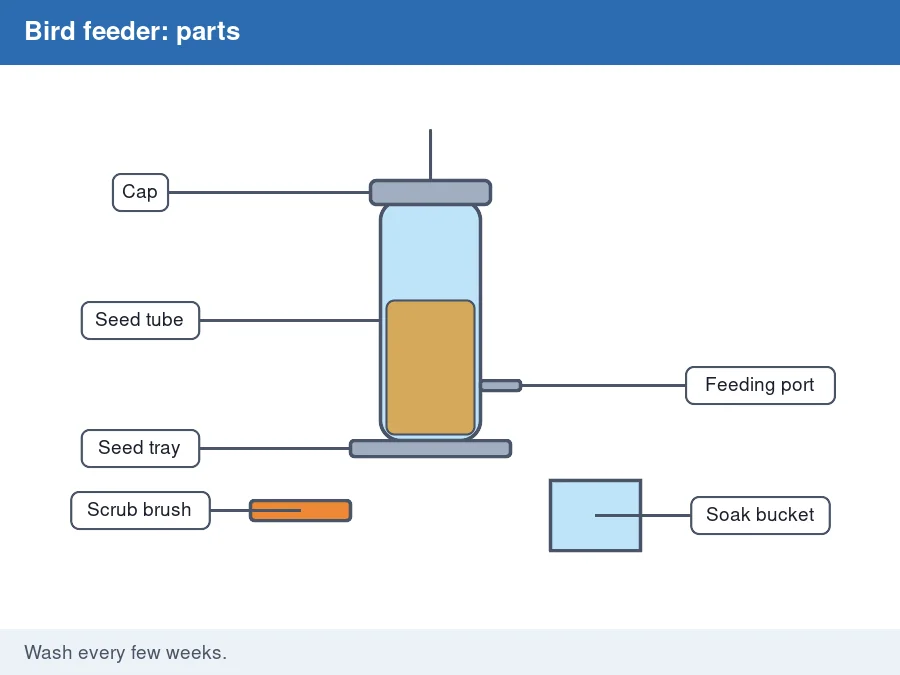
- A bucket, mild dish soap or a diluted bleach solution, a bottle brush, old toothbrush and gloves
- Call a pro if
- Nothing routine; just replace feeders that are cracked, badly chewed or impossible to clean properly.
In this guide
- Wear protection
- Chemical safety
A dirty feeder spreads mold and disease through your local bird population faster than almost anything else in the yard. Regular cleaning keeps birds healthy and seed fresh. Here is how to clean a bird feeder the right way.
1. Empty the old seed
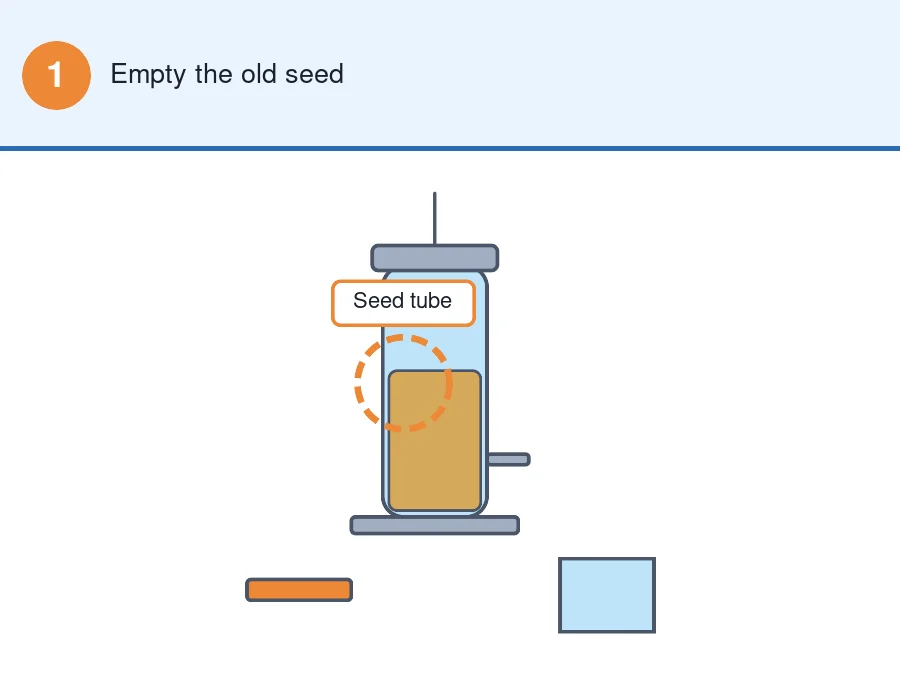
1. Dump out all remaining seed.
2. Discard anything damp, clumped or moldy in the trash.
3. Never compost moldy seed or scatter it on the ground.
4. Old seed is where the problems start, so none of it goes back in.
2. Take the feeder apart
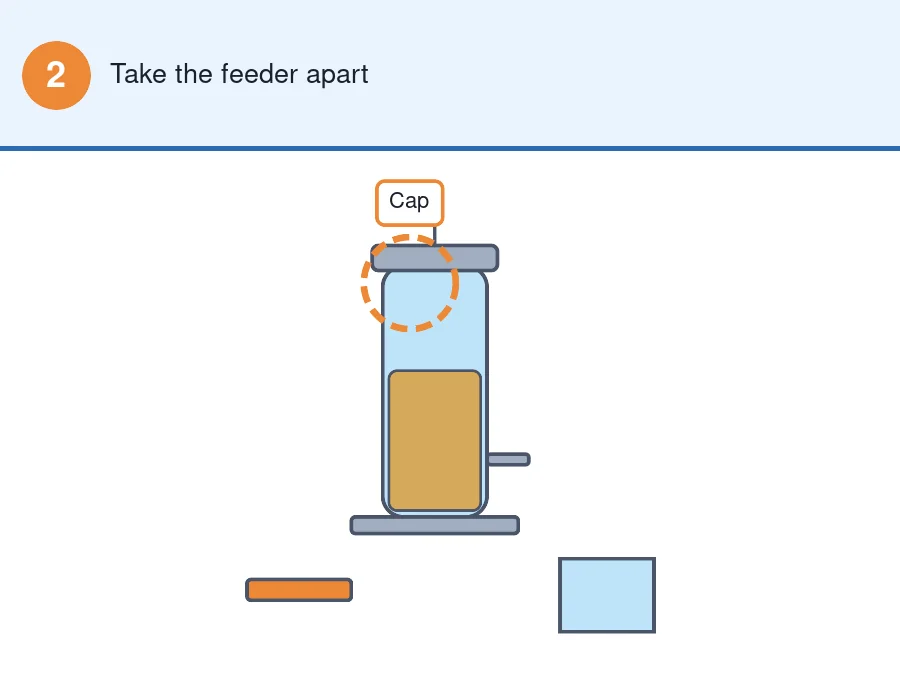
1. Disassemble tubes, trays, ports and lids as far as the design allows.
2. Keep screws and small parts in a cup.
3. Photograph the assembly first if it looks complicated.
4. Cleaning around assembled parts leaves the worst spots dirty.
3. Soak the pieces
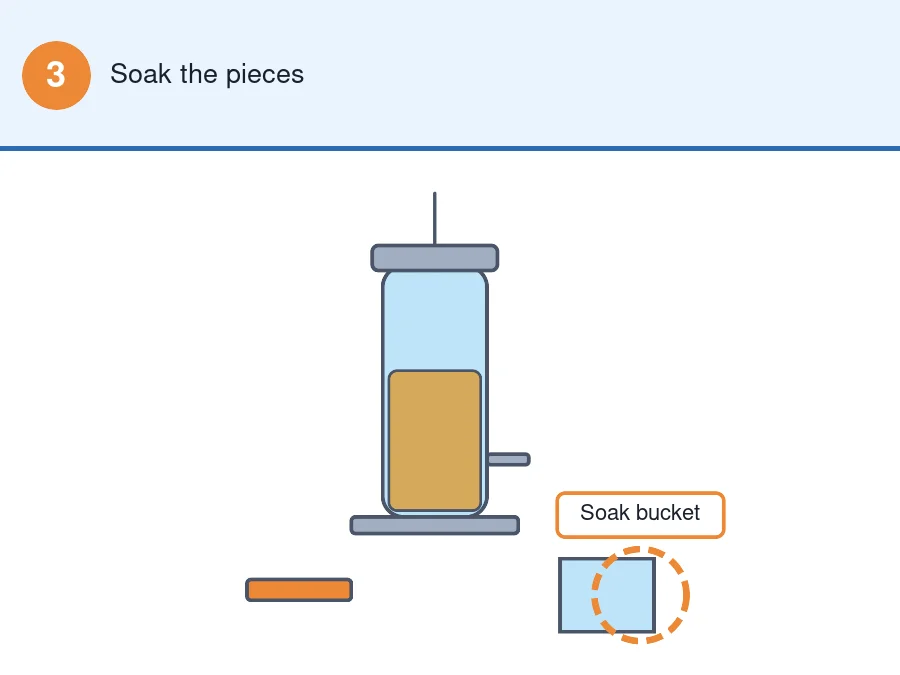
1. Soak parts in hot, soapy water for 15 minutes.
2. For mold or heavy grime, use one part bleach to nine parts water. Never mix bleach with ammonia or other cleaners; the fumes are toxic.
3. A good soak loosens caked seed and droppings.
4. Hummingbird feeders need this every few days in summer heat.
4. Scrub every surface
1. Scrub tubes with a bottle brush.
2. Work an old toothbrush into ports, corners and seams.
3. Clear drainage holes and perches.
4. Any residue left behind re-seeds the next mold bloom.
5. Rinse thoroughly
1. Rinse every part under clean running water.
2. Keep rinsing until no soap or bleach smell remains.
3. Residue can harm birds and spoils fresh seed.
4. Two rinses beat one when bleach was used.
6. Dry completely
1. Air dry all parts fully on a rack or towel.
2. Sunlight helps disinfect as it dries.
3. Never refill a feeder that is still damp.
4. Moisture inside turns fresh seed moldy within days.
7. Clean the area below
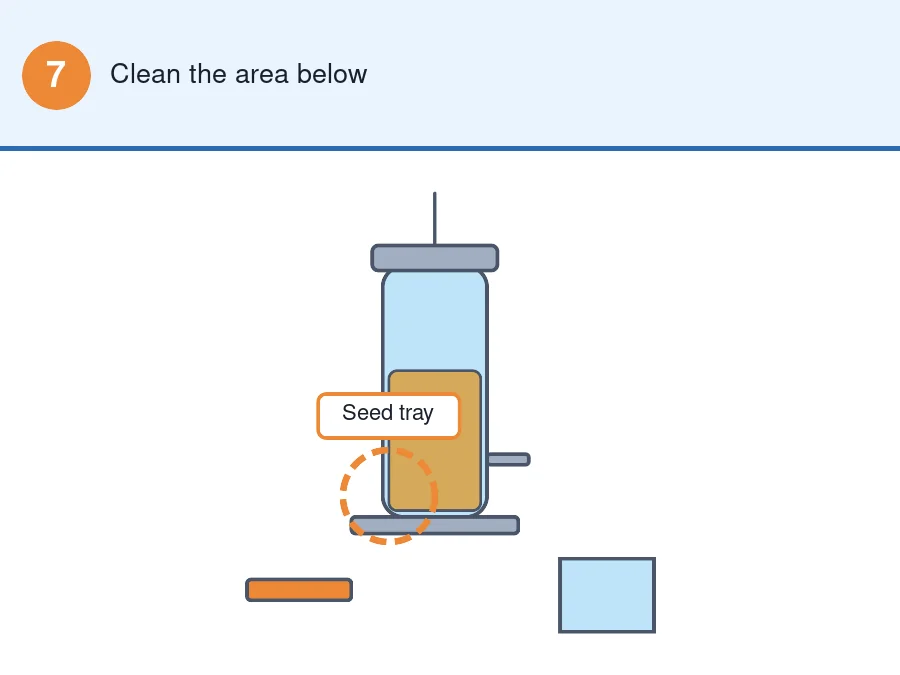
1. Rake up hulls and droppings under the feeder.
2. Move the feeder occasionally so waste does not concentrate.
3. A fouled patch of ground spreads disease too.
4. The feeding zone is part of the feeder.
8. Set a cleaning schedule
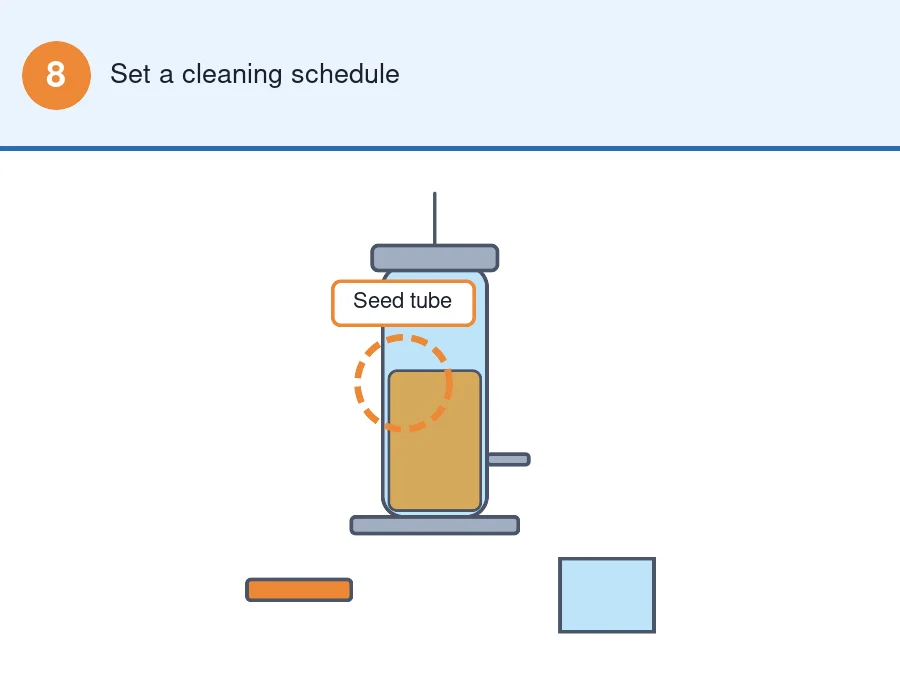
1. Clean seed feeders every two weeks, weekly in wet weather.
2. Clean hummingbird feeders every few days in summer.
3. Watch seed for clumping between cleanings.
4. A calendar reminder keeps the habit going.
Common mistakes
- Topping off old seed instead of emptying and cleaning first.
- Refilling while the feeder is still damp, which molds the new seed fast.
- Skipping the bleach soak when mold is visible, so spores survive.
- Cleaning feeders in the kitchen sink where food is prepared.
Related guides
FAQ
How often should I clean my bird feeder?
Every two weeks in normal conditions, weekly during wet weather, and immediately if you see mold or sick birds. Hummingbird feeders need cleaning every two to four days in hot weather.
Can I use bleach to clean a bird feeder?
Yes, a solution of one part bleach to nine parts water is the standard disinfection method. Rinse thoroughly until no smell remains and dry completely before refilling.
Why does my bird seed get moldy so fast?
Usually a damp feeder, poor drainage, or seed sitting too long. Clean and fully dry the feeder, check drainage holes are clear, and fill with smaller amounts more often.
What are signs my feeder is making birds sick?
Moldy or clumped seed, a sour smell, and birds that look fluffed up, lethargic or have crusty eyes. Take the feeder down, clean it thoroughly, and leave it down for a week or two to break the disease cycle.
More from this topic
- How to Clean a Patio Umbrella Without Damaging It: Learn how to clean a patio umbrella: brush off debris, wash the canopy with mild soap, treat mold and mildew,...
- How to Clean a Brick Patio: Learn how to clean a brick patio: sweep it, wash with a mild soap and clear the joints without loosening the...
- How to Clean a Brick Wall: Learn how to clean a brick wall safely: test a small patch, use a soft brush and mild detergent, and avoid...
- How to Clean a Chimney Flue: Learn how to clean a chimney flue: check the creosote level, set up the work area, brush the flue from the...
- How to Clean a Concrete Retaining Wall: Learn how to clean a concrete retaining wall: brush off the growth, wash with a mild cleaner and check the...
 Garage and OutdoorsHow to Clean a Patio Umbrella Without Damaging ItLearn how to clean a patio umbrella: brush off debris, wash the canopy with mild soap, treat mold and mildew, and dry it fully before storing.
 Garage and OutdoorsHow to Clean a Brick PatioLearn how to clean a brick patio: sweep it, wash with a mild soap and clear the joints without loosening the bricks.
 Garage and OutdoorsHow to Clean a Brick WallLearn how to clean a brick wall safely: test a small patch, use a soft brush and mild detergent, and avoid blasting old brick.Garage and OutdoorsHow to Clean a Chimney FlueLearn how to clean a chimney flue: check the creosote level, set up the work area, brush the flue from the top or bottom and dispose of the soot safely.
 Garage and OutdoorsHow to Clean a Concrete Retaining WallLearn how to clean a concrete retaining wall: brush off the growth, wash with a mild cleaner and check the drains behind it.