
How to Clean Garden Tools
Part of: Outdoors and garage · Also in: The Complete Guide to Outdoor and Yard Repair for Homeowners
- Difficulty
- Easy
- Time
- 10 to 15 minutes per tool
- Tools
- A stiff brush, soapy water, a wire brush or sandpaper for rust, disinfectant, rags and oil
- Call a pro if
- Nothing routine; broken handles, cracked blades and failed springs need repair or replacement, not just cleaning.
In this guide
- Wear protection
- Chemical safety
Clean tools work better, last longer, and do not spread plant disease from one bed to the next. A quick clean after use and a proper one each season is all it takes. Here is how to clean garden tools the right way.
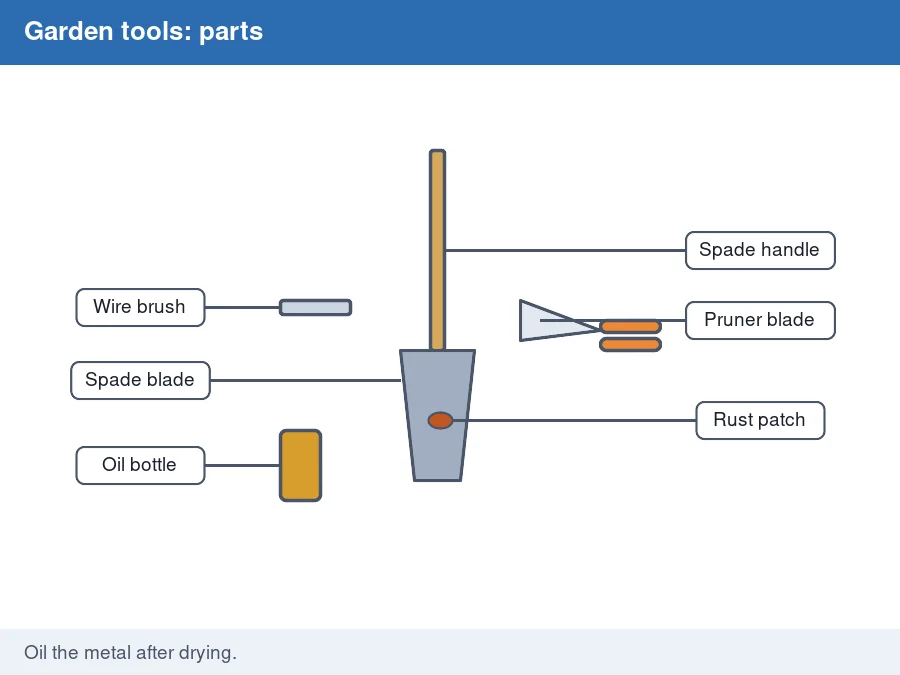
1. Knock off the dirt
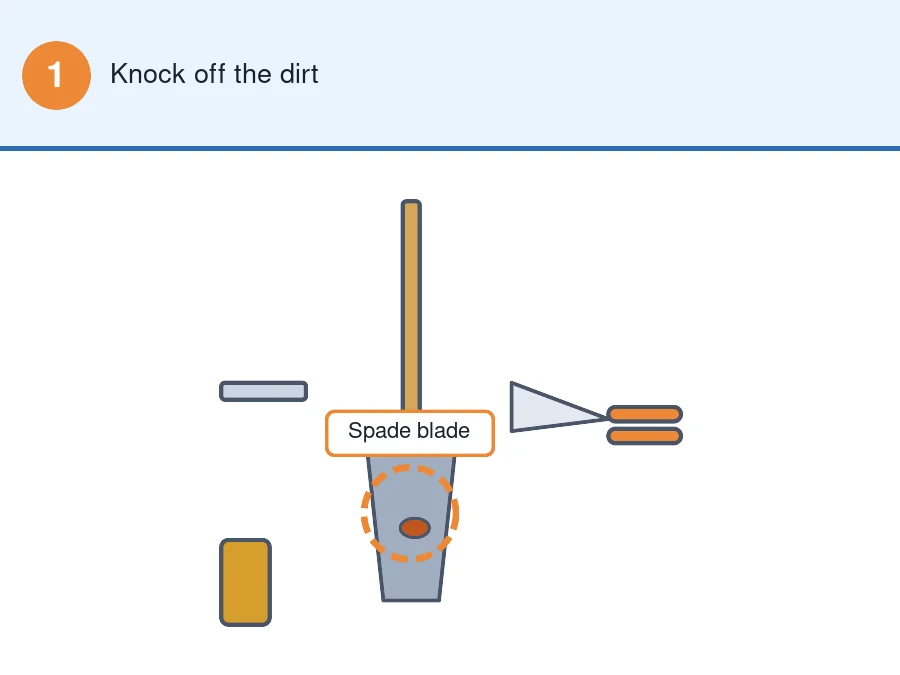
1. Bang soil loose and brush it off with a stiff brush.
2. Hose off stubborn mud and let tools drain.
3. Dig dried soil out of joints and pivots.
4. Soil holds moisture against the metal, which invites rust.
2. Wash with soapy water
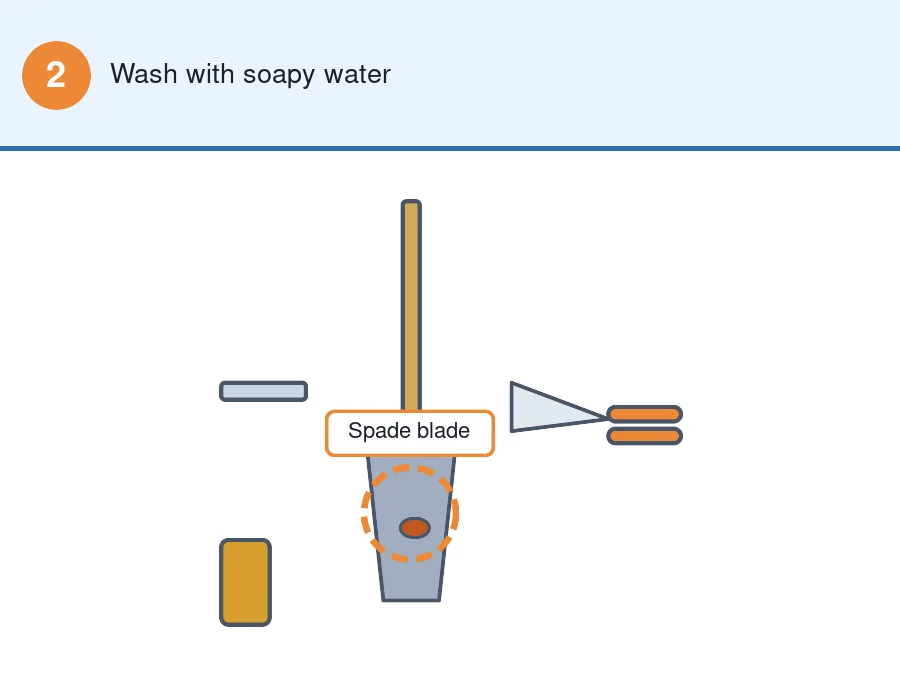
1. Scrub metal parts in warm, soapy water.
2. Wipe wooden handles with a damp rag, not a soak.
3. Rinse and dry every tool fully with a rag.
4. Standing water on wood or steel undoes the whole cleaning.
3. Remove sap and sticky residue
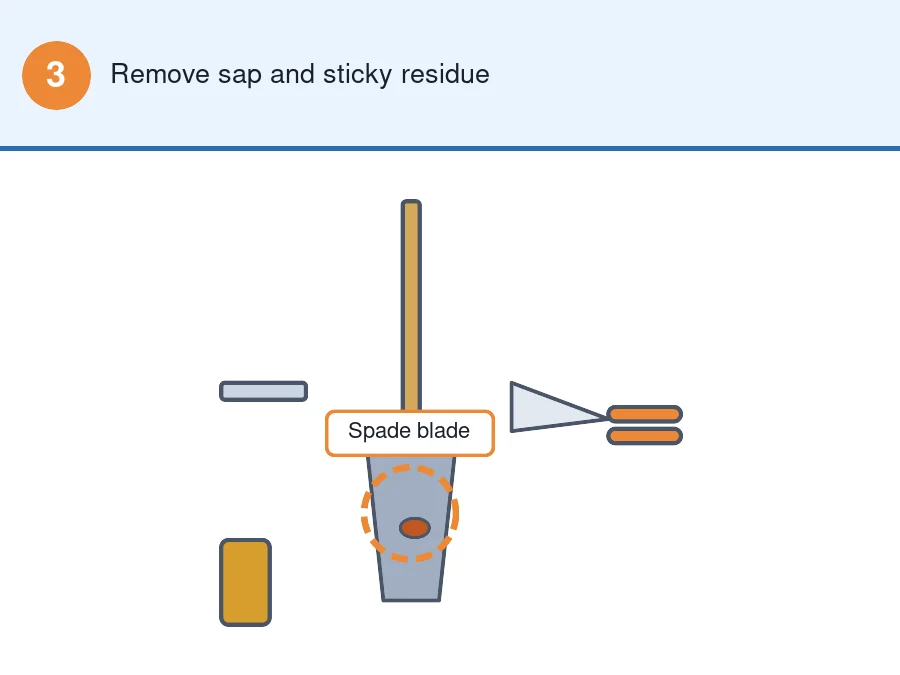
1. Scrape sap off blades with a plastic putty knife.
2. Rub residue with a rag dampened in mineral spirits or rubbing alcohol.
3. Sap glues pivots and holds grit against edges.
4. Pruners and loppers need this most.
4. Tackle the rust
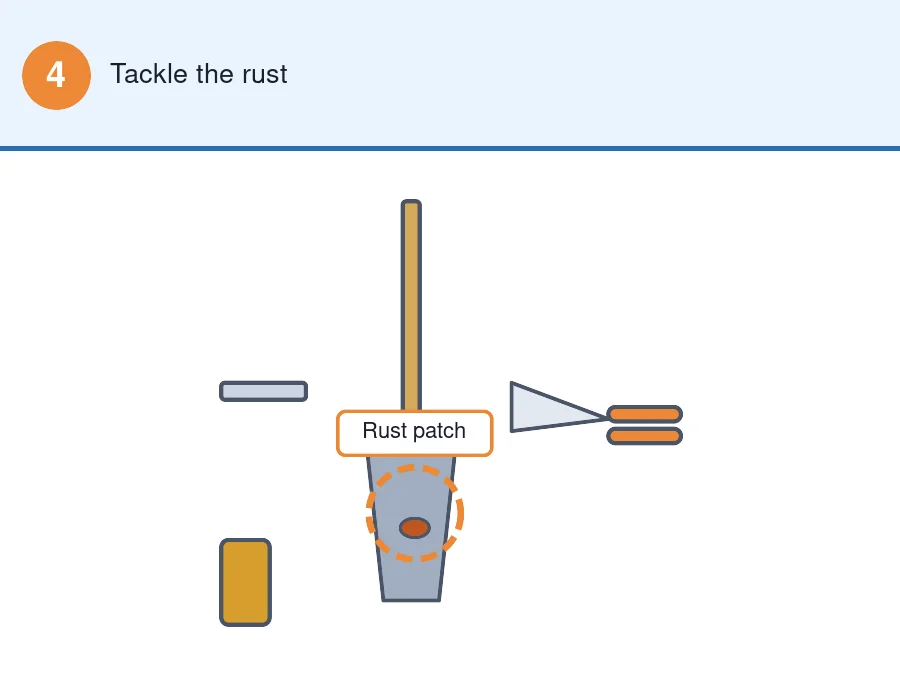
1. Scrub light rust with a wire brush or steel wool.
2. Sand stubborn patches with medium-grit sandpaper.
3. Soak badly rusted small tools in white vinegar overnight, then scrub.
4. Rust left alone pits the metal permanently.
5. Disinfect the blades
1. Wipe cutting edges with rubbing alcohol.
2. Disinfect pruners between plants when disease is present.
3. A diluted bleach solution works, but rinse and oil after since bleach corrodes. Never mix bleach with ammonia or other cleaners; the fumes are toxic.
4. This stops spreading blight and mildew through the garden.
6. Care for the handles
1. Sand rough or splintering wooden handles smooth.
2. Rub in boiled linseed oil and let it soak.
3. Tighten loose heads and screws while you are at it.
4. Oiled wood resists cracking and splinters.
7. Oil the metal
1. Wipe blades and metal surfaces with an oiled rag.
2. Oil pivots and springs on pruners and shears.
3. A thin film is enough; excess oil grabs dust.
4. Oil is the barrier between your tools and the next rust bloom.
8. Store them right
1. Hang tools or store them off a damp floor.
2. Keep them under cover, out of the weather.
3. Do a full clean-and-oil before winter storage.
4. Good storage makes next season's cleaning a five-minute job.
Common mistakes
- Putting tools away wet and dirty, which guarantees rust and dull edges.
- Soaking wooden handles, which swells and cracks the wood.
- Skipping disinfectant after cutting diseased plants, spreading it to healthy ones.
- Leaving tools outside where weather undoes every cleaning.
Related guides
FAQ
How often should I clean garden tools?
Brush off dirt after every use and do a full clean with washing, rust removal and oiling at the end of each season. Disinfect pruners whenever you cut diseased material.
What removes rust from garden tools?
A wire brush or steel wool for light rust, sandpaper for stubborn spots, and an overnight white vinegar soak for badly rusted small tools. Scrub, rinse, dry and oil afterward.
Should I disinfect garden tools?
Yes, especially pruners and shears. Wiping blades with rubbing alcohol between plants stops spreading diseases like blight and powdery mildew through the garden.
What oil should I use on garden tools?
Any light machine oil or general-purpose oil works on blades and pivots. Boiled linseed oil suits wooden handles. A thin coat is all you need on either.
More from this topic
- How to Store Garden Tools for Winter So They Last: Learn how to store garden tools for winter: clean, dry, sharpen, oil, and hang them, and prepare hoses,...
- How to Remove Rust From Tools the Easy Way: Learn how to remove rust from tools: soak in vinegar, scrub with the right abrasive, and protect the metal so...
- How to Sharpen Garden Tools: Learn how to sharpen garden tools: pruners, shears, hoes and shovels with a file or stone, plus rust removal...
- How to Organize Garden Tools So You Can Find Everything: Learn how to organize garden tools: sort by use, hang long-handled tools, protect edges and rust, and set up...
- How to Clean a Rake: Learn how to clean a rake: clear debris from the tines, wash off sap and rust, and care for the...
 Garage and OutdoorsHow to Store Garden Tools for Winter So They LastLearn how to store garden tools for winter: clean, dry, sharpen, oil, and hang them, and prepare hoses, sprayers, and mower so they are ready in spring.
 Garage and OutdoorsHow to Remove Rust From Tools the Easy WayLearn how to remove rust from tools: soak in vinegar, scrub with the right abrasive, and protect the metal so rust stays away.
 Garage and OutdoorsHow to Sharpen Garden ToolsLearn how to sharpen garden tools: pruners, shears, hoes and shovels with a file or stone, plus rust removal and care.
 Garage and OutdoorsHow to Organize Garden Tools So You Can Find EverythingLearn how to organize garden tools: sort by use, hang long-handled tools, protect edges and rust, and set up a system that stays tidy.
 Garage and OutdoorsHow to Clean a RakeLearn how to clean a rake: clear debris from the tines, wash off sap and rust, and care for the handle.