
How to Clean Outdoor Furniture
Part of: Outdoors and garage

- Difficulty
- Easy
- Time
- One to two hours for a full set
- Tools
- A hose or bucket, mild dish soap, a soft brush, cloths, white vinegar for mildew and a protectant for the material
- Call a pro if
- Nothing routine; just match the cleaner to the material and test a hidden spot on painted or delicate finishes.
In this guide
- Wear protection
- Chemical safety
A season of pollen, bird droppings, sunscreen and mildew leaves patio furniture looking rough. Each material has a method that cleans it without damage. Here is how to clean outdoor furniture, whatever yours is made of.
1. Brush off the loose stuff first
1. Knock off leaves, pollen and cobwebs with a dry brush.
2. Vacuum woven textures with a brush attachment.
3. Clear debris from joints and undersides.
4. Dry removal first keeps mud out of the wash step.
2. Wash plastic and resin
1. Scrub with warm water and a squirt of dish soap.
2. Use a soft brush on textured surfaces.
3. Rinse with the hose and towel dry.
4. Baking soda paste lifts scuffs on white plastic.
3. Wash metal furniture
1. Clean with mild soapy water and a soft cloth.
2. Rinse and dry thoroughly to prevent rust.
3. Touch up paint chips on steel before rust starts.
4. Aluminum needs no rust care, just soap and water.
4. Wash wood furniture
1. Scrub with soapy water and a soft brush along the grain.
2. Rinse lightly; do not soak the wood.
3. Let it dry fully, then oil teak or seal as needed.
4. Wood furniture rewards a yearly clean-and-oil routine.
5. Wash wicker and rattan
1. Vacuum crevices first, then wipe with a damp soapy cloth.
2. Use as little water as possible on natural wicker.
3. Synthetic wicker tolerates a gentle hose rinse.
4. Dry in the sun or with good airflow to prevent mildew.
6. Kill mildew and stains
1. Spray mildew with a 50-50 white vinegar and water mix.
2. Let it sit ten minutes, then scrub and rinse.
3. For stubborn mildew on hard surfaces, a diluted bleach solution works; keep it off fabric and test first. Never mix bleach with vinegar or ammonia, since the fumes are toxic.
4. Mildew returns fast if furniture stays damp, so dry everything.
7. Clean the cushions separately
1. Check cushion tags; many covers zip off for machine washing.
2. Hand wash fixed cushions with soapy water and rinse well.
3. Stand cushions on edge to dry completely.
4. Damp cushion cores grow mildew from the inside out.
8. Protect for the season
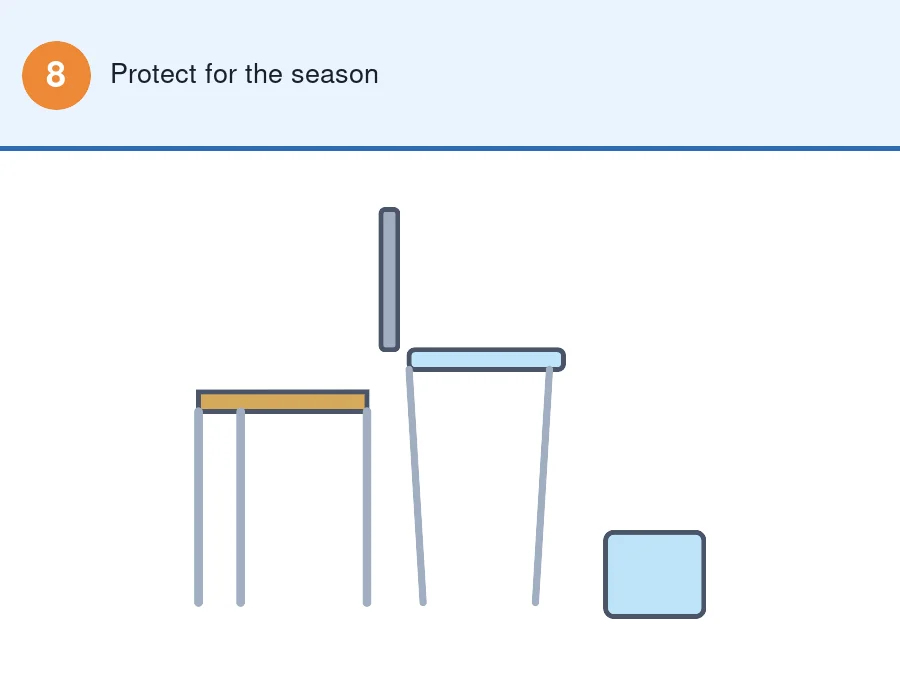
1. Apply car wax to metal frames for a water-shedding coat.
2. Oil wood and add fabric protector to cushions.
3. Cover or store furniture in harsh weather.
4. An hour of protection saves days of cleaning later.
Common mistakes
- Using one cleaner on every material, which damages wood and wicker.
- Pressure washing wood or wicker, which splinters and unravels it.
- Putting cushions away damp, which guarantees mildew by spring.
- Letting rust spots spread on steel instead of touching them up early.
Related guides
- How to Clean a Deck Box
- How to Clean Outdoor Toys
- How to Clean Wood Furniture
- How to Clean Outdoor Light Fixtures
- How to Prepare Your Home for a Storm: Outdoor and Indoor
- How to Winterize an Outdoor Faucet Before the First Freeze
- How to Clean Outdoor Cushions So They Look New Again
- How to Clean a Patio Umbrella Without Damaging It
- How to Clean an Outdoor Rug So It Looks New
FAQ
How often should I clean outdoor furniture?
A full clean at the start and end of the season, plus quick wipe-downs monthly. Cushions need attention whenever spills or mildew spots appear.
Can I pressure wash patio furniture?
Only sturdy plastic and metal, on a gentle setting from a distance. Never pressure wash wood, wicker or cushions, which splinter, unravel and saturate. A hose and brush is safer for almost everything.
How do I remove mildew from outdoor furniture?
A 50-50 vinegar and water spray, left for ten minutes then scrubbed, clears most mildew. For stubborn spots on hard, colorfast surfaces, diluted bleach works; test first and keep it off fabric.
What is the best way to protect outdoor furniture?
Clean it, dry it fully, then protect by material: paste wax on metal, oil on teak and hardwood, fabric protector on cushions. Covers or storage in bad weather do more than any coating.
More from this topic
- How to Clean a Deck Box: Learn how to clean a deck box: empty and wash it inside and out, kill mildew, and keep your outdoor storage...
- How to Clean Outdoor Steps: Learn how to clean outdoor steps: remove algae, moss and stains from concrete, stone and wood...
- How to Store Patio Furniture for Winter: Learn how to store patio furniture for winter: clean each material, dry it, fix damage, and cover or stack it...
- How to Clean Outdoor Cushions So They Look New Again: Learn how to clean outdoor cushions: brush off debris, wash covers and foam the right way, kill mildew, dry...
- How to Clean a Trampoline: Learn how to clean a trampoline: wash the mat and pads safely, remove mildew, rinse and dry, plus a safety...
 SeasonalHow to Clean a Deck BoxLearn how to clean a deck box: empty and wash it inside and out, kill mildew, and keep your outdoor storage fresh.
 SeasonalHow to Clean Outdoor StepsLearn how to clean outdoor steps: remove algae, moss and stains from concrete, stone and wood steps.
 SeasonalHow to Store Patio Furniture for WinterLearn how to store patio furniture for winter: clean each material, dry it, fix damage, and cover or stack it in a dry place so it lasts for years.
 Garage and OutdoorsHow to Clean Outdoor Cushions So They Look New AgainLearn how to clean outdoor cushions: brush off debris, wash covers and foam the right way, kill mildew, dry fully and store them so they last.
 SeasonalHow to Clean a TrampolineLearn how to clean a trampoline: wash the mat and pads safely, remove mildew, rinse and dry, plus a safety check.