
How to Roll a Wall Without Lap Marks
Part of: Floors, walls and doors
- Difficulty
- Easy
- Time
- 2 to 4 hours
- Tools
- Roller and cover, extension pole, paint tray, brush, drop cloth, painter's tape, damp cloth
- Call a pro if
- The wall is over fresh plaster or a very porous surface, since it needs a sealer coat first or it will dry unevenly.
In this guide
- Power off first
- Chemical safety
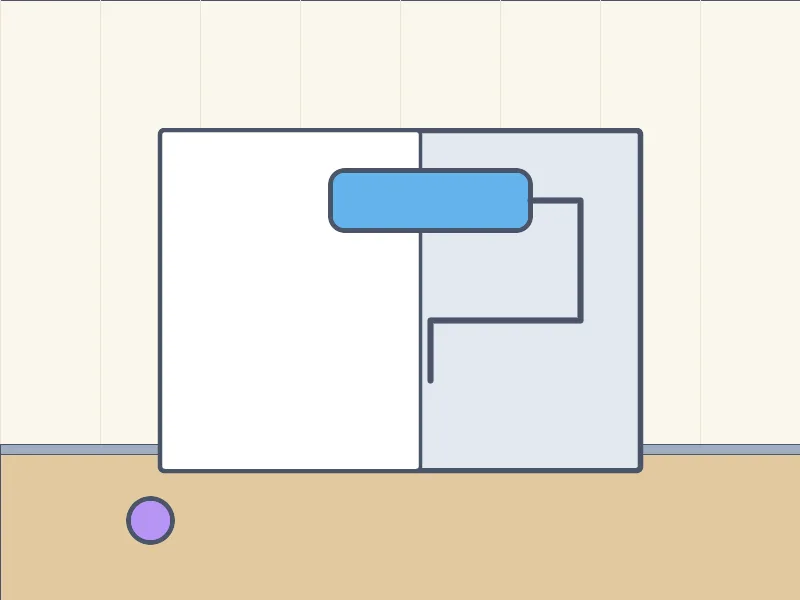
A lap mark is the line where you rolled back over paint that had already started to dry. It is darker or shinier than the rest of the wall, and it shows worst on a flat sheen and in raking light. The fix is technique, not paint. How to roll a wall without lap marks starts with the cover: a half inch nap for smooth drywall, three eighths for a very smooth finish.
1. Pick the right cover
1. A half inch nap for smooth drywall.
2. Three eighths for a very smooth finish.
3. A thicker nap holds more paint.
4. A cheap cover sheds fibers.
2. Load the roller evenly
1. Dip a third of the cover in the tray.
2. Roll it off on the ramp.
3. Do not press hard in the tray.
4. An even load lays an even coat.
3. Work in a grid
1. Divide the wall into squares about three feet wide.
2. Finish one square before moving on.
3. Keep the whole square wet.
4. Never go back to a dry square.
4. Roll vertical strips
1. Start at a corner and roll up.
2. Move over half a roller width.
3. Roll down beside the first strip.
4. Overlap each pass by half.
5. Keep a wet edge
1. The edge of what you just rolled is wet.
2. Start the next pass on that wet edge.
3. Move along the wall, not back into dry paint.
4. This is the whole trick.
6. Reload before the roller runs dry
1. A dry roller drags and leaves a line.
2. Reload at the end of each square.
3. Do not stretch the last of a load.
7. Do not press hard
1. Pressure squeezes paint to the edges.
2. Those edges dry into ridges.
3. Let the roller do the work.
8. Paint a whole wall in one go
1. Stopping mid wall leaves a line.
2. Finish the wall before you break.
3. If you must stop, stop at a corner.
9. Watch the drying time
1. Fast drying paint laps more.
2. Heat and a fan dry it faster.
3. Close the window while you roll.
10. Roll the second coat the same way
1. Wait the full recoat time.
2. Roll in the same direction.
3. Two thin coats hide lap marks.
11. Fix a lap mark you already have
1. Let it dry fully.
2. Lightly sand the ridge with fine paper.
3. Recoat the whole wall, not the line.
4. A spot coat shows as a patch.
Common mistakes
- Rolling back into paint that has set.
- Stretching a dry roller.
- Stopping in the middle of a wall.
- Pressing hard to get more coverage.
- Working in a hot room with a fan on.
FAQ
What causes lap marks when painting?
Rolling over paint that has already started to dry.
Does a second coat hide lap marks?
Usually yes, if you keep a wet edge on that coat too.
What nap roller is best for walls?
Half inch on smooth drywall, thicker on textured walls.
Can I paint a wall in two sessions?
Yes, if you stop at a corner or a natural break.
Related guides
- How to Cut In a Ceiling Line: Learn how to cut in a ceiling line without a wobble: load the brush lightly, use the wall to steady your hand...
- How to Texture a Wall With a Roller: Learn how to texture a wall with a roller using thinned joint compound, from mixing and rolling to knocking...
- How to Whitewash an Interior Brick Wall: Learn how to whitewash an interior brick wall with diluted paint, keeping the brick texture visible while...
- How to Paint a Ceiling Without Lap Marks: Learn how to paint a ceiling without lap marks by working in wet sections, rolling in one direction and...
- How to Paint a Ceiling Without Streaks, Drips or a Sore Neck: Learn how to paint a ceiling cleanly: prep and cover everything, cut in the edges, roll in overlapping bands,...
 Walls and PaintHow to Cut In a Ceiling LineLearn how to cut in a ceiling line without a wobble: load the brush lightly, use the wall to steady your hand and work in short pulls.
 Walls and PaintHow to Texture a Wall With a RollerLearn how to texture a wall with a roller using thinned joint compound, from mixing and rolling to knocking down for an even finish.
 Walls and PaintHow to Whitewash an Interior Brick WallLearn how to whitewash an interior brick wall with diluted paint, keeping the brick texture visible while brightening the room.
 PaintingHow to Paint a Ceiling Without Lap MarksLearn how to paint a ceiling without lap marks by working in wet sections, rolling in one direction and keeping a wet edge the whole way.
 Walls and PaintHow to Paint a Ceiling Without Streaks, Drips or a Sore NeckLearn how to paint a ceiling cleanly: prep and cover everything, cut in the edges, roll in overlapping bands, keep a wet edge and avoid the lap marks that show.