
How to Anchor a Trampoline So Wind Cannot Take It
Part of: Outdoors and garage
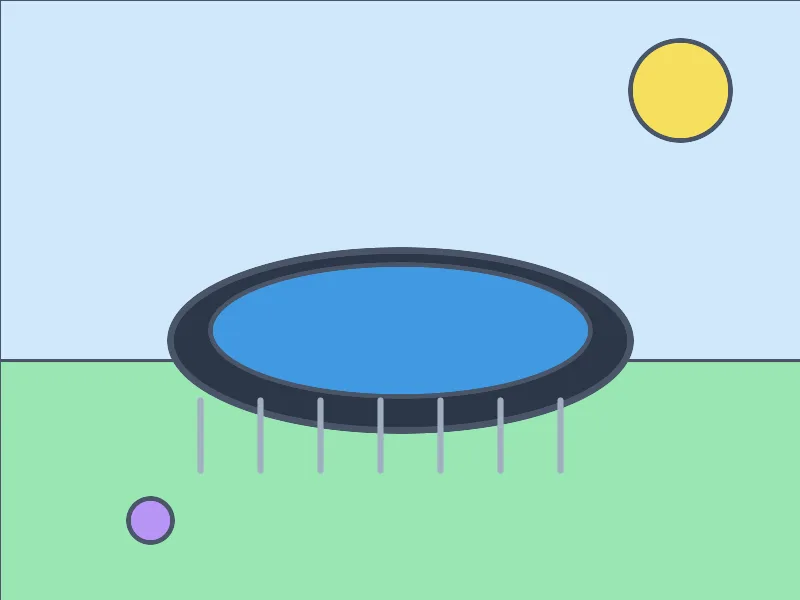
- Difficulty
- Easy
- Time
- One to two hours
- Tools
- Trampoline anchor kit or auger anchors, straps, a hammer or drill, a wrench, gloves
- Call a pro if
- The trampoline sits on a steep slope or exposed hilltop where even anchors struggle, since professional groundworks or relocation is the safer call.
In this guide
- Wear protection
A trampoline's round frame catches wind like a sail, and even a modest storm can send it through a fence or onto a roof. Anchoring takes an hour and is the cheapest insurance in the yard. Here is how to anchor a trampoline properly.
1. Choose the right anchors
- Auger anchors: corkscrew into the ground; the best hold in most soils.
- U-shaped stakes: hammered over the legs; fine for light winds and firm ground.
- Sandbags: a backup for hard ground where stakes will not go, but they shift over time.
- Buy a kit rated for your trampoline size, and count on anchoring every leg or every other leg at minimum.
2. Pick the spot carefully
1. Choose level ground; a trampoline on a slope puts constant sideways pull on anchors.
2. Keep it clear of fences, trees, wires and the house by several feet.
3. Soft, well-drained soil holds augers best; waterlogged ground releases them.
4. If the only flat spot is exposed, plan on heavier anchoring.
3. Position the frame first
1. Set the trampoline exactly where you want it before anchoring.
2. Check it is level by rolling a ball across the mat.
3. Mark the ground at each leg.
4. Moving it after anchoring means starting over, so take a minute here.
4. Install the anchors
1. Drive auger anchors into the ground beside each leg at a slight angle away from the trampoline.
2. Screw them down until only the eye or top loop shows.
3. On hard ground, drive a pilot hole with a metal bar first.
4. For U-stakes, hammer them over the leg base until they grip firmly.
5. Strap the frame down
1. Loop the straps from the anchor over the frame or leg, not the mat or springs.
2. Tighten each strap so the frame cannot lift or shift.
3. Cross-brace on large trampolines: angle straps in opposite directions at each station.
4. Check that straps do not rub on sharp frame edges, which frays them.
6. Secure the extras
- Anchor the safety net poles too if the kit allows; they catch wind as well.
- Take the net down ahead of forecast storms; it is the biggest sail on the frame.
- Store ladders and loose parts inside.
- In hurricane or severe storm warnings, consider removing the mat entirely.
7. Check after weather and seasons
1. Test every anchor by hand monthly; they loosen as soil shifts.
2. Retighten and re-seat any that move.
3. After major storms, inspect straps for fraying and anchors for lift.
4. In freeze-thaw climates, re-check everything each spring.
8. Keep the whole setup safe
- One jumper at a time is the rule that prevents most injuries.
- Keep the safety net closed while jumping.
- Inspect springs, mat and pads with the anchors.
Common mistakes
- Anchoring only two sides so the frame twists free in a gust.
- Strapping to the mat or springs instead of the frame.
- Hammering stakes straight down in soft soil where they pull straight out.
- Forgetting the safety net acts like a sail in a storm.
- Setting and forgetting; anchors need checking after every big blow.
Related guides
- How to Anchor a Swing Set So It Stays Put
- How to Clean a Trampoline
- How to Test Garden Soil at Home: pH, Drainage, Nutrients
- How to Install a Gravel Pad Under a Shed
FAQ
Do I really need to anchor a trampoline?
Yes, unless it sits in a fully sheltered spot. Wind regularly throws unanchored trampolines through windows, fences and power lines.
How many anchors does a trampoline need?
At minimum one per pair of legs, and one per leg in exposed areas or storm-prone regions.
What is the best type of trampoline anchor?
Auger-style anchors screwed deep into the ground hold best in most soils. U-stakes suit firm ground and light winds.
Can I anchor a trampoline on concrete?
Yes, with sandbags or bolt-down plates made for hard surfaces. Standard ground stakes will not work there.
More from this topic
- How to Anchor a Shed to the Ground: Learn how to anchor a shed: choose the right anchors for your base, tie the frame down, and protect it from...
- How to Anchor a Swing Set So It Stays Put: Learn how to anchor a swing set: choose ground anchors or concrete footings, set each leg firmly, and test...
- How to Babyproof a Garage: Learn how to babyproof a garage: lock up tools and chemicals, secure the door, cover outlets, and make the...
- How to Build a Fire Pit Area in the Yard: Learn how to build a fire pit area in the yard: check the rules, pick a clear spot, dig and level the base,...
- How to Deal With a Wasp Nest Safely: How to deal with a wasp nest safely: identify the nest, pick the safest timing and gear, and know when to...
 Garage and OutdoorsHow to Anchor a Shed to the GroundLearn how to anchor a shed: choose the right anchors for your base, tie the frame down, and protect it from wind.
 Garage and OutdoorsHow to Anchor a Swing Set So It Stays PutLearn how to anchor a swing set: choose ground anchors or concrete footings, set each leg firmly, and test the frame before the first swing.
 Garage and OutdoorsHow to Babyproof a GarageLearn how to babyproof a garage: lock up tools and chemicals, secure the door, cover outlets, and make the space safe for kids.
 Garage and OutdoorsHow to Build a Fire Pit Area in the YardLearn how to build a fire pit area in the yard: check the rules, pick a clear spot, dig and level the base, ring it with stone and keep a safe clearance.
 Garage and OutdoorsHow to Deal With a Wasp Nest SafelyHow to deal with a wasp nest safely: identify the nest, pick the safest timing and gear, and know when to call a pest professional instead.