
How to Build a Concrete Curb Along a Driveway Edge
Part of: Outdoors and garage
- Difficulty
- Moderate
- Time
- 1 to 2 days plus curing
- Tools
- Shovel, wheelbarrow, level, string line, form boards, stakes, trowel, edging float, concrete mix, gloves, boots, safety glasses
- Call a pro if
- The drive is on a slope, the curb has to carry vehicles, or the edge sits over a drain or a service line.
In this guide
- Wear protection
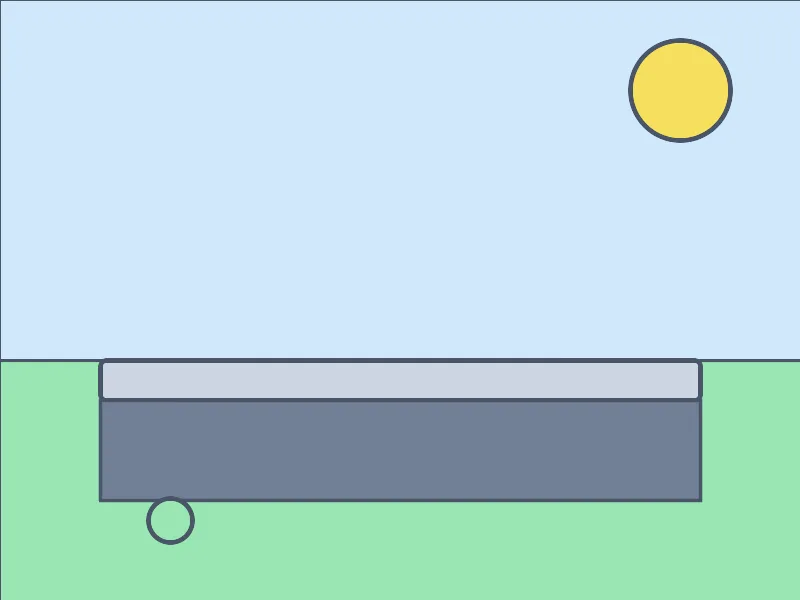
The forms, the mix and the cure decide whether a concrete curb stays sharp or cracks and crumbles. The pour itself is quick. Here is how to build a concrete curb along a driveway edge so it lasts.
1. Decide the profile
A common curb is about 4 to 6 inches wide and 6 inches tall, with a little extra buried below. Make it the same width along its whole length. Check for service lines and any drain along the edge before you plan the line.
2. Build strong forms
Use straight boards set on edge and staked every 2 to 3 feet on the outside. Screw the boards to the stakes so the pressure of wet concrete cannot push them out. Check the top edges with a level and a string line, and spray the inside faces with form oil or wipe on a thin coat so the boards release.
3. Mix to a stiff, workable consistency
Add water to the mix a little at a time. It should hold its shape in a slump, not run like soup. Too much water weakens concrete and makes it crack. Mix only as much as you can place before it starts to stiffen.
4. Pour and consolidate
Fill the form in layers. Poke a shovel or stick along the edges to push the mix against the boards and remove air pockets. Tap the outside of the forms with a hammer to settle it.
5. Strike off and finish
Pull a straight board along the top to level it. Wait for the surface sheen to fade, then smooth it with a trowel. Run an edging tool along both top edges for a rounded, chip-resistant corner.
6. Cut joints
Cut or tool a joint across the curb every 4 to 6 feet, about a quarter of the depth. The curb will crack along the joints instead of at random.
7. Cure slowly
Keep the concrete damp for about a week by misting it and covering it with plastic. Strip the forms after a day or two, once the edges hold. Keep vehicles off for at least a week, and protect it from frost.
Common mistakes
- Adding too much water to make pouring easier.
- Weak forms that bow under the weight.
- Letting the surface dry out in sun or wind.
- Skipping joints on a long run.
FAQ
How long before I can drive near the curb?
Wait about a week, longer in cold weather.
Do I need rebar?
Not always for a small edge curb, but a single length of rebar can help it hold together.
Can I pour in the cold?
Not near freezing. Fresh concrete damaged by frost never recovers.
Related guides
- How to Install a Gravel Shoulder Along a Driveway: Learn how to install a gravel shoulder along a driveway: cut the edge, lay fabric and stone and keep the...
- How to Build a Concrete Pad for a Shed: Learn how to build a concrete pad for a shed: excavate, set a level form and pour a slab that keeps the shed...
- How to Build a Dirt Berm to Direct Water: Learn how to build a dirt berm to direct water: shape a low mound on the high side, compact it and plant it...
- How to Build a Gravel Boardwalk: Learn how to build a gravel boardwalk: frame a shallow bed with timber edging and compact gravel so the path...
- How to Build a Gravel Parking Pad: Learn how to build a gravel parking pad: excavate, lay a geotextile and compact layers of stone so the...
 Garage and OutdoorsHow to Install a Gravel Shoulder Along a DrivewayLearn how to install a gravel shoulder along a driveway: cut the edge, lay fabric and stone and keep the surface from crumbling.
 Garage and OutdoorsHow to Build a Concrete Pad for a ShedLearn how to build a concrete pad for a shed: excavate, set a level form and pour a slab that keeps the shed dry.
 Garage and OutdoorsHow to Build a Dirt Berm to Direct WaterLearn how to build a dirt berm to direct water: shape a low mound on the high side, compact it and plant it so runoff goes where you want.
 Garage and OutdoorsHow to Build a Gravel BoardwalkLearn how to build a gravel boardwalk: frame a shallow bed with timber edging and compact gravel so the path stays firm underfoot.
 Garage and OutdoorsHow to Build a Gravel Parking PadLearn how to build a gravel parking pad: excavate, lay a geotextile and compact layers of stone so the surface stays firm.