
How to Build a Gravel Boardwalk
Part of: Outdoors and garage
- Difficulty
- Moderate
- Time
- 1 weekend
- Tools
- Shovel, wheelbarrow, rake, plate compactor, level, string line, timber edging, stakes, landscape fabric, gravel, gloves, boots
- Call a pro if
- The path crosses a drain field, sits on a steep slope, or has to carry vehicles.
In this guide
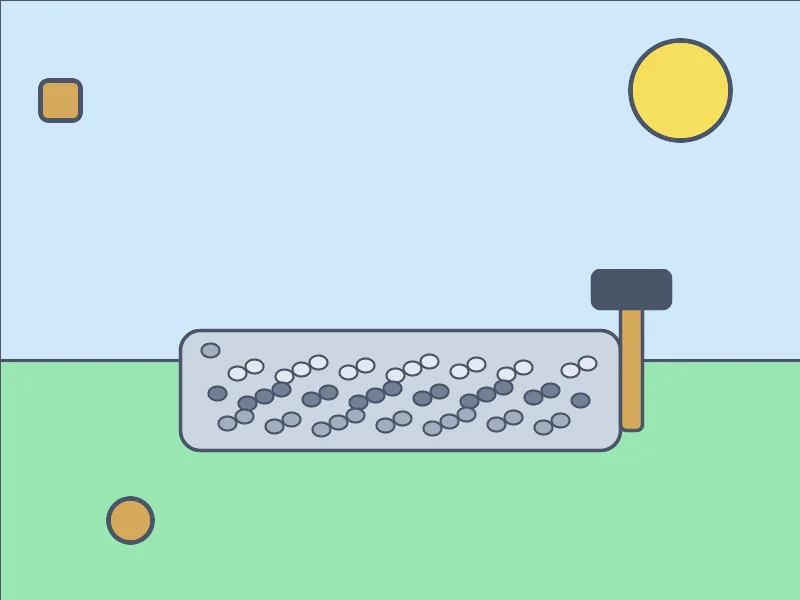
A gravel boardwalk gives you a firm, dry route across wet ground without the cost of timber decking. It is a shallow bed held by edging. Here is how to build a gravel boardwalk.
1. Plan the route
1. Walk the route you actually take across the garden.
2. Keep the path wide enough for a wheelbarrow.
3. Avoid tree roots and the lowest wet spot.
2. Mark it out
1. Drive stakes at the corners.
2. Run a string line along each edge.
3. Check the width is even the whole way.
3. Set the levels
1. Work out a gentle fall along the path.
2. Check where the path meets the lawn.
3. Keep the finished surface flush with the grass.
4. Strip the turf
1. Cut the turf in spits and set it aside.
2. Dig down about four inches.
3. Remove roots and soft soil.
5. Firm the base
1. Rake the bed flat.
2. Compact it with a plate compactor.
3. Fill any soft spots and recompact.
6. Lay the fabric
1. Roll landscape fabric over the whole bed.
2. Overlap the edges.
3. Let it run under the edging line.
4. Fabric stops gravel sinking into mud.
7. Fix the edging
1. Set treated timber along both edges.
2. Peg it with stakes every couple of feet.
3. Check the edging is straight and level.
8. Add the gravel
1. Tip gravel in small piles along the path.
2. Rake it to an even depth.
3. Compact in two passes.
9. Finish the surface
1. Rake the surface flat and slightly crowned.
2. Sweep loose stone back inside the edging.
3. Check the path drains along its length.
10. Keep it in shape
1. Top up the gravel each year.
2. Pull weeds as they appear.
3. Rake leaves off before winter.
Choosing stone that stays put
Round pea gravel feels good underfoot and migrates into the lawn within a season. Crushed stone with angular faces locks together when compacted and holds its place on a slope. A mix of a coarse base stone and a finer top stone gives the best of both: the base carries the load, the top walks well. If the path is on a slope, add a few shallow timber or stone cross pieces, called check logs, to slow the stone creeping downhill. Sweep the edges back in after every heavy rain rather than waiting until the path looks thin.
Common mistakes
- Skipping the fabric, so the gravel disappears into the soil.
- Edging set above the lawn, which trips people.
- No compaction, so the path ruts under a wheelbarrow.
- Building across the lowest, wettest spot.
- Using round pea gravel, which shifts underfoot.
Related guides
- How to Build a Rain Garden
- How to Lay a Concrete Garden Path
- How to Install a Gravel Pad Under a Shed
- How to Install a Gravel Landing Outside a Door
- How to Keep Gravel From Spreading Into the Lawn
FAQ
What gravel is best for a boardwalk?
Crushed angular stone that locks together, not round pea gravel.
How deep should the gravel be?
About three inches of compacted stone over a firm, fabric lined base.
Do I need timber edging?
It keeps the gravel in place and gives a clean edge. Without it, stone spreads into the lawn.
Can I build one over tree roots?
Yes, keep the gravel shallow and avoid cutting roots thicker than a couple of inches.
More from this topic
- How to Build a Rain Garden: Learn how to build a rain garden: pick a spot that drains, dig a shallow basin and plant it to soak up roof...
- How to Lay a Concrete Garden Path: Learn how to lay a concrete garden path: set out a curve, build a level form and pour sections that stay...
- How to Lay a Gravel Path: Learn how to lay a gravel path: plan the route and width, dig out the turf, edge it, build a compacted base...
- How to Build a Dry Creek Bed: Learn how to build a dry creek bed: dig a shallow swale on the water path, line it and set river rock to...
- How to Build a Gravel Parking Pad: Learn how to build a gravel parking pad: excavate, lay a geotextile and compact layers of stone so the...
 Garage and OutdoorsHow to Build a Rain GardenLearn how to build a rain garden: pick a spot that drains, dig a shallow basin and plant it to soak up roof and driveway runoff.
 Garage and OutdoorsHow to Lay a Concrete Garden PathLearn how to lay a concrete garden path: set out a curve, build a level form and pour sections that stay crack free.
 Garage and OutdoorsHow to Lay a Gravel PathLearn how to lay a gravel path: plan the route and width, dig out the turf, edge it, build a compacted base and add the top layer at the right depth.
 Garage and OutdoorsHow to Build a Dry Creek BedLearn how to build a dry creek bed: dig a shallow swale on the water path, line it and set river rock to carry runoff away.
 Garage and OutdoorsHow to Build a Gravel Parking PadLearn how to build a gravel parking pad: excavate, lay a geotextile and compact layers of stone so the surface stays firm.