
How to Keep Gravel From Spreading Into the Lawn
Part of: Outdoors and garage
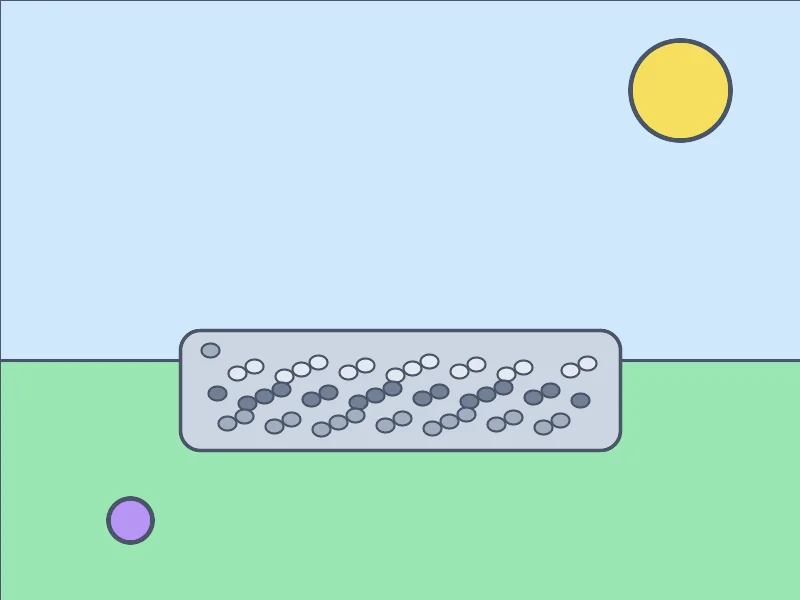
- Difficulty
- Easy
- Time
- 1 to 2 hours
- Tools
- Spade, half moon edger, string line, rubber mallet, edging strip or stone, gravel, rake, gloves
- Call a pro if
- The gravel sits on a slope above the lawn, or the edge keeps collapsing because the ground is soft.
In this guide
- Wear protection
Gravel creeps. Mowers throw it, feet kick it and rain washes it, and within a season the lawn has a gray fringe. A firm edge stops it. How to keep gravel from spreading into the lawn starts with where it escapes, checking the edge for the worst spots and whether the gravel sits higher than the lawn.
1. Find where it escapes
1. Look along the edge for the worst spots.
2. Check whether the gravel sits higher than the lawn.
3. Note where a mower turns.
2. Lower the gravel level
1. Rake gravel back from the edge.
2. Remove enough so it sits just below the lawn.
3. Keep the surface flat, not mounded.
3. Cut a clean edge
1. Push a half moon edger straight down along the line.
2. Cut a spade's depth.
3. Lift the turf strip away.
4. Choose an edging
1. Timber is cheap and quick.
2. Stone setts look better and last longer.
3. Plastic strip suits curves and tight budgets.
5. Set the edging
1. Bed the edging in the cut trench.
2. Tap it down so the top is flush with the lawn.
3. Check it is level along the run.
6. Fix it in place
1. Peg timber edging every couple of feet.
2. Set stone edging on a firm base.
3. Fill behind the edge with soil.
7. Add a gravel trap
1. Fit a narrow strip of paving or setts along the edge.
2. Let the strip sit level with the lawn.
3. Sweep gravel back onto it.
8. Rake and top up
1. Rake the gravel back from the edge.
2. Top up where it has thinned.
3. Keep the depth even.
9. Mow with care
1. Lift the mower deck slightly along the edge.
2. Mow away from the gravel, not toward it.
3. Use a string trimmer for the last strip.
10. Check it each season
1. Look at the edge after winter.
2. Re-set any edging that has heaved.
3. Sweep gravel back where it has spread.
Curves and corners
Gravel escapes fastest where the edge curves or turns a corner, because that is where a mower swings wide and where water gathers. Cut curves in short, straight runs rather than one sweeping arc, and set the edging in shorter pieces so each one follows the line. At a corner, set a larger stone or a short post so the mower has something solid to steer around. If the corner is also the low point of the path, add a shallow drainage channel so rain does not wash the gravel onto the grass every storm.
Common mistakes
- Leaving gravel mounded above the lawn.
- An edge that stands proud, where a mower hits it.
- No edging at all, just a loose line of stone.
- Mowing toward the gravel.
- Ignoring a soft edge until it collapses.
FAQ
What is the best edging for gravel?
Timber for straight runs and tight budgets, stone setts for a long lasting edge.
Can I just rake gravel back each week?
It slows the spread but never stops it. An edge does.
How deep should the edging sit?
Flush with the lawn, with most of its depth buried.
Will a mower damage the edging?
It can catch a proud edge. Keep the top flush and mow away from it.
Related guides
- How to Mulch Around a Tree Correctly: Learn how to mulch around a tree correctly: keep the ring wide and shallow, clear the trunk flare and stop...
- How to Build a Stone Border Around a Tree: Learn how to build a stone border around a tree: set stones clear of the trunk and keep the root zone open to...
- How to Install a Garden Curb: Learn how to install a garden curb: cut a firm trench, bed the curbs level and haunch them so the edge holds...
- How to Cut a Branch With a Pruning Saw: Learn how to cut a branch with a pruning saw: undercut first, saw from the top and leave the branch collar so...
- How to Dethatch a Lawn: When It Helps and How to Do It Right: Learn how to dethatch a lawn: check the thatch depth, choose a rake or power dethatcher, pick the right...
 Garage and OutdoorsHow to Mulch Around a Tree CorrectlyLearn how to mulch around a tree correctly: keep the ring wide and shallow, clear the trunk flare and stop piling mulch against the bark.
 Garage and OutdoorsHow to Build a Stone Border Around a TreeLearn how to build a stone border around a tree: set stones clear of the trunk and keep the root zone open to air and water.
 Garage and OutdoorsHow to Install a Garden CurbLearn how to install a garden curb: cut a firm trench, bed the curbs level and haunch them so the edge holds for years.
 Garage and OutdoorsHow to Cut a Branch With a Pruning SawLearn how to cut a branch with a pruning saw: undercut first, saw from the top and leave the branch collar so the tree seals the wound.
 Garage and OutdoorsHow to Dethatch a Lawn: When It Helps and How to Do It RightLearn how to dethatch a lawn: check the thatch depth, choose a rake or power dethatcher, pick the right season, and follow up with seed, feed, and water.