
How to Build a Stone Border Around a Tree
Part of: Outdoors and garage
- Difficulty
- Easy
- Time
- 2 to 4 hours
- Tools
- Spade, half moon edger, rubber mallet, level, stones, mulch, gloves, safety glasses
- Call a pro if
- The tree is large or the trunk is damaged, or the border would raise the soil level over the roots.
In this guide
- Wear protection
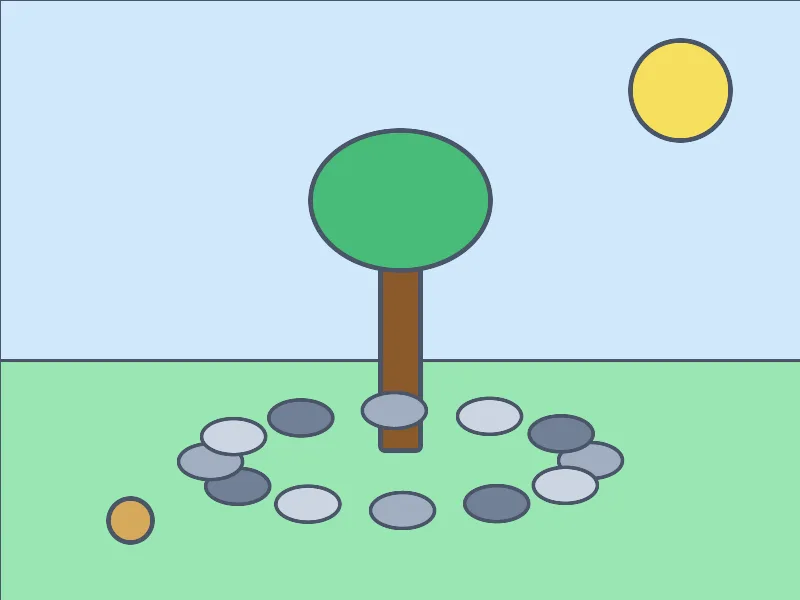
A stone ring around a tree is usually built to solve a mowing problem, and it can solve it well or kill the tree slowly. The difference is not the stone. It is how much soil gets moved, and how close the ring sits to the trunk. If you still want to know how to build a stone border around a tree, the answer is a ring set well clear of the trunk.
Start with the tree, not the stones
Look at the tree before you design anything. Check the trunk for damage or a graft union, note which way the canopy spreads, and look for roots showing at the surface. A tree that already has surface roots, or one that has been mounded with soil in the past, needs a ring that disturbs as little as possible. A young tree in open lawn can take more.
How far out to go
The roots that matter are not under the trunk; they spread well beyond the canopy, and the fine feeding roots are close to the surface. A ring that reaches the canopy line is a reasonable target for a mature tree, and wider is better where space allows. A ring only a foot wide does nothing for the tree and little for the mower, because the mower still has to turn on the root zone.
The real risk is raising the soil level
Roots need air. Covering the root zone with even a couple of inches of soil or stone compacts the surface and cuts the oxygen supply, and a tree can decline over several seasons without anyone connecting the two. This is why the ring should be cut into the ground rather than built up on top of it: the finished level inside the ring should be the same as the lawn outside, not higher.
Digging near roots
Use hand tools, cut only roots that are in the way of the edging line, and stop if you meet a root thicker than your wrist. That root is structural, and cutting it does more damage than a crooked ring. Where a root crosses the line, lift the stones over it rather than cutting through it.
Setting the stones
Flat stones set on a shallow bed of sand or grit, tapped down so the top sits flush with the lawn, let a mower pass without catching. Set them proud and the mower finds them; set them loose and they shift within a season. Curves need smaller stones, and the inner edge should follow the trunk evenly, with a clear gap of a few inches all round so the bark is never buried or rubbed.
Mulch, not a mound
Inside the ring, mulch a couple of inches deep, kept a hand's width clear of the trunk. Mulch piled against bark holds moisture against it and invites rot and pests, and the cone shape that appears around so many trees does the tree no favors. Water the ring slowly after planting anything in it, and top the mulch up each spring rather than every month.
When a ring is the wrong choice
If the tree is old, stressed, or growing in shallow soil over rock, a mulch ring with no excavation at all is kinder than a stone border. If the ground is wet and shaded, stone traps moisture against the trunk. And if the real problem is that the mower hits the trunk, a mulch ring wide enough to turn in solves it without any digging.
Related guides
- How to Mulch Around a Tree Correctly: Learn how to mulch around a tree correctly: keep the ring wide and shallow, clear the trunk flare and stop...
- How to Build a Stone Garden Step: Learn how to build a stone garden step: bed a flat slab on compacted gravel so a slope is safe to walk on all...
- How to Edge a Garden Bed With Stone: Learn how to edge a garden bed with stone: cut a clean line, bed the stones level and keep soil where it...
- How to Keep Gravel From Spreading Into the Lawn: Learn how to keep gravel from spreading into the lawn: edge the bed, set a firm border and stop the stone...
- How to Build a Dry Stacked Stone Wall: Learn how to build a dry stacked stone wall: set a gravel footing, stack stones with a batter and tie the...
 Garage and OutdoorsHow to Mulch Around a Tree CorrectlyLearn how to mulch around a tree correctly: keep the ring wide and shallow, clear the trunk flare and stop piling mulch against the bark.
 Garage and OutdoorsHow to Build a Stone Garden StepLearn how to build a stone garden step: bed a flat slab on compacted gravel so a slope is safe to walk on all year.
 Garage and OutdoorsHow to Edge a Garden Bed With StoneLearn how to edge a garden bed with stone: cut a clean line, bed the stones level and keep soil where it belongs.
 Garage and OutdoorsHow to Keep Gravel From Spreading Into the LawnLearn how to keep gravel from spreading into the lawn: edge the bed, set a firm border and stop the stone creeping with mowers.
 Garage and OutdoorsHow to Build a Dry Stacked Stone WallLearn how to build a dry stacked stone wall: set a gravel footing, stack stones with a batter and tie the courses without mortar.