
How to Build a Dry Creek Bed
Part of: Outdoors and garage

- Difficulty
- Moderate
- Time
- 1 to 2 weekends
- Tools
- Shovel, wheelbarrow, hose for marking, landscape fabric, river rock, edging stones, rake, gloves, boots
- Call a pro if
- The water path runs toward the house or a neighbor's property, or the volume is more than a shallow channel can carry.
In this guide
A dry creek bed is a drainage channel that looks like a stream bed. It moves runoff across a yard and turns an eroded gully into something worth looking at. Here is how to build a dry creek bed.
1. Watch where water runs
1. Check the yard during heavy rain.
2. Mark the path the water takes.
3. Note where it pools and where it exits.
2. Plan the route
1. Follow the natural low line.
2. Keep the outlet clear of the house and the property line.
3. Keep the channel shallow, a few inches deep.
3. Mark the shape
1. Lay a hose on the ground to draw the curves.
2. Make the bed wider at the inlet.
3. Curve rather than run straight, which slows the water.
4. Dig the swale
1. Cut the turf and set it aside.
2. Dig a shallow, rounded channel.
3. Slope the sides gently in.
4. Check the fall toward the outlet.
5. Line the bed
1. Tamp the soil bottom firm.
2. Lay landscape fabric over the whole channel.
3. Overlap the seams well.
4. Fabric stops rock sinking into mud.
6. Set the edging
1. Place larger stones along both edges.
2. Bed them so they sit below the lawn level.
3. Keep the edge line smooth and continuous.
7. Add the rock
1. Start with larger rock in the center.
2. Fill around it with smaller river rock.
3. Keep the rock below the lawn edge.
4. Rake the surface so it reads as a stream bed.
8. Test the flow
1. Run a hose at the top of the bed.
2. Watch how the water moves.
3. Check for spots where it spills over the edge.
4. Raise the edging where it does.
9. Plant the edges
1. Choose plants that tolerate wet feet and dry spells.
2. Group them along the banks, not in the channel.
3. Mulch around them, not over the rock.
10. Keep it working
1. Rake leaves out after autumn.
2. Check the outlet each season.
3. Reset any rock that shifts after heavy rain.
Rock size and how it behaves in a storm
Small uniform rock looks tidy on a dry day and moves in the first real storm. Water lifts light stone and pushes it downhill until the channel fills at the low end. Mix sizes instead. Put the biggest stones where the flow is fastest, usually the inlet and any bend, and let smaller rock settle between them. Angular stone locks together far better than smooth river rock, though round stone reads more like a real creek. If the flow is strong enough to move rock, the bed needs to be wider or the water needs slowing with a planted bank above it.
Common mistakes
- Digging too deep, so it becomes a trip hazard.
- Using round rock only, which rolls away in a flood.
- No fabric, so mud works up through the stone.
- Running the bed straight at the house.
- Letting leaves block the outlet.
Related guides
- How to Build a Dirt Berm to Direct Water
- How to Build a Stone Drainage Ditch
- How to Build a Gravel Boardwalk
- How to Build a Raised Garden Bed
- How to Edge a Garden Bed With Stone
- How to Set Up a Drip Irrigation Line for a Garden Bed
FAQ
Does a dry creek bed actually drain a yard?
It moves surface water along a planned path. For underground seepage you need a french drain.
What rock is best for a dry creek bed?
A mix of larger angular stone and smaller river rock, so it locks together and looks natural.
How wide should it be?
Wide enough to carry the flow, usually two to four feet for a garden yard.
Can I walk on it?
Yes, if the rock is set firm and the channel is shallow. Keep the stones below lawn level.
More from this topic
- How to Build a Stone Drainage Ditch: Learn how to build a stone drainage ditch: cut a shallow channel on the water line, line it and fill with...
- How to Build a Dirt Berm to Direct Water: Learn how to build a dirt berm to direct water: shape a low mound on the high side, compact it and plant it...
- How to Build a Dry Stacked Stone Wall: Learn how to build a dry stacked stone wall: set a gravel footing, stack stones with a batter and tie the...
- How to Build a Low Retaining Wall for a Planting Bed: Learn how to build a low retaining wall for a planting bed: dig a level trench, compact the base, stack the...
- How to Build a Rain Garden: Learn how to build a rain garden: pick a spot that drains, dig a shallow basin and plant it to soak up roof...
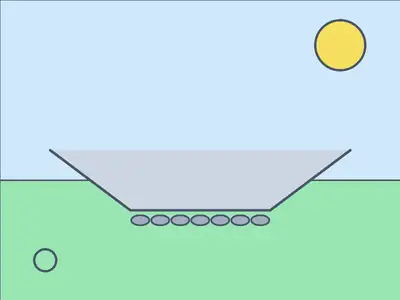 Garage and OutdoorsHow to Build a Stone Drainage DitchLearn how to build a stone drainage ditch: cut a shallow channel on the water line, line it and fill with stone.
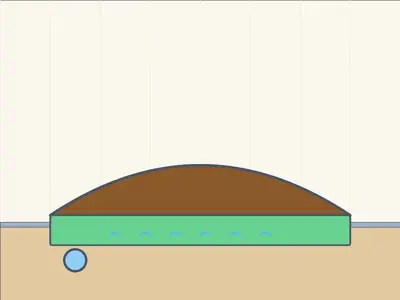 Garage and OutdoorsHow to Build a Dirt Berm to Direct WaterLearn how to build a dirt berm to direct water: shape a low mound on the high side, compact it and plant it so runoff goes where you want.
 Garage and OutdoorsHow to Build a Dry Stacked Stone WallLearn how to build a dry stacked stone wall: set a gravel footing, stack stones with a batter and tie the courses without mortar.
 Garage and OutdoorsHow to Build a Low Retaining Wall for a Planting BedLearn how to build a low retaining wall for a planting bed: dig a level trench, compact the base, stack the blocks and drain the soil behind it.
 Garage and OutdoorsHow to Build a Rain GardenLearn how to build a rain garden: pick a spot that drains, dig a shallow basin and plant it to soak up roof and driveway runoff.