
How to Build a Raised Garden Bed
Part of: Outdoors and garage
- Difficulty
- Moderate
- Time
- Half a day to a weekend
- Tools
- Saw, drill and screws, tape measure, level, shovel, wheelbarrow, landscape fabric, work gloves, safety glasses, pencil
- Call a pro if
- You plan to build on a slope, over a buried utility line or against the house where drainage is poor, since those need a proper plan before anything is filled.
In this guide
- Wear protection
- Call 811 before digging
A raised bed solves three problems at once: bad soil, bad drainage and a back that does not want to bend to the ground. It is a straightforward woodworking job with one important rule, which is to get the site and the soil right before the frame is full. Here is how to build a raised garden bed.
1. Choose the site
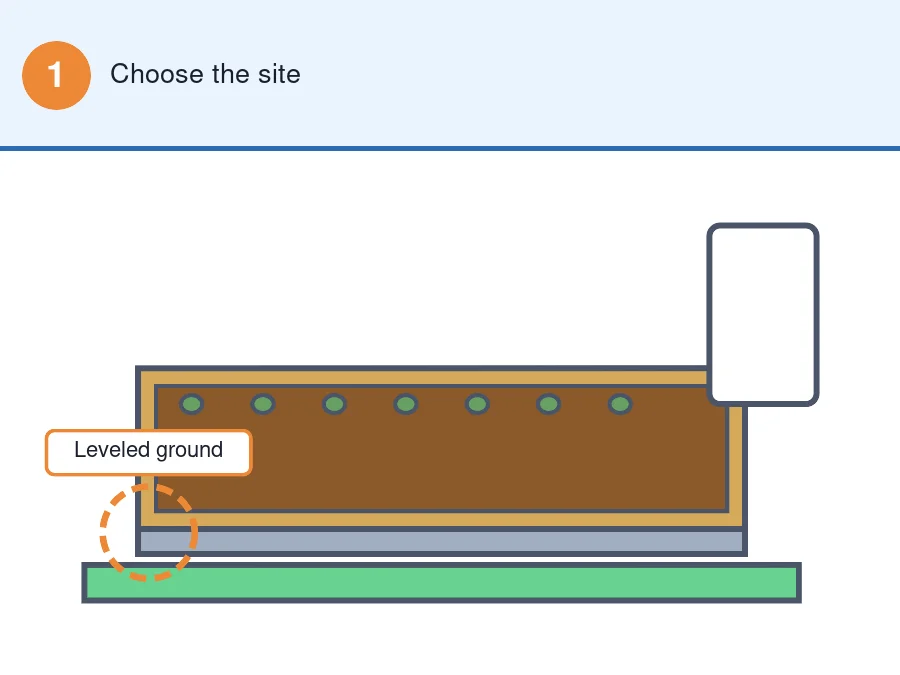
1. Watch the spot through a day and confirm it gets six to eight hours of sun for vegetables.
2. Pick a level area, or one you are willing to level.
3. Keep it close to a water source, since hauling a hose is what makes people skip watering.
4. Leave room to walk and to mow around it.
5. Keep it away from the foundation, a septic field and buried lines.
2. Decide the size and the height
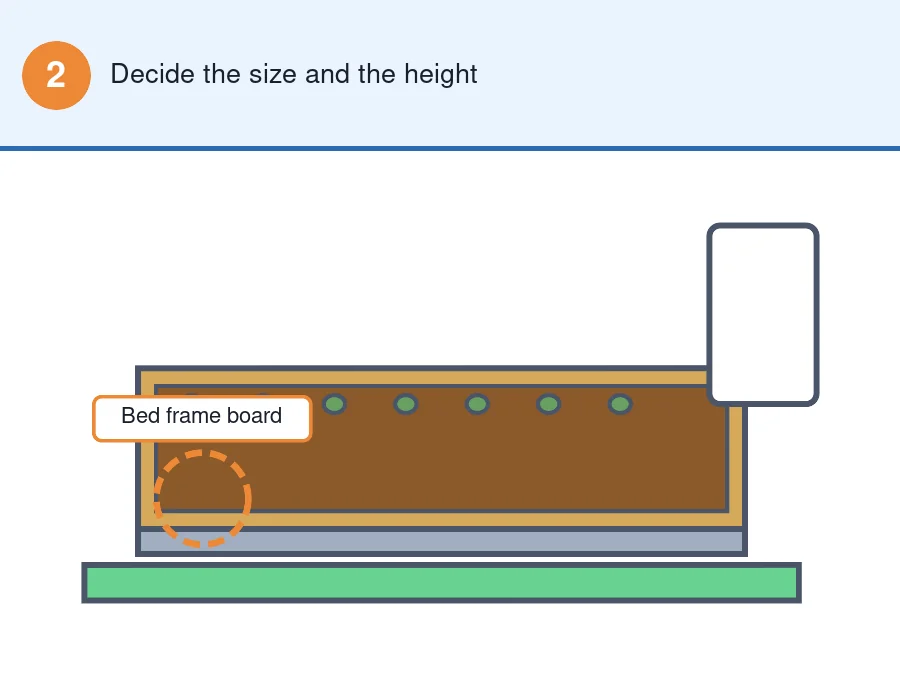
1. Keep the width to four feet so you can reach the middle from either side.
2. Make it as long as the space allows, in multiples of your board length.
3. Choose a height of 6 to 12 inches for most vegetables, higher if you want to sit or if the soil below is poor.
4. Remember that a taller bed needs more soil, which is the biggest cost in the project.
5. Draw the plan and write the cut list before you buy anything.
3. Pick the wood
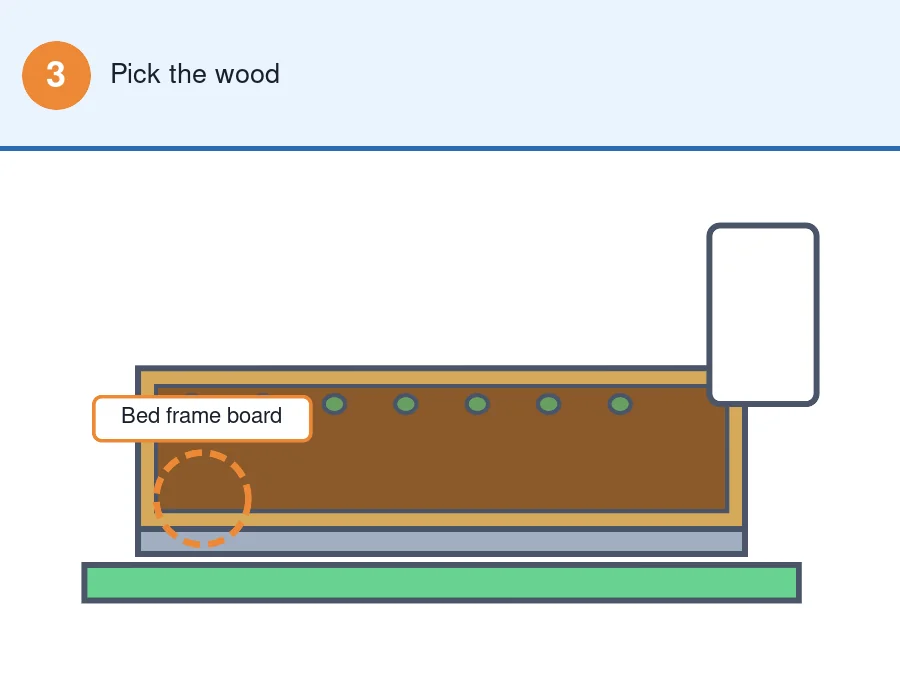
1. Untreated rot resistant wood such as cedar or cypress lasts well and avoids any treatment questions.
2. Standard dimensional lumber works and is cheaper, but it lasts fewer seasons.
3. If you use pressure treated lumber, line the inside with heavy plastic sheeting, since some gardeners prefer to keep the treatment away from the soil.
4. Avoid unknown reclaimed wood, which may have been painted or treated with something you cannot identify.
5. Use 2 inch thick boards for a bed that will hold soil for years.
4. Mark and level the ground
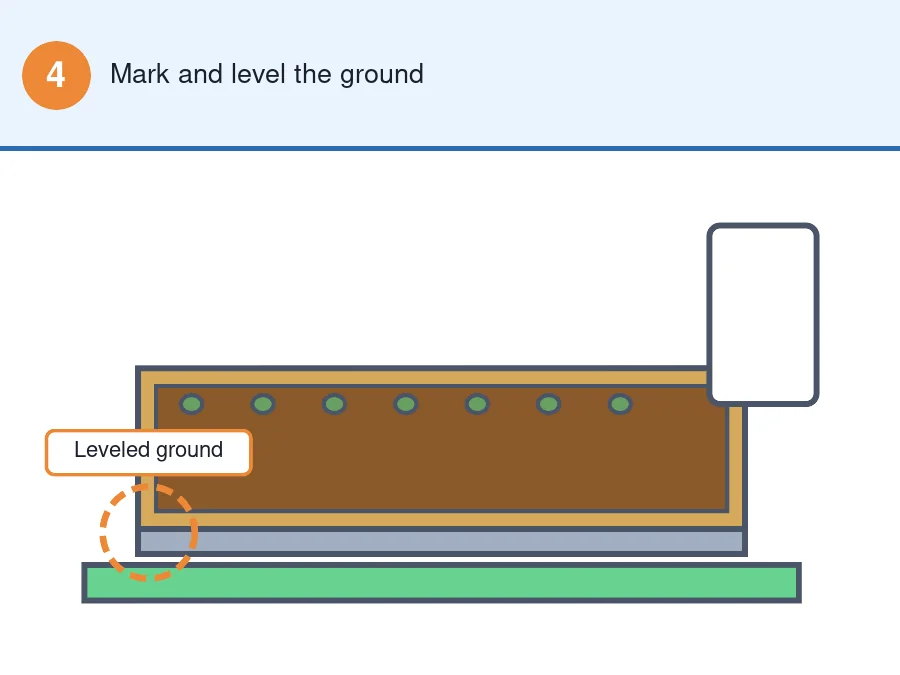
1. Mark the outline with stakes and string.
2. Strip the grass inside the outline with a shovel, and keep the turf for the compost.
3. Check the level across the corners and correct the high side by digging, not by shimming.
4. Rake the base flat.
5. Lay landscape fabric over the base if you want to stop weeds and keep moles out, but leave the soil below undisturbed so water drains.
5. Cut the boards
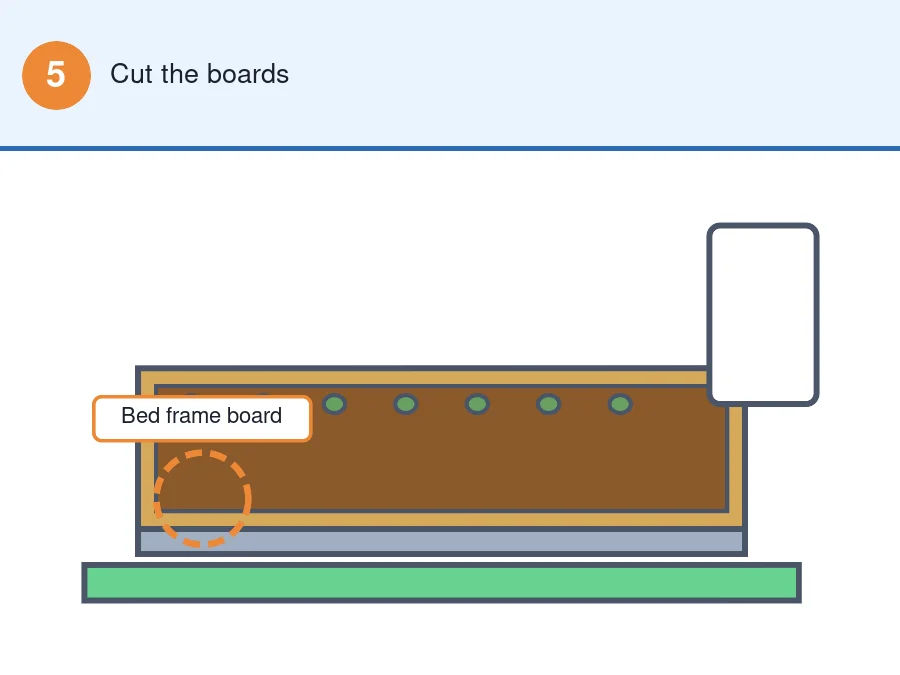
1. Measure twice and mark with a square.
2. Cut the long sides first and lay them out to check the fit.
3. Cut the short ends to match.
4. Sand the cut ends lightly so nobody gets a splinter.
5. Keep the offcuts for corner blocks.
6. Assemble the frame
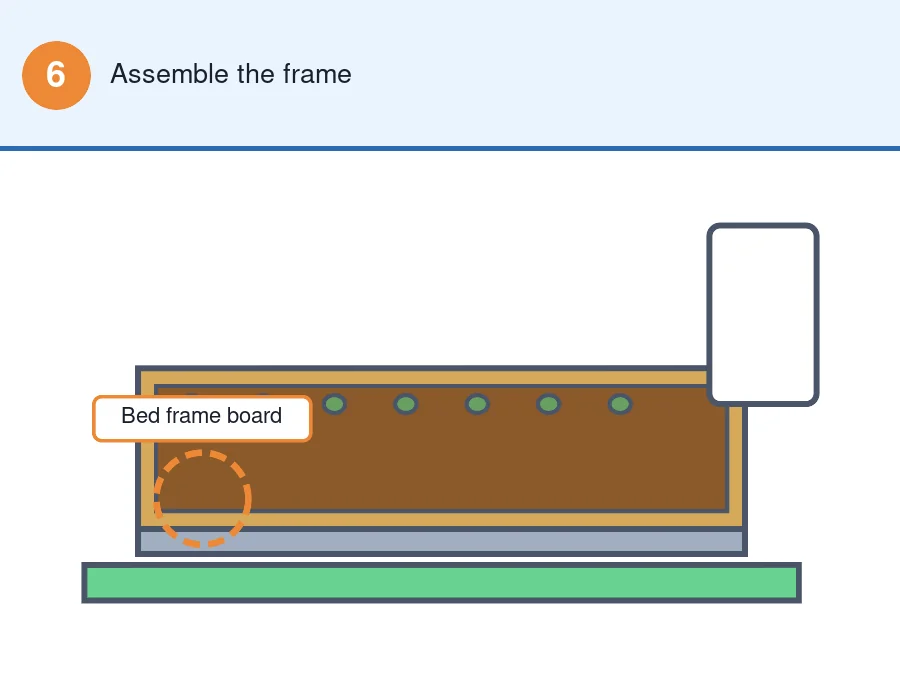
1. Build each layer as a rectangle on flat ground.
2. Screw through the outside face into the end board with two screws per joint.
3. Add a corner block inside each corner for strength.
4. Stack the second layer and offset the joints from the first.
5. Check the diagonals, which should be equal, and check the frame is square before the final screws.
7. Set it in place
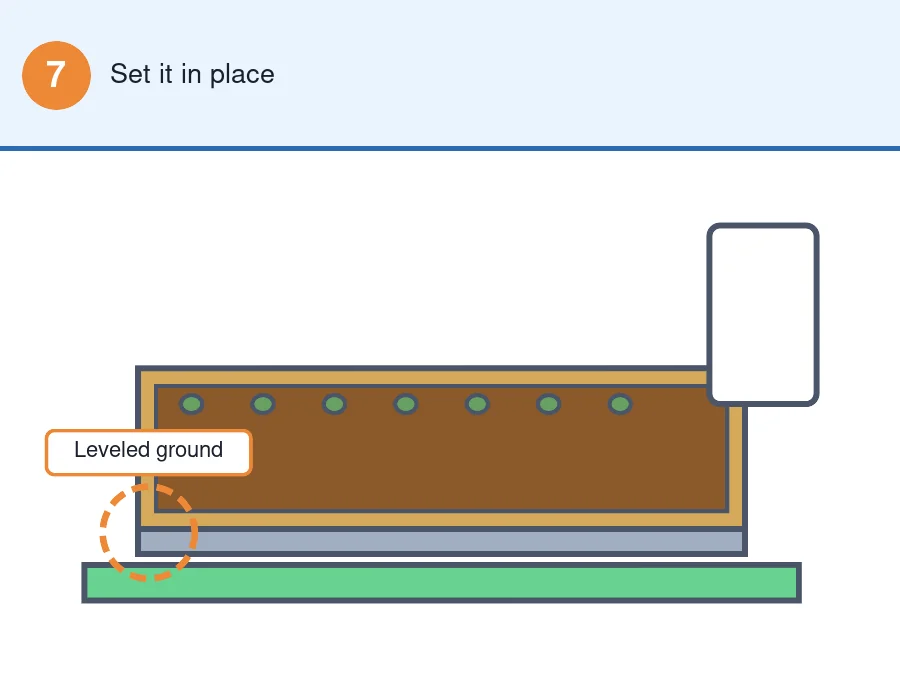
1. Move the assembled frame onto the prepared base with a helper.
2. Check the level again and adjust the soil underneath.
3. Fill any gap under the boards with soil so the frame is supported.
4. Add a cap rail if you want a comfortable edge to sit on or to set tools down.
5. Firm the frame so it does not shift when the soil goes in.
8. Fill it with the right mix
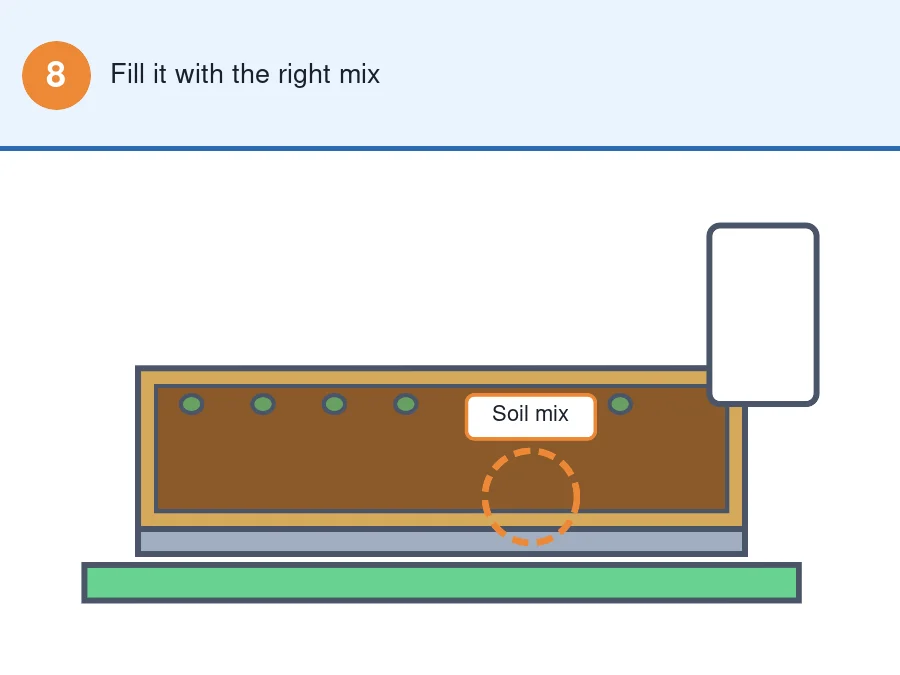
1. Use a mix of topsoil and compost, roughly two parts soil to one part compost.
2. Do not fill a tall bed with only potting mix, which dries out fast and costs more.
3. Add a layer of coarse material at the bottom of a deep bed if drainage is poor.
4. Fill to about an inch below the top so water does not run off.
5. Water the bed deeply and let it settle before planting, then top it up.
9. Plant and set up watering
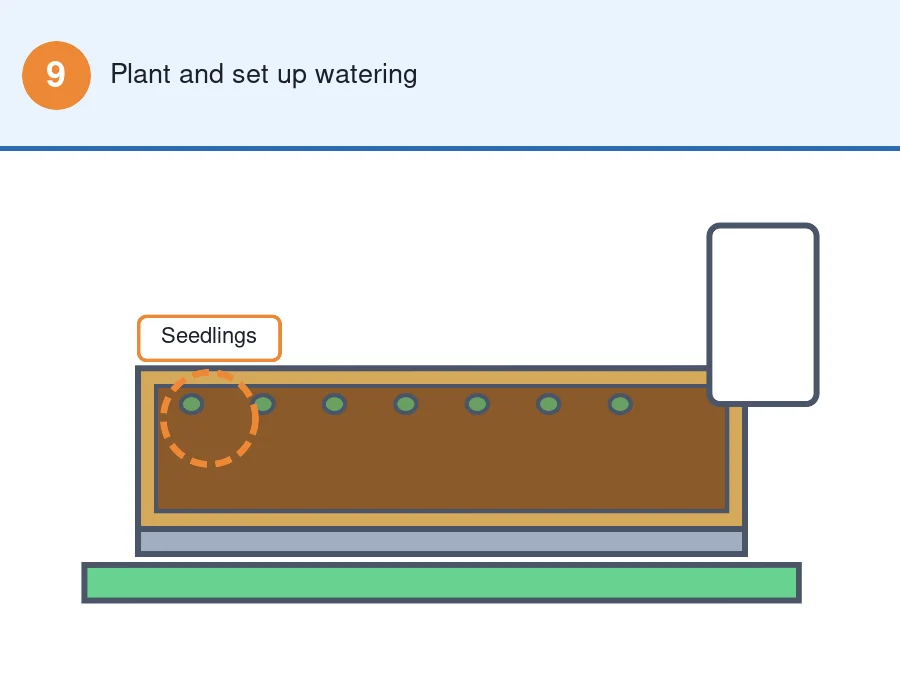
1. Plant according to the spacing on the seed packet, since a crowded bed yields less.
2. Add a drip line or soaker hose while the bed is empty and easy to reach.
3. Mulch the surface to hold moisture and keep weeds down.
4. Put a path of gravel or mulch around the bed so mud does not follow you in.
5. Plan crop rotation for next year before you forget what went where.
Our guide on mulching garden beds covers the depth and the materials.
Common mistakes
- Building too wide to reach the middle.
- Filling a tall bed with expensive potting soil.
- Skipping the level check, which shows up as a leaning frame.
- No path around the bed, so the grass gets trampled.
- Forgetting to call 811 before digging.
Related guides
- How to Build a Simple Cold Frame for Winter Greens
- How to Edge a Garden Bed With Stone
- How to Build a Stone Garden Step
- How to Set Up a Drip Irrigation Line for a Garden Bed
- How to Build a Rain Garden
- How to Build a Low Retaining Wall for a Planting Bed
FAQ
What is the best wood for a raised bed?
Cedar or cypress last longest without treatment. Standard lumber is fine for a few seasons, and pressure treated lumber is usually lined to keep it away from the soil.
How deep should a raised bed be?
Six to twelve inches suits most vegetables and herbs. Root crops and sitting height beds need more.
Do I need to remove the grass first?
It is better to. Cardboard and mulch can smother it, but removing the turf gives you a cleaner base and less weed pressure.
How much soil does a 4 by 8 foot bed need?
A 4 by 8 bed at 10 inches deep takes roughly one cubic yard of soil mix. Measure your bed and use a soil calculator for the exact figure.
More from this topic
- How to Build a Fire Pit Area in the Yard: Learn how to build a fire pit area in the yard: check the rules, pick a clear spot, dig and level the base,...
- How to Build a Sandbox With a Cover: Learn how to build a sandbox with a cover: frame it square, line the base, add drainage and sand, and fit a...
- How to Build a Simple Cold Frame for Winter Greens: Learn how to build a simple cold frame for winter greens: site it facing south, frame it from scrap wood, fit...
- How to Build a Simple Outdoor Trash Can Enclosure: Learn how to build a simple outdoor trash can enclosure: size it to your trash cans, frame it with an open...
- How to Build a Simple Potting Bench: Learn how to build a simple potting bench: size the top to your reach, frame it square, add a soil bin and a...
 Garage and OutdoorsHow to Build a Fire Pit Area in the YardLearn how to build a fire pit area in the yard: check the rules, pick a clear spot, dig and level the base, ring it with stone and keep a safe clearance.
 Garage and OutdoorsHow to Build a Sandbox With a CoverLearn how to build a sandbox with a cover: frame it square, line the base, add drainage and sand, and fit a hinged lid that keeps cats out.
 Garage and OutdoorsHow to Build a Simple Cold Frame for Winter GreensLearn how to build a simple cold frame for winter greens: site it facing south, frame it from scrap wood, fit an old window and vent it on warm days.
 Garage and OutdoorsHow to Build a Simple Outdoor Trash Can EnclosureLearn how to build a simple outdoor trash can enclosure: size it to your trash cans, frame it with an open back and fit a lid that lifts clear.
 Garage and OutdoorsHow to Build a Simple Potting BenchLearn how to build a simple potting bench: size the top to your reach, frame it square, add a soil bin and a lower shelf, and seal the wood.