
How to Mulch Garden Beds the Right Way for Healthier Plants
Part of: Outdoors and garage
- Difficulty
- Easy
- Time
- 1 to 3 hours
- Tools
- Wheelbarrow, rake, flat shovel or edger, gloves, mulch, hand trowel, hose
- Call a pro if
- Standing water collects in the bed, trees show signs of disease, or the bed sits against a foundation with signs of moisture or termites.
In this guide
- Wear protection
A good layer of mulch keeps soil damp, blocks many weeds, and makes a bed look finished. A bad one can rot stems and invite pests. If you want to mulch garden beds well, a few simple rules make all the difference.
What mulch does
Mulch is a cover for the soil. It slows evaporation so you water less, keeps roots cooler in summer and steadier in winter, and holds weed seeds down. As organic mulch breaks down, it adds material to the soil.
Pick a material
- Shredded bark or wood chips. Long lasting and good for trees and shrubs.
- Compost. Feeds the soil and works well in vegetable beds.
- Straw or shredded leaves. Good in vegetable gardens.
- Gravel or stone. Does not break down. Better for dry beds and paths than for vegetables.
Choose clean, untreated material. Avoid fresh piles that smell sour, since they can harm plants.
When to mulch
Spring, after the soil has warmed, is a common time. A fall layer protects roots in cold regions. Mulch placed on very cold, wet soil in early spring can slow warming, so wait a bit.
Step by step
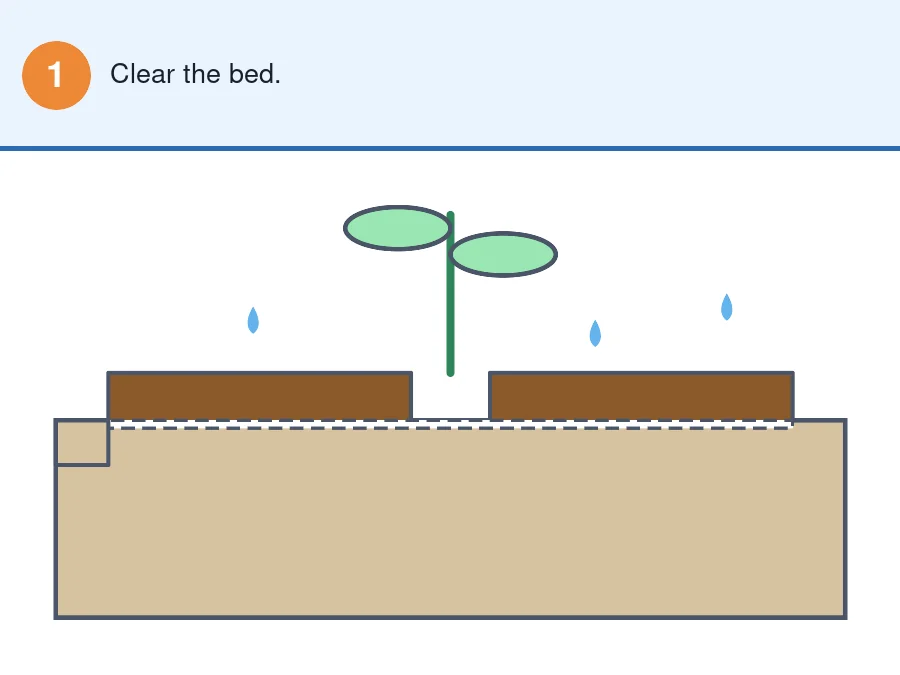
1. Clear the bed. Pull weeds, roots and all. Remove old, matted mulch if it is thick.
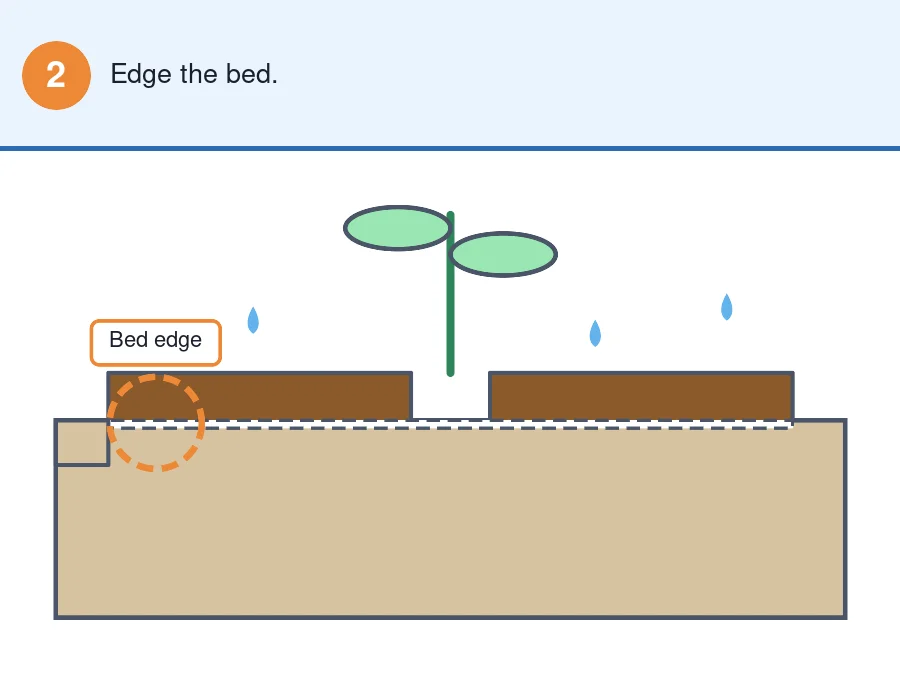
2. Edge the bed. Cut a clean edge with a flat shovel or edger so mulch stays in place.
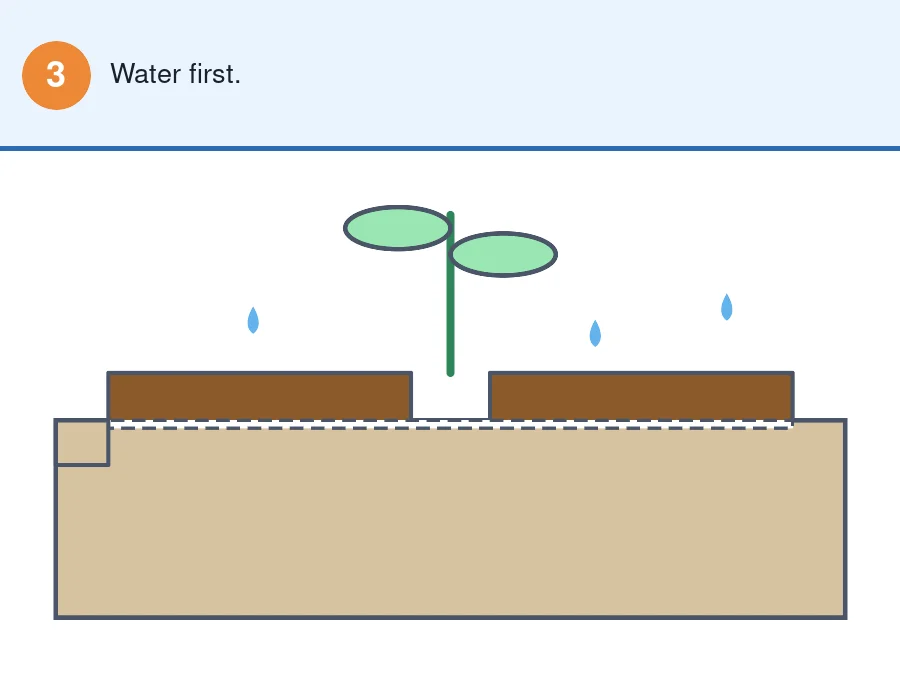
3. Water first. If the soil is dry, water it well before covering.
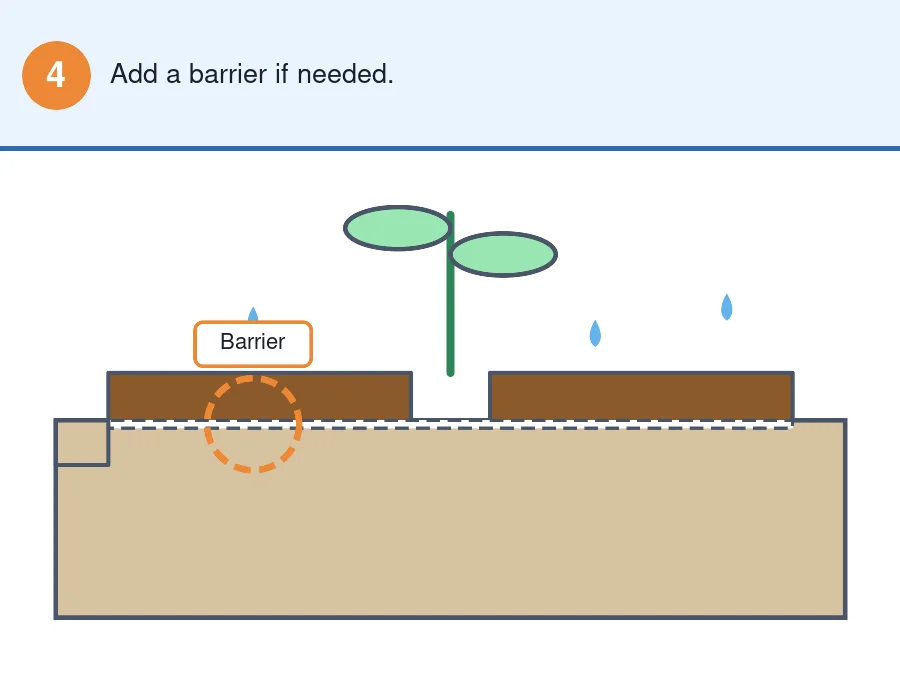
4. Add a barrier if needed. On weedy spots, lay a few sheets of plain cardboard under the mulch. Wet it down so it stays put.
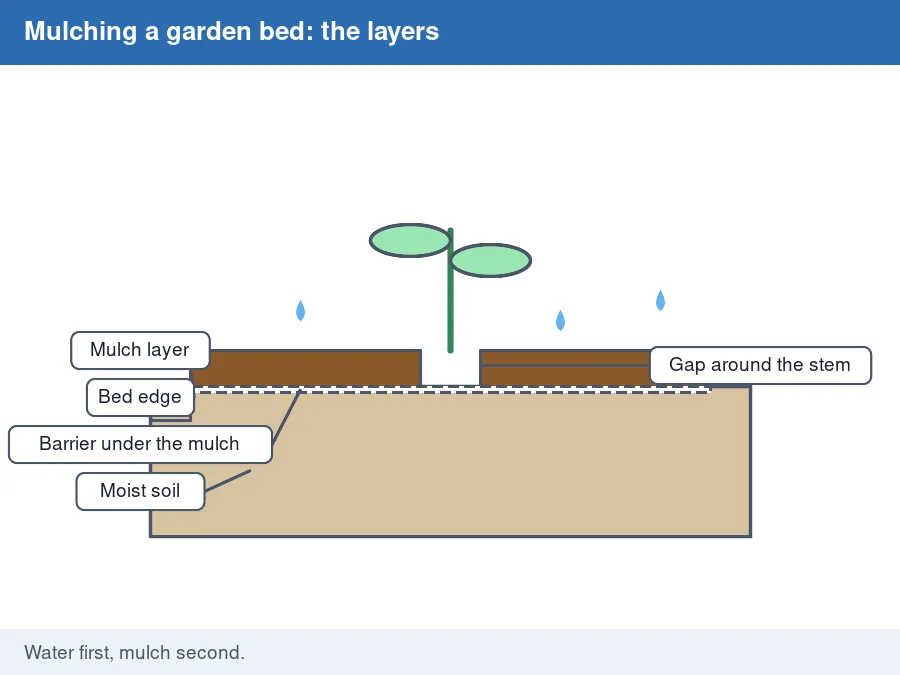
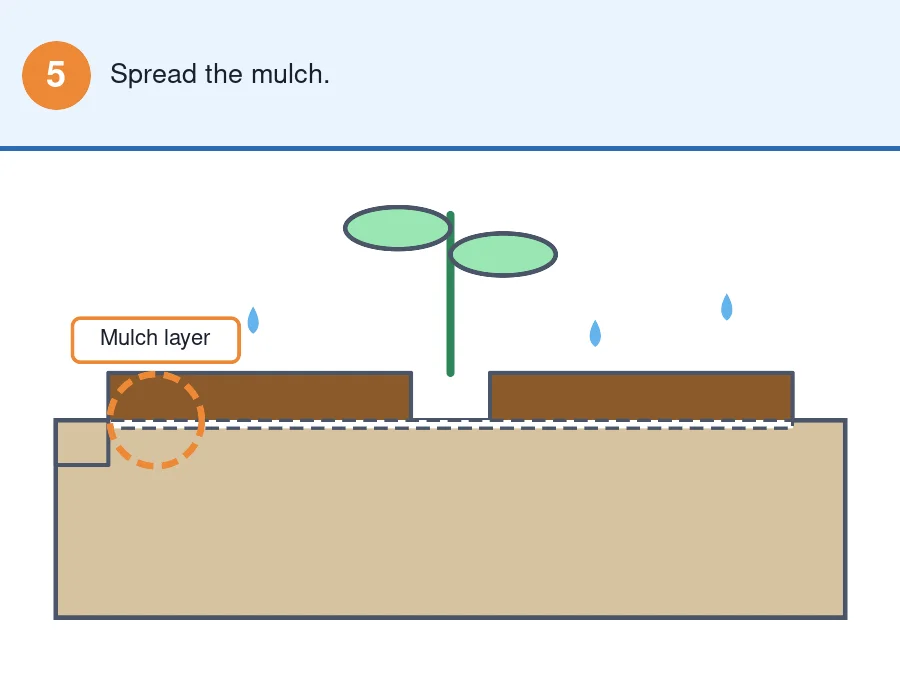
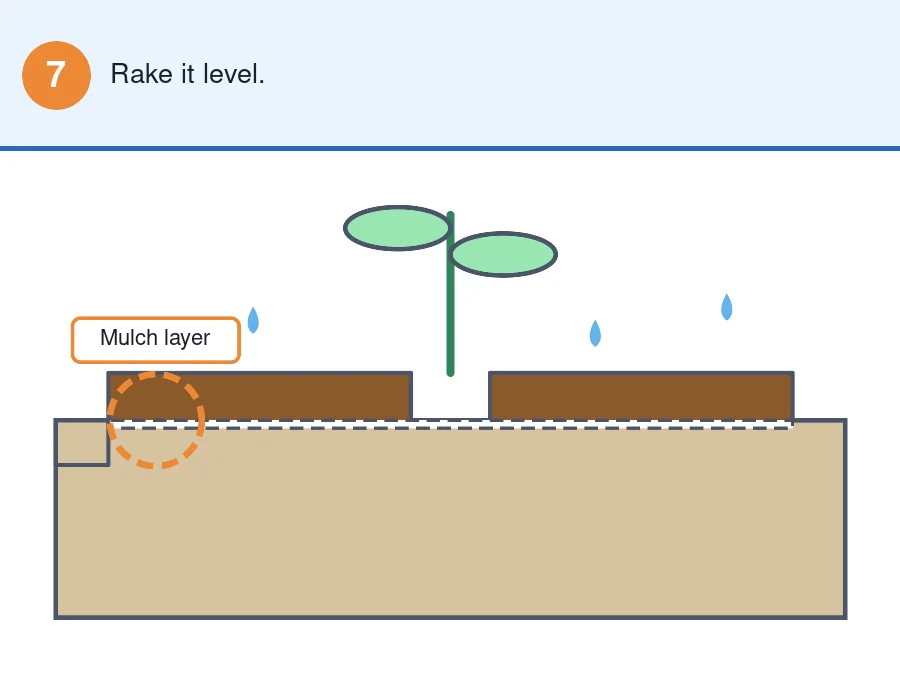
5. Spread the mulch. Aim for about two to three inches of coarse material. Less on fine material like compost.
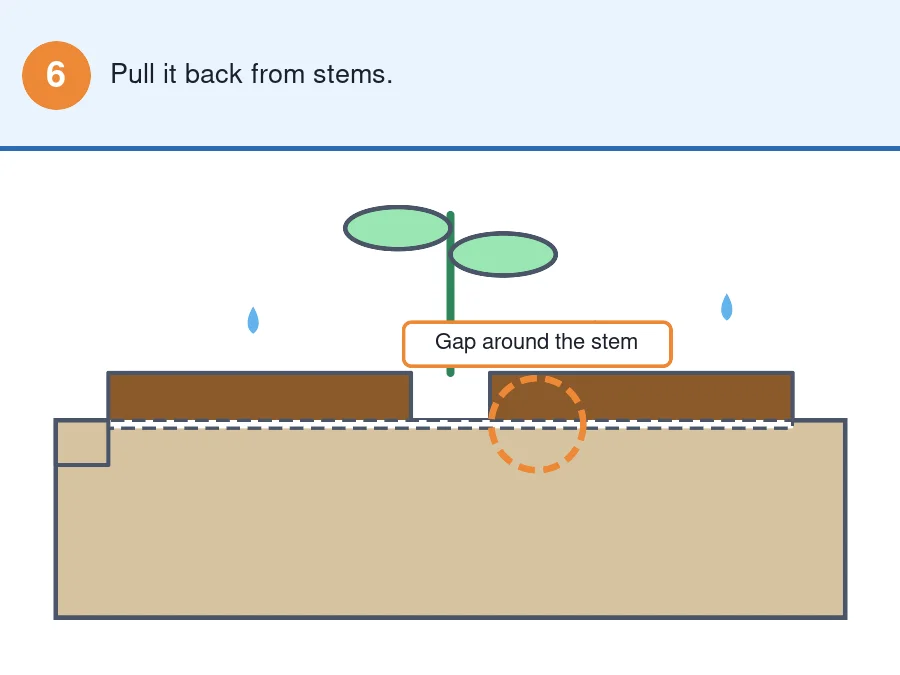
6. Pull it back from stems. Leave a small gap around the base of each plant and about a hand's width around tree trunks.
7. Rake it level. Fluff any compacted areas so water and air reach the soil.
Avoid the volcano
Piling mulch up against a tree trunk looks tidy but keeps the bark wet. That can lead to rot and pests. Spread it flat, like a donut, not a cone.
Keep mulch off the house
Mulch against siding or foundation wood can hide termites and keep walls damp. Leave a clear strip of several inches at the foundation. See how to spot termite damage for warning signs. Also keep beds sloped away from the house so water does not run toward the wall.
Refresh each year
Mulch breaks down. Check each spring. If a layer is still thick, rake it to loosen and add a thin top layer. Do not stack many inches over old mulch.
Fix problems
- White fuzz or mold: usually harmless. Rake to break it up.
- Weeds coming through: pull them and add a bit more mulch.
- Matted layer: fluff with a rake so water can get in.
- Mulch washing away: add edging or use heavier material in swales.
FAQ
How deep should mulch be?
About two to three inches for most coarse mulch. Too much can smother roots.
Is colored mulch safe?
Many are, but choose products labeled for garden use and follow the label.
Do I need to remove old mulch?
Not every year. Remove it only if it is thick, matted, or diseased.
Can I put mulch on top of weeds?
Thin weeds may push through. Pull them first or use a cardboard layer.
Related guides
- How to Test Garden Soil at Home: pH, Drainage, Nutrients: Learn how to test garden soil at home: take good samples, check texture and drainage with simple tests,...
- How to Lubricate a Garage Door the Right Way: Learn how to lubricate a garage door: which parts need grease, which to skip, and how a 15-minute lube job...
- How to Plant Shrubs Along a Fence Line: Learn how to plant shrubs along a fence line: space them for their mature width, dig wide holes, amend the...
- How to Restring a Weed Trimmer the Easy Way: Learn how to restring a weed trimmer: pick the right line, wind it the right direction, and load the spool so...
- How to Set Up a Drip Irrigation Line for a Garden Bed: Learn how to set up a drip irrigation line for a garden bed. Choose parts, connect to the spigot, lay tubing,...
 Garage and OutdoorsHow to Test Garden Soil at Home: pH, Drainage, NutrientsLearn how to test garden soil at home: take good samples, check texture and drainage with simple tests, measure pH, and decide what to add before planting.
 Garage and OutdoorsHow to Lubricate a Garage Door the Right WayLearn how to lubricate a garage door: which parts need grease, which to skip, and how a 15-minute lube job quiets a noisy door.
 Garage and OutdoorsHow to Plant Shrubs Along a Fence LineLearn how to plant shrubs along a fence line: space them for their mature width, dig wide holes, amend the soil and keep them clear of the fence.
 Garage and OutdoorsHow to Restring a Weed Trimmer the Easy WayLearn how to restring a weed trimmer: pick the right line, wind it the right direction, and load the spool so it feeds smoothly.
 Garage and OutdoorsHow to Set Up a Drip Irrigation Line for a Garden BedLearn how to set up a drip irrigation line for a garden bed. Choose parts, connect to the spigot, lay tubing, add emitters and test for even watering.