
How to Spot Termite Damage
Part of: Outdoors and garage
- Difficulty
- Easy to check, pro needed to treat
- Time
- 30 to 60 minutes to inspect
- Tools
- Flashlight, flat screwdriver or awl, notebook, camera or phone, gloves
- Call a pro if
- You find mud tubes, wings by windows, soft or hollow wood, or tiny wood pellets. Call a licensed pest professional for any confirmed termites.
In this guide
- Wear protection
- Chemical safety
Termites eat wood from the inside, so damage can be well along before you see it. A yearly check takes less than an hour, and spotting the first signs early saves repair costs. How to spot termite damage starts with the mud tubes, thin tunnels of soil about the width of a pencil on foundation walls and piers.
This guide is part of our wider guide to garage, decks, fences and yard care.
Know the main signs
- Mud tubes. Subterranean termites build thin tunnels of soil about the width of a pencil on foundation walls, piers and beams. They protect the insects from dry air.
- Discarded wings. After a swarm, termites shed their wings. Small piles of equal-sized wings near windows, doors or light fixtures are a sign.
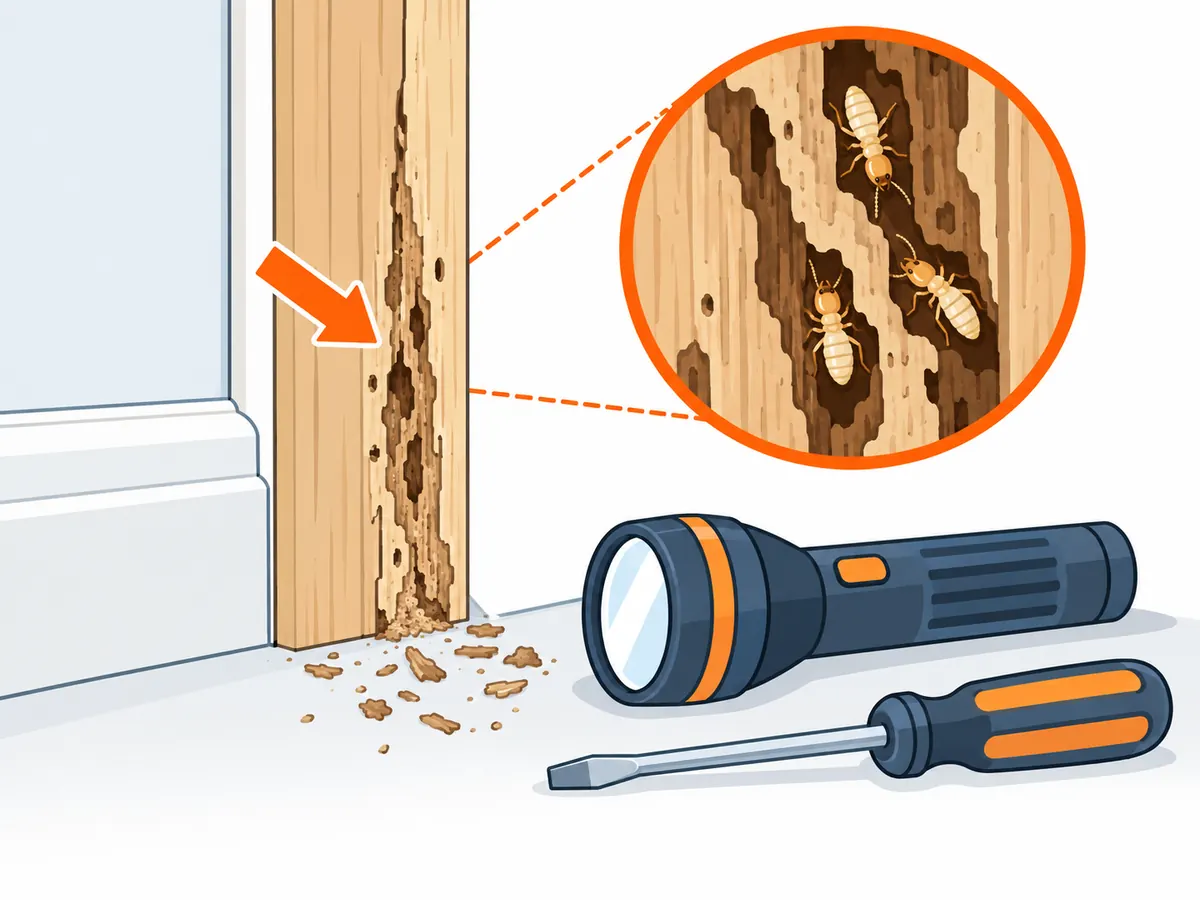
- Hollow or papery wood. Tap along baseboards, door frames and beams with a screwdriver handle. A hollow sound suggests the inside has been eaten. Wood may be layered like paper.
- Frass. Drywood termites push out tiny pellets that look like sawdust or coffee grounds from small kick-out holes.
- Buckling paint or bubbling walls. Moisture and tunneling can make paint blister or the surface look wavy.
- Stuck doors and windows. Warping can be from termite damage, but also from humidity. See our guide to a door that rubs the frame.
- Clicking sounds. In quiet rooms, you may hear faint tapping inside walls.
Termites or flying ants?
During spring, winged insects may appear around a home. Compare them. A termite swarmer has a broad waist with no pinch, straight bead-like antennae and four wings of equal length. Flying ants have a narrow, pinched waist, bent (elbowed) antennae and wings of unequal length. Take a photo or catch one in a jar. A pest professional or your local extension office can identify it.
Where to look
Check the foundation, the crawl space, the basement, the garage and the attic. Look at wood that touches soil, such as deck posts, fence posts and wooden steps. Check around leaks and plumbing, since damp wood attracts termites. Look at window frames and door frames. Outside, check mulch, firewood and stumps close to the house.
Probe suspect wood
Tap with the handle of a screwdriver. Push the tip of a flat screwdriver into the wood. If it sinks in easily, the wood may be soft from rot or termites. Rot and termites can both cause damage. A pro can tell them apart.
What to do if you find signs
1. Do not disturb the area more than needed, since it can scatter insects.
2. Take photos of what you see, and note where.
3. Call at least two licensed pest control companies for inspections. Ask for a written report and a treatment plan.
4. Ask about the type of termite, the treatment method, the warranty and the cost in writing before you agree.
5. Have a contractor check for structural damage.
Reduce the risk
Keep soil and mulch a few inches below siding and away from wood. Fix leaks and keep gutters clear. Store firewood and lumber away from the house. Keep crawl spaces ventilated and dry. Remove old stumps and wood debris. Use a dehumidifier in damp spaces. Do an inspection each year and after heavy rain.
What about DIY products?
Store-bought sprays and baits exist, but for an active infestation near a structure, professional treatment is the usual advice. The size of the colony and the hidden nature of the damage make DIY risky.
Related guides
- How to Clean a Concrete Patio or Driveway and Remove Stains
- How to Deal With a Wasp Nest Safely: When to DIY and When to Call a Pro
- How to Repair a Concrete Driveway Crack
FAQ
Can termites damage a house quickly?
It depends on the colony and the species. Damage can build over months and years.
Is termite damage covered by insurance?
Usually not. Check your policy.
Do I need a yearly inspection?
Many experts suggest one, especially in warm regions.
More from this topic
- How to Get Rid of Carpenter Ants Before They Damage Wood: Learn how to get rid of carpenter ants: find the nest by following the trail, fix the damp wood that attracts...
- How to Split Firewood: Learn how to split firewood: choose the right tools, read the grain, swing safely, and season your wood for...
- How to Spot a Roof Leak Before It Ruins a Ceiling: Learn how to spot a roof leak: read the attic and ceiling signs, trace water back to its entry point, check...
- How to Start Seeds Indoors for a Stronger Garden: Learn how to start seeds indoors: pick containers and mix, time sowing, give light and warmth, thin and...
- How to Stop a Wood Fence From Rotting: Learn how to stop a wood fence from rotting: fix ground contact, improve airflow, seal the end grain, keep...
 Garage and OutdoorsHow to Get Rid of Carpenter Ants Before They Damage WoodLearn how to get rid of carpenter ants: find the nest by following the trail, fix the damp wood that attracts them, and bait or treat the colony.
 Garage and OutdoorsHow to Split FirewoodLearn how to split firewood: choose the right tools, read the grain, swing safely, and season your wood for winter.
 Garage and OutdoorsHow to Spot a Roof Leak Before It Ruins a CeilingLearn how to spot a roof leak: read the attic and ceiling signs, trace water back to its entry point, check flashing and vents and know who to call.
 Garage and OutdoorsHow to Start Seeds Indoors for a Stronger GardenLearn how to start seeds indoors: pick containers and mix, time sowing, give light and warmth, thin and harden off seedlings, and move them out safely.
 Garage and OutdoorsHow to Stop a Wood Fence From RottingLearn how to stop a wood fence from rotting: fix ground contact, improve airflow, seal the end grain, keep water away and treat the wood before decay starts.