
How to Clean a Concrete Patio or Driveway and Remove Stains
Part of: Outdoors and garage · Also in: The Complete Guide to Outdoor and Yard Repair for Homeowners
- Difficulty
- Easy to medium
- Time
- 2 to 5 hours, depending on the size
- Tools
- Stiff bristle push broom, garden hose, bucket, degreaser or concrete cleaner, dish soap, cat litter or baking soda, safety glasses, gloves, rubber boots
- Call a pro if
- the concrete is flaking, deeply cracked or sinking
In this guide
- Wear protection
- Chemical safety
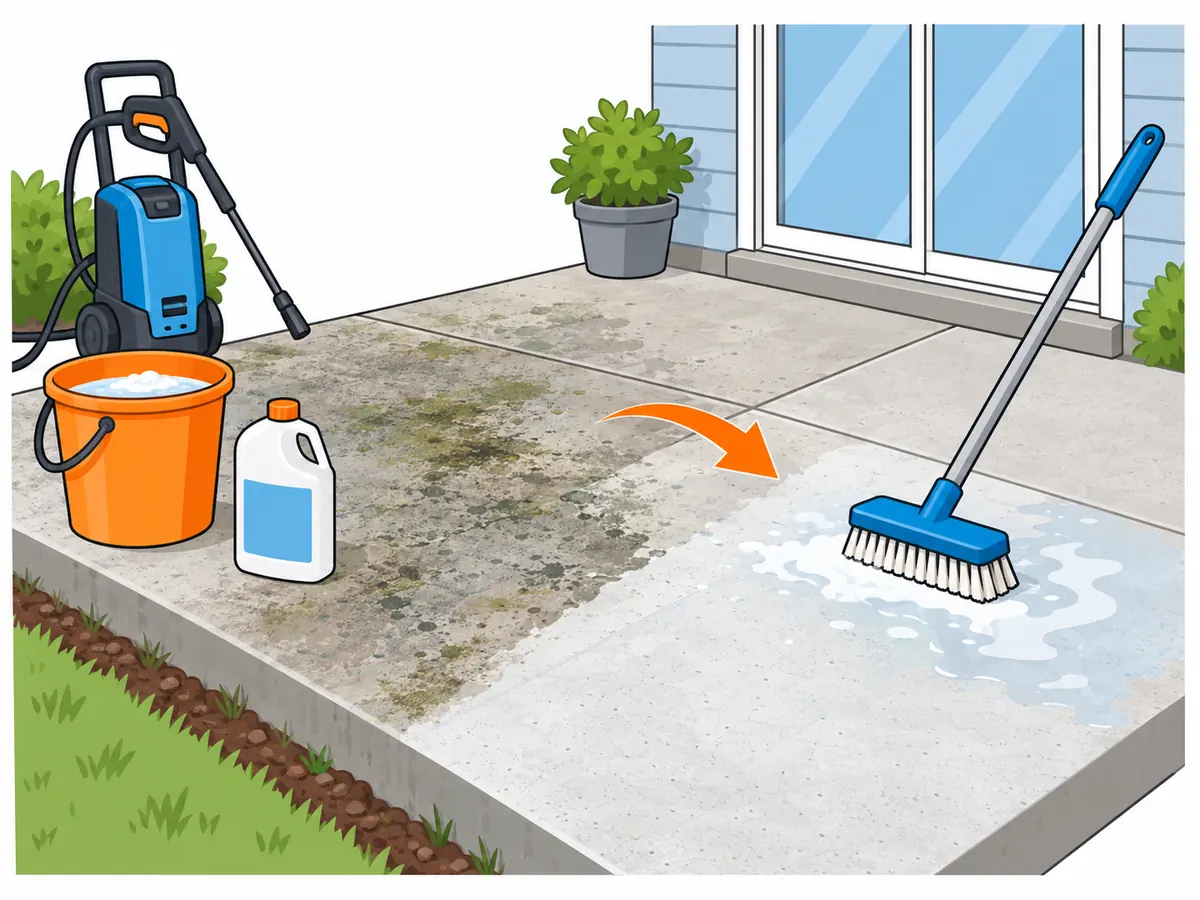
Over time, concrete collects dirt, algae, oil and rust. The good news is that most of it comes off with a stiff brush, water and the right cleaner. This guide shows how to clean a concrete patio or driveway step by step, and how to deal with common stains.
This guide is part of our wider guide to garage, decks, fences and yard care.
Prepare the area
1. Move furniture, planters and cars off the concrete.
2. Sweep it clean with a broom to remove leaves and loose dirt.
3. Cover nearby plants with plastic if you plan to use a cleaner. Wet the plants first with water.
4. Check the weather. Work on a dry day with no rain for 24 hours, and avoid hot direct sun, which dries cleaner too fast.
Step by step: general cleaning
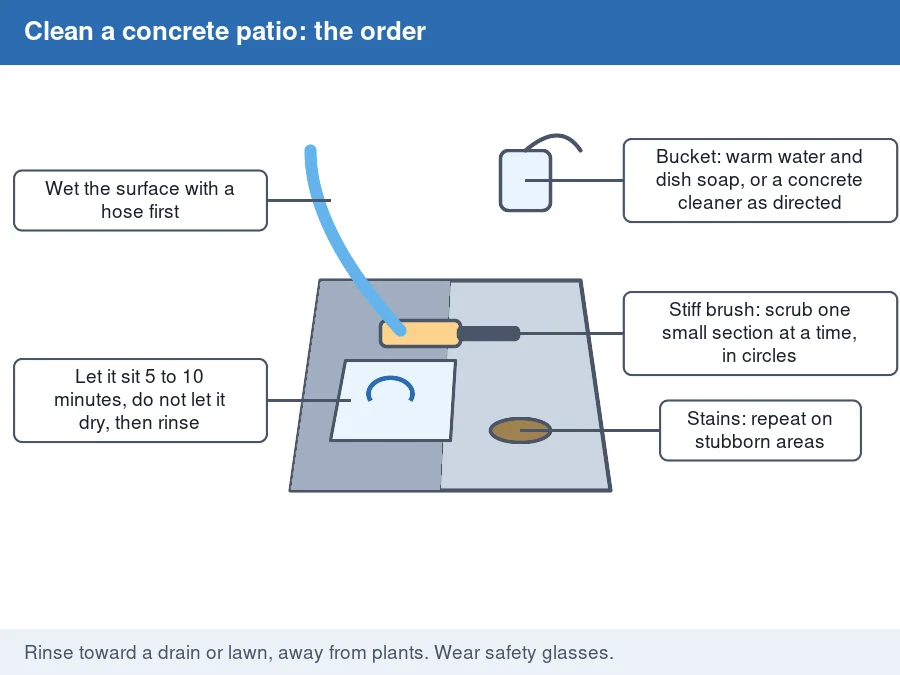
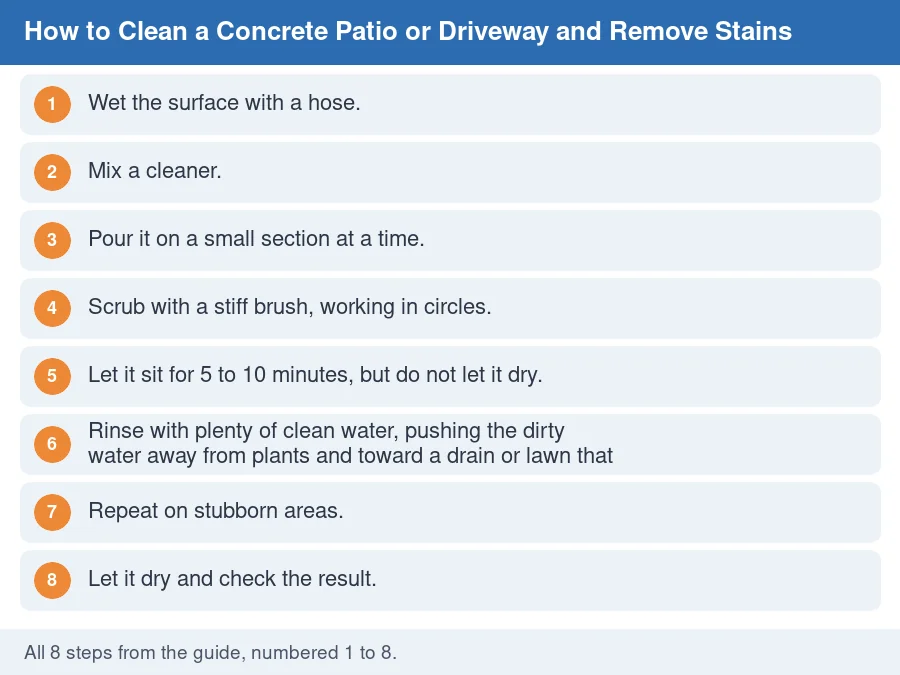
1. Wet the surface with a hose.
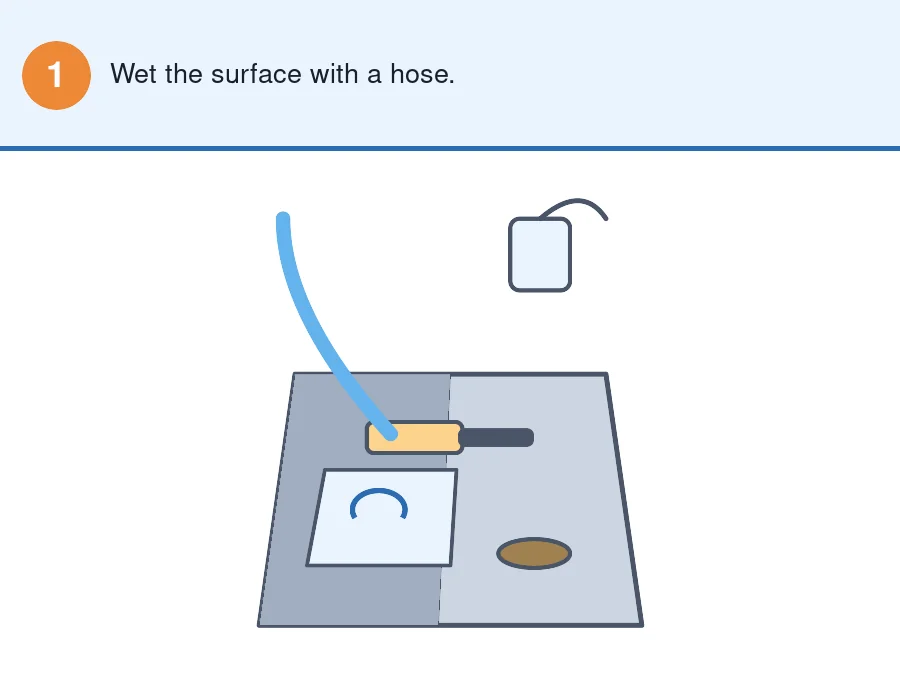
2. Mix a cleaner. Use warm water and a few squirts of dish soap in a bucket, or a concrete cleaner as directed on its label.
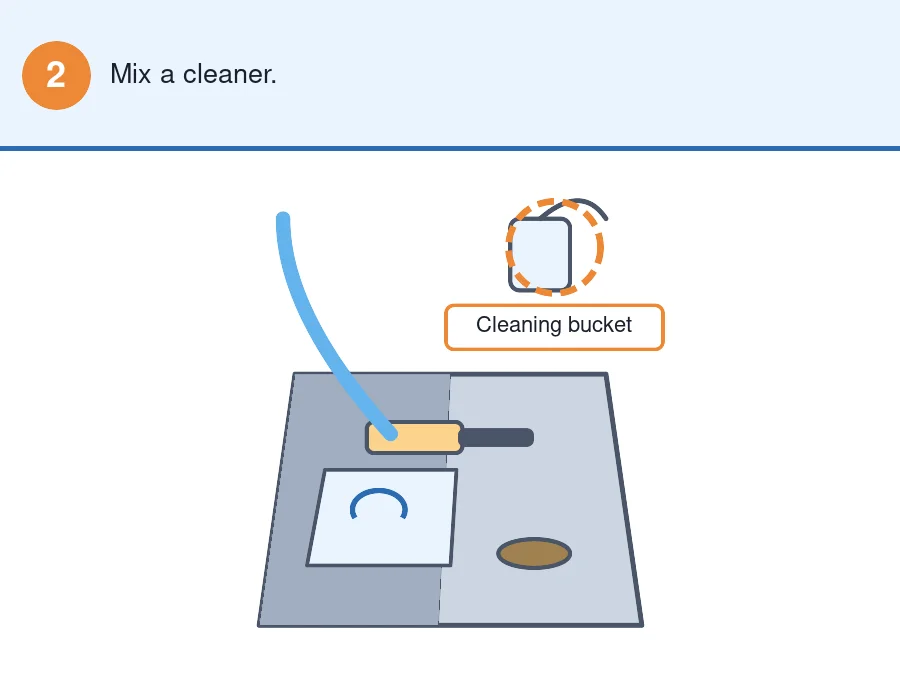
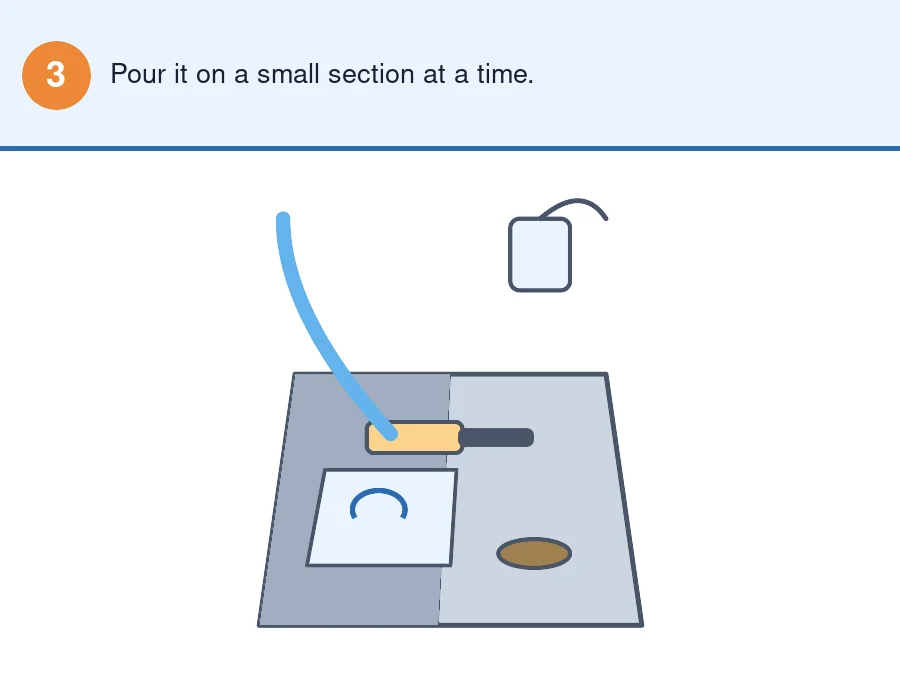
3. Pour it on a small section at a time.
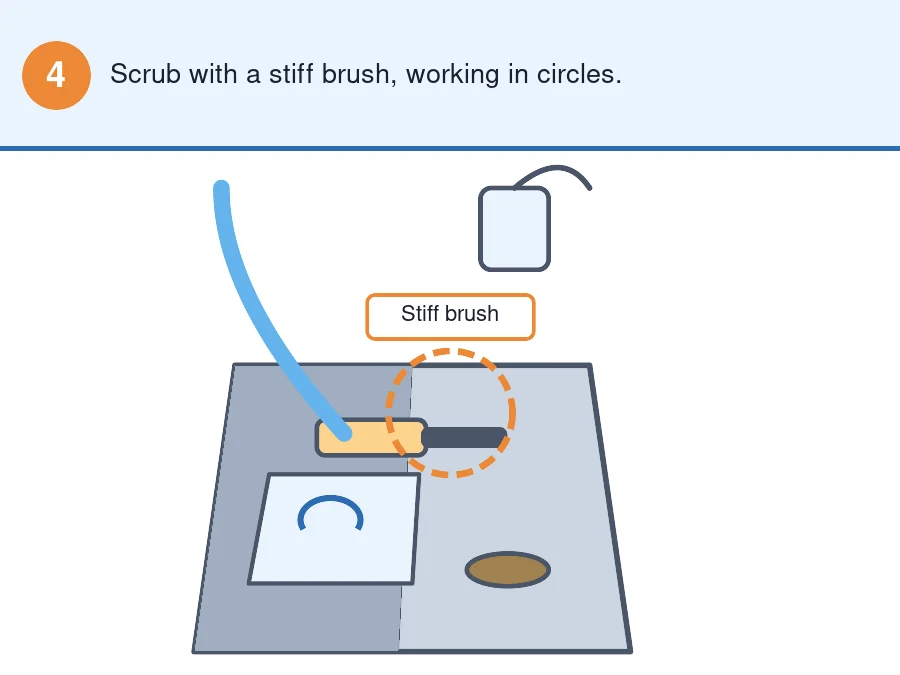
4. Scrub with a stiff brush, working in circles.
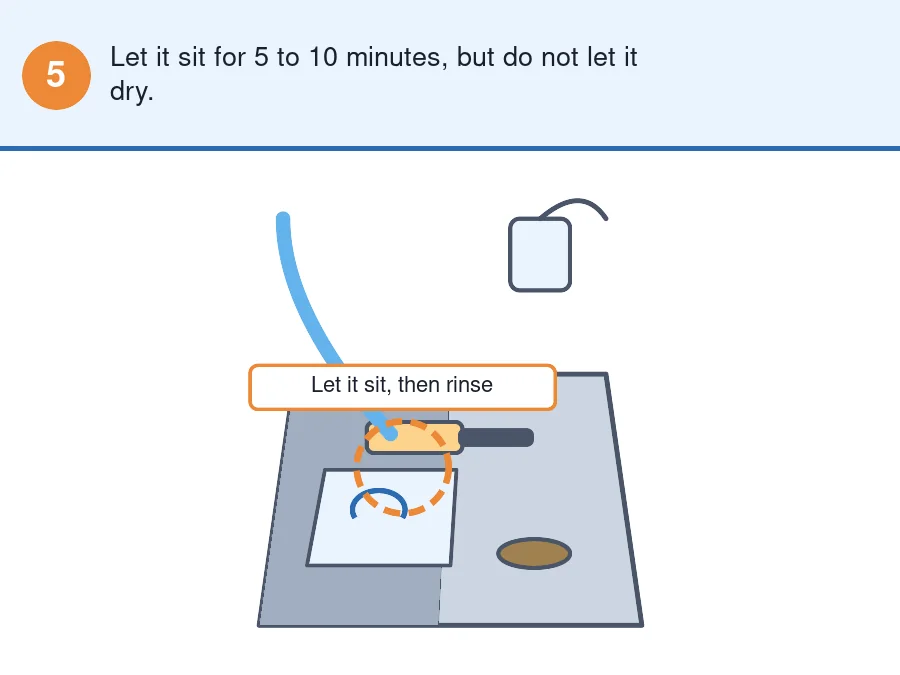
5. Let it sit for 5 to 10 minutes, but do not let it dry.
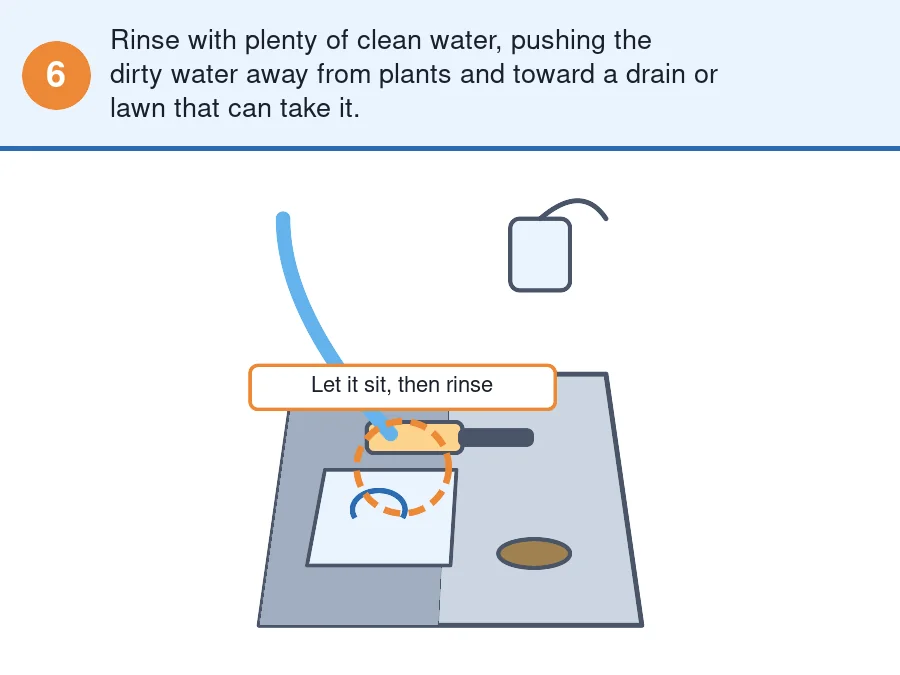
6. Rinse with plenty of clean water, pushing the dirty water away from plants and toward a drain or lawn that can take it.
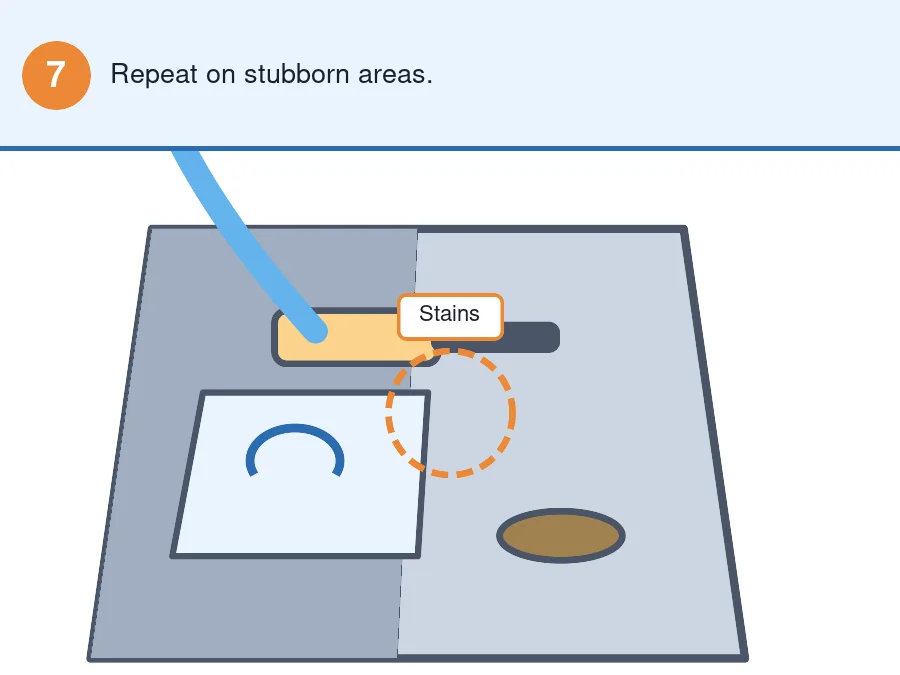
7. Repeat on stubborn areas.
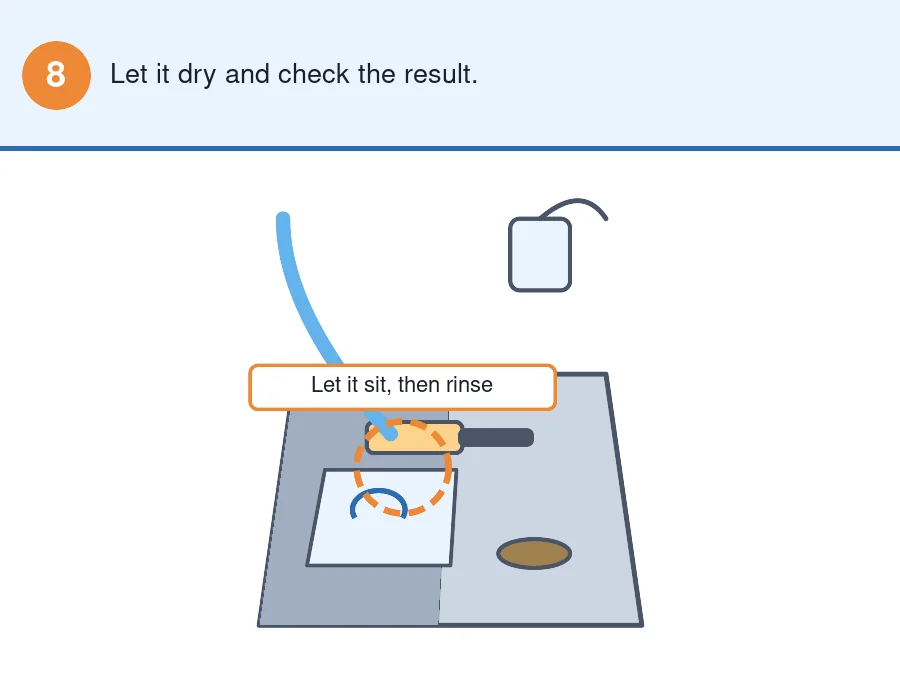
8. Let it dry and check the result.
A pressure washer on a low setting can save time, but hold the nozzle back and move it steadily. Too much pressure can scar the surface.
Signs that point to each stain
- Black or green patches in shade are algae or mildew.
- Dark spots in the driveway are oil or grease.
- Orange or brown marks are rust from metal furniture, tools or fertilizer.
- Gray film is dirt and pollen.
- White powder is efflorescence, a salt deposit from moisture.
Remove oil stains
Cover fresh spills with cat litter or baking soda right away. Let it soak for several hours, then sweep it up. For older stains, scrub with a degreaser and a stiff brush, then rinse. Some old stains need several tries. The same method works on a garage floor.
Remove algae and mildew
Scrub with a mix of water and a mild cleaner made for outdoor surfaces, following the label. Rinse well. Keep the area dry and sunny if you can, since algae likes shade and damp. Trim back plants and fix any water that pools. See Downspout drainage: how to direct water away.
Remove rust stains
Use a rust remover made for concrete, following the label. Wear gloves and eye protection. Do not mix cleaning products.
Seal the concrete
After cleaning, a concrete sealer can help block stains and water. Wait until the concrete is fully dry, often a day or two, and follow the product directions. See How to repair a concrete driveway crack before you seal if you have cracks.
Prevention
Sweep regularly. Clean up spills fast. Place mats under the car and the grill. Keep gutters clear so water does not stream on the concrete. Reseal every few years.
Tools and cleaners compared
A stiff nylon brush and dish soap handle light dirt. A degreaser handles oil. A concrete cleaner made for outdoor use handles heavy staining. Metal bristle brushes can leave rust marks and scratch the surface, so avoid them. A pressure washer with a wide fan tip is fast, but test a hidden spot first. Always read the label on any cleaner, and test it in a small, hidden spot before you use it on the whole area.
Working in sections
Divide the surface into sections of about four by four feet. Finish one section from scrub to rinse before you move to the next, so the cleaner does not dry. Work from the top of a slope to the bottom, so dirty water does not flow over clean concrete. Take breaks, as scrubbing is tiring, and drink water. After you finish, let the surface dry fully and look at it from a distance in daylight to find spots you missed.
Related guides
- How to Clean a Grill: Grates, Burners and the Inside of the Lid
- How to Remove Oil Stains From a Garage Floor (Concrete)
- How to Store Patio Furniture for Winter and Keep It Looking New
- How to Spot Termite Damage: Signs to Look For and What to Do Next
- How to Deal With a Wasp Nest Safely: When to DIY and When to Call a Pro
FAQ
Can I use bleach?
It can harm plants and surfaces. Use a cleaner made for concrete.
How often should I clean?
Once or twice a year.
Is a pressure washer safe?
Yes on low settings with a wide nozzle.
Why do stains return?
The cause, such as shade or leaks, may still be there.
More from this topic
- How to Remove Oil Stains From a Concrete Driveway: Learn how to remove oil stains from a concrete driveway: lift the fresh oil, draw out the old stain with an...
- How to Clean Algae From a Concrete Driveway: Learn how to clean algae from a concrete driveway: scrub the green film off, rinse it away and stop it coming...
- How to Clean Pavers: Learn how to clean pavers: sweep, wash, remove weeds and stains, and re-sand the joints for a like-new patio...
- How to Remove Oil Stains From a Garage Floor (Concrete): Learn how to remove oil stains from a garage floor: soak up fresh spills, scrub with degreaser or a poultice,...
- How to Remove Rust Stains From Concrete: Learn how to remove rust stains from concrete: find the metal source, lift the stain with a mild acid and...
 Garage and OutdoorsHow to Remove Oil Stains From a Concrete DrivewayLearn how to remove oil stains from a concrete driveway: lift the fresh oil, draw out the old stain with an absorbent and rinse clean.
 Garage and OutdoorsHow to Clean Algae From a Concrete DrivewayLearn how to clean algae from a concrete driveway: scrub the green film off, rinse it away and stop it coming back.
 Garage and OutdoorsHow to Clean PaversLearn how to clean pavers: sweep, wash, remove weeds and stains, and re-sand the joints for a like-new patio or path.
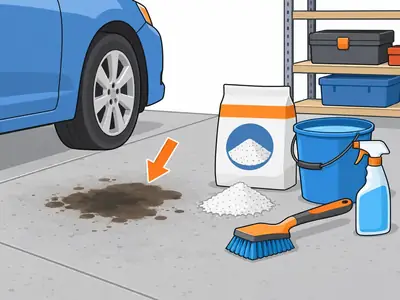 Garage and OutdoorsHow to Remove Oil Stains From a Garage Floor (Concrete)Learn how to remove oil stains from a garage floor: soak up fresh spills, scrub with degreaser or a poultice, dispose of waste safely and seal the concrete.
 Garage and OutdoorsHow to Remove Rust Stains From ConcreteLearn how to remove rust stains from concrete: find the metal source, lift the stain with a mild acid and rinse before it sets.