
How to Clean Algae From a Concrete Driveway
Part of: Outdoors and garage
- Difficulty
- Easy
- Time
- 1 to 2 hours
- Tools
- Stiff brush, bucket, mild detergent, oxygen bleach, hose, squeegee, rubber gloves, safety glasses, boots
- Call a pro if
- The green film covers a shaded slope, or water stands on the drive for days after rain.
In this guide
- Wear protection
- Chemical safety
Green film on a driveway is algae, and it grows where concrete stays damp and shaded. Cleaning it is easy. Keeping it away takes a little drainage work. Here is how to clean algae from a concrete driveway.
1. Check why it grows
1. Look for shade from trees or a building.
2. Check where water sits after rain.
3. Note the slope of the drive.
2. Gear up
1. Boots with grip, not sneakers.
2. Gloves and safety glasses.
3. A stiff brush with a long handle.
3. Sweep first
1. Sweep leaves and grit off the drive.
2. Clear the edges where debris gathers.
3. Check the drain or channel is clear.
4. Wet the surface
1. Damp the concrete before scrubbing.
2. Work in shade or early in the day.
3. Do not let the surface dry mid job.
5. Scrub with detergent
1. Mix mild detergent in warm water.
2. Scrub in circles over the green film.
3. Work in sections so it does not dry.
4. Rinse each section before moving on.
6. Treat stubborn growth
1. Use an oxygen bleach solution for heavy film.
2. Let it dwell for the time on the label.
3. Scrub again, then rinse well.
7. Rinse properly
1. Rinse from the high side down.
2. Push water off with a squeegee.
3. Keep runoff away from beds and drains.
8. Fix the water
1. Check the drive falls away from buildings.
2. Fill any hollow where water sits.
3. Clear the gutter above the drive.
9. Open it to light
1. Trim branches that shade the drive.
2. Keep the edge clear of soil and mulch.
3. Let sun and air reach the surface.
10. Slow the return
1. Reseal the drive once it is dry.
2. Sweep regularly through wet months.
3. Check after every storm.
Why concrete grows algae so easily
Concrete stays damp longer than asphalt and holds a thin film of dust that algae feeds on. Add shade and a slope that sheds water slowly, and the green film appears within a season. It is not a sign of bad concrete, just of moisture. That is also why the worst patches are usually under a tree, along a north facing wall, or in the hollow where the drive meets the garage apron.
Common mistakes
- Scrubbing dry, which spreads spores.
- Using a pressure washer at full power and etching the surface.
- Rinsing toward a storm drain.
- Cleaning without fixing the shade or drainage.
- Working in bare feet or smooth soles.
FAQ
Does bleach kill driveway algae?
It does, but oxygen bleach is safer on concrete and around plants. Follow the label.
Will pressure washing remove it?
It removes the film fast, but it comes back unless the damp is fixed.
How do I stop algae returning?
Sun, airflow and drainage. Trim shade, fix hollows and keep the surface clean.
Is algae dangerous on a drive?
It is slippery, especially when wet, which is the real risk.
Related guides
- How to Remove Oil Stains From a Concrete Driveway: Learn how to remove oil stains from a concrete driveway: lift the fresh oil, draw out the old stain with an...
- How to Clean a Concrete Patio or Driveway and Remove Stains: Learn how to clean a concrete patio or driveway with a stiff brush, a degreaser and water. Remove oil, algae...
- How to Clean a Concrete Stoop: Learn how to clean a concrete stoop: sweep it, wash off the winter grime and keep the steps safe...
- How to Clean a Greenhouse: Learn how to clean a greenhouse: wash glass and panels, disinfect surfaces, clear algae, and keep pests and...
- How to Fill a Concrete Joint Crack: Learn how to fill a concrete joint crack: clean the joint, set a backer rod and seal it so water stops...
 Garage and OutdoorsHow to Remove Oil Stains From a Concrete DrivewayLearn how to remove oil stains from a concrete driveway: lift the fresh oil, draw out the old stain with an absorbent and rinse clean.
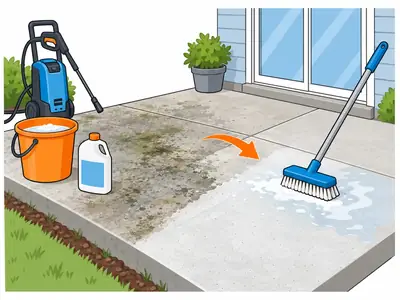 Garage and OutdoorsHow to Clean a Concrete Patio or Driveway and Remove StainsLearn how to clean a concrete patio or driveway with a stiff brush, a degreaser and water. Remove oil, algae and rust stains safely with simple steps.
 Garage and OutdoorsHow to Clean a Concrete StoopLearn how to clean a concrete stoop: sweep it, wash off the winter grime and keep the steps safe underfoot.
 Garage and OutdoorsHow to Clean a GreenhouseLearn how to clean a greenhouse: wash glass and panels, disinfect surfaces, clear algae, and keep pests and disease out.
 Garage and OutdoorsHow to Fill a Concrete Joint CrackLearn how to fill a concrete joint crack: clean the joint, set a backer rod and seal it so water stops getting under the slab.