
How to Remove Oil Stains From a Garage Floor (Concrete)
Part of: Outdoors and garage
- Difficulty
- Moderate
- Time
- 1 to 3 hours plus overnight dwell time
- Tools
- Cat litter or absorbent, stiff brush, degreaser made for concrete, baking soda or powdered laundry detergent, hose or wet vac, rubber gloves, eye protection, plastic bags
- Call a pro if
- The stain is very old and deep, the concrete is cracked or flaking, or there is fuel or solvent spilled that smells strongly.
In this guide
- Wear protection
- Chemical safety
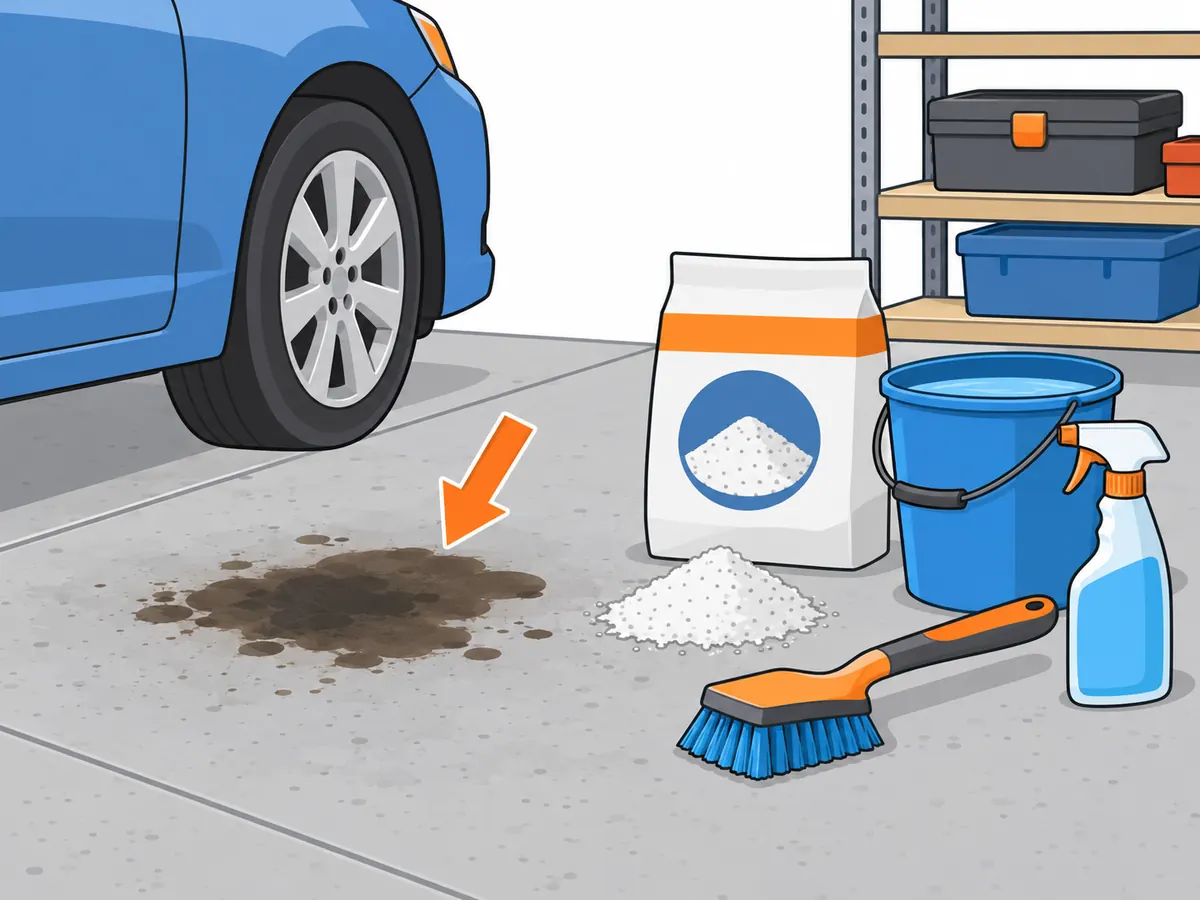
A drip from the car engine can leave a dark patch on the garage floor that never seems to go away. Concrete is porous, so oil soaks in. Fresh spills are easy to deal with. Old stains take patience. How to remove oil stains from a garage floor starts the moment it happens, covering the spill with cat litter, sawdust or cornstarch for several hours.
This guide is part of our wider guide to garage, decks, fences and yard care.
Act fast on a fresh spill
Cover the spill right away with an absorbent such as cat litter, sawdust or cornstarch. Leave it for several hours or overnight so it can soak up the oil. Grind it in lightly with the sole of a shoe. Sweep it up and put it in a bag.
Step 1: Fix the leak
If your car is leaking oil, take it to a mechanic. Put a drip pan or a piece of cardboard under it in the meantime.
Step 2: Scrub with detergent
For light stains, sprinkle powdered laundry detergent or baking soda on the damp spot. Add a little hot water and scrub with a stiff nylon brush for several minutes. Let it sit for 20 to 30 minutes and scrub again. Rinse with a hose, directing runoff to a lawn or a drain meant for wastewater, not a storm drain if your local rules forbid it. Many people prefer a wet vac to collect the water.
Step 3: Use a concrete degreaser
For stubborn stains, use a degreaser made for concrete. Follow the label for dilution, time and rinsing. Wear gloves and eye protection. Apply with a brush, keep the area wet and scrub. Do not let it dry on the concrete. Rinse well. Be careful on sealed floors, since some degreasers can strip the sealer.
Step 4: Make a poultice for deep stains
A poultice draws oil out of the concrete. Mix an absorbent such as diatomaceous earth, clay cat litter or baking soda with a solvent that the label says is safe for concrete, or with a degreaser, to form a thick paste. Spread it about a quarter inch thick over the stain, cover with plastic wrap and tape the edges. Leave it for 24 hours or more, then scrape it off and let it dry. Repeat if needed. Follow the product's directions, and ventilate the garage.
Step 5: Pressure wash with care
A pressure washer can help lift the last of the stain, but use a wide nozzle and keep it moving, because high pressure can etch concrete. Compare options in our electric pressure washer comparison if you want to buy one.
Step 6: Seal the floor
When the floor is clean and fully dry, apply a concrete sealer made for garage floors. A sealer keeps oil from soaking in and makes cleanup easier. Follow the maker's directions about prep and cure time. Keep cars off until it cures.
Dispose of waste properly
Soaked absorbent, rags and sludge may be hazardous waste. Check local rules. Many areas have a household hazardous waste drop-off. Do not put them in a storm drain or on the ground. Store oily rags in a metal can with a lid until you dispose of them.
Prevent new stains
Use drip trays or mats under vehicles. Wipe spills right away. Keep a bag of absorbent near the car. Reseal the floor every few years.
Related guides
- How to Remove Ice From a Walkway Without Damage
- How to Fix a Sticking Garage Side Door
- Garage Door Won't Close All the Way? 5 Safe Fixes to Try First
- How to Organize a Small Garage and Make Room for the Car
FAQ
Will the stain ever disappear fully?
Old stains may fade but not vanish. Sealing helps hide them.
Can I use bleach?
It will not remove oil, and mixing it with other products is risky. Do not use it.
Does cat litter really work?
It soaks up fresh oil well. It is less effective on old stains.
More from this topic
- How to Seal a Garage Floor: Learn how to seal a garage floor: clean and etch the concrete, repair cracks, and apply sealer for a durable,...
- How to Remove Oil Stains From a Concrete Driveway: Learn how to remove oil stains from a concrete driveway: lift the fresh oil, draw out the old stain with an...
- How to Clean a Concrete Patio or Driveway and Remove Stains: Learn how to clean a concrete patio or driveway with a stiff brush, a degreaser and water. Remove oil, algae...
- How to Epoxy a Garage Floor That Lasts: Learn how to epoxy a garage floor: clean and etch the concrete, repair cracks, apply the coating evenly, and...
- How to Seal a Wood Deck: Clean, Prep and Apply: How to seal a wood deck: clean it, let it dry, test the wood and apply a stain or sealer. Steps, tools,...
 Garage and OutdoorsHow to Seal a Garage FloorLearn how to seal a garage floor: clean and etch the concrete, repair cracks, and apply sealer for a durable, dust-free finish.
 Garage and OutdoorsHow to Remove Oil Stains From a Concrete DrivewayLearn how to remove oil stains from a concrete driveway: lift the fresh oil, draw out the old stain with an absorbent and rinse clean.
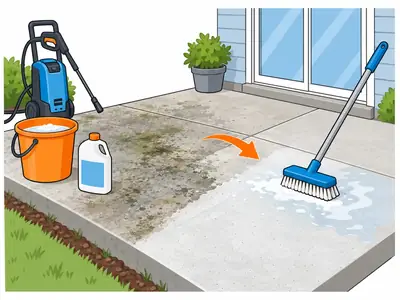 Garage and OutdoorsHow to Clean a Concrete Patio or Driveway and Remove StainsLearn how to clean a concrete patio or driveway with a stiff brush, a degreaser and water. Remove oil, algae and rust stains safely with simple steps.
 Garage and OutdoorsHow to Epoxy a Garage Floor That LastsLearn how to epoxy a garage floor: clean and etch the concrete, repair cracks, apply the coating evenly, and let it cure fully.
 Garage and OutdoorsHow to Seal a Wood Deck: Clean, Prep and ApplyHow to seal a wood deck: clean it, let it dry, test the wood and apply a stain or sealer. Steps, tools, timing and tips for first-time homeowners.