
How to Organize a Small Garage and Make Room for the Car
Part of: Outdoors and garage
- Difficulty
- Moderate
- Time
- One weekend
- Tools
- Contractor bags, boxes or bins, stud finder, drill, level, wall hooks, heavy-duty shelves, labels, work gloves
- Call a pro if
- You find signs of mold, a pest infestation, leaking chemicals or damaged wiring, or you plan to mount heavy storage on the ceiling without joists.
In this guide
- Power off first
- Wear protection
- Chemical safety
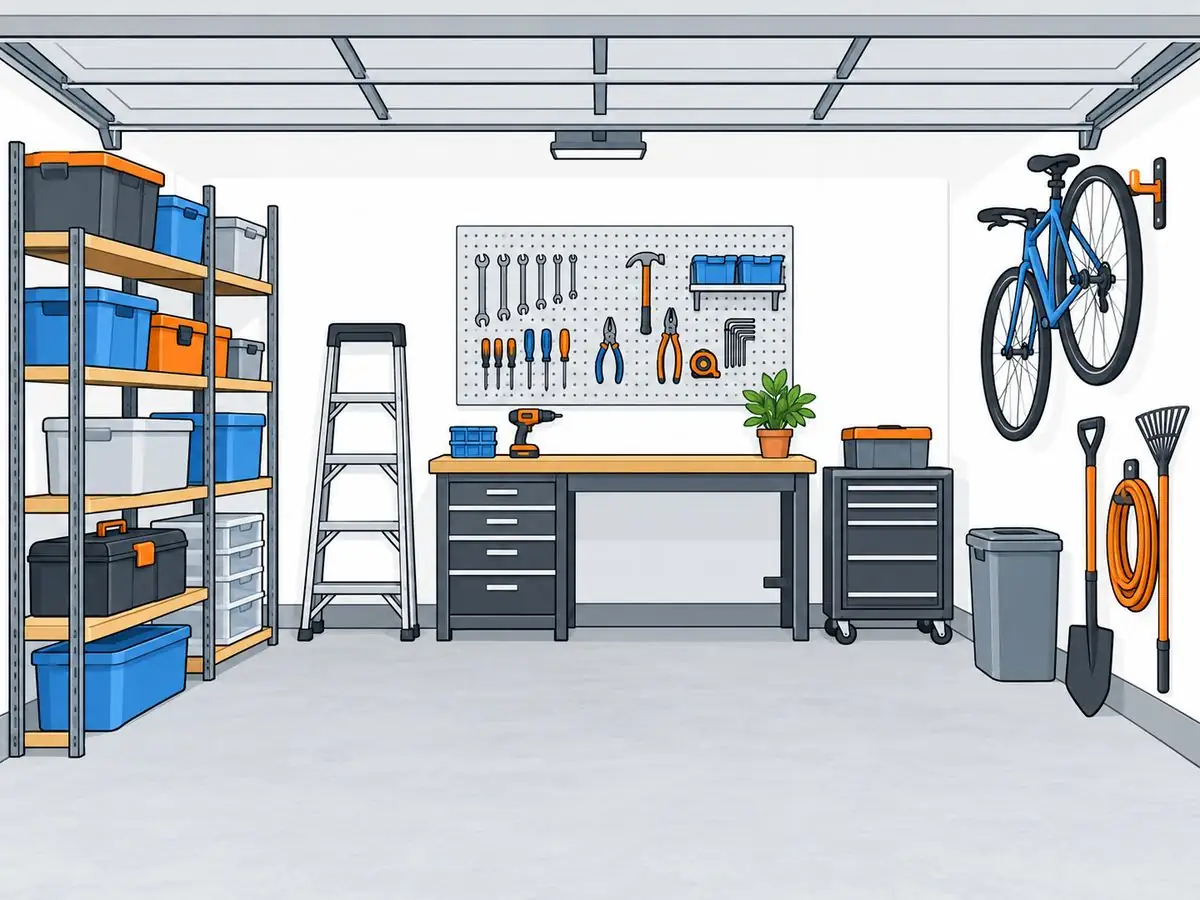
A small garage turns into a storage room quickly. A bike here, a ladder there, a box of holiday lights and a stack of paint cans. Soon you cannot open the car door. The good news is that most small garages can handle a car and plenty of storage if you plan the space. How to organize a small garage starts by emptying it and sorting into keep, donate, sell and toss.
This guide is part of our wider guide to garage, decks, fences and yard care.
Step 1: Empty it and sort
Pull everything out onto the driveway if the weather is good. Sort items into four piles: keep, donate or sell, recycle, and trash. Be honest. If you have not used it in two years, it likely does not belong. Take old paint, chemicals and batteries to a household hazardous waste collection, not the trash, and check your local rules.
Step 2: Clean and check
With the garage empty, sweep the floor and look at the walls, ceiling and corners. Look for water stains, signs of pests, or cracks. Fix anything that could damage what you store. If the floor is oily, scrub it with a degreaser and let it dry.
Step 3: Make zones
Group items by use, not by size.
- Car zone: a clear space along the side that gives a door width, about 3 feet, if possible.
- Tool zone: tools and a workbench near a light and an outlet.
- Garden and outdoor zone: rakes, hoses and bags of soil, close to the door.
- Seasonal zone: holiday boxes, camping gear and sports equipment.
Step 4: Go vertical
The best extra space in a small garage is on the walls and ceiling.
- Mount hooks and rails for ladders, bikes and long-handled tools. Screw them into studs. Use a stud finder and mark them first.
- Install sturdy shelves above the hood of the car or along the back wall. Metal or heavy-duty plastic shelves resist moisture better than particleboard.
- Use overhead racks for seasonal bins, but only on ceiling joists, within the rack's weight limit. Check clearance for the garage door track before you install.
Step 5: Use bins and labels
Use clear plastic bins with lids. They keep out dust and pests, and you can see what is inside. Label the front and the side. Put heavy items on lower shelves and light items up high. Keep things you use every week at eye level.
Step 6: Protect the car
Keep storage out of the front edge of the car's path and away from the door swing. Mount a soft pad or a tennis ball on the wall where the door might hit. A mark on the floor or a hanging ball on a string can show where to stop.
Step 7: Keep safety in view
Keep a fire extinguisher near the exit, and check smoke detectors in the house. Do not place storage in front of the electrical panel, a water heater or the garage door opener's safety sensors. Check our guide to garage door sensor alignment if a sensor gets bumped.
Mistakes to avoid
Do not stack boxes against the garage door. Do not store paint or chemicals where it freezes or overheats. Do not keep cardboard on a damp floor, since it draws moisture and pests. Do not overload shelves.
Related guides
- How to Install Garage Wall Shelves That Actually Hold Weight
- How to Fix a Sticking Garage Side Door
- Garage Door Won't Close All the Way? 5 Safe Fixes to Try First
- How to Seal a Garage Door: Gaps, Drafts, Water and Pests
- How to Organize a Garage on a Budget
FAQ
How much space do I need next to the car?
About 2 to 3 feet is usually enough to open the door and walk.
Are plastic bins better than cardboard?
Yes. They resist moisture and pests.
Can I store paint in the garage?
Only if the temperature stays within the label's range. Many paints should not freeze.
More from this topic
- How to Install Garage Wall Shelves That Actually Hold Weight: How to install garage wall shelves by starting with what you store: match depth, spacing and fasteners to the...
- How to Store a Ladder: How to store a ladder so it stays straight and safe: hang it flat, support it along its length, and keep it...
- How to Store Paint and Household Chemicals Safely: How to store paint and household chemicals safely: keep them out of heat and reach, label everything, and...
- How to Anchor a Trampoline So Wind Cannot Take It: Learn how to anchor a trampoline: choose anchors for your soil, install them at the right angles, strap the...
- How to Babyproof a Garage: Learn how to babyproof a garage: lock up tools and chemicals, secure the door, cover outlets, and make the...
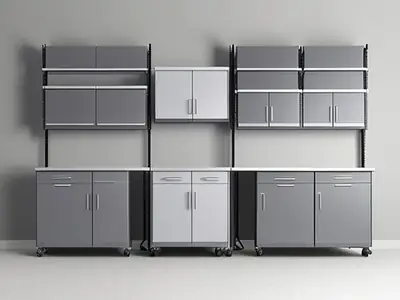 Garage and OutdoorsHow to Install Garage Wall Shelves That Actually Hold WeightHow to install garage wall shelves by starting with what you store: match depth, spacing and fasteners to the weight, then mount on studs or masonry anchors.
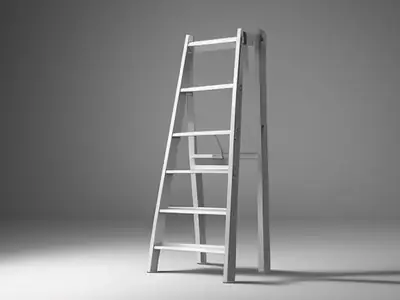 Tools and BasicsHow to Store a LadderHow to store a ladder so it stays straight and safe: hang it flat, support it along its length, and keep it out of the weather.
 SafetyHow to Store Paint and Household Chemicals SafelyHow to store paint and household chemicals safely: keep them out of heat and reach, label everything, and know what to throw away and when.
 Garage and OutdoorsHow to Anchor a Trampoline So Wind Cannot Take ItLearn how to anchor a trampoline: choose anchors for your soil, install them at the right angles, strap the frame down and check them each season.
 Garage and OutdoorsHow to Babyproof a GarageLearn how to babyproof a garage: lock up tools and chemicals, secure the door, cover outlets, and make the space safe for kids.