
How to Store a Ladder
Part of: Tools and everyday fixes
- Difficulty
- Easy
- Time
- 30 to 45 minutes
- Tools
- ladder hooks, stud finder, drill, driver, tape measure, pencil, level, bungee cord or strap, safety glasses
- Call a pro if
- The ladder is bent, cracked, or has a damaged rung, since a damaged ladder should be retired rather than stored.
In this guide
- Ladder safety
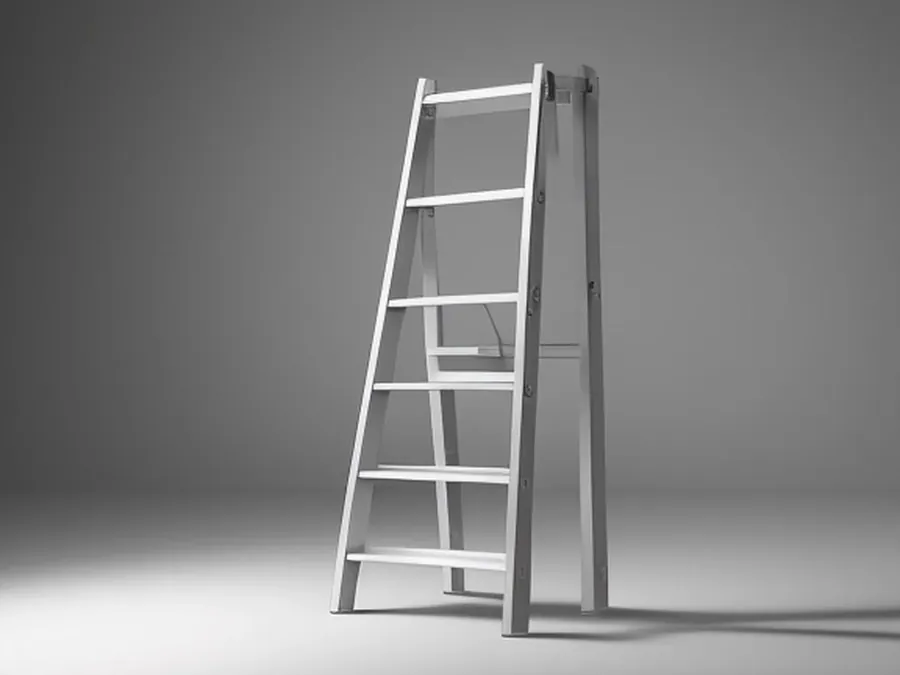
Knowing how to store a ladder keeps a tool you might need in an emergency ready to use. Ladders are long, awkward, and expensive, and they are often stored leaning against a wall, which is the worst position for them.
The principle is the same as storing lumber: support it along its length, keep it flat, and keep it dry. A ladder is basically two long boards with rungs between them, and it bends the same way.
1. Inspect it before storing
Check the rails for bends and cracks, the rungs for looseness, and the feet for wear. Look at the locks and the rope on an extension ladder. If anything is damaged, retire the ladder rather than storing it and forgetting the problem.
2. Clean it
Wipe off dirt, paint, and anything sticky. Grit on a rung is a slip hazard, and paint on the locks makes them stiff. Dry the ladder fully, especially if it is fiberglass, since moisture in the rails is bad for it.
3. Choose a dry location
A garage or shed is fine if it is dry. Outdoors in the sun is not: ultraviolet light degrades fiberglass and the plastic parts, and rain gets into the rails. A covered spot away from heat sources is best.
4. Hang it flat, not on a hook by one point
Use two or three heavy hooks rated for the weight, screwed into studs, and hang the ladder so both rails rest on the hooks. Hanging from a single point bends the ladder over time. A ladder hung flat against a wall stays straight.
5. Support it along its length
If you store a ladder horizontally on brackets, support it at both ends and in the middle for a long extension ladder. Support only at the ends lets the middle sag. The same rule applies if you store it on a shelf.
6. Never lean it against a wall for storage
Leaning a ladder stores a curve in it, and the weight sits on two points instead of along the whole rail. If you must lean it short term, lean it on a flat surface with a support at the middle, and get it onto hooks soon.
7. Keep it out of the way
Store the ladder where nobody walks under it and it cannot fall across a doorway. Above a garage door track is common, but check that it clears the door's movement. A falling ladder can seriously injure someone.
8. Secure it against falling
Use a bungee cord or a strap across the ladder at each hook so it cannot slide off. In an earthquake area or a busy shop, this matters more. A ladder that shifts on its hooks can drop without warning.
9. Protect the feet and the locks
Keep the rubber feet from sitting in water or oil, which degrades them. Store the ladder with the locks engaged or the sections together, so the rope and pulleys are not under tension in storage.
10. Check it before each use
Before you climb, check the ladder again: rails, rungs, feet, and locks. A ladder that was fine in storage can be damaged by a bump or by a leak. Inspect it as a habit, not an afterthought.
Common mistakes
- Leaning a ladder against a wall for months, which bows it.
- Hanging it from a single hook, which bends the rails.
- Storing it outdoors in the sun and rain.
- Hanging it above a doorway or a walkway.
- Storing a ladder with a damaged rung instead of retiring it.
- Leaving the rubber feet in a puddle of oil or water.
FAQ
How should a ladder be stored?
Flat and supported along its length, ideally on wall hooks rated for the weight, in a dry spot out of the sun.
Can I store a ladder outside?
Not for long. Sun and rain damage fiberglass and the plastic parts. Use a dry, covered space.
Is it bad to lean a ladder against a wall?
Yes, for long periods. It puts a curve in the rails and concentrates the load on two points.
How do I hang a ladder in a garage?
Use two or three heavy hooks screwed into studs, spaced to support both rails, with a strap across the ladder.
When should I replace a ladder?
When a rail is bent or cracked, a rung is loose, or the feet are worn through. Do not repair a damaged structural part.
Related guides
- How to Install a Pegboard Wall: How to install a pegboard wall in a garage or shop: space it off the wall, screw it into studs, and lay out...
- How to Store Lumber: How to store lumber so it stays straight and dry: stack it flat on stickers, keep it off concrete, and let...
- How to Store Power Tools: How to store power tools so batteries and blades last: keep them dry, off the floor, labeled, and out of...
- How to Store Paint and Household Chemicals Safely: How to store paint and household chemicals safely: keep them out of heat and reach, label everything, and...
- How to Organize a Toolbox: Learn how to organize a toolbox: sort by task, cut clutter, arrange for fast access, and keep it that...
 Tools and BasicsHow to Install a Pegboard WallHow to install a pegboard wall in a garage or shop: space it off the wall, screw it into studs, and lay out hooks so tools stay findable.
 Tools and BasicsHow to Store LumberHow to store lumber so it stays straight and dry: stack it flat on stickers, keep it off concrete, and let the air move around it.
 Tools and BasicsHow to Store Power ToolsHow to store power tools so batteries and blades last: keep them dry, off the floor, labeled, and out of freezing temperatures.
 SafetyHow to Store Paint and Household Chemicals SafelyHow to store paint and household chemicals safely: keep them out of heat and reach, label everything, and know what to throw away and when.
 Tools and BasicsHow to Organize a ToolboxLearn how to organize a toolbox: sort by task, cut clutter, arrange for fast access, and keep it that way.