
Garage Door Won't Close All the Way? 5 Fixes
Part of: Outdoors and garage
- Difficulty
- Easy to moderate
- Time
- 20 to 45 minutes
- Tools
- Soft cloth, small screwdriver, level or string, flashlight, a 2x4 board for the safety test, step ladder
- Call a pro if
- The door is crooked, a cable is loose or frayed, a spring looks stretched or broken, or the door falls fast when you lift it by hand.
In this guide
- Ladder safety
When your garage door won't close all the way, it often goes down, then stops a few inches above the floor and reverses. That reversing is a safety feature. The opener thinks something is in the way. The problem is usually small and cheap to fix. The steps below move from the easiest to the most involved, and none of them touch the springs.
This guide is part of our wider guide to garage, decks, fences and yard care.
Step 1: Look for something in the way
Check the floor under the door for leaves, toys, tools or a pile of snow or ice. Remove anything in the path. Also look at the bottom seal. If it has come loose and hangs down, it can block the door.
Step 2: Check the safety sensors
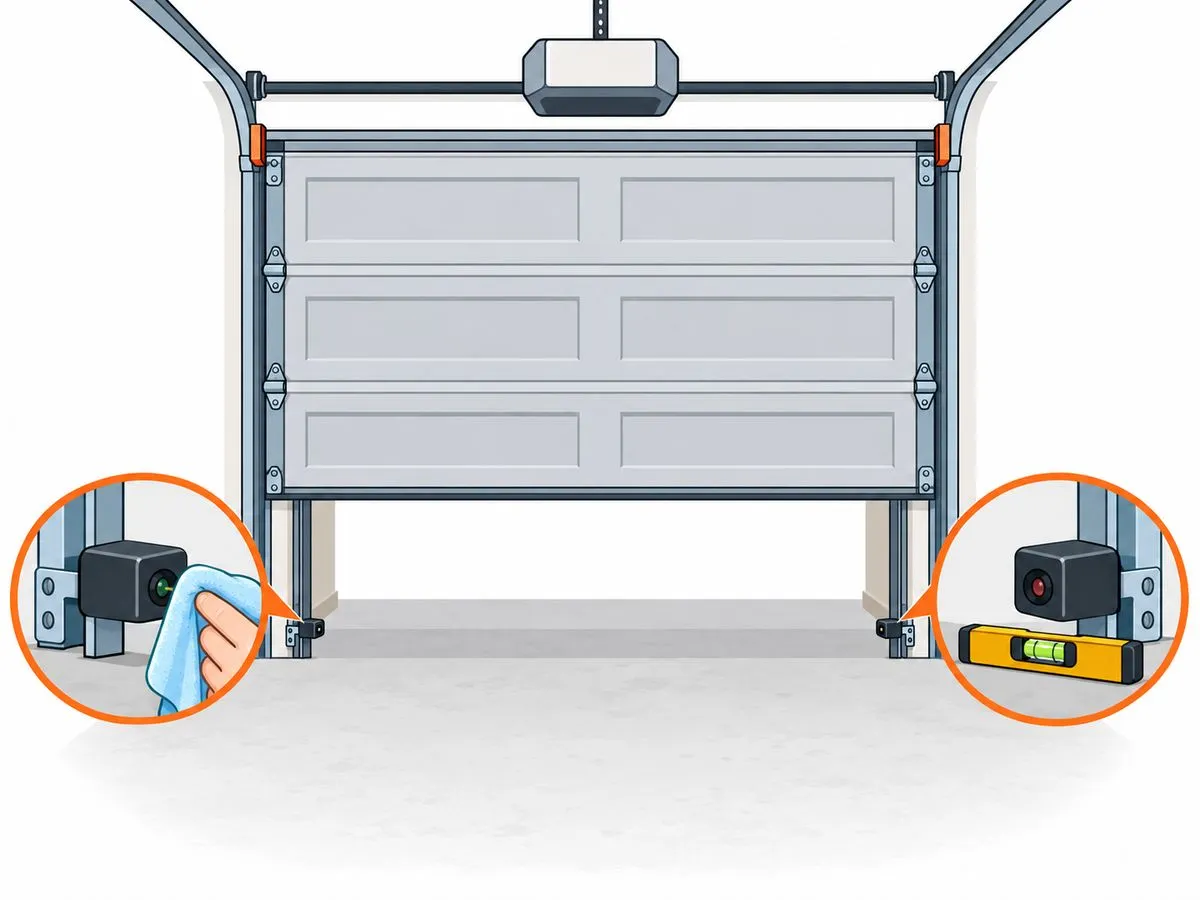
Two small sensors, called photo eyes, sit on each side of the door about 6 inches above the floor. They send an invisible beam across the opening. If the beam is blocked or crooked, the door will not close all the way, or it will reverse.
1. Look at the small light on each sensor. Many models show a steady light on both. A blinking or dark light means a problem.
2. Wipe each lens with a soft cloth. Dust, cobwebs and spray can block the beam.
3. Check that both sensors face each other. If one is bumped, loosen its bracket and turn it by hand until the lights turn steady. Tighten the bracket.
4. Make sure sunshine is not shining straight into a sensor lens. If it is, shade it.
5. Check the wire from each sensor for breaks or a loose connection at the terminals.
Our guide to how to fix garage door sensor alignment shows this step in more detail.
Step 3: Check the tracks and rollers (look only)
Look at the metal tracks on both sides. They should be straight, clean and free of dents. Wipe off dirt and spider webs. Check that the track bolts are tight with a screwdriver or wrench. Do not adjust bolts that hold the bracket at the bottom of the door or at the cables.
Spray a garage door lubricant on the rollers and hinges. Do not oil the tracks. Lube makes dirt stick.
Step 4: Adjust the close limit
The opener remembers how far the door should travel. If this setting is off, the door stops early. Look at the back of the opener motor for small screws or buttons marked "down limit" or "close limit." The exact steps differ by brand, so read your manual or search for the model number on the unit.
In general:
1. Turn the down limit screw or press the button to make the door travel a little farther.
2. Test the door after each small change.
3. If the door goes down hard and bounces up, you went too far. Back off.
If the opener has a force setting, do not turn it up high. Too much force reduces the safety reversing.
Step 5: Test the auto-reverse
After any adjustment, test the safety. Lay a 2x4 board flat on the floor under the door. Close the door. It should touch the board and reverse. If it does not, the settings need to be corrected. Do not use the door until it reverses. Call a technician if you cannot get it to reverse.
Check the balance (without touching springs)
Close the door, then pull the release cord and lift the door by hand to about waist height. A balanced door stays in place. If it falls down or shoots up, a spring is worn. Do not try to adjust it yourself. Then reconnect the door to the opener the way your manual describes.
How to prevent it
- Wipe the sensors every few months.
- Keep the floor under the door clear.
- Lubricate rollers and hinges twice a year.
- Test the auto-reverse every month.
Related guides
- How to Open a Garage Door Manually When the Power Is Out
- Garage door won't close unless you hold the button
- Garage door sensor blinking red: what it means
- How to Fix a Sticking Garage Side Door
- Noisy Garage Door: What Each Sound Means and What to Do
- How to Seal a Garage Door: Gaps, Drafts, Water and Pests
- How to Organize a Small Garage and Make Room for the Car
- How to Remove Oil Stains From a Garage Floor (Concrete)
FAQ
Why does my garage door close then go back up?
The opener sensed an obstruction or a blocked beam. Check the sensors first.
Can I use the door in the meantime?
You can close it manually with the release cord, but do not leave the garage open to the outdoors. Reset the cord when it is repaired.
Is a spring replacement a DIY job?
No. Springs hold enough force to cause injury. Leave it to a pro.
More from this topic
- Garage Door Won't Close Unless You Hold the Button: Garage door won't close unless you hold the button? Learn what the safety sensors are telling you and how to...
- Garage Door Sensor Blinking Red: What It Means: Garage door sensor blinking red? Learn what the red or amber light and blink codes mean on Chamberlain,...
- How to Fix Garage Door Sensor Alignment: Learn how to fix garage door sensor alignment when the door will not close: clean the lenses, check the...
- How to Clean a Garage Door Track: Learn how to clean a garage door track: clear grit, wipe the rails, lubricate right, and stop...
- How to Fix a Sticking Garage Side Door: Learn how to fix a sticking garage side door. Find the rub points, tighten hinges, adjust the strike plate,...
 Garage and OutdoorsGarage Door Won't Close Unless You Hold the ButtonGarage door won't close unless you hold the button? Learn what the safety sensors are telling you and how to fix it without disabling the beam.
 Garage and OutdoorsGarage Door Sensor Blinking Red: What It MeansGarage door sensor blinking red? Learn what the red or amber light and blink codes mean on Chamberlain, LiftMaster and Genie, and what to fix first.
 Garage and OutdoorsHow to Fix Garage Door Sensor AlignmentLearn how to fix garage door sensor alignment when the door will not close: clean the lenses, check the lights, adjust the brackets and test safely.
 Garage and OutdoorsHow to Clean a Garage Door TrackLearn how to clean a garage door track: clear grit, wipe the rails, lubricate right, and stop sticking.
 Garage and OutdoorsHow to Fix a Sticking Garage Side DoorLearn how to fix a sticking garage side door. Find the rub points, tighten hinges, adjust the strike plate, trim the edge and seal the wood to stop sticking.