
How to Clean a Grill
Part of: Outdoors and garage
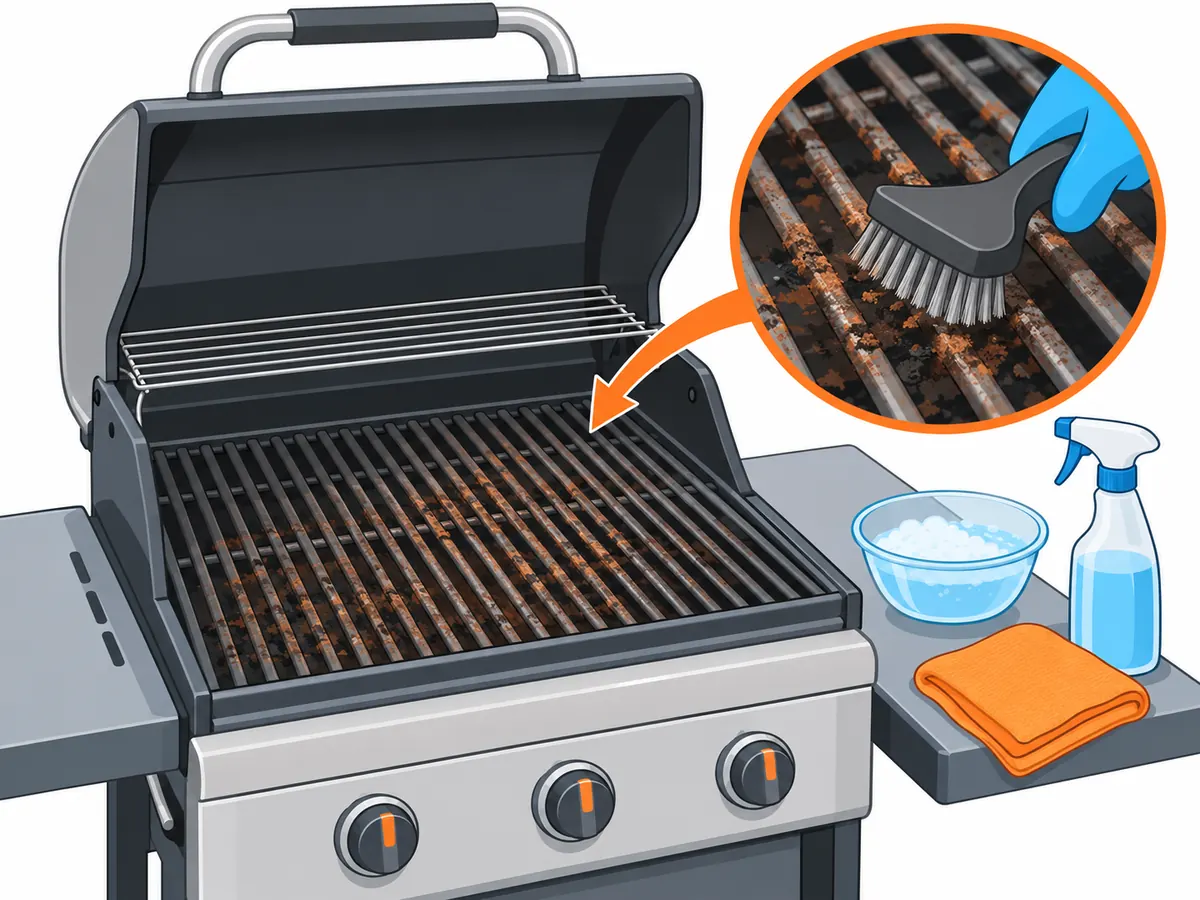
- Difficulty
- Easy
- Time
- 20 minutes for a quick clean, 1 hour for a deep clean
- Tools
- Grill brush with stiff bristles, scraper, bucket, dish soap, sponge, rags, gloves, aluminum foil, putty knife, trash bags
- Call a pro if
- the burners are rusted through, there is a gas leak or the hose is cracked
In this guide
- Gas safety
- Wear protection
A clean grill cooks more evenly, tastes better and lasts longer. Old grease can also cause flare ups and fires. Knowing how to clean a grill is a simple skill, and a deep clean takes about an hour. This guide covers gas and charcoal grills.
This guide is part of our wider guide to garage, decks, fences and yard care.
Before every cookout
1. Preheat the grill for 10 to 15 minutes with the lid closed. The heat loosens the residue.
2. Brush the grates with a grill brush. Check the brush for loose bristles, which can end up in food. Replace worn brushes.
3. Wipe the grates with a folded cloth held with tongs, and a little cooking oil.
Step by step: deep clean a gas grill
1. Turn off the gas at the tank and the burners. Let the grill cool fully. Disconnect the tank if you plan to move the grill or remove parts.
2. Remove the grates and the flavor bars or heat shields.
3. Soak the grates in a bucket of hot water with dish soap for 30 minutes.
4. Scrape the inside of the lid and the bottom with a putty knife or scraper. Flakes of carbon and grease fall into the tray. They are not paint.
5. Clean the burners. Brush the burner tubes with a stiff brush, along the tube, and check that the holes are clear. Use a paper clip or a thin wire for blocked holes.
6. Empty the drip tray and the grease cup. Wash them with hot soapy water. Line the tray with foil if the maker allows.
7. Scrub the grates and rinse them. Dry them to prevent rust.
8. Wipe the inside and outside with a soapy sponge. Rinse and dry.
9. Put the parts back and check that everything sits in place.
10. Check for leaks. Brush a mix of dish soap and water on the hose and connections. Turn on the gas at the tank, with the burners off. Bubbles mean a leak. Turn off the gas and tighten the connection. Never check a leak with a flame.
Step by step: charcoal grill
1. Let the grill cool and remove the cold ash. Dispose of ash only when it is fully cold, in a metal container.
2. Remove the grate and the charcoal grate.
3. Scrape the inside of the bowl and the lid.
4. Wash the grates and the ash catcher with hot soapy water.
5. Clean the vents so air can flow.
6. Dry and reassemble.
Signs that point to each problem
Flare ups come from grease buildup. Uneven heat comes from clogged burner holes. Yellow flames can mean blocked burners or a bad gas mix. A smell of gas means a leak. Rust on the grates means the grill was stored wet. Smoke that tastes bitter comes from old carbon flakes. A burner that will not light may be clogged or have a dead igniter.
Season the grates
After a deep clean, heat the grill and wipe the grates with a thin coat of high heat cooking oil. This helps stop rust and sticking. Repeat after each deep clean.
Cover and store
Let the grill cool before you cover it. Use a cover that fits. Store it away from walls and flammable material. In winter, keep propane tanks outside, upright and away from the house. Never store a propane tank indoors or in the garage.
Prevention
Brush the grates after each use. Empty the grease cup often. Keep the grill dry. Deep clean at the start and the middle of the season. Check the hose each spring.
Cleaning stainless and porcelain surfaces
Wipe stainless steel outside surfaces with a soft cloth and warm soapy water, in the direction of the grain. Dry them. Porcelain coated grates and lids chip easily, so do not use hard scrapers on them. Use a soft brush instead. If paint is peeling inside the lid, scrape it off, since it can flake onto food. Do not use paint inside a grill, and consider replacing the lid if it is worn.
A simple schedule
After each cookout, brush the grates while they are warm. Once a month in season, empty the drip tray and clean the grease cup. At the start of the season, do a deep clean and check the hose. At the end of the season, clean the grill and store it dry. Write the dates on a note in the garage, so you stay on track and notice any new smells or changes in the flame.
Related guides
- How to Clean Moss Off a Roof Without Damaging It
- How to Start a Compost Bin at Home Without Smells or Pests
- How to Mow a Lawn Correctly: Height, Timing, and Pattern for Thicker Grass
- How to Remove Weeds From Driveway Cracks and Keep Them Away
FAQ
How often should I clean the grill?
Brush after each use and deep clean a couple of times a year.
Is it safe to use a wire brush?
Check it for loose bristles and replace it when worn. Some people use a ball of foil instead.
Can I clean the grill with oven cleaner?
It can damage parts, so use soap and water.
How do I stop flare ups?
Keep the grill clean and trim the fat from food.
More from this topic
- How to Clean a Storm Drain Grate: Learn how to clean a storm drain grate: lift the grate safely, scoop the silt and check water runs away from...
- How to Clean a String Trimmer: Learn how to clean a string trimmer: clear grass buildup, clean the guard and head, and keep it cutting like...
- How to Clean a Wood Fence: Learn how to clean a wood fence: wash off dirt and mildew with the right mix, scrub along the grain, rinse...
- How to Clean Hard Water Stains From a Patio: Learn how to clean hard water stains from a patio: dissolve the mineral film with a mild acid and stop the...
- How to Clean Pavers: Learn how to clean pavers: sweep, wash, remove weeds and stains, and re-sand the joints for a like-new patio...
 Garage and OutdoorsHow to Clean a Storm Drain GrateLearn how to clean a storm drain grate: lift the grate safely, scoop the silt and check water runs away from the yard.
 Garage and OutdoorsHow to Clean a String TrimmerLearn how to clean a string trimmer: clear grass buildup, clean the guard and head, and keep it cutting like new.
 Garage and OutdoorsHow to Clean a Wood FenceLearn how to clean a wood fence: wash off dirt and mildew with the right mix, scrub along the grain, rinse the plants and let the wood dry before treating.
 Garage and OutdoorsHow to Clean Hard Water Stains From a PatioLearn how to clean hard water stains from a patio: dissolve the mineral film with a mild acid and stop the water that leaves it.
 Garage and OutdoorsHow to Clean PaversLearn how to clean pavers: sweep, wash, remove weeds and stains, and re-sand the joints for a like-new patio or path.