
How to Remove Weeds From Driveway Cracks and Keep Them Away
Part of: Outdoors and garage · Also in: The Complete Guide to Outdoor and Yard Repair for Homeowners
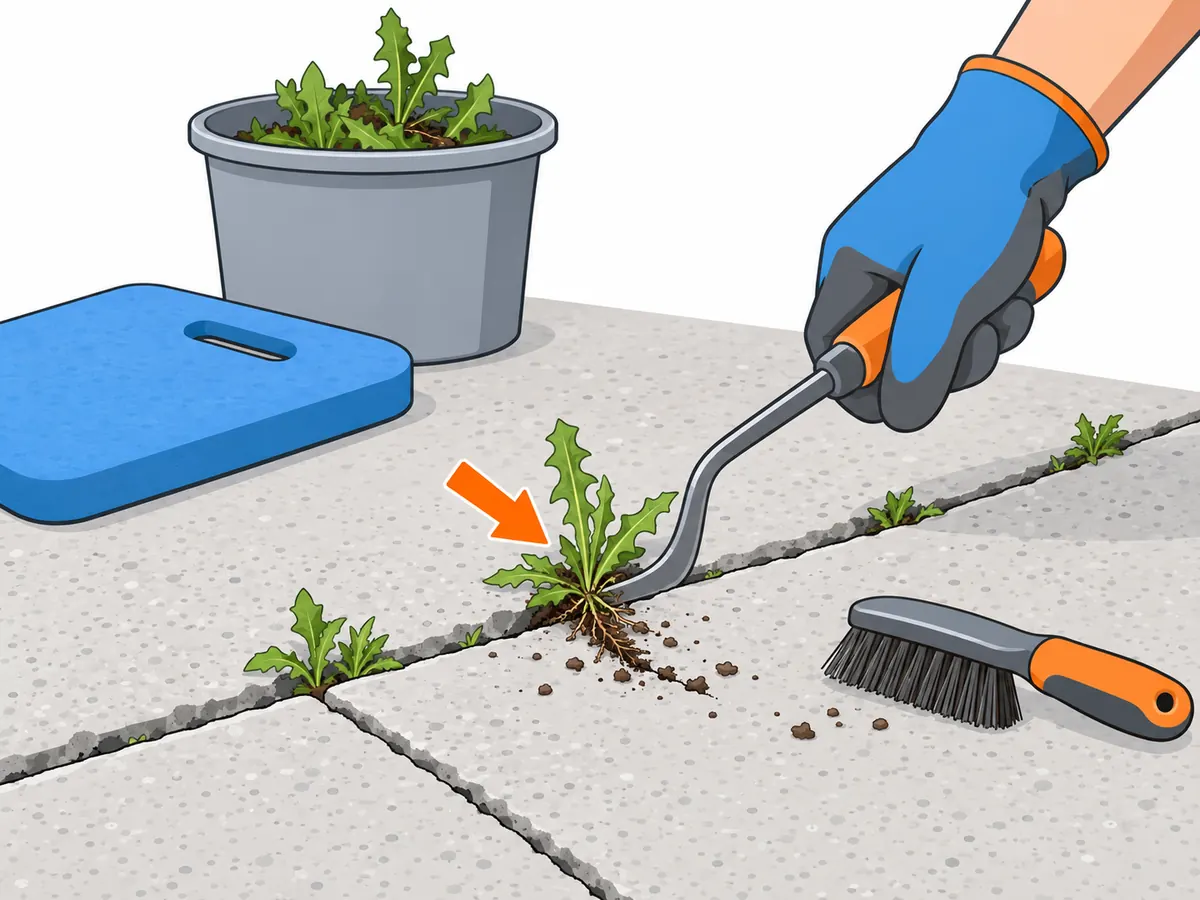
- Difficulty
- Easy
- Time
- 1 to 3 hours
- Tools
- Crack weeder or putty knife, gloves, kneeling pad, kettle, broom, stiff brush, caulk gun, concrete or asphalt crack filler, sand
- Call a pro if
- the pavement is sinking, heavily cracked or crumbling
In this guide
- Wear protection
- Chemical safety
Weeds in driveway cracks look messy, and their roots make the cracks wider. Water gets in, freezes and breaks the surface. The best way to remove weeds from driveway cracks is to pull them out by the root, then fill the cracks so they cannot grow back. This guide shows the steps and several low cost methods.
This guide is part of our wider guide to garage, decks, fences and yard care.
Step by step: remove the weeds
1. Wait for damp soil. Weeds come out more easily after rain, or after a light wetting with a hose.
2. Wear gloves and kneel on a pad.
3. Loosen the weeds with a crack weeder, a putty knife or a long screwdriver. Slide the tool along the crack and pry up the roots.
4. Pull the weeds out by hand, with the roots. Get as much root as you can.
5. Scrape the crack clean to remove dirt and moss.
6. Sweep and brush the crack to remove loose soil. A stiff brush or a leaf blower works well.
7. Dispose of the weeds in the trash, not on the lawn, if they have seeds.
Kill what is left
- Boiling water. Pour it slowly into the crack. This kills the weeds and can be done right after you pull them. Take care not to splash yourself or pour it near plants you want to keep.
- Vinegar and salt mix. A mix of vinegar, a little dish soap and salt can kill small weeds. Salt can harm soil and nearby plants, so use it only on the crack and keep it away from the lawn. Check local guidance before you use salt.
- A weed killer made for driveways. Follow the label closely and keep pets and children away until it dries.
Fill the cracks
Once the weeds are gone and the crack is clean and dry, fill it.
1. Clean the crack well, so the filler can bond.
2. Choose the filler. Use a concrete crack filler for concrete, or an asphalt crack filler for asphalt. Narrow cracks can take a caulk type filler. Wide cracks may need backer rod or sand first.
3. Apply the filler with a caulk gun or a pour spout, slightly overfilling.
4. Smooth it with a putty knife.
5. Let it cure as the label says before you drive on it.
See How to repair a concrete driveway crack for more detail.
Signs that point to why weeds keep coming back
Weeds return when seeds blow into open cracks or when roots are left behind. A wide crack holds soil and moisture. Shade and damp make it worse. Poor drainage that leaves water standing in the crack feeds them. A crack full of old sand or dirt is an ideal seed bed. Filling the crack and fixing drainage address the cause. See Downspout drainage: how to direct water away.
Other prevention
Sweep the driveway often. Keep the edges of the lawn trimmed. Fill new cracks as soon as you see them. Seal the surface every few years. Pull small weeds the day you see them, before they set roots.
Different cracks, different plans
A thin crack, about the width of a pencil line, can often be cleaned and sealed with a flexible caulk type filler. A crack about a quarter inch wide needs a pourable filler. A crack wider than half an inch needs backer rod, a foam cord pressed into the crack, before the filler so you do not use too much. A crack with raised edges or a sunken side means the ground under the pavement has moved, and filler will not fix that. Deep, branching cracks and potholes in asphalt need patching material and tamping.
Choose the season
The best time to fill cracks is on a dry day when the temperature is mild, usually in spring or fall. Cracks open wider in cold weather and close in heat, so filling in mild weather gives the longest lasting repair. Check the filler label for the temperature range and for the cure time. Avoid filling right before rain. Mark the area with cones or tape so no one drives or walks on the fresh filler.
Related guides
- How to Patch a Hole in Vinyl Siding Without Replacing the Panel
- How to Remove Oil Stains From a Garage Floor (Concrete)
- How to Start a Compost Bin at Home Without Smells or Pests
- How to Mow a Lawn Correctly: Height, Timing, and Pattern for Thicker Grass
- How to Prune Overgrown Shrubs Safely Without Hurting the Plant
FAQ
Does boiling water really work?
It works on small weeds, but deep roots can come back.
Can I use salt?
It can harm soil and plants, so avoid it near the lawn.
Should I fill the cracks?
Yes, filling stops weeds and keeps water out.
When is the best time?
After rain, when the soil is soft.
More from this topic
- How to Repair a Concrete Driveway Crack: How to repair a concrete driveway crack with a wire brush, backer rod and flexible filler. Steps, tools, and...
- How to Patch a Hole in Vinyl Siding: Learn how to patch a hole in vinyl siding with caulk, a patch piece or a replacement section. Simple steps...
- How to Seal a Concrete Driveway: Learn how to seal a concrete driveway: test for cure and moisture, clean and patch first, apply sealer in...
- How to Fill a Concrete Joint Crack: Learn how to fill a concrete joint crack: clean the joint, set a backer rod and seal it so water stops...
- How to Repair a Cracked Sidewalk Panel: Learn how to repair a cracked sidewalk panel: judge whether it is cosmetic or structural, clean and fill the...
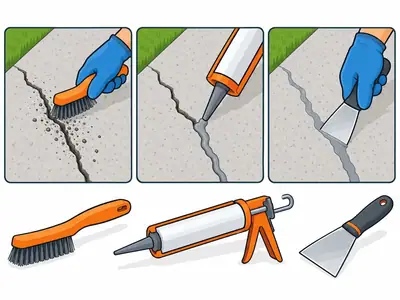 Garage and OutdoorsHow to Repair a Concrete Driveway CrackHow to repair a concrete driveway crack with a wire brush, backer rod and flexible filler. Steps, tools, and when a crack needs a pro.
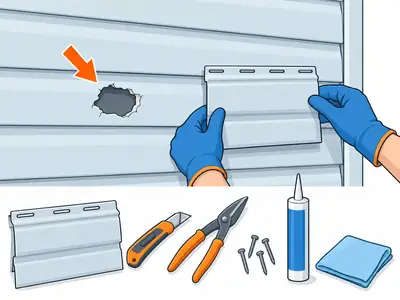 Garage and OutdoorsHow to Patch a Hole in Vinyl SidingLearn how to patch a hole in vinyl siding with caulk, a patch piece or a replacement section. Simple steps for small holes and cracks to keep water out.
 Garage and OutdoorsHow to Seal a Concrete DrivewayLearn how to seal a concrete driveway: test for cure and moisture, clean and patch first, apply sealer in even coats and know how often to reseal.
 Garage and OutdoorsHow to Fill a Concrete Joint CrackLearn how to fill a concrete joint crack: clean the joint, set a backer rod and seal it so water stops getting under the slab.
 Garage and OutdoorsHow to Repair a Cracked Sidewalk PanelLearn how to repair a cracked sidewalk panel: judge whether it is cosmetic or structural, clean and fill the crack, or replace the panel when needed.