
Downspout Drainage: How to Direct Water Away From Your House
Part of: Outdoors and garage · Also in: The Complete Guide to Outdoor and Yard Repair for Homeowners
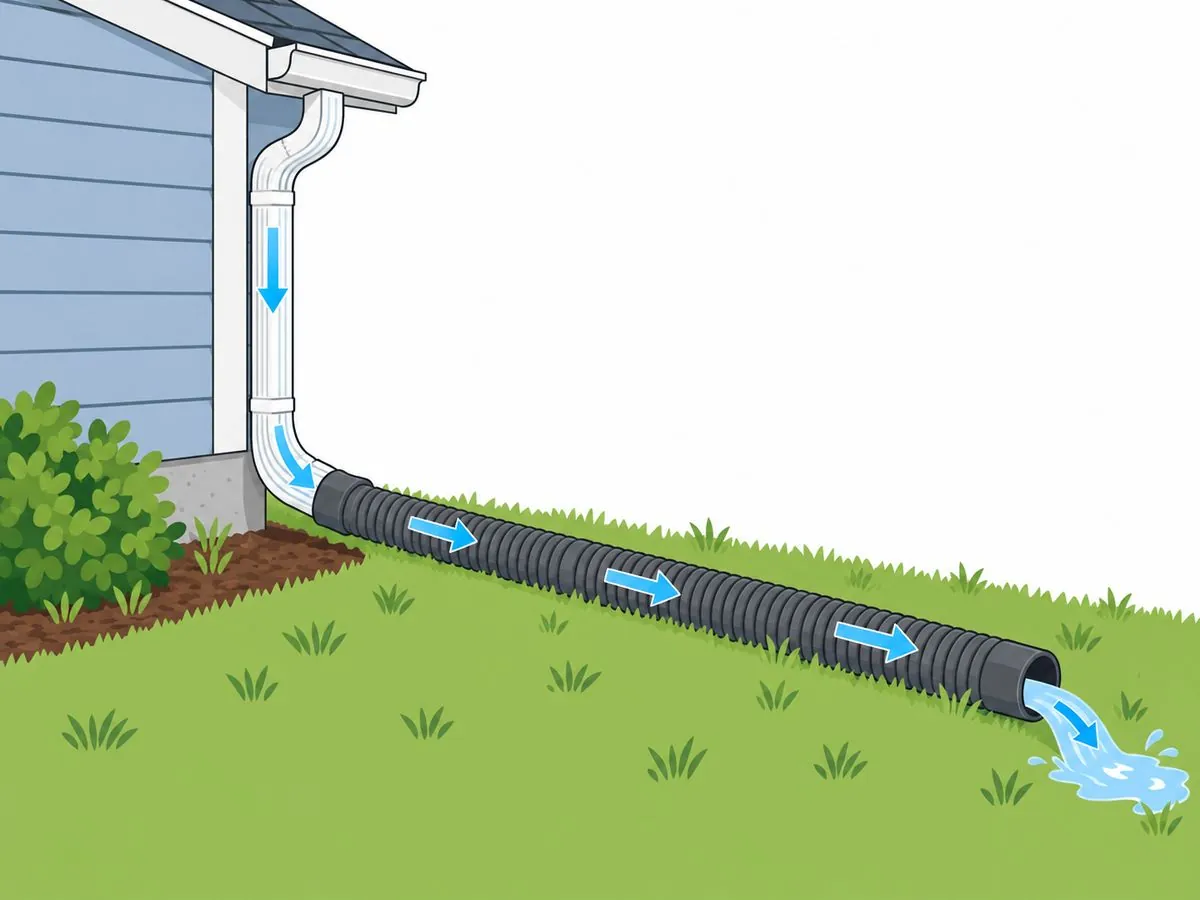
- Difficulty
- Easy
- Time
- 30 to 90 minutes
- Tools
- Tape measure, downspout extension or flexible pipe, splash block, screwdriver, hacksaw (for cutting pipe), shovel, level, work gloves
- Call a pro if
- water pools next to the foundation after you add extensions, you see foundation cracks or the basement leaks during storms
In this guide
- Wear protection
- Call 811 before digging
Poor downspout drainage is one of the most common reasons basements get damp. When water falls right next to the foundation, it soaks the soil and finds its way inside. The fix is simple and inexpensive: move the water several feet away.
This guide is part of our wider guide to gutters and drainage.
Why it matters
A roof sheds a lot of water in a heavy rain. A typical downspout can carry hundreds of gallons from one storm. If that water lands near the wall, the soil around the foundation stays wet, and wet soil pushes water through cracks and joints.
Size and route the extension
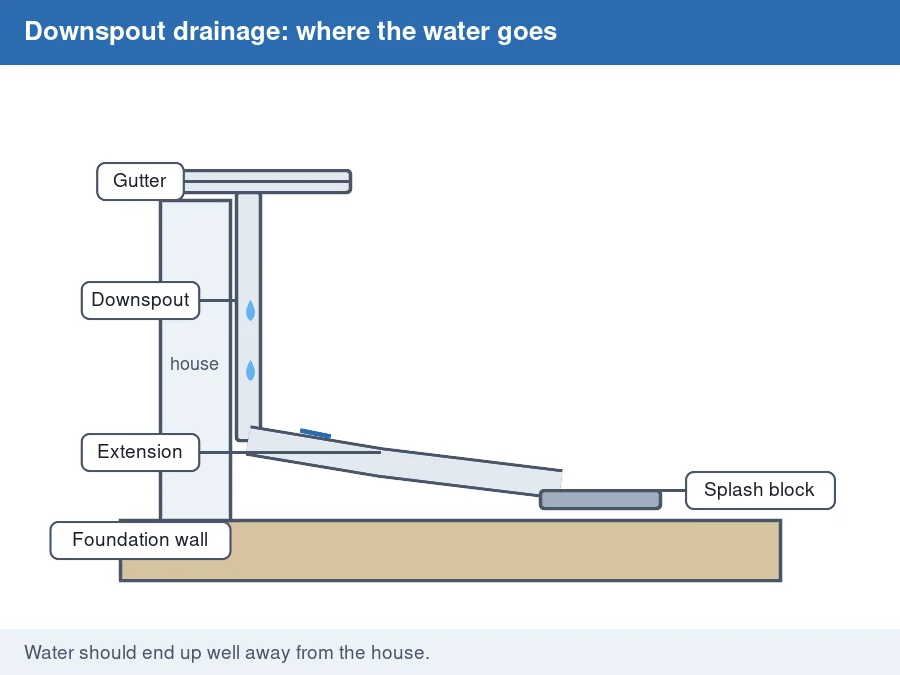
Walk the area and see where the water should go. The best place is a spot that slopes away from the house, at least 4 to 6 feet from the foundation, and farther if you can. Do not send water toward a neighbor, a driveway, a septic area or a sidewalk where ice can form. Check that the ground slopes down along the path.
Step by step
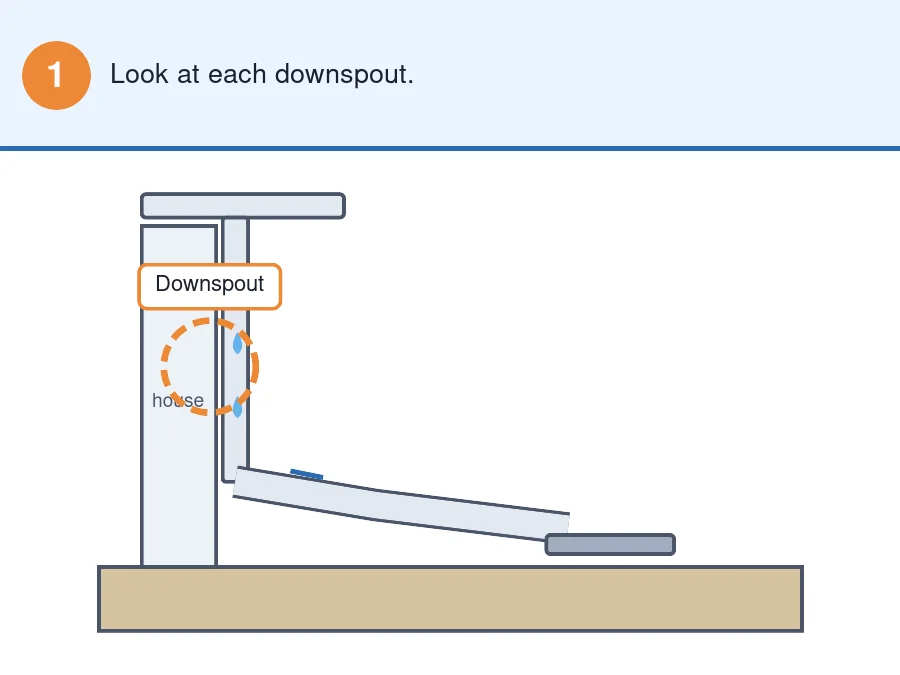
1. Look at each downspout. Watch during rain, or run a hose into the gutter. See where the water ends up.
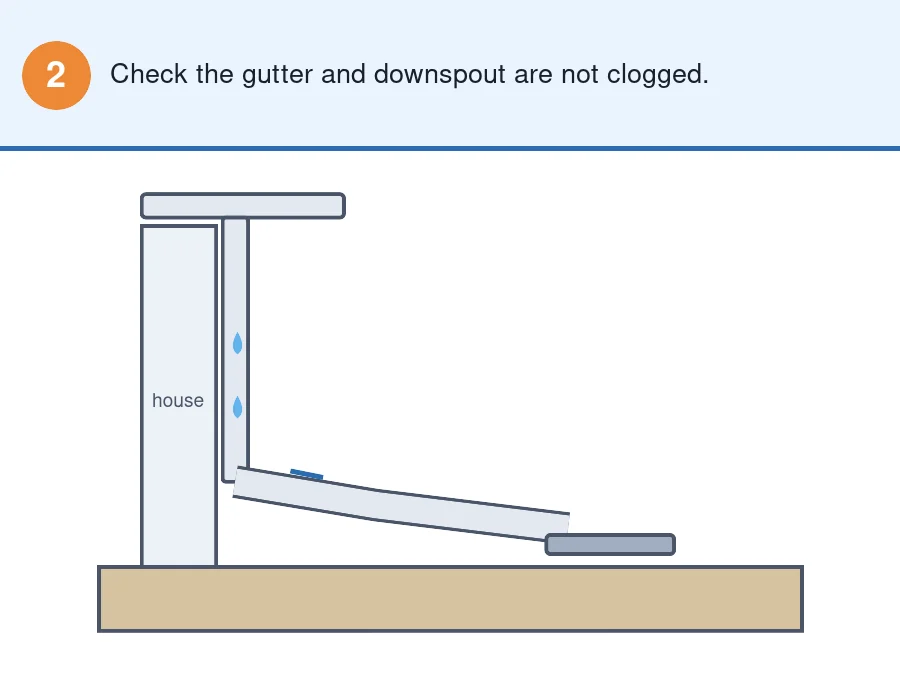
2. Check the gutter and downspout are not clogged. See How to clean gutters.
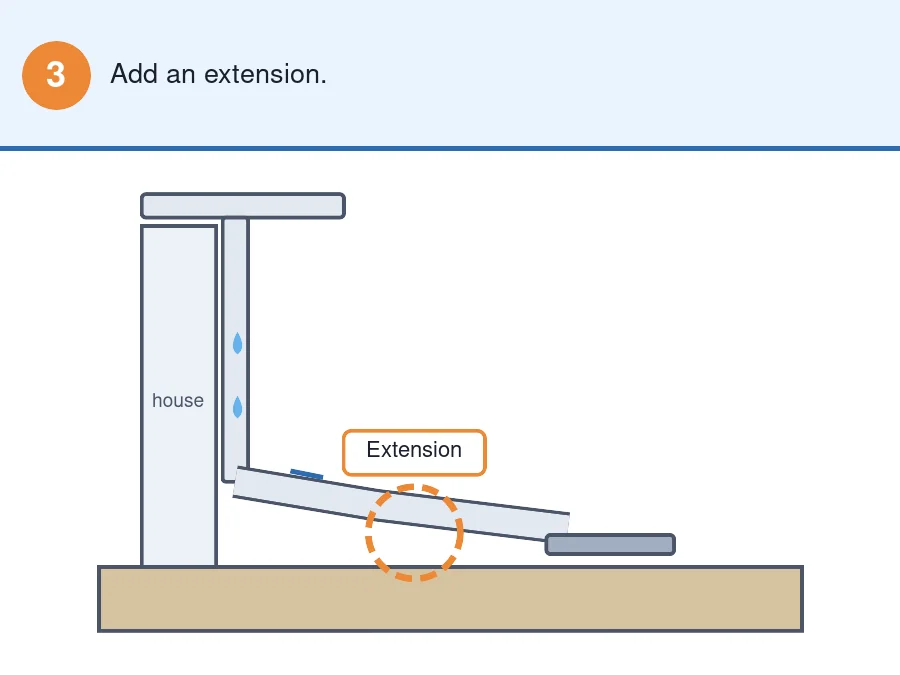
3. Add an extension. Fit a rigid or flexible extension to the bottom of the downspout. Many pros suggest at least 4 to 6 feet from the foundation, or farther if your yard is flat or your soil is clay.
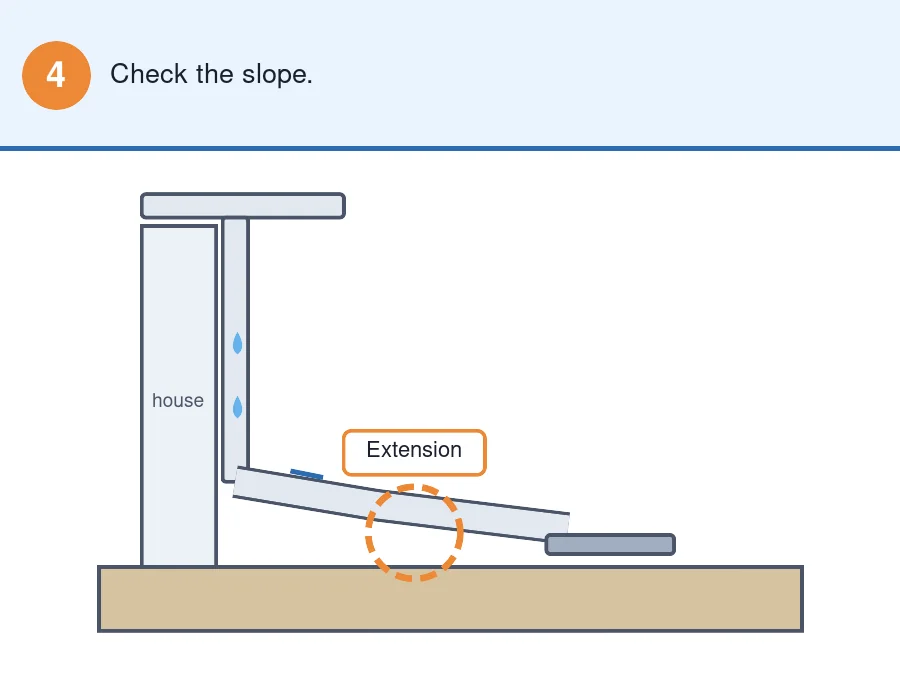
4. Check the slope. Where you can, grade the soil so it falls away from the foundation, roughly 6 inches across the first 10 feet. Add soil to low spots near the foundation and pack it down.
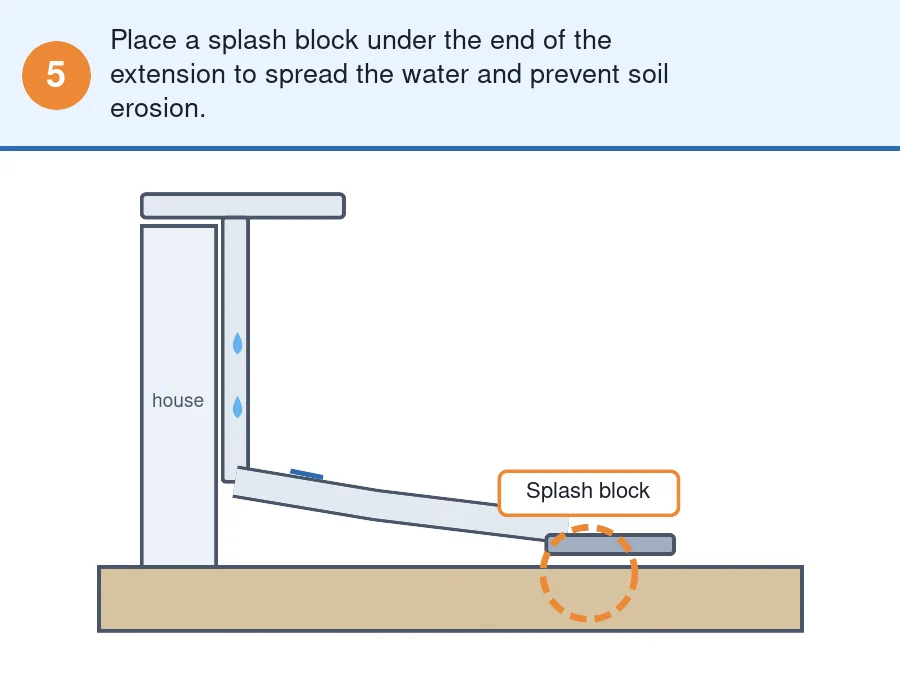
5. Place a splash block under the end of the extension to spread the water and prevent soil erosion.
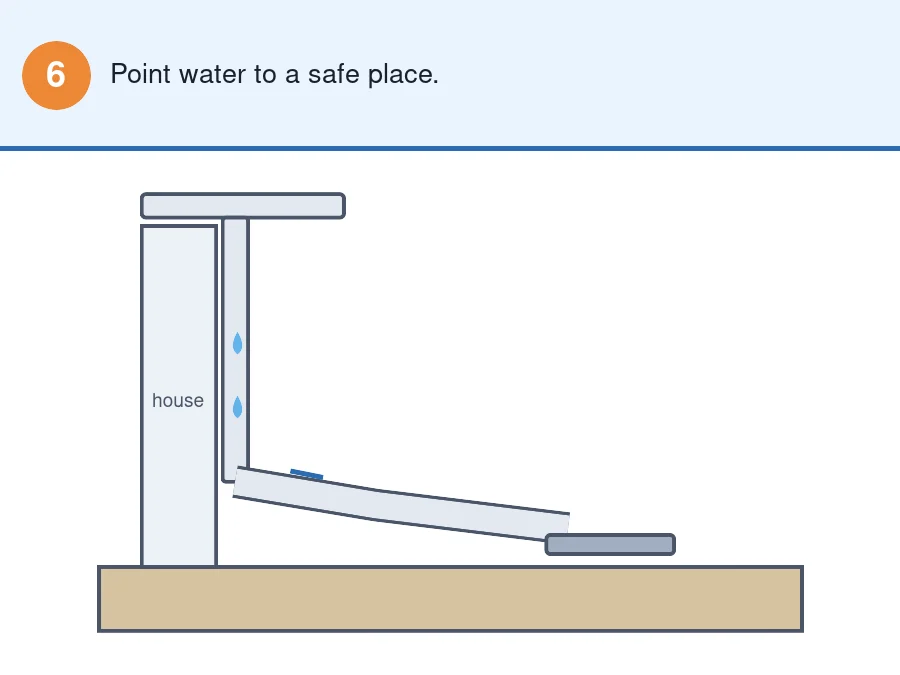
6. Point water to a safe place. Aim it at a lawn, a garden bed or a drain, not toward a neighbor's yard, the driveway edge or the sidewalk.
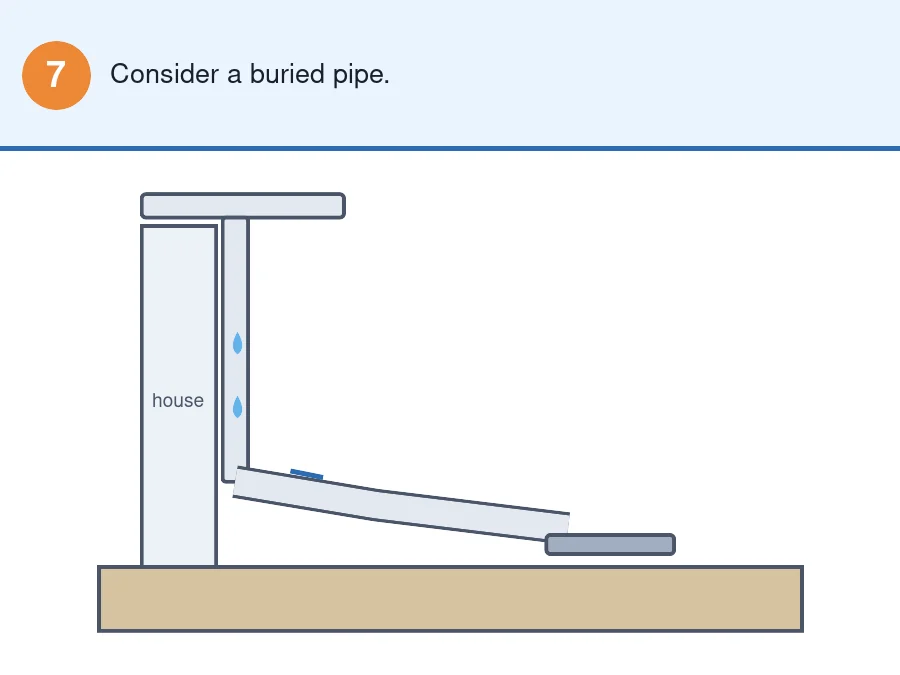
7. Consider a buried pipe. For long runs, you can bury a solid pipe with a slight downward slope to a drain outlet. Call your local utility locating service before you dig, in the US by dialing 811.
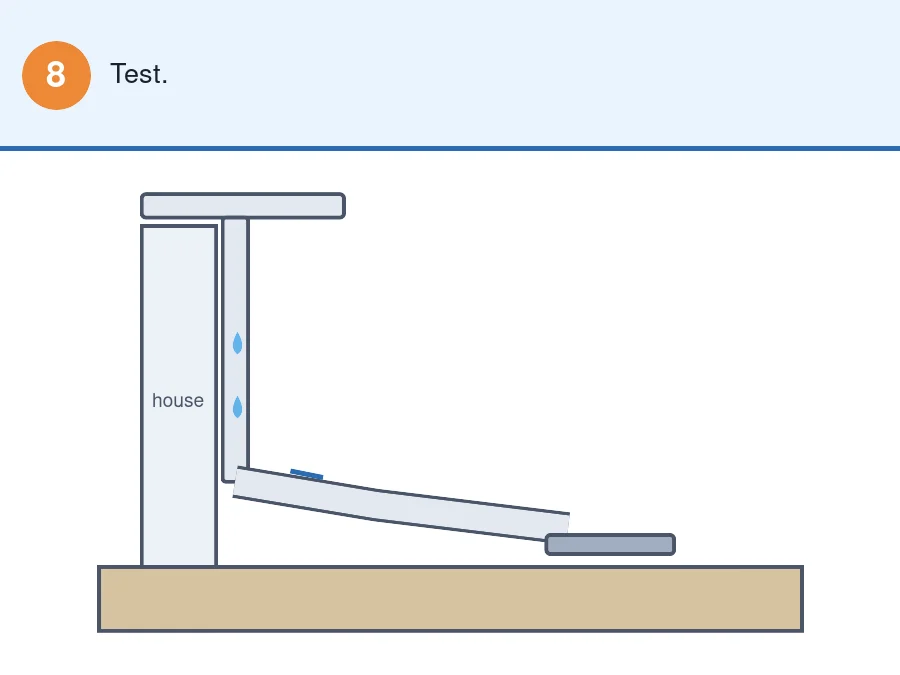
8. Test. Run a hose into the gutter for several minutes and watch where the water flows.
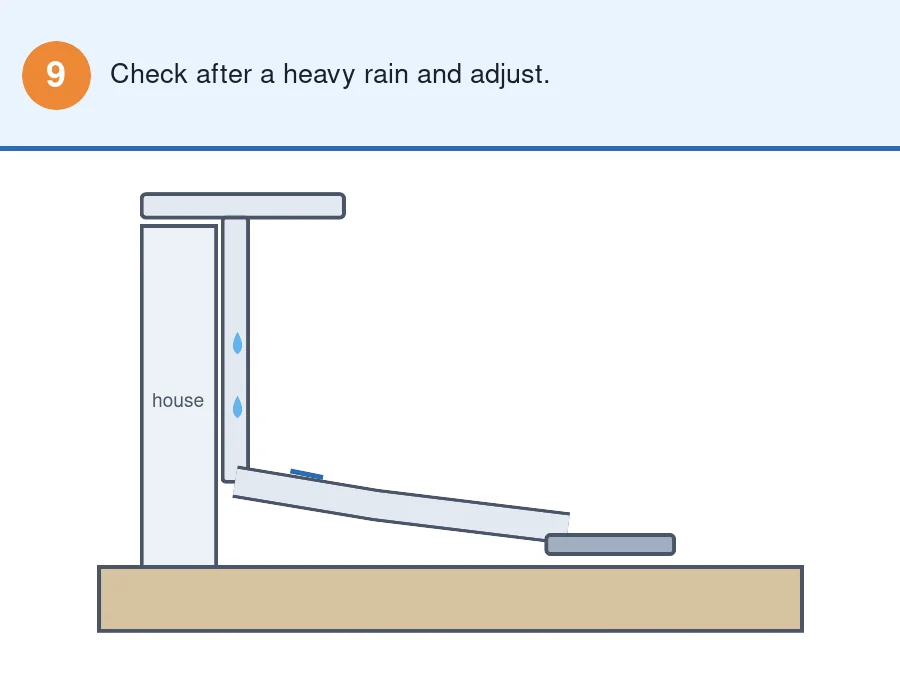
9. Check after a heavy rain and adjust.
Other fixes
- Use a downspout elbow to turn the water outward at the base.
- Fix gutters that overflow, which send water down the wall. See Leaking gutter seam: how to fix it.
- Check window wells and drains near the foundation.
Add a splash block
1. Place the block under the end of the downspout, with the sloped surface facing away from the house.
2. Level the soil under it, and pack it so the block does not rock.
3. Check that the water lands on the block and runs off the far end.
4. Move it if the water runs back toward the house.
Fix low spots and check the grade
Even a long extension fails if water stands at the end. Fill low spots along the path with packed soil so water keeps moving. Check that the ground slopes away from the foundation for the first ten feet, about an inch per foot if you can. A shovel and a few buckets of soil can fix a small dip. Reseed or mulch the bare soil so it does not wash out.
What to avoid
Do not connect a downspout to the sewer drain or to a foundation drain unless a plumber says it is allowed. Do not leave extensions in a place where you walk or mow without marking them.
Match the fix to your yard
A flat yard needs longer extensions or a buried pipe, because water has nowhere to run. A sloped yard may need only a short extension and a splash block, but check that the water does not run toward a neighbor or a low spot against the house. Clay soil drains slowly, so water can sit near the wall even with an extension. In sandy soil, water soaks in quickly, but it can still reach the foundation if it falls too near. Walk the yard during a storm to see where water goes, and adjust.
Mark and maintain
Mark extensions with a small flag so a mower does not run over them. Check them each fall for leaves and debris. Remove extensions before a hard freeze if standing water can freeze inside them.
Related guides
- How to Install a Downspout Extension and Splash Block
- Fix Sagging Gutter: Hangers, Supports and Slope
- How to Install a Hose Bib Cover for Winter
- Fix Leaking Garden Hose: Split, End or Coupling
FAQ
How far should a downspout drain from the house?
Many guides suggest at least 4 to 6 feet, and farther when you can.
Are flexible extensions good?
They are easy to use but can be crushed or clogged. Rigid pipe lasts longer.
Why is my basement damp even with extensions?
There may be other causes such as grading or cracks. See Musty smell in basement: what to do.
Do I need a permit to bury a pipe?
Rules vary by area. Check locally.
More from this topic
- How to Install a Concrete Splash Block: Learn how to install a concrete splash block: set it level, slope it away from the wall and stop the...
- How to Install a Downspout Extension: Learn how to install a downspout extension: fit the elbow, run the pipe downhill and keep roof water away...
- How to Stop Water Pooling Against a Foundation: Learn how to stop water pooling against a foundation: fix the grade, extend downspouts, clear the drainage...
- How to Build a Dirt Berm to Direct Water: Learn how to build a dirt berm to direct water: shape a low mound on the high side, compact it and plant it...
- How to Install a Dry Well: Learn how to install a dry well: size it for the roof area, dig and line the pit, connect the downspout and...
 Garage and OutdoorsHow to Install a Concrete Splash BlockLearn how to install a concrete splash block: set it level, slope it away from the wall and stop the downspout eroding the soil.
 Garage and OutdoorsHow to Install a Downspout ExtensionLearn how to install a downspout extension: fit the elbow, run the pipe downhill and keep roof water away from the foundation.
 Garage and OutdoorsHow to Stop Water Pooling Against a FoundationLearn how to stop water pooling against a foundation: fix the grade, extend downspouts, clear the drainage path and keep the basement dry.
 Garage and OutdoorsHow to Build a Dirt Berm to Direct WaterLearn how to build a dirt berm to direct water: shape a low mound on the high side, compact it and plant it so runoff goes where you want.
 Garage and OutdoorsHow to Install a Dry WellLearn how to install a dry well: size it for the roof area, dig and line the pit, connect the downspout and keep silt out so it drains between storms.