
How to Get Rid of a Musty Basement Smell by Fixing the Cause
Part of: Heating and cooling
- Difficulty
- Moderate
- Time
- A weekend, plus ongoing monitoring
- Tools
- Hygrometer, dehumidifier, flashlight, gloves, mask, soap and water, scrub brush, fans, plastic sheet for a moisture test, painter's tape
- Call a pro if
- You see large patches of mold, there is standing water or a flood, the walls are damp or crumbling, or the smell is sharp, like gas or sewage.
In this guide
- Gas safety
- Wear protection
- Chemical safety
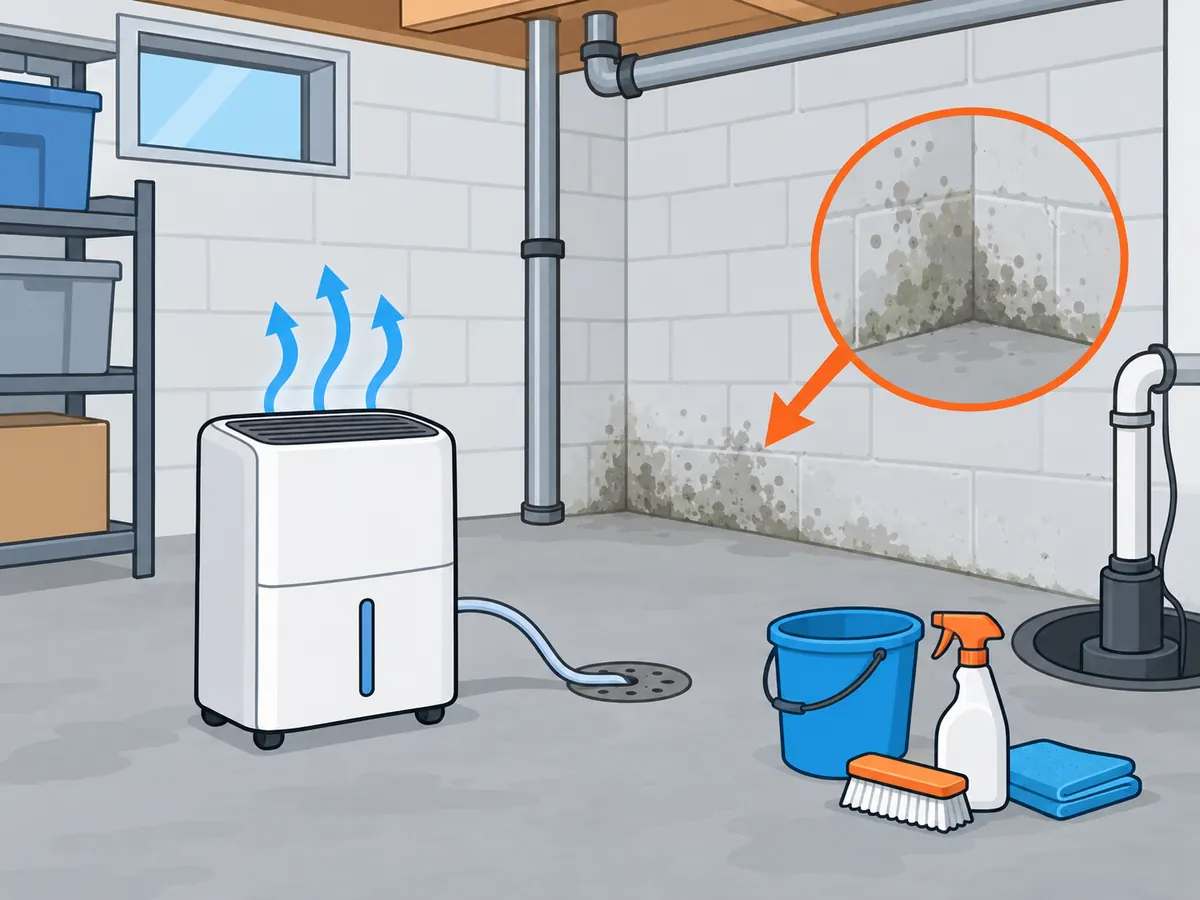
A musty basement smell is that damp, earthy odor you notice the moment you go down the stairs. It is not just unpleasant. It tells you that moisture is present and that mold or mildew may be growing. Masking it with air freshener does not help. The fix is to find the moisture and remove it.
This guide is part of our wider guide to heating, cooling and air quality.
What the smell means
A musty smell is often caused by mold or mildew growing on damp materials, such as cardboard boxes, carpet, wood and drywall. Basements are cool and below ground, so humid air condenses on cold walls and floors. The EPA says that controlling moisture is the key to controlling mold. You can read more at https://www.epa.gov/mold/brief-guide-mold-moisture-and-your-home.
Step 1: Find the moisture source
Look at each wall, the floor, the windows and the pipes. Check for water stains, white powder on concrete, peeling paint and rust. Feel for cold, damp spots. Tape a one-foot square of clear plastic to a wall and the floor, sealing the edges. After a day or two, look for moisture. If it is on the inside of the plastic, the air is humid. If it is under the plastic, moisture is coming through the wall or slab.
Common sources include:
- A leaking pipe, water heater or washing machine hose.
- Gutters and downspouts that dump water near the foundation.
- Soil that slopes toward the house.
- Cracks in the walls or the floor.
- A clothes dryer that vents into the basement.
- Everyday humidity in summer.
Step 2: Fix leaks and drainage
Fix any plumbing leaks. Clean the gutters and extend the downspouts at least several feet away from the foundation. See our guide to cleaning gutters. Grade the soil so it slopes away from the house. Vent the dryer outside. Fix cracks if they are small, or ask a pro for larger ones.
Step 3: Remove wet or moldy items
Throw out items that are moldy and cannot be cleaned, such as wet cardboard, old carpet and soaked insulation. Keep stored items on shelves, off the floor, and in plastic bins with lids.
Step 4: Clean the surfaces
Wear gloves and a mask. Scrub hard surfaces with detergent and water, then dry them fully. Do not mix products. For a small area of surface mold, soap and water usually work. For large areas or if the mold is in drywall or insulation, call a professional.
Step 5: Dry the air
Run a dehumidifier sized for the space. A common guideline is to keep humidity between 30 and 50 percent. Use a hygrometer to check the level. Empty the tank often or connect the drain hose. Fans help move air. Open windows only on dry days, since humid summer air can make it worse.
Step 6: Keep it from coming back
Watch the humidity with a hygrometer. Insulate cold water pipes to stop sweating. Keep the dehumidifier running in summer. Check the basement after heavy rain, and clean the drain and sump if you have them. A sump pump that fails can cause trouble, so test it.
Odors that are not mustiness
A rotten egg smell may be a dry drain trap or sewer gas. Pour water into floor drains to refill the trap. A gas smell is an emergency. A chemical smell may come from stored paint and solvents.
When to get help
If the smell continues after you dry the area, or you see widespread mold, get a professional to inspect. They can find hidden leaks and tell you what repairs are needed.
Related guides
- How to Bleed a Radiator Safely and Get Heat Back
- How to Insulate a Basement Rim Joist to Stop Drafts and Cold Floors
- Digital Hygrometer Comparison: ThermoPro TP50 and Two AcuRite Models
- How to Insulate Basement Walls From the Inside
FAQ
Do charcoal or baking soda bags work?
They absorb some odor but do not solve moisture.
Is a dehumidifier enough?
It helps, but leaks and drainage problems have to be fixed too.
Can I paint over the smell?
No. Paint will not stop the moisture and may peel.
More from this topic
- How to Install a Basement Dehumidifier: Learn how to install a basement dehumidifier: size it for the space, set it on a level spot, run the drain...
- How to Test Home Humidity With or Without a Hygrometer: Learn how to test home humidity: use a hygrometer, read the signs your house gives you, and keep levels in...
- How to Clean a Trash Can and Get Rid of the Smell for Good: Learn how to clean a trash can and stop odors: empty and rinse it, scrub with soap, disinfect, dry in the...
- How to Control Basement Humidity and Keep the Air Dry: Learn how to control basement humidity: measure it, find the moisture source, use a dehumidifier and airflow,...
- How to Get Rid of Centipedes in the House: Learn how to get rid of centipedes: cut the moisture they love, seal entry points, remove their prey, and...
 First HomeHow to Install a Basement DehumidifierLearn how to install a basement dehumidifier: size it for the space, set it on a level spot, run the drain and set the humidity so the basement stays dry.
 Heating and CoolingHow to Test Home Humidity With or Without a HygrometerLearn how to test home humidity: use a hygrometer, read the signs your house gives you, and keep levels in the healthy 30 to 50 percent range.
 CleaningHow to Clean a Trash Can and Get Rid of the Smell for GoodLearn how to clean a trash can and stop odors: empty and rinse it, scrub with soap, disinfect, dry in the sun, and use simple habits to keep it fresh.
 First HomeHow to Control Basement Humidity and Keep the Air DryLearn how to control basement humidity: measure it, find the moisture source, use a dehumidifier and airflow, and fix outside drainage that causes damp air.
 Garage and OutdoorsHow to Get Rid of Centipedes in the HouseLearn how to get rid of centipedes: cut the moisture they love, seal entry points, remove their prey, and clear them from basements.