
Heating, Cooling and Air Quality: Checks Before Service
Part of: Heating and cooling
- Difficulty
- Easy
- Time
- 15 to 60 minutes
- Tools
- Screwdriver, vacuum, flashlight, thermometer, batteries, caulk or weatherstripping
- Call a pro if
- You smell gas, the furnace or AC makes a grinding or screaming noise, refrigerant lines are involved, or the unit trips its breaker repeatedly.
In this guide
- Power off first
- Gas safety
This guide covers heating, cooling and air quality, from a thermostat that will not respond to humidity. Most heating and cooling complaints are airflow, filters or settings, and a service call costs more than the fix. The rest are usually a part that is cheap to replace. This page runs through the checks in the order that finds the answer fastest, and marks the point where opening the unit is no longer a good idea.
Cooling problems
An air conditioner that runs but does not cool is usually one of four things: a filter clogged with dust, a condenser coil packed with debris, a thermostat set wrong, or a unit that has iced over. Change the filter, clear the outdoor unit, and check the setting before you conclude the system has failed.
If the indoor unit is iced, turn it off and let it thaw before running it again, or you will repeat the cycle. Ice usually means restricted airflow or low refrigerant, and the second one is a technician's job.
A condensate line that clogs stops the system or leaks water near the air handler. Flushing it with water or a little vinegar once a season prevents the wet-ceiling version of that problem.
Keeping a house cool without running the AC all day is mostly shade, ventilation and timing: close blinds on the sunny side, run fans, and open windows at night when the air is cooler than the house.
Heat, radiators and thermostats
A radiator that stays cold at the top has air in it. Bleeding it takes a key, a cloth and five minutes, and the heat comes back immediately.
A furnace that runs but does not heat usually has a filter, a flame sensor or a pilot issue. A furnace that short-cycles can be a thermostat, a blocked flue or an oversized unit; the first two are worth checking. Listen at the return grille: a system that is straining for air will be noisy there and quiet at the registers, which points at the filter and the duct rather than the burner.
A thermostat that will not turn on is often just batteries, and the guide on a dead thermostat starts there for good reason. A thermostat schedule is worth setting properly: a few degrees of setback when the house is empty saves real money without hurting comfort.
Air leaks, insulation and ventilation
Most houses lose heat through a small number of places: the attic hatch, the rim joist in the basement, around windows and doors, and any penetration for pipes and wires. Finding air leaks with a hand or a smoke pencil and sealing them is the highest-value hour you can spend on energy.
Attic insulation depth is easy to check with a tape measure against the joists. Gaps and compressed patches matter as much as the average depth. Ventilation has to be right too: sealing a house without ventilation traps moisture, and an attic that cannot breathe grows mold on the roof deck.
Window insulation film is a cheap fix for single-pane windows in winter, and it is invisible when applied properly.
Air quality and humidity
Dust on vents is a filter and airflow problem, not a duct cleaning problem in most homes. Cleaning the vents and registers and changing the filter does the job.
Humidity is the other half of comfort. A damp basement smells musty because moisture is trapped; a dehumidifier plus fixing the water source solves it. A hygrometer tells you what you are actually dealing with instead of guessing. In winter, indoor humidity that is too high shows up as condensation on windows, which is the same moisture finding a cold surface.
When to stop and call a pro
Call for gas smells, grinding or screaming noises, a unit that trips its breaker, ice that keeps returning after a thaw, or any refrigerant work. Call as well if the furnace is old and the repair involves the heat exchanger: a cracked exchanger is a carbon monoxide risk, not a repair.
FAQ
How often should a furnace filter be changed? Every one to three months, more often with pets or a dusty house. A clogged filter is the most common cause of poor heating and cooling.
Why does my AC freeze up? Restricted airflow or low refrigerant. Change the filter, clear the coil, and if it returns, call a technician.
Is bleeding a radiator safe? Yes, if the system is a hot-water type and you keep a cloth under the key. Stop as soon as water comes out steadily.
Why is my house dusty after the heat comes on? Dust burning off the heat exchanger at the start of the season, plus a dirty filter. It settles after a few days.
Related guides
- Air Conditioner Not Cooling? Checks to Make Before You Call for Service
- How to Change a Furnace Filter (and How Often to Do It)
- How to Bleed a Radiator Safely and Get Heat Back
- How to Find Air Leaks in Your Home and Where to Seal First
- How to Fix a Thermostat That Won't Turn On: Batteries First
- How to Air Seal an Attic
More from this topic
- How to Fix a Thermostat That Won't Turn On: Batteries First: Learn how to fix a thermostat that won't turn on: replace the batteries, check the breaker and furnace...
- Lights, Ceiling Fans and Fixtures: Fixes and Safe Swaps: Ceiling fans: a light that flickers, a bulb stuck in the socket, a ceiling fan that wobbles or a doorbell...
- Seasonal Home Maintenance: What to Do Each Season: Seasonal home maintenance: a season by season list of the home maintenance jobs that prevent expensive...
- Tools, Costs and Your First Home: What to Expect: Your first home: which tools are worth buying, which to rent, what common repairs really cost, and the first...
- How to Change a Furnace Filter (and How Often to Do It): Learn how to change a furnace filter in five minutes: find the size, check the airflow arrow, swap it and...
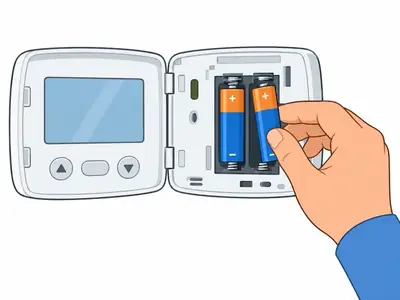 Heating and CoolingHow to Fix a Thermostat That Won't Turn On: Batteries FirstLearn how to fix a thermostat that won't turn on: replace the batteries, check the breaker and furnace switch, and know when to call an HVAC pro.
 Electrical BasicsLights, Ceiling Fans and Fixtures: Fixes and Safe SwapsCeiling fans: a light that flickers, a bulb stuck in the socket, a ceiling fan that wobbles or a doorbell that has gone silent. Steps and safety tips included.
 SeasonalSeasonal Home Maintenance: What to Do Each SeasonSeasonal home maintenance: a season by season list of the home maintenance jobs that prevent expensive repairs. Difficulty: easy, with tools and steps listed.
 Tools and BasicsTools, Costs and Your First Home: What to ExpectYour first home: which tools are worth buying, which to rent, what common repairs really cost, and the first jobs to do when you move into a new home.
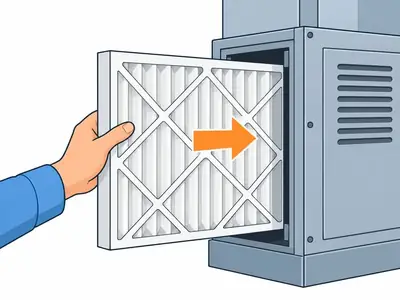 Heating and CoolingHow to Change a Furnace Filter (and How Often to Do It)Learn how to change a furnace filter in five minutes: find the size, check the airflow arrow, swap it and decide how often to replace it.