
Air Conditioner Not Cooling? Checks to Make
Part of: Heating and cooling
- Difficulty
- Easy to moderate
- Time
- 20 to 45 minutes
- Tools
- New filter, screwdriver, soft brush, garden hose, flashlight, towel
- Call a pro if
- You see ice on the lines or the indoor unit, the system trips the breaker, the unit makes a loud grinding or buzzing sound, or you suspect a refrigerant leak.
In this guide
- Power off first
An air conditioner not cooling can be a simple filter, thermostat or breaker issue. When an air conditioner is not cooling, the room feels warm and the system runs for hours. Before you assume the worst, work through the simple causes. Many are a few minutes of work.
This guide is part of our wider guide to heating, cooling and air quality.
Check the thermostat
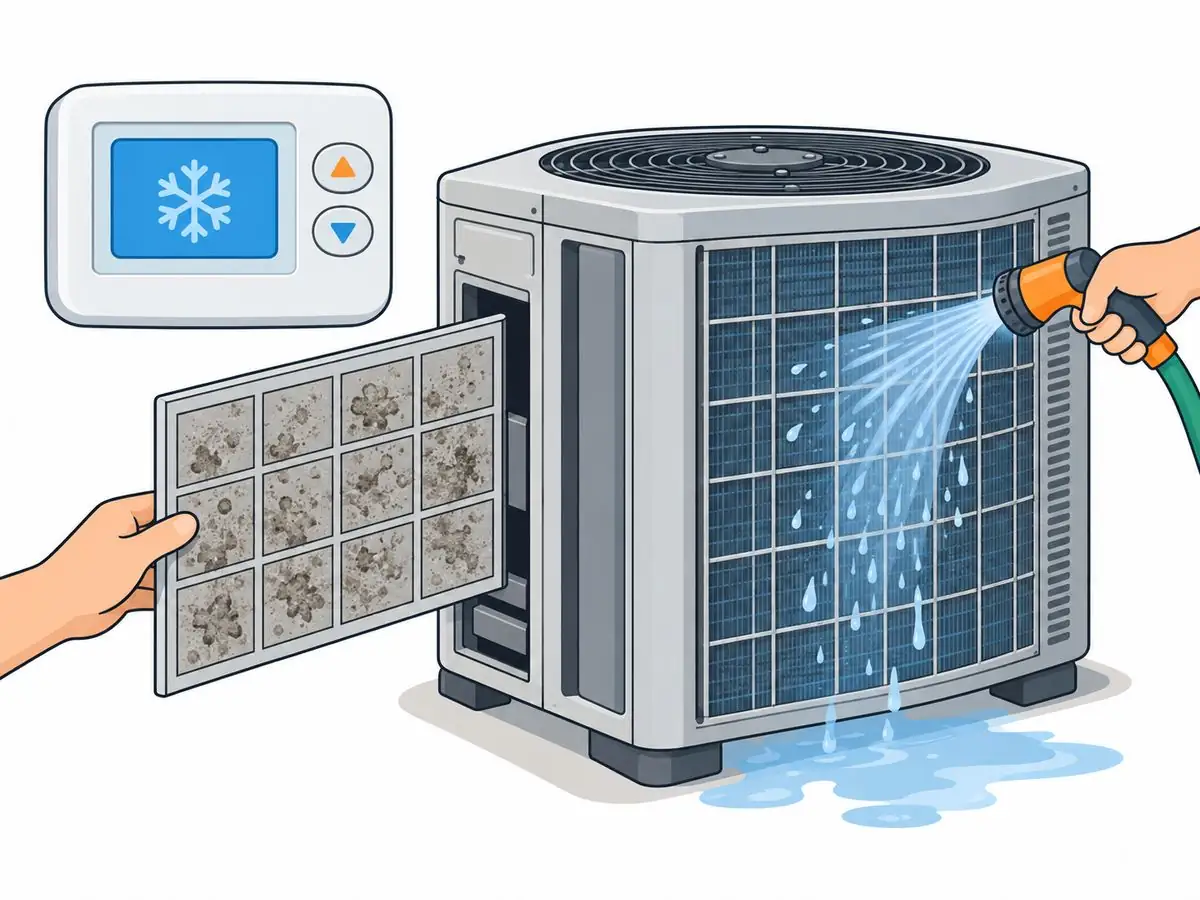
Make sure the thermostat is set to cool, the temperature is set below the room temperature, and the fan is on auto. A dead battery can also make a thermostat go blank. If your thermostat has other trouble, see our guide to a thermostat that will not turn on.
Look at the filter
A clogged filter cuts airflow, and the system cannot move cool air. Slide the filter out and hold it to the light. If you cannot see through it, replace it with the right size. Most filters need a change every one to three months. Our guide to changing a furnace filter shows how.
Check the breaker and switches
The outdoor unit has its own breaker, and often a disconnect box next to the unit. If the breaker is tripped, reset it once. If it trips again, stop and call a technician. See how to reset a tripped breaker.
Clear the outdoor unit
Turn off the power. Remove leaves, grass clippings and cobwebs from around the unit. Keep about two feet of clear space on all sides. Gently rinse the outside fins with a garden hose, spraying from the outside, without high pressure. Bent fins can be straightened with a fin comb, but do it carefully.
Check the vents and drain
Open all supply vents and make sure furniture or rugs do not cover them. Look for a condensate drain pipe near the indoor unit. If it drips a lot or the pan is full, the line may be clogged.
Ice on the lines
If you see ice on the copper line or on the indoor coil, turn off the cooling and set the fan to on to thaw it. This can take a few hours. Ice often comes from low airflow or low refrigerant. If it returns after you replace the filter, call a technician.
When it is a pro job
Warm air from the vents with a running outdoor fan, hissing or oily spots, or a compressor that clicks and does not start are signs of refrigerant or electrical trouble.
Give it time to recover
After you fix the cause, the house will not cool right away. A system needs several hours to bring a hot house down, and it works best if you keep doors and windows closed, shut blinds on sunny sides and avoid dropping the thermostat by many degrees at once. If it still struggles on a normal day after the filter and coil are clean, it is time for a service visit.
Notes for window and portable units
If you have a window or portable unit, the list is a little different. Clean the filter, which slides out the front, by rinsing it and letting it dry. Check that the unit is level enough to drain, and that the window seal is tight. A portable unit needs its exhaust hose to run out of the room, and a hose that is kinked or leaking hot air back inside will cancel the cooling. Also check that the room is not too large for the unit's rating. A unit sized for a bedroom will not keep a whole living room cool, no matter how clean it is.
Related guides
- Dryer Not Heating but Running? 6 Checks Before You Call for Repair
- How to Control Basement Humidity and Keep the Air Dry
- How to Clean Air Vents and Registers Without Hiring a Duct Cleaner
- How to Find Air Leaks in Your Home and Where to Seal First
- How to Vent a Portable Air Conditioner the Right Way
FAQ
How often should an AC be serviced?
A yearly checkup before summer is a common recommendation.
Why is the AC running all day?
It may be undersized, dirty or the weather is extreme. Check the filter first.
Can I add refrigerant myself?
No. It needs a licensed technician.
More from this topic
- How to Prepare Your Air Conditioner for Summer: Learn how to prepare your air conditioner for summer: change the filter, clean the outdoor unit, clear the...
- How to Clean a Window Air Conditioner for Better Cooling: Learn how to clean a window air conditioner: wash the filter, clean the coils and fins, clear the drain and...
- How to Clean Evaporator Coils on Your Air Conditioner: Learn how to clean evaporator coils: access the indoor coil safely, brush and rinse away buildup, and keep...
- How to Reduce Dust in Your Home for Good: Learn how to reduce dust in your home: upgrade your filter, fix the leaks that pull dust in, and clean in the...
- How to Set a Thermostat Schedule to Save Energy: Learn how to set a thermostat schedule to save energy: pick wake, away, home, and sleep settings, avoid big...
 Heating and CoolingHow to Prepare Your Air Conditioner for SummerLearn how to prepare your air conditioner for summer: change the filter, clean the outdoor unit, clear the drain line and test it before the heat.
 Heating and CoolingHow to Clean a Window Air Conditioner for Better CoolingLearn how to clean a window air conditioner: wash the filter, clean the coils and fins, clear the drain and get full cooling power back.
 Heating and CoolingHow to Clean Evaporator Coils on Your Air ConditionerLearn how to clean evaporator coils: access the indoor coil safely, brush and rinse away buildup, and keep your AC cooling efficiently.
 Heating and CoolingHow to Reduce Dust in Your Home for GoodLearn how to reduce dust in your home: upgrade your filter, fix the leaks that pull dust in, and clean in the order that actually works.Heating and CoolingHow to Set a Thermostat Schedule to Save EnergyLearn how to set a thermostat schedule to save energy: pick wake, away, home, and sleep settings, avoid big swings, and match your system type.