
How to Reset a Tripped Breaker Safely
Part of: Electrical safety
- Difficulty
- Easy
- Time
- 5 to 10 minutes
- Tools
- Flashlight
- Call a pro if
- The breaker trips again right away or often, feels hot, or smells burnt.
In this guide
- Power off first
When part of your house suddenly loses power, a tripped circuit breaker is the most common reason. Breakers are designed to shut off when a circuit carries too much current. Knowing how to reset a tripped breaker is a basic skill, but it also helps to know when not to reset it.
This guide is part of our wider guide to electrical problems and safety.
Remember this rule for any later electrical job: turn off power at the breaker first. Before you replace an outlet, switch or light fixture, switch the matching breaker off, then confirm with a non-contact voltage tester that the power is really off.
Why breakers trip
Three things cause most trips. An overload happens when too many devices run on one circuit, such as a space heater and a hair dryer. In a short circuit a hot wire touches a neutral or ground wire, which damaged wiring or a faulty appliance can cause. A ground fault is similar but involves current leaking to ground, which is common in damp places.
Step 1: Unplug or turn off what was running
Before you touch the panel, unplug or switch off the devices on the dead circuit. This reduces the chance that the breaker trips again right away and helps you find the cause.
Step 2: Find the panel
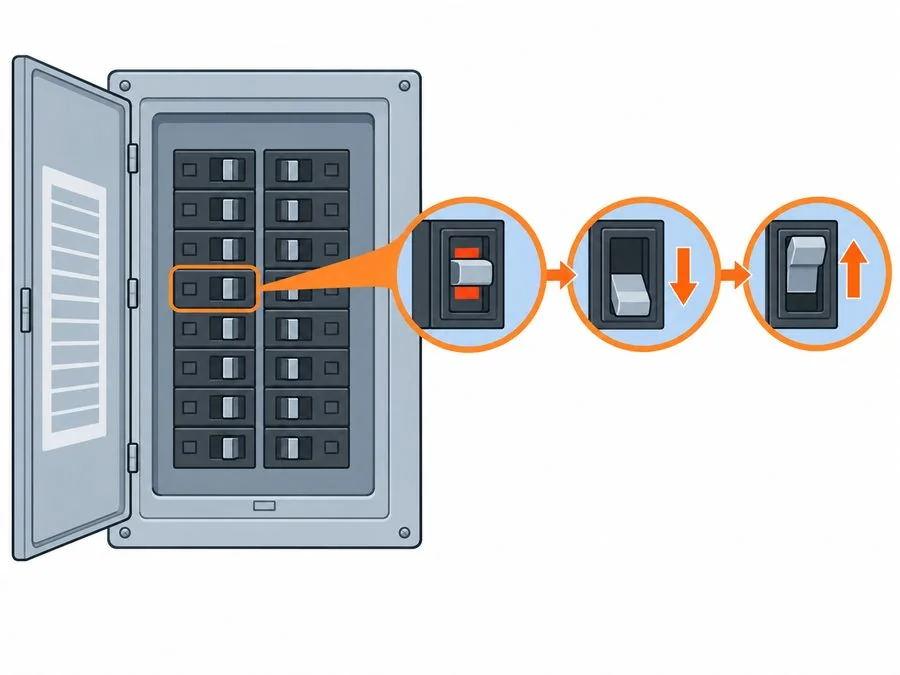
Panels are usually in a basement, garage, utility room or closet. Make sure the floor around it is dry. Never stand in water or touch the panel with wet hands. Open the door and look at the switches. A tripped breaker is usually in the middle position, or its switch looks different from the others. Some show an orange or red marker.
Step 3: Reset it correctly
Push the switch firmly all the way to the OFF position first. You will often feel a click. Then push it to ON. Stand to the side of the panel and use one hand, keeping your face away from it. If the breaker holds, power should come back.
Step 4: Plug things back in slowly
Plug devices back in one at a time. If the breaker trips as you plug in one item, that device may be faulty or too demanding for the circuit. Stop using it.
GFCI outlets
Bathrooms, kitchens, garages and outdoor outlets often have GFCI outlets with TEST and RESET buttons. If an outlet is dead, press the RESET button on that outlet, or on another GFCI outlet nearby, since one can protect several.
When not to reset
Do not keep resetting a breaker that trips again. That is a sign of a real fault. Call an electrician if you notice any of these:
- A burning smell or scorch marks at the panel or an outlet.
- A breaker that is hot to touch.
- Buzzing or crackling from the panel.
- Lights that flicker often.
- A breaker that will not stay on, even with nothing plugged in.
- Water in or around the panel.
Common mistakes
- Taping or holding a breaker on.
- Replacing a breaker with a bigger one. That can cause wires to overheat.
- Removing the panel cover. Only a qualified electrician should open the inside of a panel.
A note on safety
Working inside a panel or on wiring is not a beginner job. The steps in this guide only involve the switch on the front. If you are unsure, leave it alone and call a licensed electrician.
How to prevent trips
Spread heavy appliances across different circuits. Space heaters, microwaves, toasters and hair dryers each draw a lot of power, so avoid running several on the same circuit at once. Do not overload power strips, and replace appliances that have frayed cords or that make the lights dim when they start. If you keep needing to unplug things to avoid trips, ask an electrician whether the circuit needs to be upgraded.
Related guides
- Hose Bib Vacuum Breaker Leaks: How to Stop Water Spraying From the Spigot
- How to Find Your Electrical Panel and Label Breakers
- Lights Dim When Appliance Starts: What It Means
- Breaker Will Not Reset: What to Do
- How to Test a Circuit Breaker With a Multimeter
- How to Replace a Light Switch Safely in 20 Minutes
FAQ
Why did my breaker trip?
An overload, a short circuit or a ground fault.
How do I reset it?
Push it fully off, then fully on.
Is it safe to keep resetting?
Once is fine. If it trips again, find the cause or call an electrician.
What if the breaker will not stay reset?
A breaker that trips again immediately or within minutes is telling you the fault is still there: an overloaded circuit; a short; or a ground fault. Unplug everything on that circuit and reset once more. If it still trips; stop and call an electrician.
Should I turn anything off before resetting a breaker?
Yes. Switch off or unplug the devices on that circuit first; especially electronics and motors. Resetting into a full load can cause a surge; and if a faulty device caused the trip; you want it disconnected when power returns.
Where is my breaker panel usually located?
Common spots are the garage; basement; utility room; hallway closet; or an exterior wall in warmer climates. In apartments it is often in a kitchen or hallway. The panel door usually has a directory labeling each circuit.
More from this topic
- Circuit Breaker Keeps Tripping When Microwave Runs: Circuit breaker keeps tripping when microwave runs? Learn the usual causes, a safe way to test them and when...
- What to Do When Your GFCI Outlet Will Not Reset: Learn what to do when your GFCI outlet will not reset: check for a tripped breaker, unplug devices, find...
- Power Out in One Room? What to Check First: Power out in one room usually means a tripped breaker, a tripped GFCI upstream or a failed connection. Check...
- How to Replace an Outlet: Swap a GFCI Outlet Safely: Learn how to replace an outlet with a GFCI outlet safely: turn off power at the breaker, test it, swap the...
- GFCI Keeps Tripping: What It Means and What to Do: When a GFCI keeps tripping, it is doing its job: a ground fault, a wet location, a bad appliance or a failing...
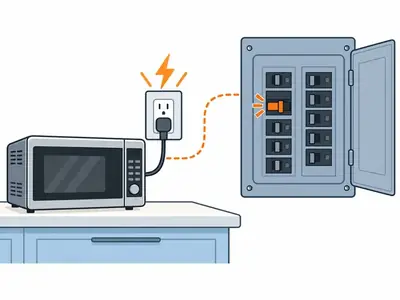 Electrical BasicsCircuit Breaker Keeps Tripping When Microwave RunsCircuit breaker keeps tripping when microwave runs? Learn the usual causes, a safe way to test them and when to stop and call a licensed electrician.
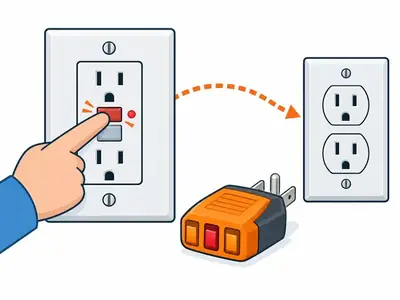 Electrical BasicsWhat to Do When Your GFCI Outlet Will Not ResetLearn what to do when your GFCI outlet will not reset: check for a tripped breaker, unplug devices, find linked outlets and know when to replace it.Electrical BasicsPower Out in One Room? What to Check FirstPower out in one room usually means a tripped breaker, a tripped GFCI upstream or a failed connection. Check them safely, in this order.
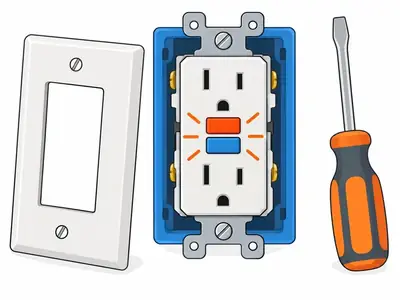 Electrical BasicsHow to Replace an Outlet: Swap a GFCI Outlet SafelyLearn how to replace an outlet with a GFCI outlet safely: turn off power at the breaker, test it, swap the wires and when to call an electrician.Electrical BasicsGFCI Keeps Tripping: What It Means and What to DoWhen a GFCI keeps tripping, it is doing its job: a ground fault, a wet location, a bad appliance or a failing device. Find which one, safely.