
Circuit Breaker Keeps Tripping When Microwave Runs
Part of: Appliances
- Difficulty
- Easy to diagnose, not a DIY wiring fix
- Time
- 20 to 30 minutes to find the cause
- Tools
- Flashlight, a notepad, a plug-in outlet tester (optional)
- Call a pro if
- The breaker is hot, buzzing or smells burnt, it trips with nothing plugged in, or the panel is warm or scorched.
In this guide
- Power off first
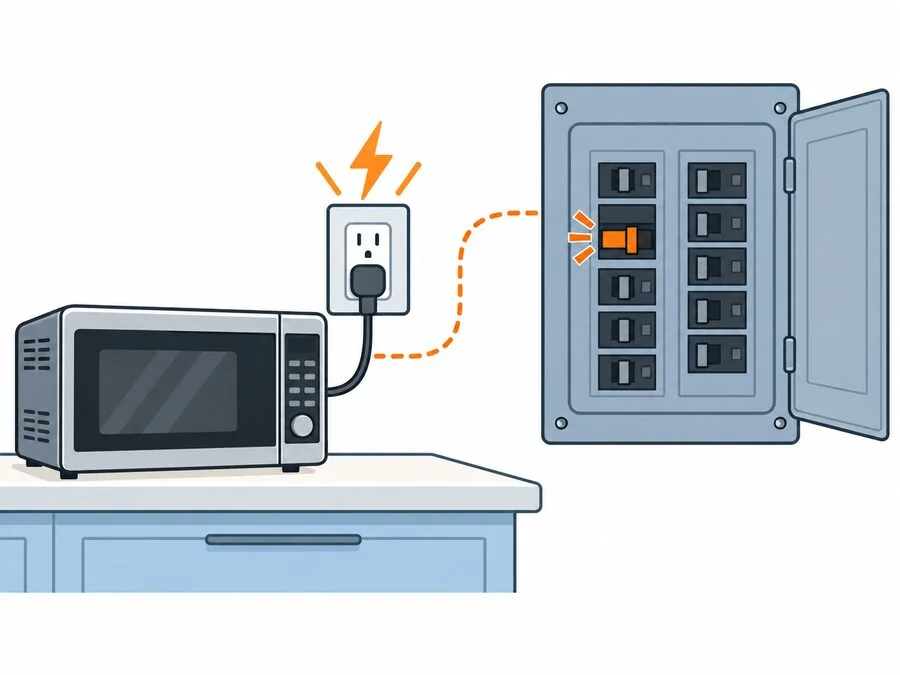
If your circuit breaker keeps tripping when microwave runs, the circuit is usually carrying more than it was built for, or one device on it is failing. A breaker is a safety switch. Each time it trips, it is telling you something about the load or the wiring behind it.
Why a microwave trips a breaker
A microwave oven draws a lot of power while it heats, often 1,000 to 1,500 watts. On a standard 15 or 20 amp kitchen circuit, that is a big share of the limit. Add a toaster, coffee maker or kettle on the same circuit and the total goes past what the breaker allows. It trips to protect the wire.
The most common causes are:
- Too many appliances sharing one circuit, so the combined load is too high.
- A microwave with an internal fault, such as a worn door switch or failing part.
- A breaker that has gotten weak with age and trips early.
- A loose connection at an outlet or at the breaker, which can heat up.
- A ground fault, if the circuit is a GFCI or AFCI type breaker.
Step 1: Unplug everything else on that circuit
Turn the microwave off and unplug anything else in the kitchen that shares the outlet or nearby outlets. Reset the breaker by switching it fully off, then on. Run the microwave alone for 30 seconds with a cup of water inside. Never run it empty.
If it works alone, you have an overload. The fix is to spread the load. Move other appliances to a different circuit and avoid running high-power items at the same time as the microwave.
Step 2: Check which outlet and which breaker
Write down which outlets lose power when the breaker trips. This tells you how many things share the circuit. Many kitchens have two small-appliance circuits, and a microwave ideally has its own. Do not guess. If you cannot tell which breaker feeds which outlet, see our guide on how to reset a tripped breaker for safe ways to identify them.
Step 3: Test the microwave somewhere else
If the breaker trips even with only the microwave plugged in, try the microwave in an outlet on a different circuit, plugged directly into the wall. Never use an extension cord or power strip. If it trips the other breaker too, the microwave is the problem. Check the cord for damage, and think about replacing the unit. Microwave internals hold dangerous stored electricity, so do not open the case.
Step 4: Look for warning signs
Stop and leave it alone if you notice any of these:
- The breaker switch feels warm or hot.
- You hear buzzing or crackling, or smell burning plastic.
- Outlet cover plates are discolored.
- The breaker trips right away, even with nothing running.
- The lights dim when the microwave starts.
These point to a loose connection, damaged wire or failing breaker. That is electrician work, and it is a fire risk.
What not to do
- Do not replace a 15 amp breaker with a 20 amp one. The wire may not handle it.
- Do not hold a breaker on, or tape it.
- Do not use a power strip or extension cord for a microwave.
- Do not keep resetting a breaker that trips again right away. Repeated resets can stress the breaker and the wiring.
How an electrician fixes it
An electrician will check the load, test the breaker and look at connections. Common solutions are moving the microwave to a dedicated circuit, replacing a worn breaker or tightening a loose connection. A dedicated 20 amp circuit for a built-in microwave is a standard upgrade, and it needs a permit in many areas. Ask for a written quote and ask whether a permit is included.
Related guides
- Lights Dim When Appliance Starts: What It Means
- Microwave Turntable Not Spinning: Causes and Easy Fixes
- Range Hood Fan Weak or Noisy: Causes and Simple Fixes
- Microwave Not Heating: What to Check
When to call a pro
A microwave that trips a shared breaker needs its own circuit, and running one is a licensed electrician job with a permit in most areas. Never swap in a bigger breaker to stop the trips; the breaker protects the wire, and oversizing it lets the wire overheat inside the wall. Sources: NFPA 70 (NEC) 210.52(B), NFPA electrical fire safety guidance.
FAQ
Is it normal for a microwave to trip a breaker once in a while?
A single trip when you run several appliances together is a sign of overload, not always a fault. If it happens often, or with the microwave alone, treat it as a problem and find the cause.
Can a bad microwave trip the breaker?
Yes. A failing door switch, magnetron or wiring inside the oven can draw too much current. If the microwave trips breakers on more than one circuit, replace it instead of repairing it.
Is it safe to keep resetting the breaker?
Resetting once after removing the extra load is fine. Resetting again and again is not. A breaker that keeps tripping is warning you about a real problem.
More from this topic
- How to Reset a Tripped Breaker Safely: How to reset a tripped breaker safely, what usually causes it, and the warning signs that mean you should...
- Breaker Will Not Reset: What to Do: Breaker will not reset? Unplug devices, flip it fully off then on and learn what a repeat trip means. Safe...
- GFCI Keeps Tripping: What It Means and What to Do: When a GFCI keeps tripping, it is doing its job: a ground fault, a wet location, a bad appliance or a failing...
- How to Find Your Electrical Panel and Label Breakers: How to find your electrical panel and label breakers in a new home. Safe steps with a helper, a radio or...
- How to Map Your Breaker Panel in One Afternoon: Learn how to map your breaker panel: label every breaker to its rooms and outlets with a lamp, a helper and a...
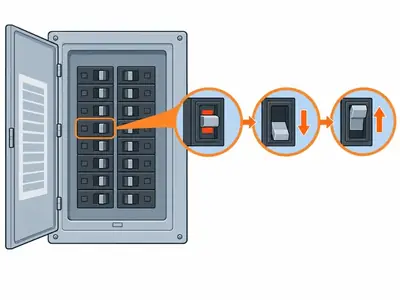 Electrical BasicsHow to Reset a Tripped Breaker SafelyHow to reset a tripped breaker safely, what usually causes it, and the warning signs that mean you should call an electrician. Steps and safety tips included.
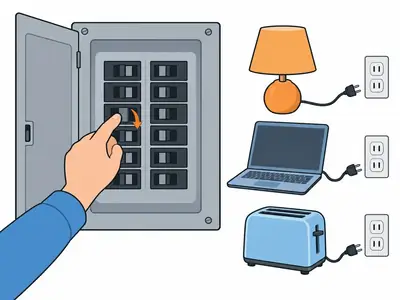 Electrical BasicsBreaker Will Not Reset: What to DoBreaker will not reset? Unplug devices, flip it fully off then on and learn what a repeat trip means. Safe steps and when to call an electrician.Electrical BasicsGFCI Keeps Tripping: What It Means and What to DoWhen a GFCI keeps tripping, it is doing its job: a ground fault, a wet location, a bad appliance or a failing device. Find which one, safely.
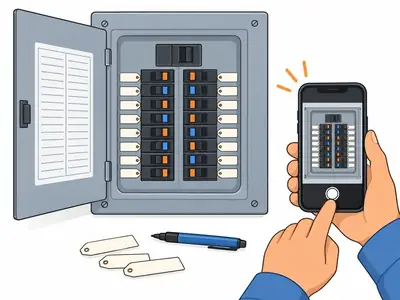 Electrical BasicsHow to Find Your Electrical Panel and Label BreakersHow to find your electrical panel and label breakers in a new home. Safe steps with a helper, a radio or tester, and a clear panel map. Know when to call a pro.Electrical BasicsHow to Map Your Breaker Panel in One AfternoonLearn how to map your breaker panel: label every breaker to its rooms and outlets with a lamp, a helper and a circuit directory you will actually use.