
Power Out in One Room? What to Check First
Part of: Electrical safety
- Difficulty
- Easy
- Time
- 10 to 20 minutes
- Tools
- A lamp or phone charger for testing, a flashlight, a plug-in outlet tester if you have one
- Call a pro if
- The breaker trips again immediately, you find scorch marks or smell burning, or part of the room has power and part does not with the breaker on, since that points to a wiring fault.
In this guide
- Power off first
One room goes dark while the rest of the house is fine. Power out in one room usually means a protective device doing its job: a breaker or a GFCI that tripped for a reason. The checks go from most common to most serious, and the first three fix most cases.
1. Confirm the outage boundary
Map what is actually dead.
1. Test every outlet and light in the room with a lamp or phone charger.
2. Check whether the dead area is one room exactly, or a room plus a hallway or bathroom.
3. Note whether lights work but outlets do not, or the reverse; they can be on different circuits.
4. If half the house is out, this is a different problem; call your utility first, then an electrician.
2. Find and reset the breaker properly
A tripped breaker often does not look tripped.
1. Open the panel door and look for a handle sitting between on and off, or showing an orange or red flag.
2. Push the suspect breaker firmly to off first, then back to on; a weak flip does not reset it.
3. If you cannot spot it, the panel's circuit directory should name the room.
4. Power returns and stays: note what was running when it tripped. If it trips again, see breaker will not reset.
3. Hunt the tripped GFCI upstream
1. One GFCI outlet can protect standard outlets in other rooms, often a bathroom, garage, kitchen or exterior GFCI feeding the dead room.
2. Walk the house and press reset on every GFCI you find, including the garage and outside.
3. The dead room's outlets often come back with a click from a GFCI two rooms away.
4. If a GFCI will not reset, see GFCI outlet will not reset.
4. Unplug before you retry
1. Unplug everything in the dead room, especially space heaters, hair dryers, vacuums and window air conditioners.
2. Reset the breaker or GFCI with the room empty.
3. Add devices back one at a time until the trip repeats; the last one added is your suspect.
4. A heater that trips a circuit is not faulty by definition; it may simply be too big for that circuit's other loads.
5. Check for a dead GFCI or outlet device
1. If the breaker and all GFCIs are fine and the room is still dead, one outlet in the chain may have failed internally.
2. Look for the outlet closest to the panel or the one with the most use, and check it with an outlet tester.
3. Scorched, loose or backstabbed connections inside a device kill the run; that repair is a careful DIY or a quick electrician visit.
4. An outlet that feels warm is the symptom that often precedes this failure.
6. Consider the less common causes
1. A switch controlling the room's outlets may be off; check wall switches before assuming a fault.
2. A light fixture with a failed connection can open the circuit to downstream outlets in older wiring.
3. Rodent damage or a nail through a cable shows up as a dead run with no tripped device.
4. Older homes with fuses need the fuse checked, and repeated blown fuses mean the circuit has a fault, not bad luck.
7. Know exactly when to call
1. The breaker trips instantly on reset with everything unplugged: a short in the wiring.
2. Burning smell, buzzing at an outlet, or any scorch mark.
3. Part of a circuit dead with the breaker on: a failed connection somewhere in the run.
4. Aluminum wiring or knob-and-tube anywhere in the path: professional territory.
Common mistakes
- Resetting a breaker without pushing it fully to off first.
- Checking only the dead room for a GFCI and missing the one in the garage that feeds it.
- Resetting repeatedly without unplugging the offending device.
- Assuming a new-looking outlet means good connections behind it.
- Replacing devices before confirming the breaker and GFCIs are actually fine.
FAQ
Why is the power out in one room but the breaker is not tripped?
Two likely causes: the breaker tripped without moving visibly, so flip it firmly off and on, or a GFCI outlet somewhere upstream tripped and is feeding that room. Check every GFCI in the house.
Can one bad outlet kill power to a whole room?
Yes. Outlets are wired in a chain, and a failed connection in one device cuts power to everything downstream of it. The deadest answer is often the first outlet in the run.
Why does my room lose power only when I use the vacuum?
The vacuum pushes the circuit over its limit on top of whatever else is running. Unplug other loads on that circuit, and if it still trips alone, the circuit or the vacuum has a fault.
Is a dead room dangerous?
The protective trip itself is safety working. The danger signs are burning smells, scorch marks, buzzing, or a breaker that will not stay reset. Those mean stop and call an electrician.
Related guides
- Outlet Not Working in One Room: How to Fix It: Outlet not working in one room? Check the GFCI, the breaker and the plug first. Safe steps, tools and when to...
- Electrical Problems and Safety: Breakers, Outlets, Lights: Electrical problems and safety: a breaker that will not reset, an outlet that is dead or sparking, a switch...
- Doorbell Not Ringing: What to Check: Doorbell not ringing? Check the button, the chime, the transformer and the batteries in a wireless set. Safe...
- What to Check Before Hiring an Electrician: What to check before hiring an electrician: the license, insurance, permits, written scope, who does the work...
- Breaker Will Not Reset: What to Do: Breaker will not reset? Unplug devices, flip it fully off then on and learn what a repeat trip means. Safe...
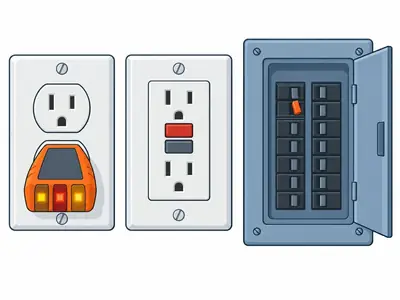 Electrical BasicsOutlet Not Working in One Room: How to Fix ItOutlet not working in one room? Check the GFCI, the breaker and the plug first. Safe steps, tools and when to call an electrician.Electrical BasicsElectrical Problems and Safety: Breakers, Outlets, LightsElectrical problems and safety: a breaker that will not reset, an outlet that is dead or sparking, a switch that buzzes. Steps and safety tips included.
 Electrical BasicsDoorbell Not Ringing: What to CheckDoorbell not ringing? Check the button, the chime, the transformer and the batteries in a wireless set. Safe steps, tools and when to call an electrician.Electrical BasicsWhat to Check Before Hiring an ElectricianWhat to check before hiring an electrician: the license, insurance, permits, written scope, who does the work and the warning signs of a bad hire.
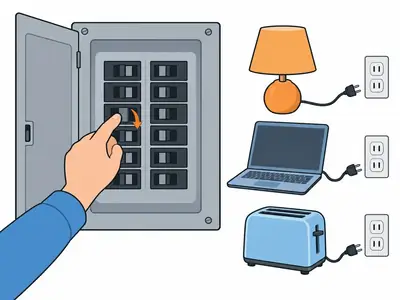 Electrical BasicsBreaker Will Not Reset: What to DoBreaker will not reset? Unplug devices, flip it fully off then on and learn what a repeat trip means. Safe steps and when to call an electrician.