
Hose Bib Vacuum Breaker Leaking: How to Fix the Spray
Part of: Outdoors and garage
- Difficulty
- Easy
- Time
- 15 to 30 minutes
- Tools
- Adjustable pliers or wrench, screwdriver, replacement vacuum breaker, rag, thread caulk tape
- Call a pro if
- water leaks from behind the faucet handle or inside the wall, the pipe is corroded, or the faucet is loose in the wall
In this guide
- Power off first
- Water off first
- Wear protection
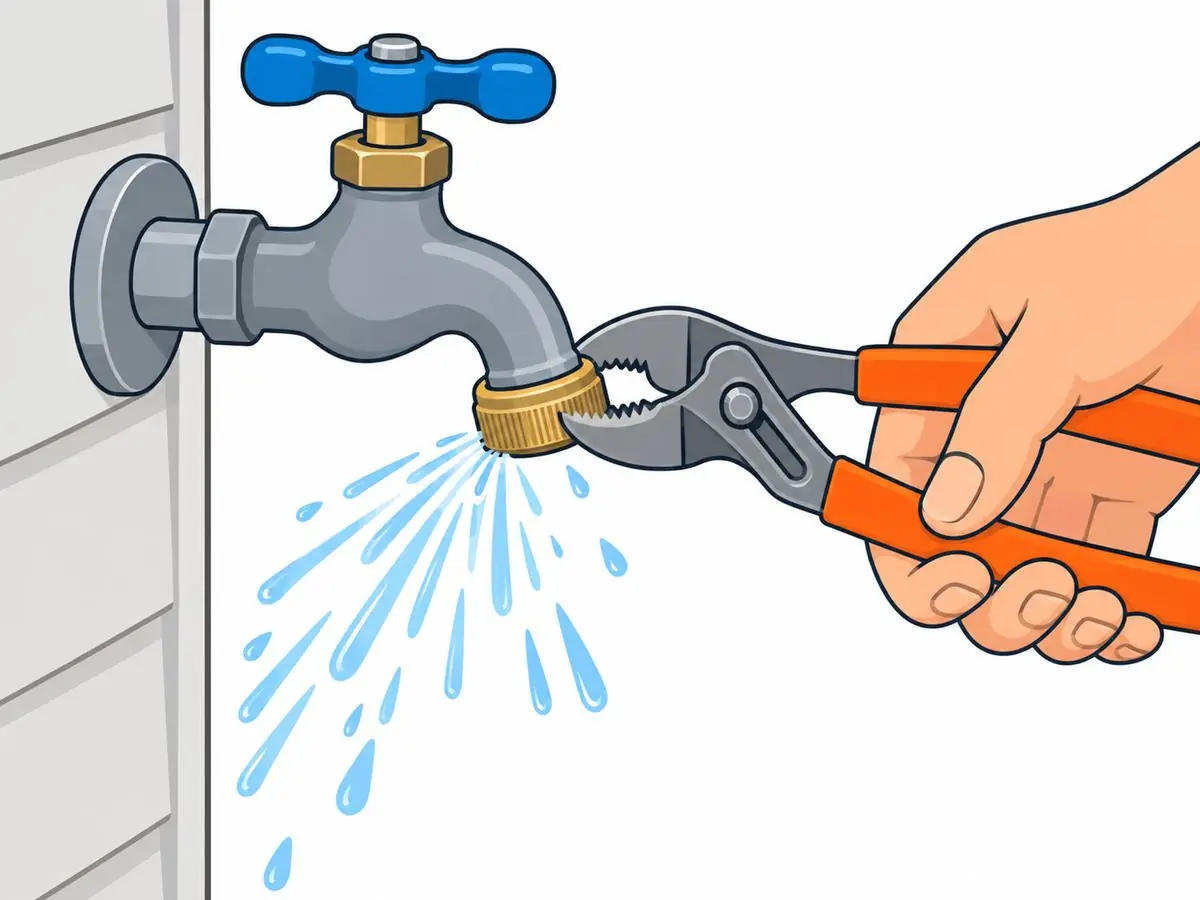
Many outdoor faucets have a small brass or plastic cap at the spout, called a vacuum breaker. It stops dirty water from flowing back into your drinking water supply. When the hose bib vacuum breaker wears out, you may see water spraying from the top of the cap when the faucet is on, or a drip at the spout when it is off. It is a common repair and often easy.
How the part works
The vacuum breaker is a backflow preventer. When you run water, the valve inside seals and water flows out of the spout. When you turn the water off, a small vent opens so air can enter and stop water from being drawn back into the pipes. A little water may spit from the vent when you first turn the faucet on or off, and that is normal. A steady spray or a stream means the part is worn.
Step by step
1. Close the hose. Disconnect any hose and turn the faucet off.
2. Look at the cap. See where the water comes from. A leak at the vent holes on the cap points to the vacuum breaker. A leak at the handle points to the packing nut or washer. A leak where the faucet meets the wall points to the pipe.
3. Check for a stuck vent. Dirt or an insect nest can block the vent. Wipe the area and rinse it with water.
4. Tighten the cap. Some vacuum breakers are held by a small set screw or a snap ring. Many have a screw head on the side. If it is loose, tighten it.
5. Remove the cap. With the water off, unscrew it by hand or with pliers. Some have a small set screw on the side that you loosen first. If the cap will not turn, soak it with penetrating oil for a few minutes and try again.
6. Inspect the old part for cracks, worn rubber or mineral deposits.
7. Install a new vacuum breaker. Match the thread size, usually three quarter inch hose thread. Wrap the male threads with a few turns of thread tape if the manufacturer calls for it, and screw the new part on by hand. Tighten a quarter turn with pliers.
8. Turn on the water slowly. Look for spraying and drips, and check again after a few minutes.
If the leak does not stop
- Handle leak: tighten the packing nut slightly behind the handle. If it still leaks, replace the packing or washer. See How to fix a dripping outdoor faucet.
- Leak at the wall: this may need a plumber.
- Frozen damage: water spraying from a crack in the body after a freeze means the faucet needs replacing.
Prevent it from happening again
Disconnect hoses in cold weather, drain the faucet and shut off the inside valve if there is one. Hoses left on trap water in the faucet, and freezing water breaks parts. For extra help, see How to thaw frozen pipes safely.
Why the part wears out
Sun, freezing weather and minerals in the water all wear the small rubber disc inside the vacuum breaker. Over time the disc hardens and no longer seals. Hoses left under pressure also push on the valve. Fixing the leak early saves water and prevents a wet wall, where moisture can damage siding and the framing behind it. Check the faucet at the start of every watering season, with the hose off, by turning it on and looking at the cap.
A note on pressure and hoses
Do not leave a hose connected and under pressure all day if you do not need it. A closed nozzle on the end of the hose keeps the hose under constant pressure, which stresses the faucet and the part behind it. Turn the faucet off when you are done, and let the hose drain.
Choose the right replacement
Take the old part to the store or take a clear photo with a measurement. Parts come in different sizes and styles. Look for a part rated for your faucet, and avoid the cheapest if it looks thin or flimsy. If the faucet is old and corroded, replace the whole faucet.
Related guides
- How to Clear a Clogged Outdoor Drain or Catch Basin
- How to Install a Hose Bib Cover for Winter
- Breaker Will Not Reset: What to Do
- How to Reset a Tripped Breaker Safely
- How to Find Your Electrical Panel and Label Breakers
More help
If the water is coming from somewhere else, plumbing leaks sorts every common leak by location and links to the repair.
FAQ
Is it normal for a little water to come out of the vacuum breaker?
A small spurt when you turn the faucet off is normal. A constant spray is not.
Can I leave the vacuum breaker off?
No. It protects your drinking water from backflow.
Will this fix a leak at the handle?
No. The handle leak comes from the packing nut or washer.
Do I need to turn off the water inside the house?
Not for a simple swap if the faucet shuts off fully, but do it if you are unsure.
More from this topic
- How to Replace a Hose Bib: Learn how to replace a hose bib: shut off and drain the line, unscrew the old fitting and seal the new one so...
- How to Fix a Leaky Hose Bib Handle: How to fix a leaky hose bib handle: tighten the packing nut or replace the packing washer and stop the stem...
- How to Fix a Dripping Outdoor Faucet: How to fix a dripping outdoor faucet: tighten the packing nut, replace the washer and protect it from...
- Fix Leaking Garden Hose: Split, End or Coupling: Garden hose spraying from a split or the end? Fix leaking garden hose problems: find the leak, patch a hole...
- How to Install a Hose Bib Cover for Winter: Protect your outdoor faucet from freezing. Learn how to prepare, drain and install a hose bib cover, plus...
 Garage and OutdoorsHow to Replace a Hose BibLearn how to replace a hose bib: shut off and drain the line, unscrew the old fitting and seal the new one so it does not leak.
 Outdoor PlumbingHow to Fix a Leaky Hose Bib HandleHow to fix a leaky hose bib handle: tighten the packing nut or replace the packing washer and stop the stem drip in minutes.
 Garage and OutdoorsHow to Fix a Dripping Outdoor FaucetHow to fix a dripping outdoor faucet: tighten the packing nut, replace the washer and protect it from freezing. Steps, tools and when to call a pro.
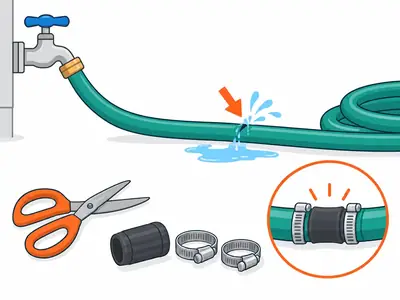 Garage and OutdoorsFix Leaking Garden Hose: Split, End or CouplingGarden hose spraying from a split or the end? Fix leaking garden hose problems: find the leak, patch a hole and replace a hose end.
 Garage and OutdoorsHow to Install a Hose Bib Cover for WinterProtect your outdoor faucet from freezing. Learn how to prepare, drain and install a hose bib cover, plus when to shut off the inside valve for winter.