
How to Clear a Clogged Outdoor Drain or Catch Basin
Part of: Outdoors and garage
- Difficulty
- Easy to medium
- Time
- 30 to 90 minutes
- Tools
- Gloves, small shovel or hand trowel, screwdriver, garden hose with spray nozzle, bucket, stiff brush, drain snake, flashlight
- Call a pro if
- the drain pipe is crushed, tree roots are in the line or water still does not drain
In this guide
- Power off first
- Wear protection
- Call 811 before digging
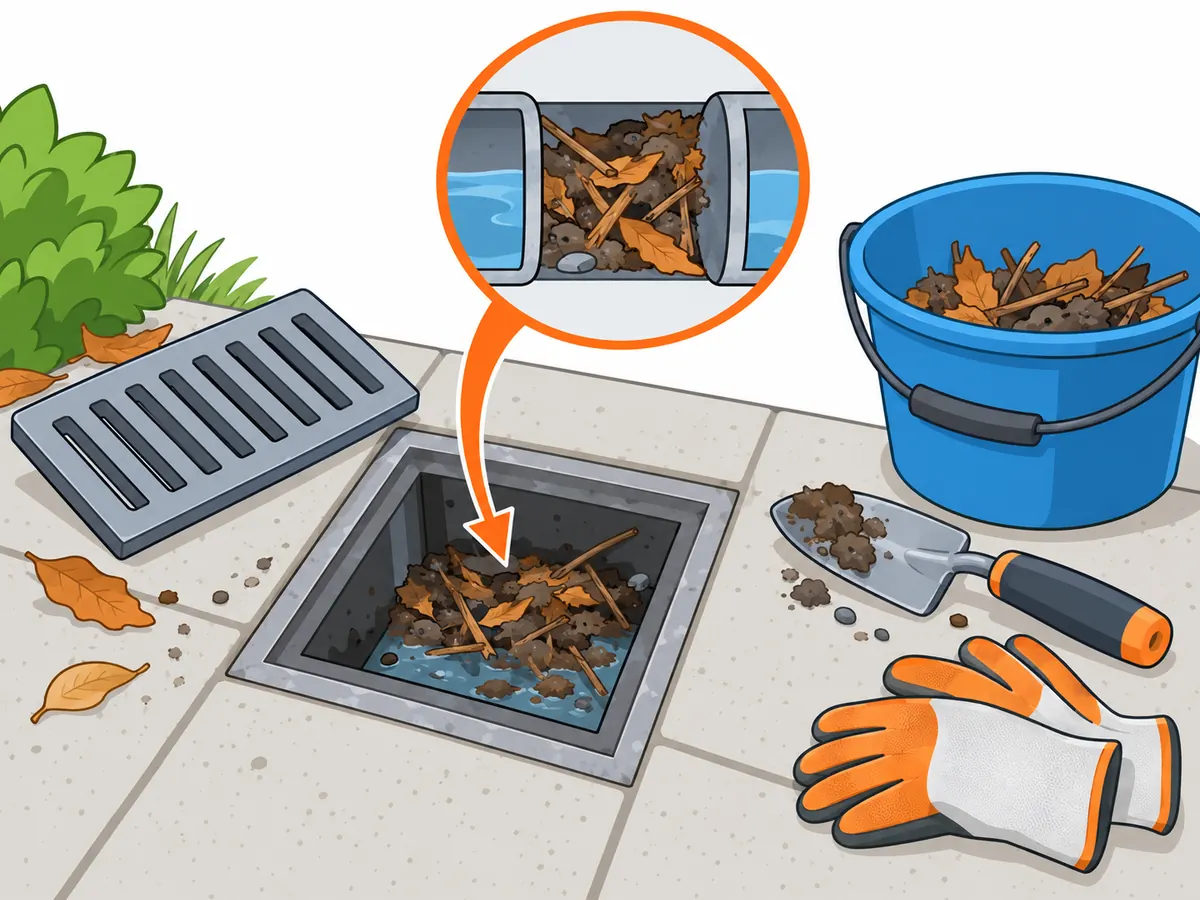
After a heavy rain, you notice a puddle that does not go away by the patio, driveway or window well. A clogged outdoor drain lets water pool against the house and can lead to leaks and a wet basement. Most outdoor drains clog with leaves, silt and mulch, and you can clear them in under an hour with simple tools. This guide shows how.
This guide is part of our wider guide to gutters and drainage.
Find the drain
Look for a grate or a round cover in a low spot. It may be near a downspout, at the end of a driveway, in a window well or in a corner of the yard. Catch basins have a grate and a box below that collects debris. Some drains connect to a buried pipe that leads to the street, a dry well or a pop-up emitter in the yard.
Step by step: clear the basin
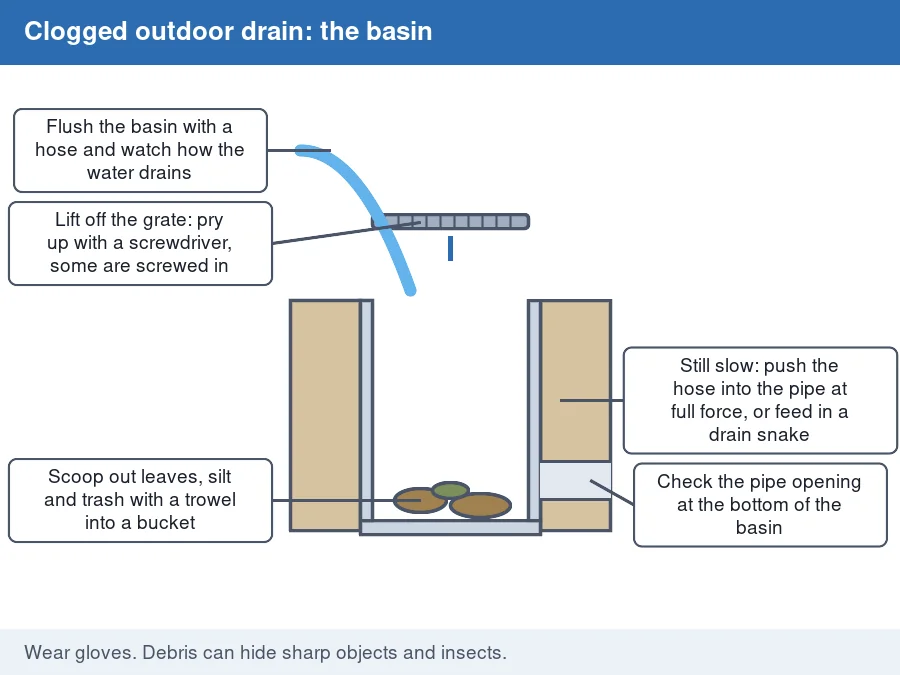
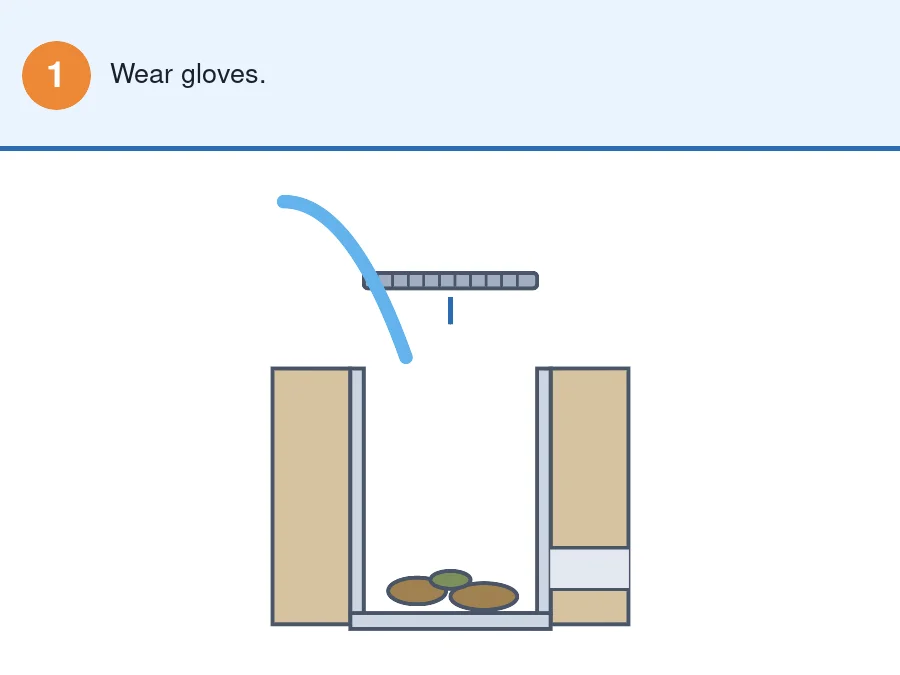
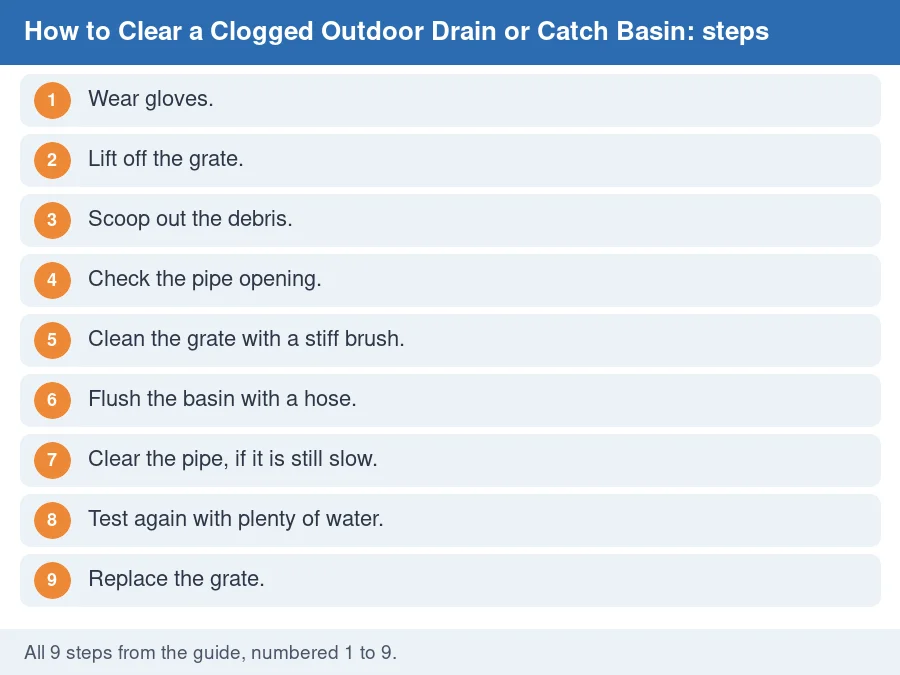
1. Wear gloves. Debris can hide sharp objects and insects.
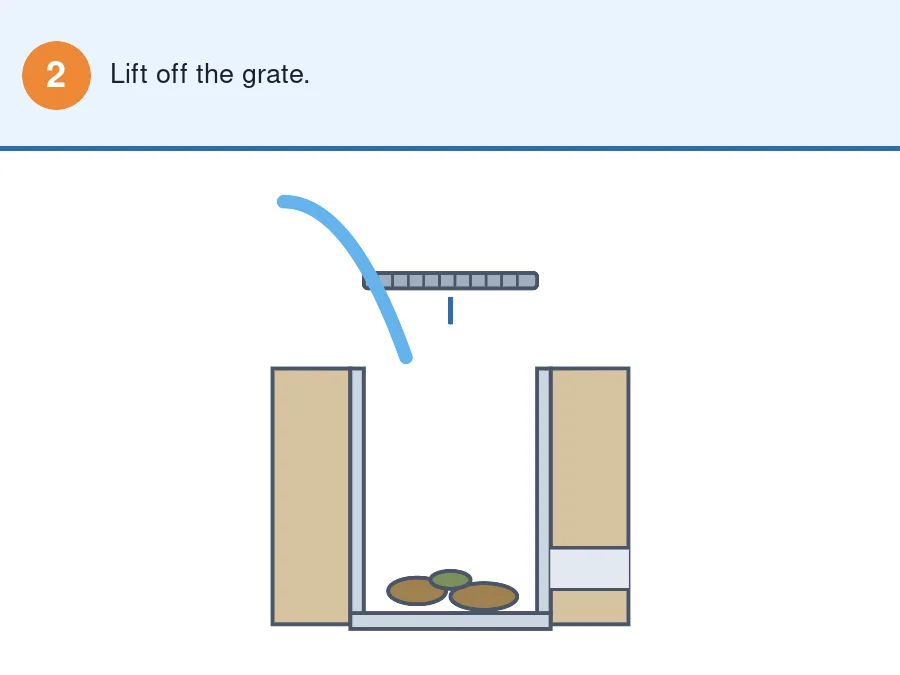
2. Lift off the grate. Use a screwdriver to pry it up. Some are screwed in.
3. Scoop out the debris. Use a trowel or a small shovel. Put it in a bucket. Remove leaves, silt and trash.
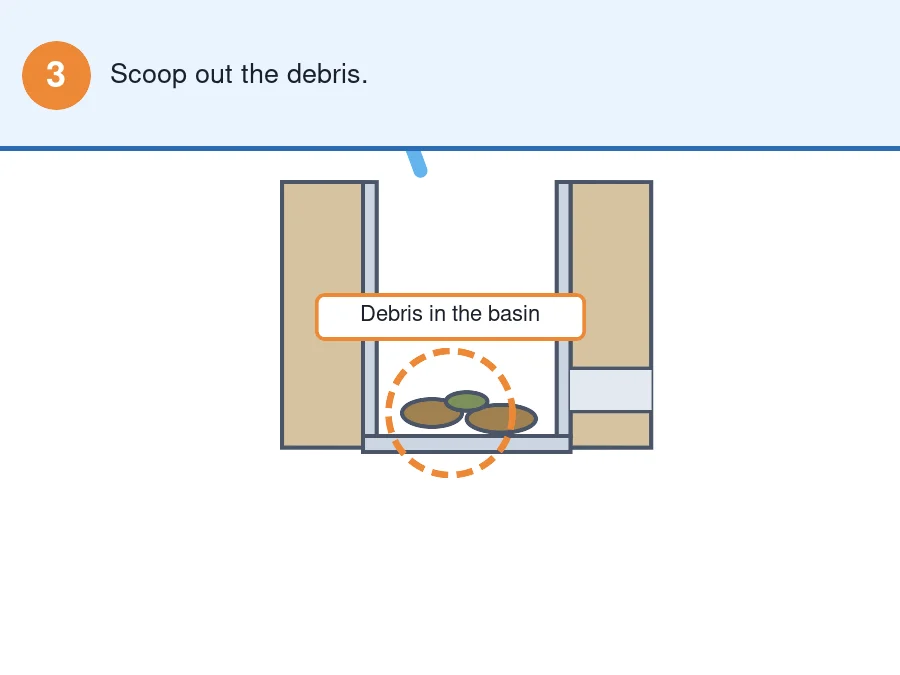
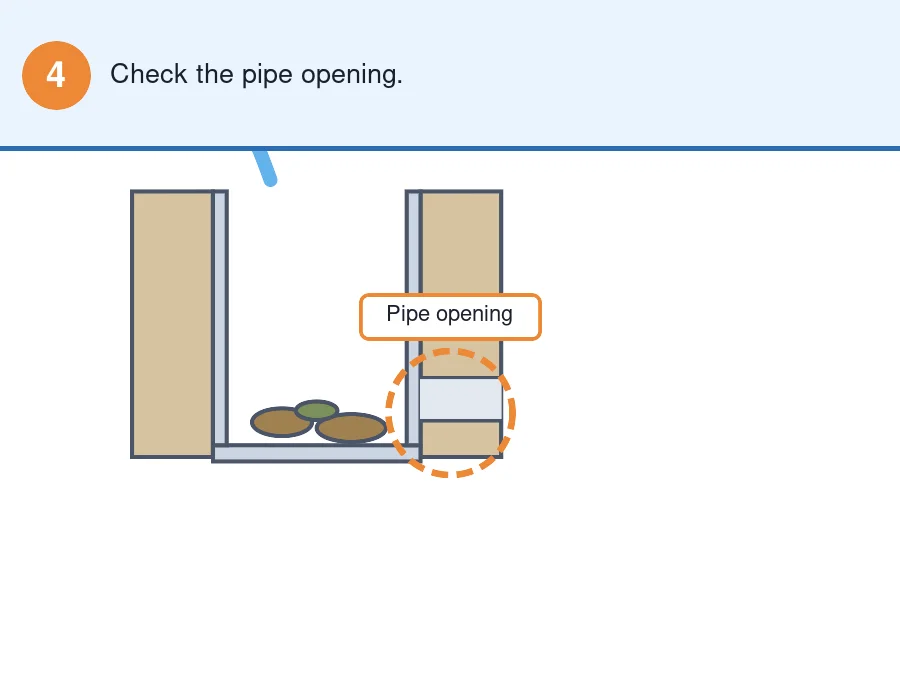
4. Check the pipe opening. Look for a pipe at the bottom of the basin. See if it is blocked.
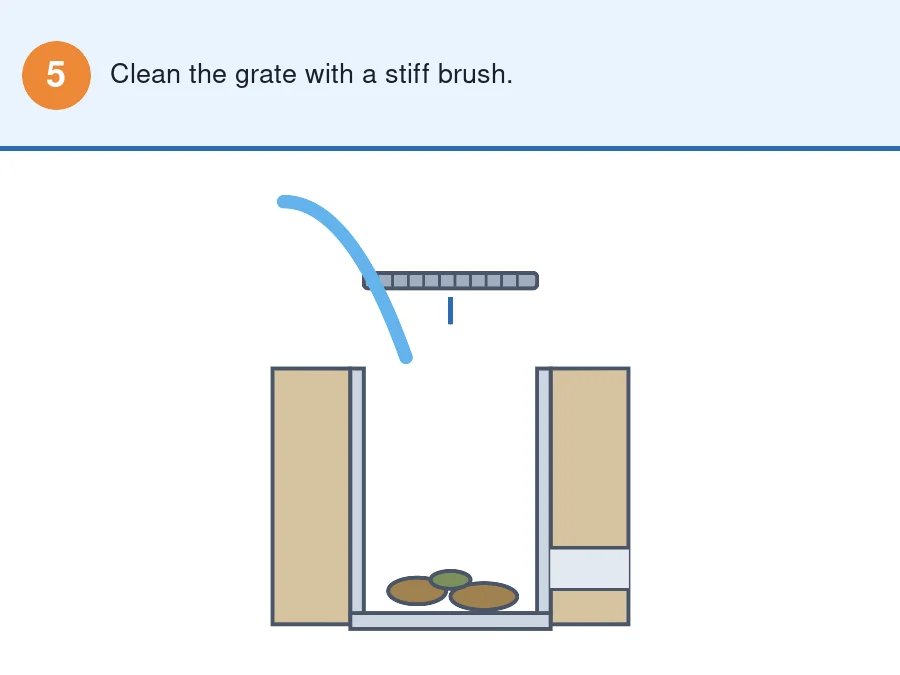
5. Clean the grate with a stiff brush.
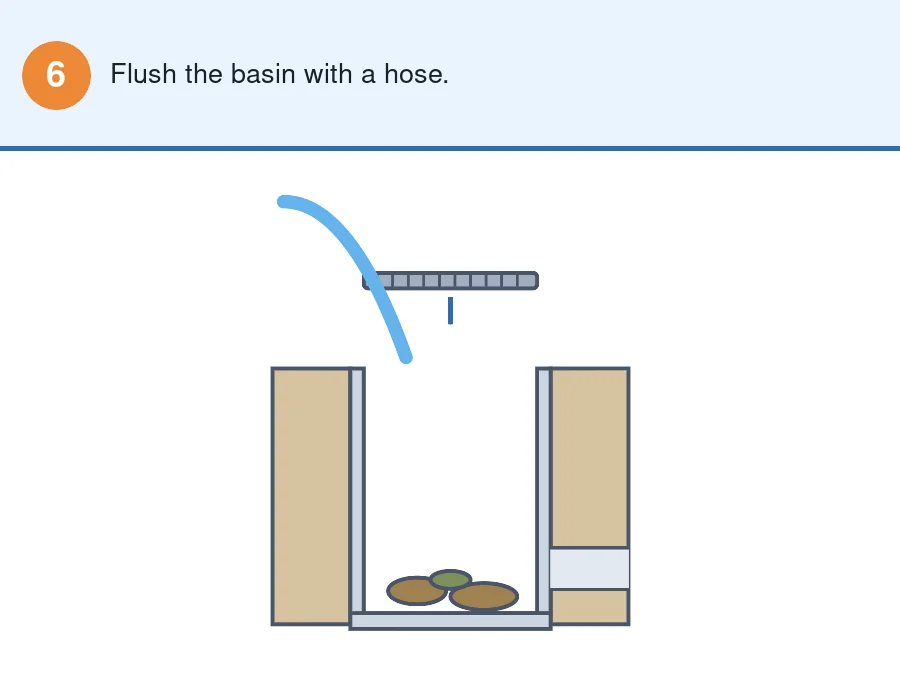
6. Flush the basin with a hose. Watch how the water drains.
7. Clear the pipe, if it is still slow. Push the hose into the pipe and run water at full force. A drain snake can reach further. Feed it in gently and turn the handle to break up the clog.
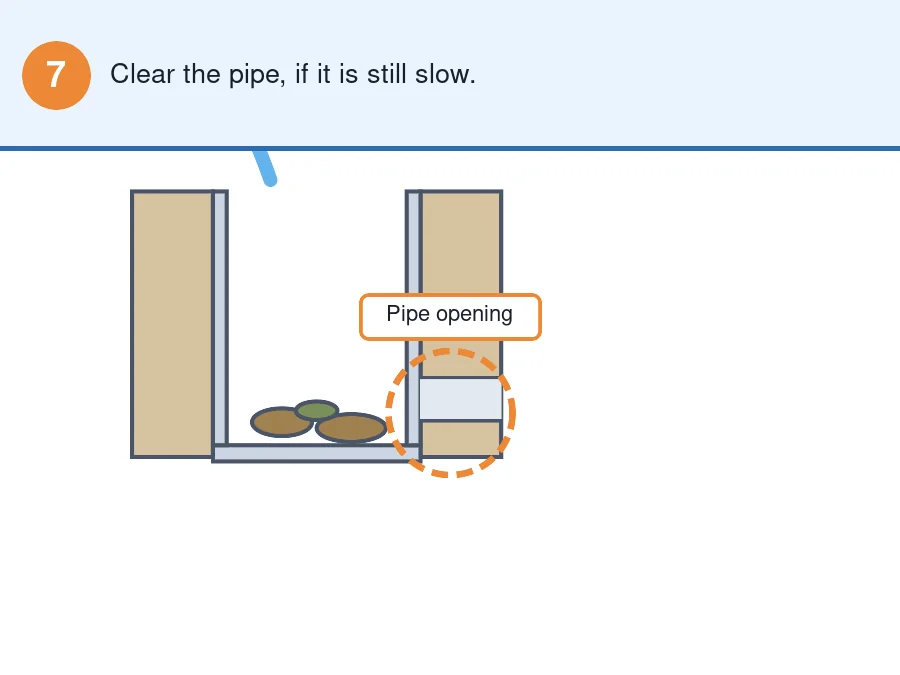
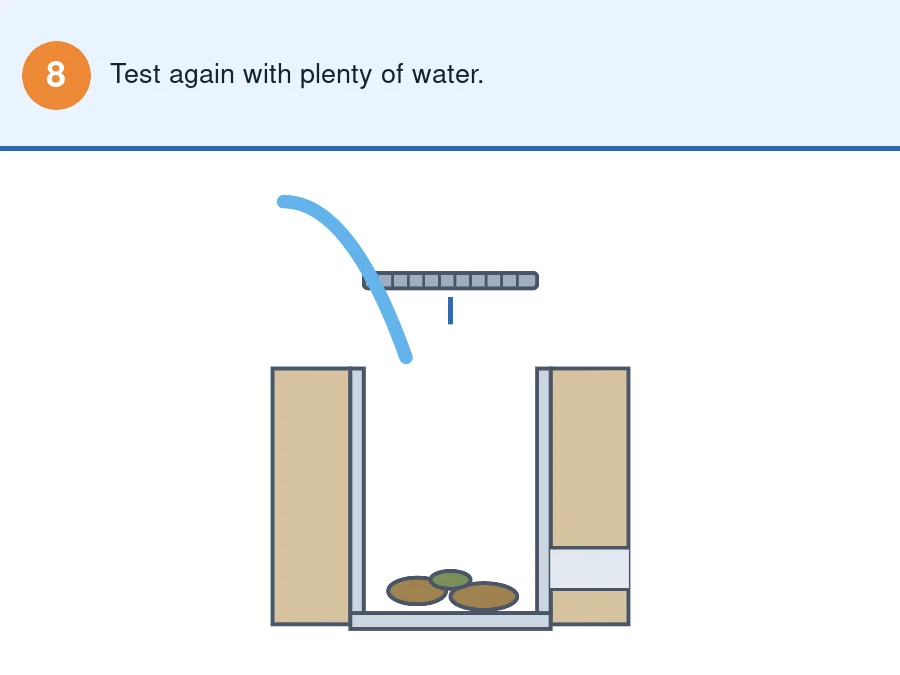
8. Test again with plenty of water.
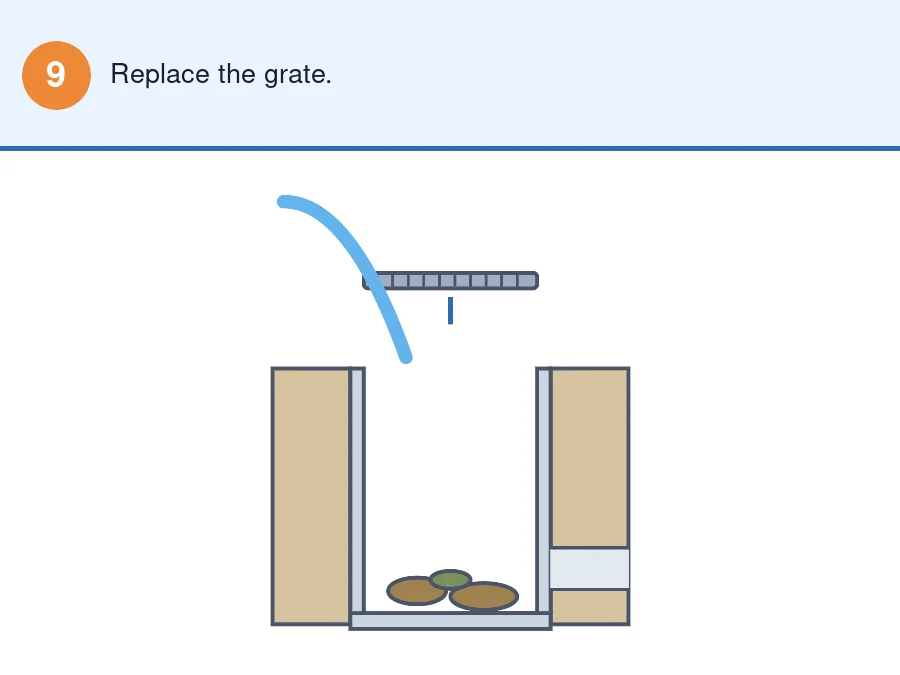
9. Replace the grate.
Check where the water goes
Find out where the pipe leads. A pipe that goes to the street or a dry well may be blocked at the end. A pop-up emitter in the yard may be stuck shut, so check that it opens when water flows. Look for wet spots that show a broken pipe. Make sure the drain is lower than the area it serves, so water flows toward it.
Signs that point to each cause
A basin full of leaves and silt points to a lack of maintenance. Water that does not drain even though the basin is clear points to a clogged or collapsed pipe. A gurgling sound can show air trapped in the pipe. A slow drain that gets worse after rain may have roots or a low spot in the pipe. A wet area along the pipe route suggests a break. Standing water by the foundation is serious. See Downspout drainage: how to direct water away.
Window wells
A clogged window well drain can flood a basement window. Remove leaves and debris, and check that the drain at the bottom is open. Pour water in to test. Keep the well cover clear. See Musty smell in basement: what to do for moisture problems.
Fix the landscape
Make sure the ground slopes away from the house. Remove mulch and soil that has built up around the drain. Trim plants that drop leaves into it. Put a leaf guard on the grate if the area is shaded by trees. Clean gutters so they do not send debris to the drain. See How to clean gutters.
Prevention
Clear the drain before the rainy season and after storms. Check it in fall. Keep the grate clean. Flush the line once a year. Watch for new puddles.
A simple yearly routine
Before the leaf season, clear every outdoor drain on the property and flush each line with a hose. After the leaves fall, check again. Take a photo of each drain when it is clean, so you can see changes over time. Keep a hand trowel and gloves near the hose reel, so cleaning takes only a few minutes whenever rain is coming.
When to call a specialist
If the drain still does not run after you clear the basin and flush the line, the pipe may be crushed, offset or full of roots. A contractor can run a camera into the line to find the problem and clear it with a power tool. Collapsed pipes in clay or old plastic need replacement. Do not pour chemicals or run a sewer machine yourself if you are not sure where the pipe goes.
Related guides
- Gate Latch Will Not Catch: How to Fix It
- How to Fix a Dripping Outdoor Faucet
- How to Winterize an Outdoor Faucet Before the First Freeze
- How to Install a Hose Bib Cover for Winter
FAQ
Why does my drain back up?
Leaves, silt and roots block it.
How often should I clean it?
Twice a year and after big storms.
Can I use chemicals?
Not usually. They do not clear leaves and silt.
What if the pipe is broken?
Call a drainage contractor.
More from this topic
- How to Install a Catch Basin for Yard Drainage: Learn how to install a catch basin for yard drainage: dig the pit, set the box level and pipe the water to a...
- How to Install a French Drain: Learn how to install a french drain: dig a sloped trench, line it with fabric and gravel and carry water to a...
- How to Install a Patio Drain: How to install a patio drain that works: whether you need one, where the water can go, which drain suits the...
- How to Fix a Muddy Backyard: Learn how to fix a muddy backyard: find where the water comes from, move the downspouts, regrade the soil,...
- How to Get Rid of Mosquitoes in Your Yard: Learn how to get rid of mosquitoes in your yard: empty standing water, treat what you cannot drain, tidy the...
 Garage and OutdoorsHow to Install a Catch Basin for Yard DrainageLearn how to install a catch basin for yard drainage: dig the pit, set the box level and pipe the water to a safe outlet.
 Garage and OutdoorsHow to Install a French DrainLearn how to install a french drain: dig a sloped trench, line it with fabric and gravel and carry water to a safe outlet.
 Garage and OutdoorsHow to Install a Patio DrainHow to install a patio drain that works: whether you need one, where the water can go, which drain suits the puddle, and how to set it.
 Garage and OutdoorsHow to Fix a Muddy BackyardLearn how to fix a muddy backyard: find where the water comes from, move the downspouts, regrade the soil, add drainage and keep traffic off wet ground.
 Garage and OutdoorsHow to Get Rid of Mosquitoes in Your YardLearn how to get rid of mosquitoes in your yard: empty standing water, treat what you cannot drain, tidy the garden and protect your family at dusk.