
How to Install a Hose Bib Cover for Winter
Part of: Outdoors and garage

- Difficulty
- Easy
- Time
- 10 to 20 minutes
- Tools
- Foam faucet cover, screwdriver if needed, towel, flashlight
- Call a pro if
- the faucet drips inside the wall, the pipe is already cracked or no shutoff valve exists inside
In this guide
- Water off first
- Gas safety
- Ladder safety
- Wear protection
A hose bib cover is a cheap foam dome that helps keep an outdoor spigot from freezing. An outdoor faucet is one of the first places to freeze when the weather turns cold. Ice in the pipe can split it, and the damage often shows up only in spring, when the water is turned on again. A foam cover is a simple and cheap way to add protection. This guide shows how to prepare the faucet, fit the cover and add other steps that help prevent a burst pipe.
This guide is part of our wider guide to gutters and drainage.
Know your faucet
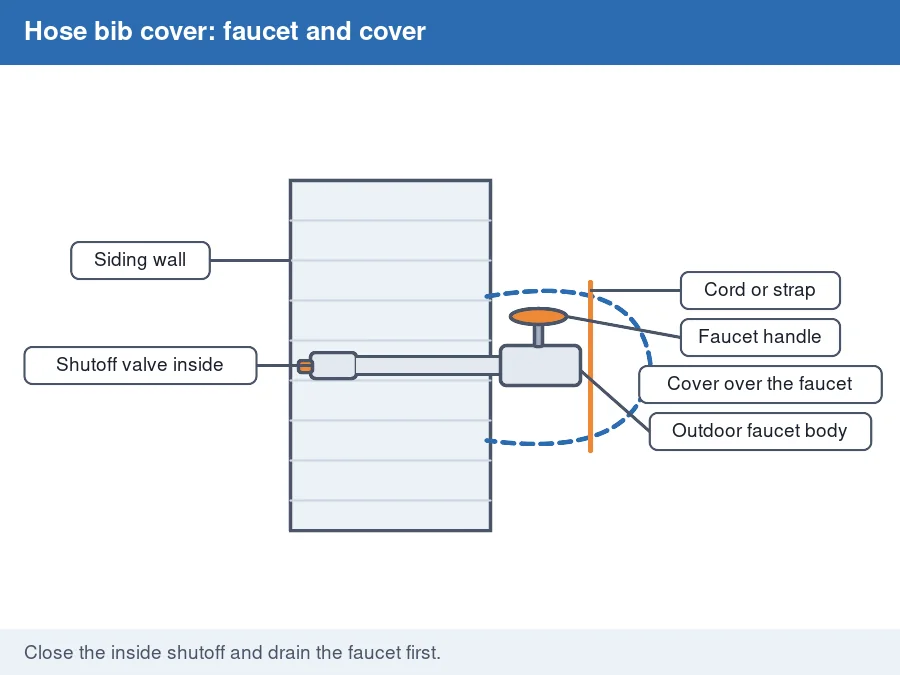
Many newer homes have a frost-proof faucet. It has a long stem that places the shutoff point deep inside the warm wall. These still need the hose removed in winter. Older faucets shut off near the outside wall and can freeze more easily. Look for a shutoff valve inside the house, usually in the basement or a crawl space, on the pipe that feeds the faucet.
Step by step
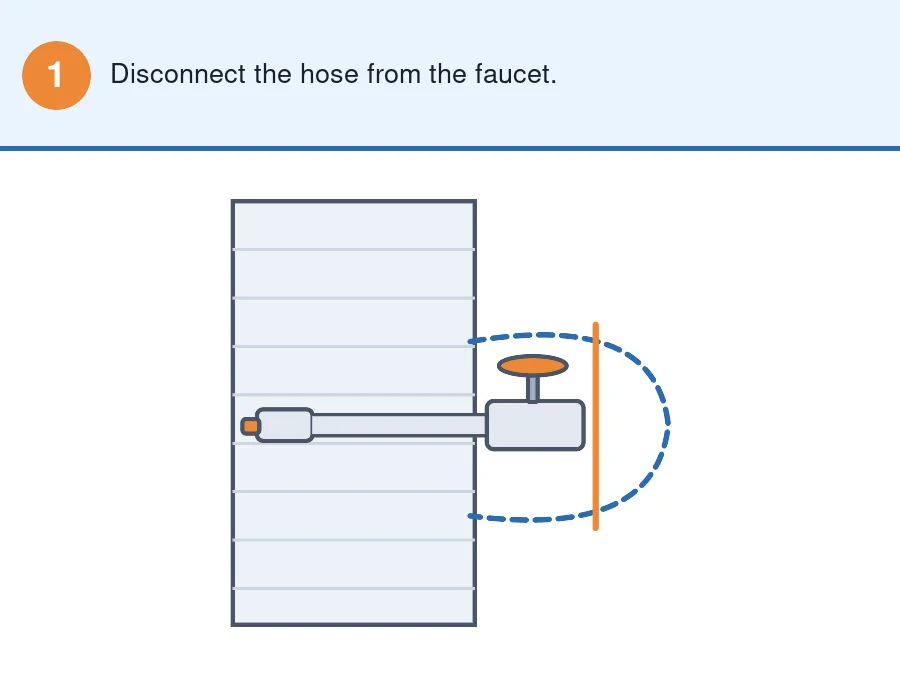
1. Disconnect the hose from the faucet. Also remove any splitter or timer.
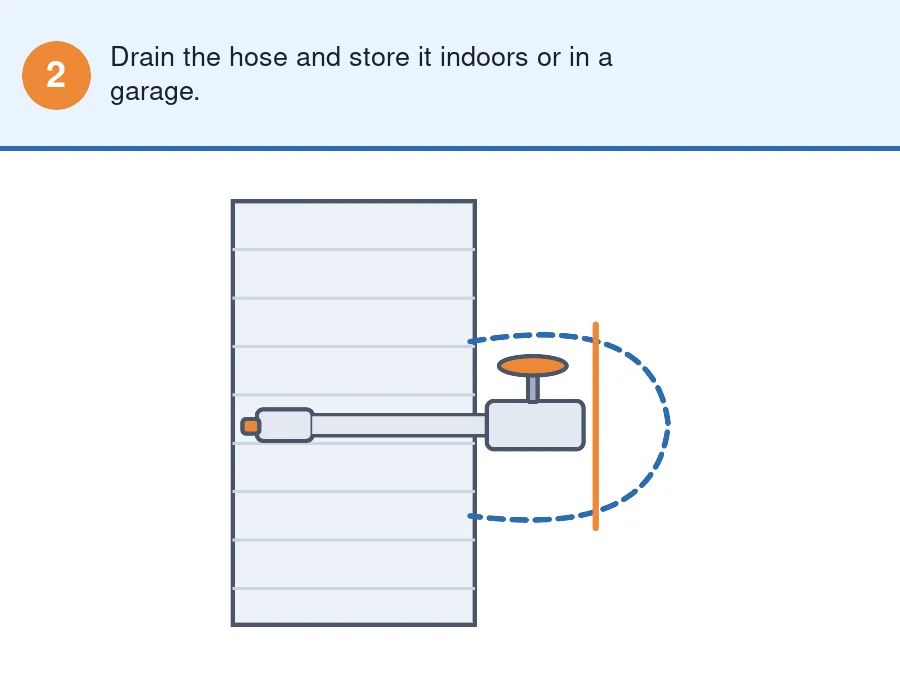
2. Drain the hose and store it indoors or in a garage.
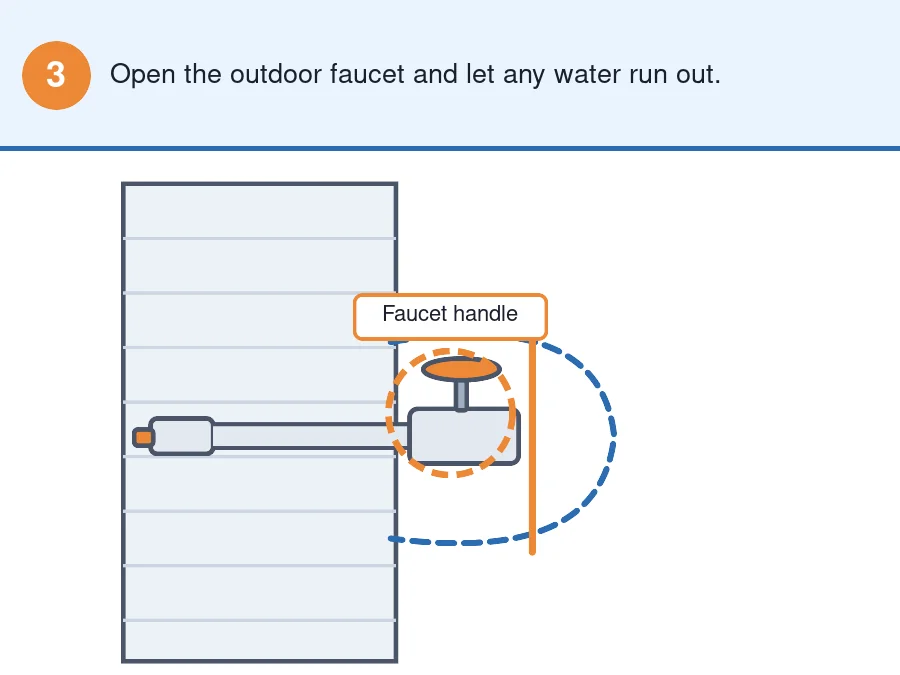
3. Open the outdoor faucet and let any water run out.
4. Close the inside shutoff valve if you have one. Then open the outdoor faucet to drain the pipe. Leave it open until a freeze is over.
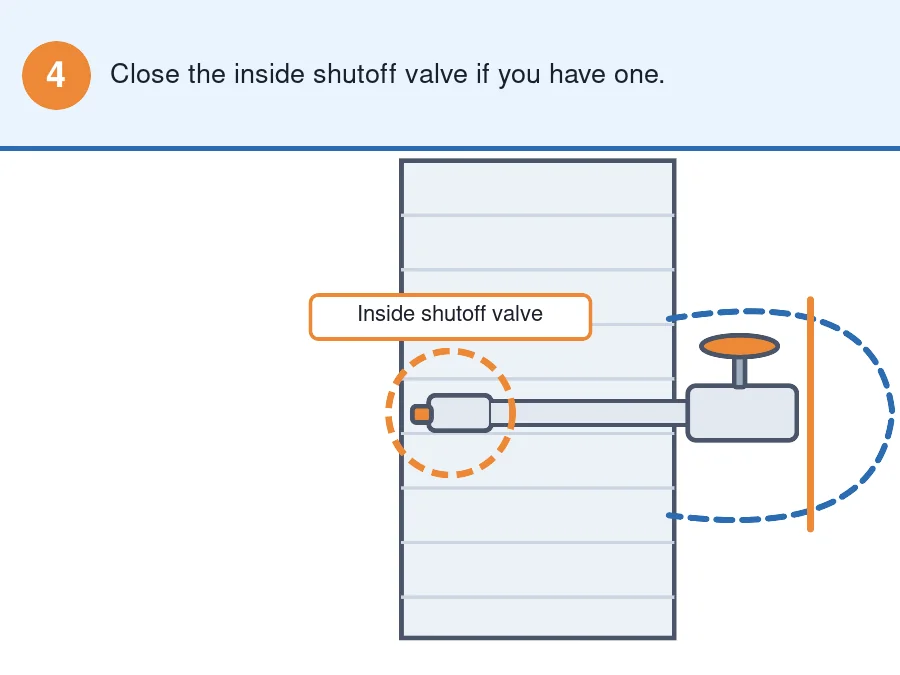
5. Dry the faucet with a towel.
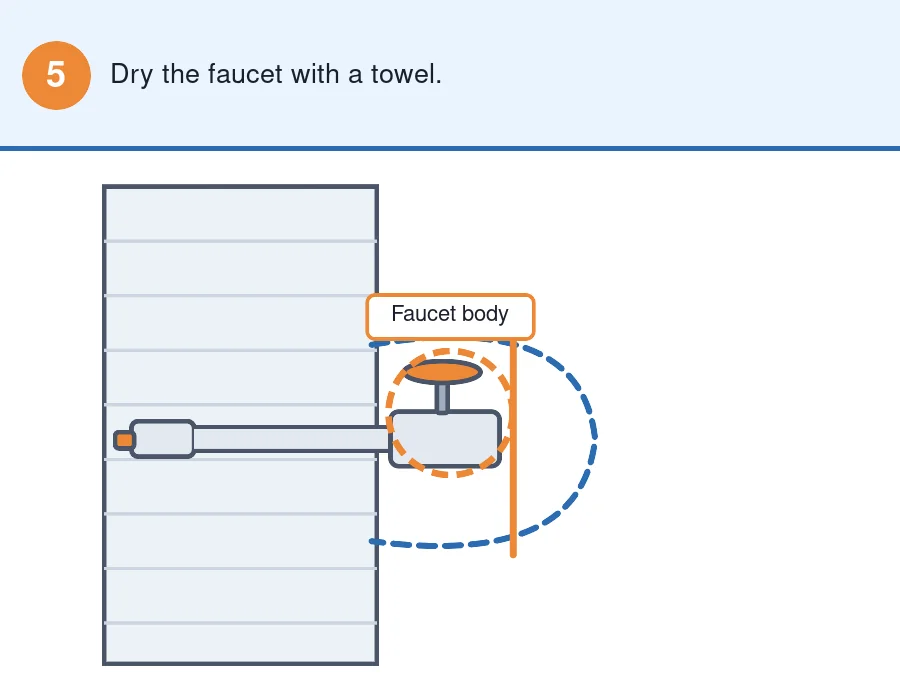
6. Check for a drip. If it still drips with the handle closed, see How to fix a dripping outdoor faucet.
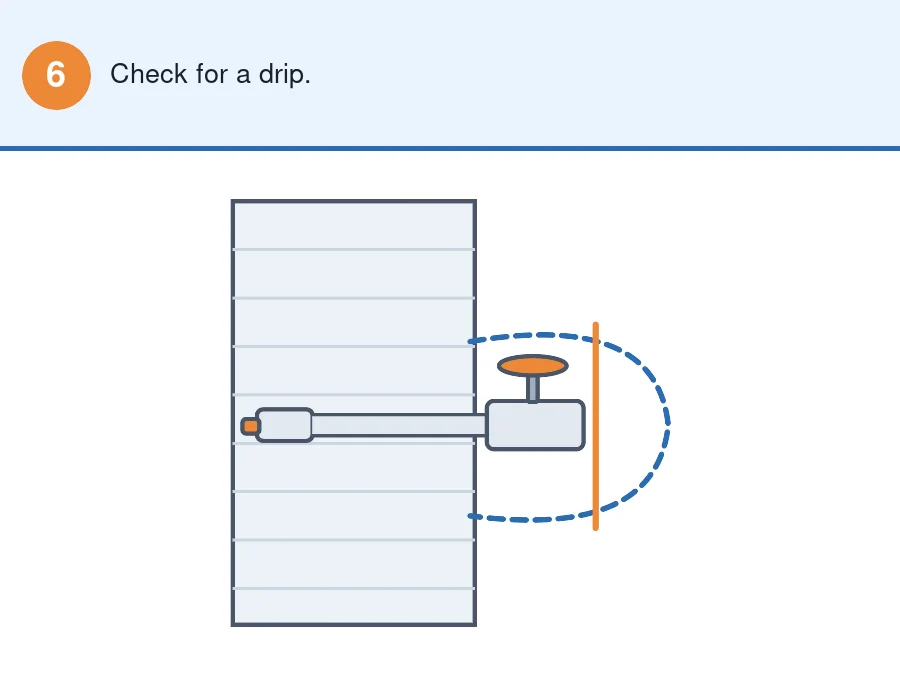
7. Place the cover over the faucet with the opening facing the wall.
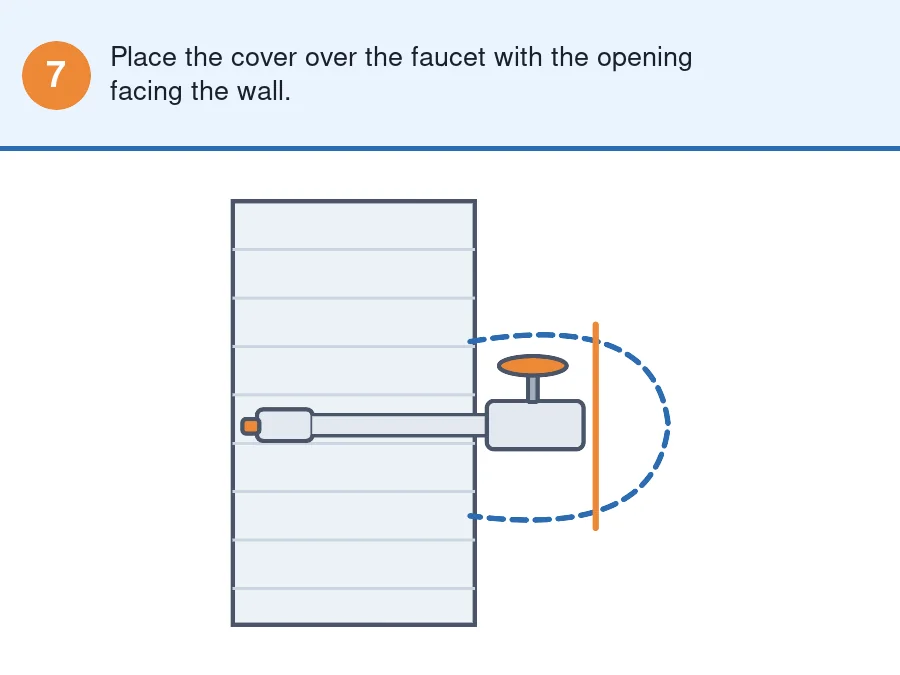
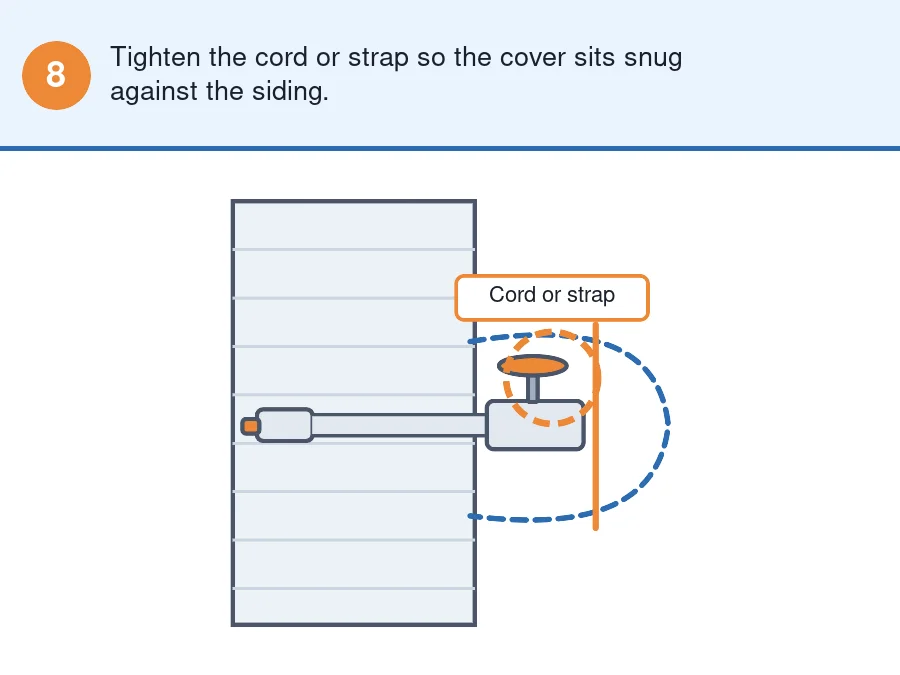
8. Tighten the cord or strap so the cover sits snug against the siding.
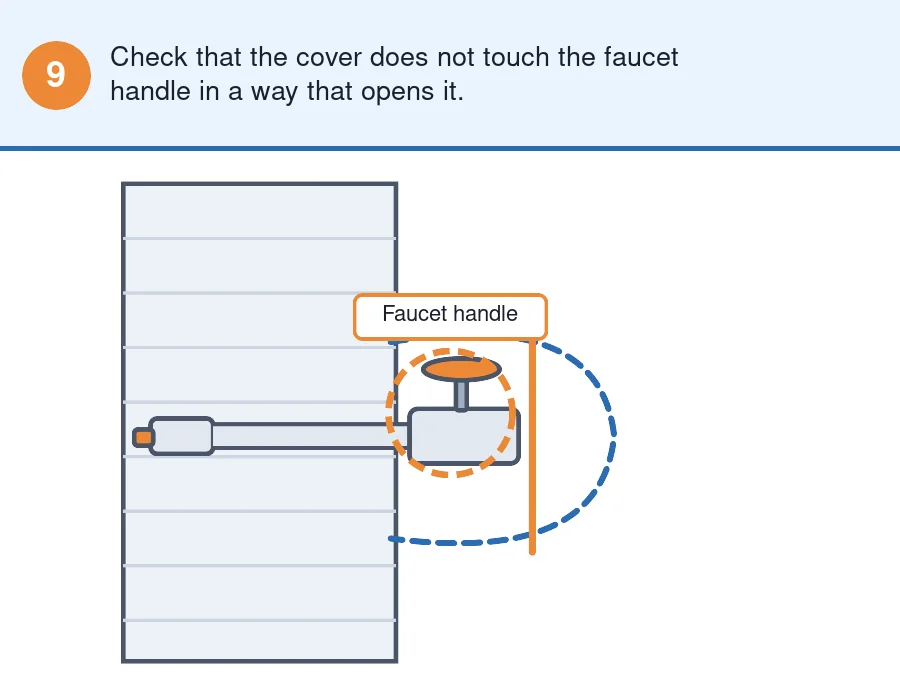
9. Check that the cover does not touch the faucet handle in a way that opens it.
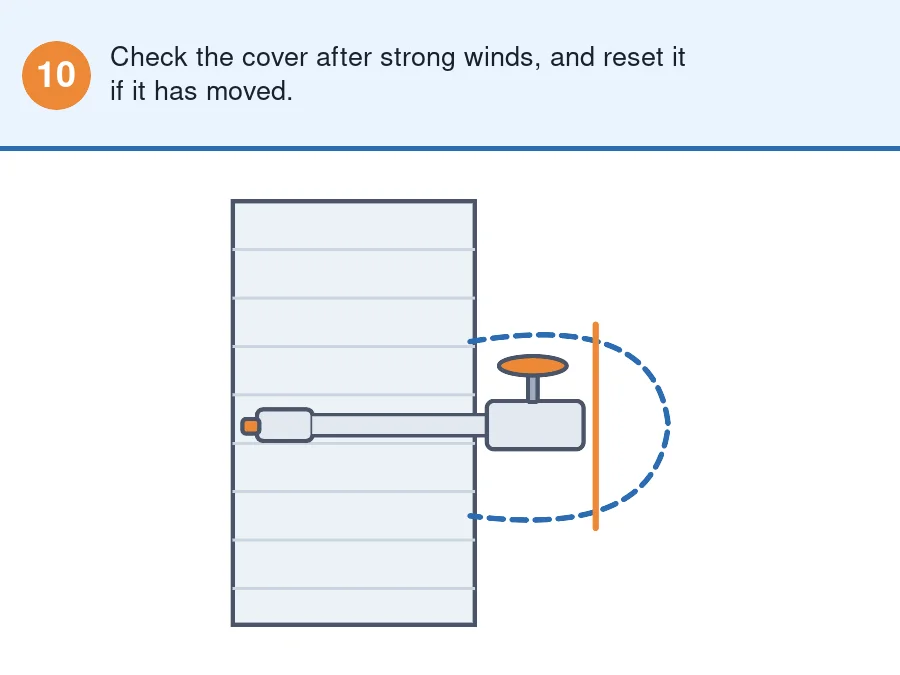
10. Check the cover after strong winds, and reset it if it has moved.
Which cover to use
Hard foam covers with a rubber seal work well. Soft fabric covers may be fine for mild areas but protect less in deep freezes. Pick one that fits the size of your faucet and any bib vacuum breaker. Covers do not add heat. They slow heat loss, so they help in short cold snaps but may not stop freezing in long, deep cold.
Signs that point to each cause
A faucet that drips after winter may have a split pipe or a cracked body. A wet wall inside near the faucet is a warning sign of a burst pipe. A faucet that will not turn on in spring may be frozen. A cover that blows off is too loose or too small. A spray from the faucet body when the water comes on in spring points to damage. Close the valve and call a plumber. See How to insulate water pipes to prevent freezing.
Extra protection
Seal gaps around the pipe where it enters the wall, using caulk or foam. Insulate any exposed pipe inside the crawl space. Leave cabinet doors open on very cold nights if pipes run along an outside wall. See How to winterize your home.
If a pipe freezes
Turn off the water at the main and open the faucet. Never use an open flame or a torch. Use a hair dryer on low or warm towels with care, away from any water on the floor. See How to thaw frozen pipes safely.
Prevention
Remove hoses before the first freeze. Make this part of your fall list. Mark a date on your calendar. In spring, remove the cover and check the faucet for leaks before you reconnect the hose. Open the inside valve slowly and look at the pipe and the wall.
Spring check
When the weather warms, turn the inside valve back on and open the outdoor faucet to let the air out. Close it and watch for drips for a few minutes. Look at the wall inside near the pipe. If you see dampness, shut the valve off and call a plumber. Store the cover in a dry place for next year.
Related guides
- How to Install Solar Path Lights That Work All Night
- Fix Leaking Garden Hose: Split, End or Coupling
- How to Clear a Clogged Outdoor Drain or Catch Basin
- How to Fix a Leaky Roof Temporarily Until a Pro Arrives
FAQ
Do I need a cover if I have a frost-proof faucet? The hose must still come off. A cover adds a layer of protection.
Should I leave the faucet open? After the inside valve is off, leaving it open lets any water drain.
When should I install the cover? Before the first freeze of the season.
Can a cover stop a hard freeze? Not always. Draining the pipe is more important.
More from this topic
- How to Fix a Dripping Outdoor Faucet: How to fix a dripping outdoor faucet: tighten the packing nut, replace the washer and protect it from...
- How to Winterize an Outdoor Faucet Before the First Freeze: Learn how to winterize an outdoor faucet: shut off the supply, drain the line, open the valve, fit an...
- How to Replace a Hose Bib: Learn how to replace a hose bib: shut off and drain the line, unscrew the old fitting and seal the new one so...
- How to Store a Grill for Winter the Right Way: Learn how to store a grill for winter: deep clean the grates, protect the burners, disconnect the tank...
- How to Winterize a Pressure Washer Before Freezing Weather: Learn how to winterize a pressure washer: drain the water, run pump saver through, and store it so freezing...
 Garage and OutdoorsHow to Fix a Dripping Outdoor FaucetHow to fix a dripping outdoor faucet: tighten the packing nut, replace the washer and protect it from freezing. Steps, tools and when to call a pro.
 SeasonalHow to Winterize an Outdoor Faucet Before the First FreezeLearn how to winterize an outdoor faucet: shut off the supply, drain the line, open the valve, fit an insulated cover and check for leaks that could freeze.
 Garage and OutdoorsHow to Replace a Hose BibLearn how to replace a hose bib: shut off and drain the line, unscrew the old fitting and seal the new one so it does not leak.
 Garage and OutdoorsHow to Store a Grill for Winter the Right WayLearn how to store a grill for winter: deep clean the grates, protect the burners, disconnect the tank safely, and cover it until spring.
 Garage and OutdoorsHow to Winterize a Pressure Washer Before Freezing WeatherLearn how to winterize a pressure washer: drain the water, run pump saver through, and store it so freezing cannot crack the pump.