
How to Fix a Leaky Roof Temporarily Until a Pro Arrives
Part of: Outdoors and garage
- Difficulty
- Moderate to hard
- Time
- 1 to 3 hours
- Tools
- Bucket, plastic sheeting, towels, flashlight
- Call a pro if
- The roof is steep, wet or icy, or you cannot safely reach the damaged spot. Always call a roofer for the permanent fix.
In this guide
- Safety first
- Step 1: Catch the water
- Step 2: Find where the leak starts
- Step 2b: Take photos
- Step 3: Temporary patch from the inside
- Step 4: Leave roof tarping to a roofer
- Step 5: Call a roofer and your insurer
- Step 6: Dry everything out
- What not to do
- When this is an emergency
- Related guides
- FAQ
- When to call a pro
- Power off first
A roof leak tends to show up in the middle of a storm. You should not try a full repair in bad weather, but you can limit the damage until a roofer can fix it. This guide shows how to fix a leaky roof temporarily, and what to do first, safely.
This guide is part of our wider guide to gutters and drainage.
Safety first
Do not climb onto a wet, steep or icy roof. Falls are dangerous. If water is coming through a ceiling near light fixtures or wiring, turn off the power to that room at the breaker. If the ceiling is bulging with water, do not stand under it and do not poke or puncture it. Keep people and pets out of the room, move valuables away, and place buckets under any drips. If the bulge is near light fixtures or wiring, turn off power to that area at the breaker. Call a roofer or emergency service right away, because a bulging ceiling can collapse.
Step 1: Catch the water
Place buckets or large pots under the drip. Lay a towel or a rag in the bucket to reduce splashing. Move furniture, rugs and electronics out of the area, and cover what you cannot move with plastic sheeting.
Step 2: Find where the leak starts
The place where water enters the roof is often uphill from the stain on the ceiling. If you can get into the attic safely, look for wet insulation, dark stains or daylight through the roof boards. Use a flashlight. Common sources are damaged or missing shingles, cracked flashing around chimneys, vents and skylights, and clogged gutters.
Step 2b: Take photos
Photograph the damage inside and outside for your insurance claim. Write down the date and time. Keep receipts for emergency supplies.
Step 3: Temporary patch from the inside
If you can reach the leak from the attic, you can slow it with a small patch of roofing cement. Apply a thick layer over the hole or crack, and press a piece of flashing or a shingle scrap into it. This is only temporary.
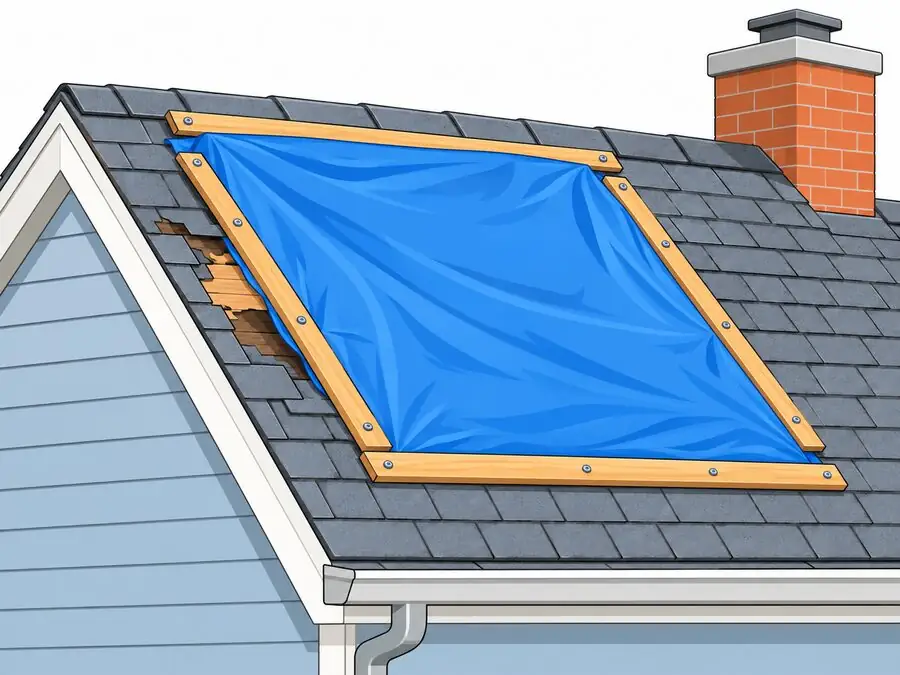
Step 4: Leave roof tarping to a roofer
Do not climb onto a roof to place a tarp yourself. Falls from roofs and ladders are a leading cause of serious home injuries, and a wet roof is slippery. Roofers can usually place a tarp quickly, and many offer emergency service. In the meantime, keep the water inside under control with buckets, towels and plastic sheeting, and stay off the roof.
Step 5: Call a roofer and your insurer
Call a licensed roofer for a proper repair. Ask for a written estimate. Contact your homeowner's insurance company about the claim. Many policies cover sudden storm damage but not leaks caused by neglect, so read your policy and ask.
Step 6: Dry everything out
Wet insulation and drywall can grow mold within a day or two. Set up fans and a dehumidifier, take out anything soaked, and open windows only when the weather outside is dry. If mold has already started, wear a mask and consider calling a professional.
What not to do
- Do not walk on a wet roof.
- Do not use roofing cement over wet surfaces and expect it to last.
- Do not ignore a small leak. It gets worse.
- Do not climb a ladder in the rain.
When this is an emergency
If a large section of the roof is damaged, if the ceiling is sagging, or if water is near electrical wiring, call a professional right away and, if there is a risk to safety, leave the area.
A temporary fix buys you time. A permanent fix needs a roofer who can find the real cause and repair or replace the damaged parts.
Related guides
- How to Seal Roof Flashing Around a Chimney or Vent
- How to Fix a Dripping Outdoor Faucet
- How to Install a Hose Bib Cover for Winter
- Install Hose Reel on a Wall: Steps That Last
FAQ
Is it safe to climb on a wet roof?
No. Wet roofs are slippery. Start from inside and wait for safe weather.
How long does a temporary patch last?
It buys time, often days to weeks, and is not a permanent repair.
Will insurance cover a roof leak?
Sudden damage may be covered. Take photos, and call your insurer.
More from this topic
- How to Fix a Leaking Skylight: Learn how to fix a leaking skylight: find whether the leak is the glass seal, the flashing or condensation,...
- How to Fix a Sagging Gate So It Closes Properly: Learn how to fix a sagging gate with a diagonal brace, an anti-sag kit or tightened hinges so it latches and...
- How to Patch a Flat Roof: Learn how to patch a flat roof: find the leak, clean and dry the area, apply patch or coating, seal the edges...
- How to Repair a Torn Roof Shingle: Learn how to repair a torn roof shingle: lift the tabs, seal small tears, replace damaged shingles and check...
- How to Seal Roof Flashing Around a Chimney or Vent: Learn how to seal roof flashing: find the failed spot, clean the area, apply roofing sealant correctly and...
 Garage and OutdoorsHow to Fix a Leaking SkylightLearn how to fix a leaking skylight: find whether the leak is the glass seal, the flashing or condensation, then reseal, replace the seal or call a roofer.
 Garage and OutdoorsHow to Fix a Sagging Gate So It Closes ProperlyLearn how to fix a sagging gate with a diagonal brace, an anti-sag kit or tightened hinges so it latches and swings freely without dragging.
 Garage and OutdoorsHow to Patch a Flat RoofLearn how to patch a flat roof: find the leak, clean and dry the area, apply patch or coating, seal the edges and check the repair after rain.
 Garage and OutdoorsHow to Repair a Torn Roof ShingleLearn how to repair a torn roof shingle: lift the tabs, seal small tears, replace damaged shingles and check the flashing so the roof stays watertight.
 Garage and OutdoorsHow to Seal Roof Flashing Around a Chimney or VentLearn how to seal roof flashing: find the failed spot, clean the area, apply roofing sealant correctly and know when a roofer should replace it.