
How to Thaw Frozen Pipes Safely
Part of: Basic plumbing
- Difficulty
- Medium
- Time
- 30 minutes to a few hours
- Tools
- Hair dryer, towels, hot water, bucket, flashlight, space heater (used with care), gloves
- Call a pro if
- you cannot find the frozen section, the pipe is cracked, water is leaking, the pipe is inside a wall you cannot open or the freeze keeps returning
In this guide
- Power off first
If no water comes out of a faucet on a freezing day, a pipe may be frozen. Knowing how to thaw frozen pipes safely can save you a burst pipe and a flooded home. Act quickly, but do not use an open flame.
This guide is part of our wider guide to water pressure, pipes and sump pumps.
Spot the freeze
Signs include no water or a trickle from one faucet, frost on an exposed pipe, a bulging pipe, or a smell from a drain. Pipes in unheated spaces, outside walls, basements, crawl spaces and garages freeze first.
Step by step
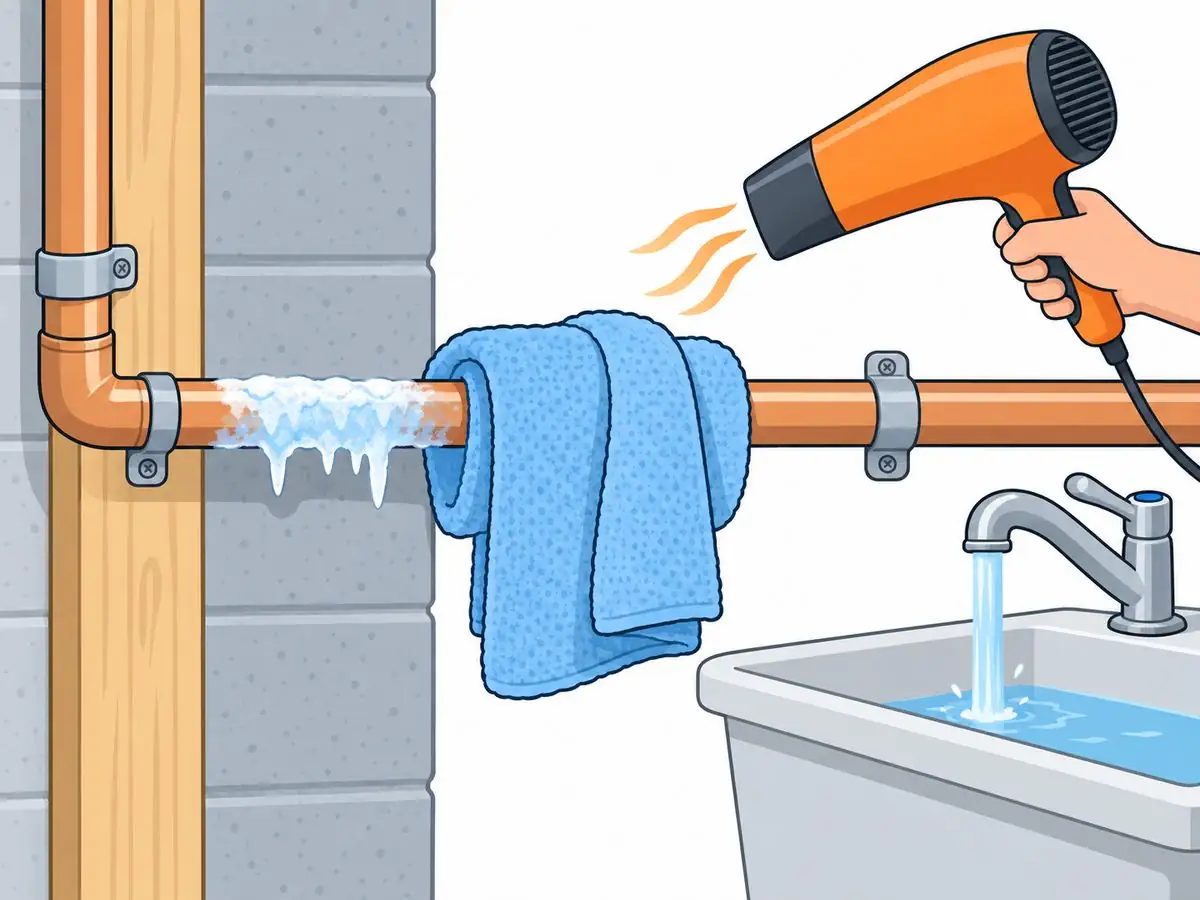
1. Open the faucet. Turn on the cold and hot faucets on the affected line. As the ice melts, water needs a way out and the open faucet relieves pressure.
2. Find the frozen section. Follow the pipe from the faucet toward the main supply. The frozen part is often cold, frosty or close to an outside wall.
3. Check for cracks. Look for splits, wet spots or drips. If you see a break, shut off the main valve and call a plumber. How to shut off the water main shows where it is.
4. Warm the pipe slowly. Use a hair dryer on a low or medium setting, moving it along the pipe and starting closest to the faucet. Keep the dryer away from water and puddles.
5. Use warm towels. Wrap the pipe in towels soaked in hot (not boiling) water. Replace them as they cool.
6. Add gentle room heat. A space heater placed safely away from anything flammable can warm a cold room. Never leave it unattended, and keep it clear of water.
7. Keep the faucet open until full flow returns.
8. Check all connections. Look for leaks when water starts to flow.
9. Thaw other faucets. If one pipe froze, others may be close.
What never to do
- No open flame. Do not use a torch, a lighter or a heat gun. They can start fires and damage pipes.
- No boiling water poured directly on the pipe.
- No chemical antifreeze in drinking water lines.
- Do not ignore a burst. If the pipe has split, water will pour out as it thaws. Be ready at the shutoff.
Prevent a repeat
Insulate exposed pipes with foam sleeves. Seal gaps where cold air enters. On very cold nights, open cabinet doors under sinks and let a faucet drip. Disconnect outdoor hoses. See How to winterize your home for a full list.
Know where the cold spots are
Make a list of places in your house where pipes run through unheated spaces, such as garages, crawl spaces, exterior walls and attics. Pipes in a kitchen sink cabinet on an outside wall are also at risk. Open the cabinet doors on very cold nights. If you are away, keep the heat at no lower than the setting your insurer or the pipe maker suggests, and ask someone to check the house.
After the thaw
Check each joint and the pipe for wet spots for the next day. A pipe can crack without leaking until it thaws and pressure returns. If you see a drip, shut off the water to that line and call a plumber. Insulate the pipe or add heat tape made for pipes before the next cold snap.
Related guides
- How to Winterize a Sprinkler System
- Sweating Pipes: How to Stop Water Drips
- Water Hammer in Pipes: Why It Bangs and How to Stop It
- How to Insulate a Water Heater and Hot Water Pipes Safely
- How to Insulate Hot Water Pipes
FAQ
How long does it take to thaw a pipe?
From 30 minutes to a few hours, depending on the length of ice and the pipe location.
Should I turn off the water?
If you suspect a crack, yes. Otherwise keep the faucet open while thawing.
Can plastic pipes freeze?
Yes. Plastic is flexible but still can crack.
Will my insurance cover a burst?
Policies vary. Check yours, and take photos before cleanup.
More from this topic
- How to Insulate Water Pipes to Prevent Freezing: Learn how to insulate water pipes to prevent freezing. Choose foam sleeves, wrap pipes in cold spaces, seal...
- How to Drain Your Plumbing System Completely: How to drain your plumbing system: shut the main, open every fixture top to bottom and empty the lines for...
- Sump Pump Discharge Pipe Frozen: How to Fix It: Sump pump discharge pipe frozen in winter? Learn how to thaw it safely, keep water moving and prevent ice...
- How to Winterize an Outdoor Faucet Before the First Freeze: Learn how to winterize an outdoor faucet: shut off the supply, drain the line, open the valve, fit an...
- How to Crimp PEX Pipe: Joints That Never Leak: How to crimp PEX pipe: cut square, seat the fitting, position the ring and gauge every crimp for leak-proof...
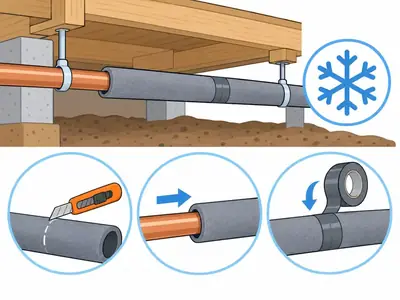 PlumbingHow to Insulate Water Pipes to Prevent FreezingLearn how to insulate water pipes to prevent freezing. Choose foam sleeves, wrap pipes in cold spaces, seal drafts and use simple tricks in a hard freeze.
 PlumbingHow to Drain Your Plumbing System CompletelyHow to drain your plumbing system: shut the main, open every fixture top to bottom and empty the lines for repairs or winter.
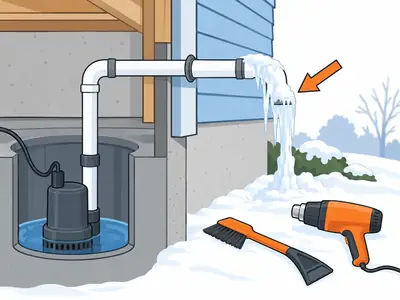 PlumbingSump Pump Discharge Pipe Frozen: How to Fix ItSump pump discharge pipe frozen in winter? Learn how to thaw it safely, keep water moving and prevent ice blocks that flood basements.
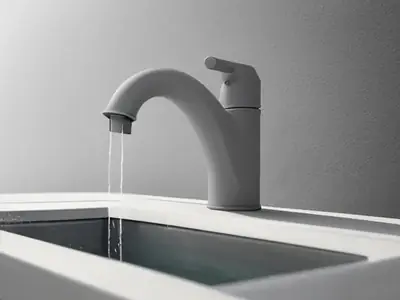 SeasonalHow to Winterize an Outdoor Faucet Before the First FreezeLearn how to winterize an outdoor faucet: shut off the supply, drain the line, open the valve, fit an insulated cover and check for leaks that could freeze.
 PlumbingHow to Crimp PEX Pipe: Joints That Never LeakHow to crimp PEX pipe: cut square, seat the fitting, position the ring and gauge every crimp for leak-proof joints.