
Water Hammer in Pipes: Why It Bangs and How to Stop It
Part of: Basic plumbing
- Difficulty
- Moderate
- Time
- 30 to 60 minutes
- Tools
- Flashlight, pipe straps, screwdriver, pressure gauge, towel
- Call a pro if
- The noise is loud, you see leaks, pressure is very high or you are not comfortable draining the system.
In this guide
- Step 1: Find where the bang happens
- Step 2: Check the water pressure
- Step 3: Secure loose pipes
- Step 4: Drain the system to refill the air chambers
- Step 5: Install a water hammer arrestor
- Step 6: Check the fixtures
- Mistakes to avoid
- Keeping it from coming back
- Quick recap
- How to tell which fixture is the cause
- Related guides
- FAQ
- When to call a pro
- Water off first
- Gas safety
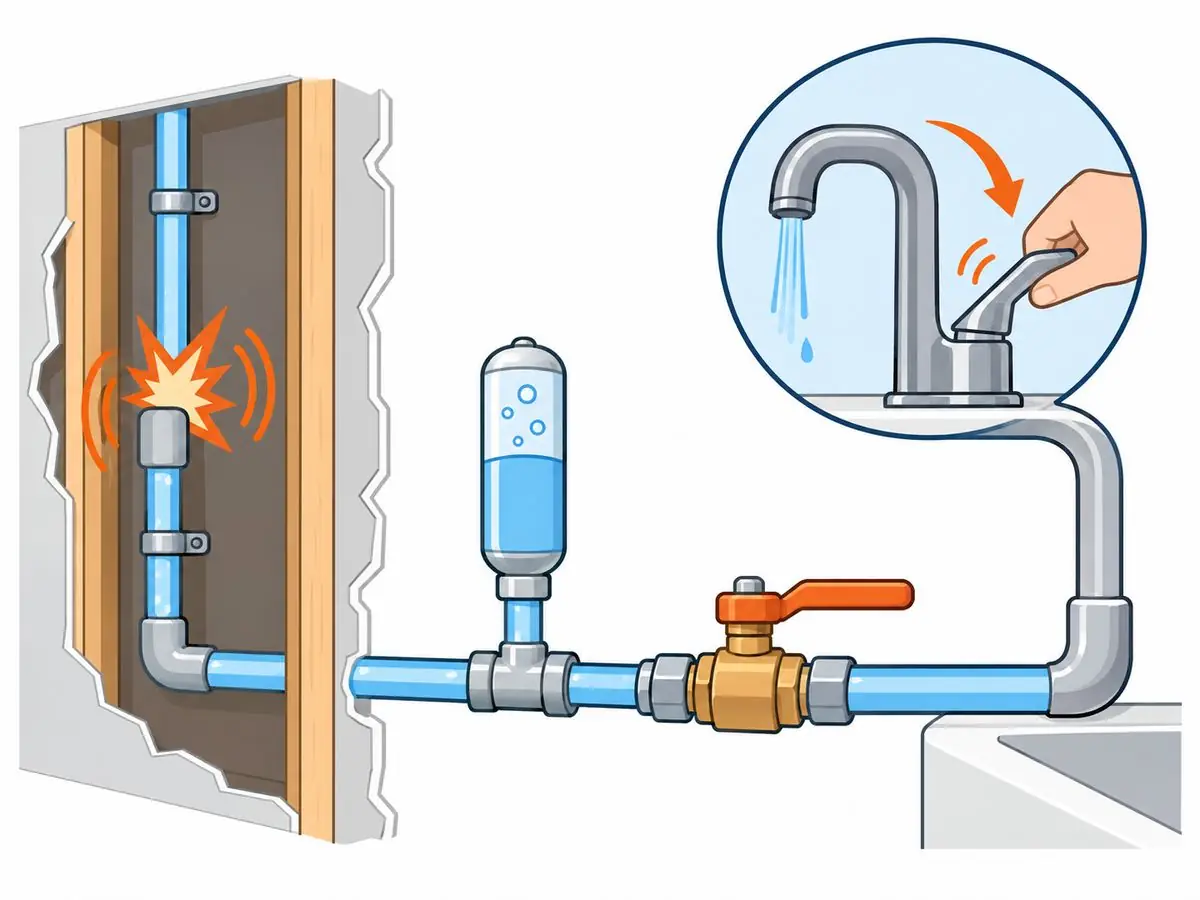
Water hammer in pipes is the loud bang or thud you hear when a faucet, washer or dishwasher valve closes quickly. Moving water suddenly stops and sends a shock wave through the pipes. Over time it can loosen joints and wear parts, so it is worth fixing.
This guide is part of our wider guide to water pressure, pipes and sump pumps.
Step 1: Find where the bang happens
Turn faucets on and off one at a time and listen. Notice if the noise comes with the washing machine or dishwasher.
Step 2: Check the water pressure
Screw a pressure gauge to an outdoor spigot and read it. Pressure above about 80 psi is hard on pipes. If it is high, a plumber can check or replace the pressure reducing valve.
Step 3: Secure loose pipes
Look at exposed pipes in the basement or crawl space. Pipes that can move will bang. Add pipe straps or foam pipe insulation at the spots where pipes touch wood framing.
Step 4: Drain the system to refill the air chambers
Some homes have short air chambers on supply lines. When they fill with water, the cushion is gone. Shut off the main water valve. Open the highest faucet and the lowest faucet. Let the pipes drain fully, then close the faucets and turn the water back on slowly.
Step 5: Install a water hammer arrestor
This small device screws onto the supply line near the washer or dishwasher and absorbs the shock. Choose one that matches the pipe size. If you do not have the tools, a plumber can fit one quickly.
Step 6: Check the fixtures
A worn washer inside a faucet or a failing valve can cause banging. Replace worn parts if you can see them.
Mistakes to avoid
Do not cut into pipes just to add an air chamber unless you know how. Do not ignore a rising pressure reading. Do not put straps on pipes so tight that they cannot expand when hot water flows. Do not leave a loud hammer for months, because repeated shocks can loosen soldered or threaded joints.
Keeping it from coming back
Have the water pressure checked once a year, especially after plumbing work. Fit arrestors at fast-closing valves such as the washer and dishwasher. Keep pipes supported every few feet. A small repair now prevents a leak in a wall later.
Quick recap
Start by finding where the bang happens, then check the water pressure, secure loose pipes and drain the system so the air chambers can refill. A hammer arrestor is the next step if the noise remains. If the banging comes with leaks or very high pressure readings, call a plumber.
How to tell which fixture is the cause
Water hammer often comes from one fast-closing valve. Washing machines and dishwashers use solenoid valves that shut in a split second, and single-lever faucets can do the same. To find the cause, listen while each fixture shuts off, then try shutting a faucet slowly by hand. If the banging disappears when you close slowly, the pipe is carrying a fast shock, and a valve or arrestor near the fixture will help. If the noise appears even with slow shutoff, loose pipes are more likely. Write down which fixture and what time it happened, since this helps a plumber find the cause fast.
Related guides
- How to Quiet a Banging Radiator
- How to Thaw Frozen Pipes Safely
- Angle Stop Valve Leaks or Will Not Turn: What to Do
- How to Shut Off Water Main (and Find the Shutoff Valve)
- How to Insulate a Water Heater and Hot Water Pipes Safely
FAQ
Is water hammer harmful?
Over time it can loosen fittings and cause leaks.
Why does it happen when the dishwasher stops?
The valve shuts fast and stops the flow suddenly.
Will it fix itself?
Rarely. Check the cause.
More from this topic
- How to Quiet a Banging Radiator: Learn how to quiet a banging radiator: bleed trapped air, fix the pipe slope, free a stuck valve and stop the...
- Sweating Pipes: How to Stop Water Drips: Sweating pipes drip water and can stain ceilings. Learn how to tell condensation from a leak, insulate cold...
- How to Insulate Water Pipes to Prevent Freezing: Learn how to insulate water pipes to prevent freezing. Choose foam sleeves, wrap pipes in cold spaces, seal...
- Water Pressure Low Throughout the House: What It Means: Water pressure low throughout the house points to the meter valve, the pressure regulator, old galvanized...
- Water Pressure, Pipes and Sump Pumps: What to Check: Water pressure: low pressure, banging pipes, condensation, frozen lines or a sump pump that will not run....
 PlumbingHow to Quiet a Banging RadiatorLearn how to quiet a banging radiator: bleed trapped air, fix the pipe slope, free a stuck valve and stop the expansion noise that wakes the house.
 PlumbingSweating Pipes: How to Stop Water DripsSweating pipes drip water and can stain ceilings. Learn how to tell condensation from a leak, insulate cold lines and control humidity. Steps and tools.
 PlumbingHow to Insulate Water Pipes to Prevent FreezingLearn how to insulate water pipes to prevent freezing. Choose foam sleeves, wrap pipes in cold spaces, seal drafts and use simple tricks in a hard freeze.
 PlumbingWater Pressure Low Throughout the House: What It MeansWater pressure low throughout the house points to the meter valve, the pressure regulator, old galvanized pipes or the city supply. Check them in order.
 PlumbingWater Pressure, Pipes and Sump Pumps: What to CheckWater pressure: low pressure, banging pipes, condensation, frozen lines or a sump pump that will not run. Includes the tools you need and when to call a pro.