
Angle Stop Valve Leaks or Will Not Turn: What to Do
Part of: Kitchen
- Difficulty
- Easy to medium
- Time
- 15 to 60 minutes
- Tools
- Adjustable wrench, small wrench or pliers, rag, bucket, towel, flashlight, replacement valve (if needed)
- Call a pro if
- the valve will not shut off, the pipe it is attached to is corroded or soldered, or you are not able to turn the water off to the house
In this guide
- Water off first
An angle stop valve is the small shutoff valve on the wall or floor under a sink or behind a toilet. It lets you turn off water to one fixture. Because it is rarely used, an angle stop valve can seize, drip at the handle or fail to shut off when you need it. Here is how to deal with it safely.
This guide is part of our wider guide to water pressure, pipes and sump pumps.
Know what you have
There are two common types. A multi-turn valve has a round handle you turn several times, and it uses a rubber washer. A quarter-turn valve has a small lever that rotates ninety degrees, and it uses a ball inside. Quarter-turn valves tend to last longer. The valve connects to the wall pipe by compression, threads, or solder, and to the fixture with a supply line.
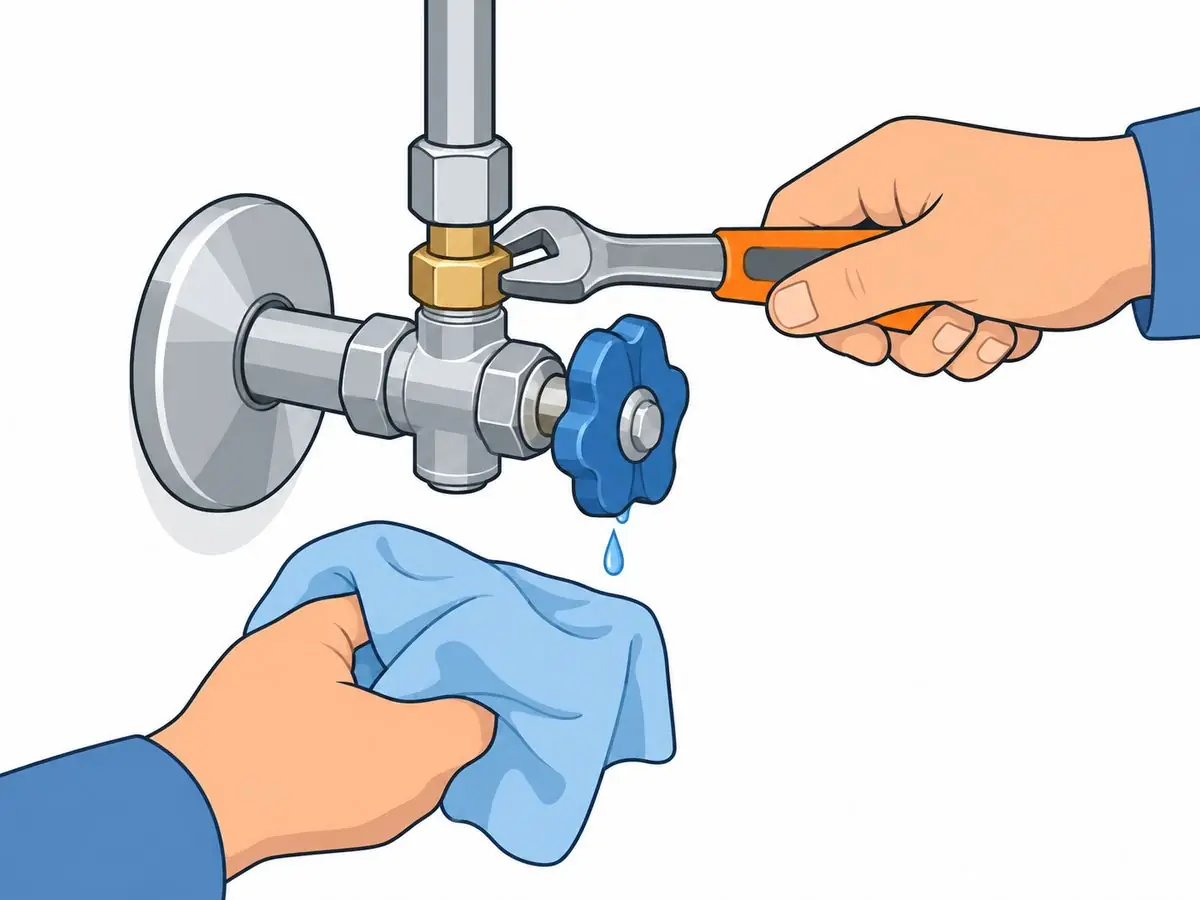
If the valve drips from the handle
1. Look for the packing nut behind the handle. It is the nut just under the handle, around the stem.
2. Tighten it one quarter turn with a small wrench while holding the valve body steady with another wrench or your hand. Do not overtighten, since this can make the handle hard to turn.
3. Dry and test. Wipe the area dry and wait a few minutes to see if the drip stops.
4. If it still drips, the packing washer or O-ring is worn. On many valves, you can replace it after you shut off the water at the main. This is a delicate job, and replacing the valve is often simpler.
If the valve drips from the connection
A drip at the compression nut or where the supply line connects can come from a loose nut or a worn washer. With the water off, tighten the nut a little or replace the supply line. See How to replace a braided supply line.
If the handle will not turn
1. Do not force it. A stem can snap, and then you have a bigger leak.
2. Spray a little penetrating oil at the stem and wait ten to fifteen minutes.
3. Try a gentle back and forth motion with your hand or a small wrench on the handle, not more than a quarter turn at first.
4. If it still sticks, leave it. Shut off the water at the main valve and replace the valve. See How to shut off the water main.
Replace the valve
1. Turn off the water at the main and open a faucet to drain the lines.
2. Disconnect the supply line from the valve.
3. Remove the old valve. A compression valve unscrews from the pipe, and a threaded valve unscrews from a threaded pipe. A soldered valve needs a pipe cutter and a heat source, which is a job for a plumber, since open flame near wood is a fire risk.
4. Slide the new compression nut and ring onto the pipe, and attach the new valve. Tighten the nut with a wrench.
5. Reconnect the supply line and turn the water back on slowly. Check for leaks.
Keep valves working
Turn each valve off and on once a year to keep it from seizing. Turn gently, and stop if it resists. Replace any valve that is corroded, crusty or dripping. Know where your main valve is, in case a valve fails.
Choose a replacement valve
A quarter-turn ball valve is a good choice for replacement. It opens and closes with a short turn of the handle and has no rubber washer that can harden. Match the inlet type to your wall pipe, such as compression, threaded or push-fit, and the outlet to the supply line you use. Take the old valve to the store to compare sizes. Buy a valve made for potable water. If the pipe in the wall is soft copper, a compression valve is often the easiest to install without heat.
When to ask for help
If the pipe turns or moves when you try to loosen the old valve, stop. A loose or damaged pipe inside the wall can break. Hold the pipe still with a second wrench while you turn the nut, and do not pull on it. If the pipe is corroded, flaking or green, a plumber should replace the section.
Related guides
- Gas Burner Clicks but No Flame: What to Do
- How to Install a Water Leak Sensor Where It Matters Most
- Water Softener Not Working: What to Check Before You Call
- How to Fix a Leaky Hose Connection at the Spigot or Sprayer
- How to Replace a Kitchen Sink Strainer Basket
- How to Replace a Main Water Shutoff Valve
More help
If the water is coming from somewhere else, plumbing leaks sorts every common leak by location and links to the repair.
FAQ
Why won't my shutoff valve close all the way?
The washer or ball inside may be worn, or debris is blocking it. Replace the valve.
Is it safe to loosen the packing nut a little?
Only if you tighten it back right away. Do not remove it with water on.
Can I replace the valve without shutting off the main?
No. You need the water off at the main or at a valve upstream.
How long do angle stop valves last?
Many last 10 to 20 years, but older multi-turn valves seize more often.
More from this topic
- Replace Toilet Shutoff Valve: Compression or Push-Fit: Toilet shutoff valve leaking or stuck? Replace toilet shutoff valve parts step by step with a compression or...
- How to Fix a Shower Valve That Won't Turn: Learn how to fix a shower valve that won't turn: free a seized cartridge, clear mineral scale and replace the...
- Replace Toilet Wax Ring and Stop Base Leaks: Toilet leaking at the base or rocking? Replace toilet wax ring parts step by step, reset the bowl and seal it...
- How to Shut Off Water Main (and Find the Shutoff Valve): Learn how to shut off water main in an emergency. Find the shutoff valve, tell ball valves from gate valves...
- Dishwasher Not Filling With Water: What to Check: A dishwasher not filling with water is usually a closed valve, a kinked line, a stuck float or a failed inlet...
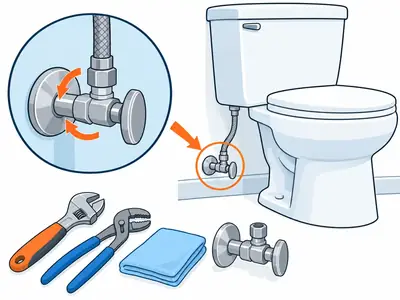 BathroomReplace Toilet Shutoff Valve: Compression or Push-FitToilet shutoff valve leaking or stuck? Replace toilet shutoff valve parts step by step with a compression or push-fit stop valve.
 BathroomHow to Fix a Shower Valve That Won't TurnLearn how to fix a shower valve that won't turn: free a seized cartridge, clear mineral scale and replace the cartridge or stem without cracking the valve.
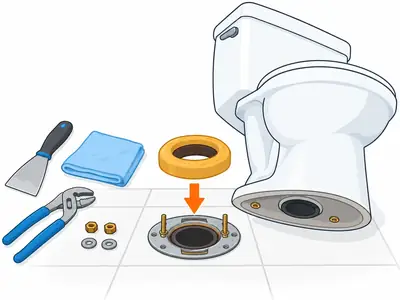 BathroomReplace Toilet Wax Ring and Stop Base LeaksToilet leaking at the base or rocking? Replace toilet wax ring parts step by step, reset the bowl and seal it against leaks and odors.
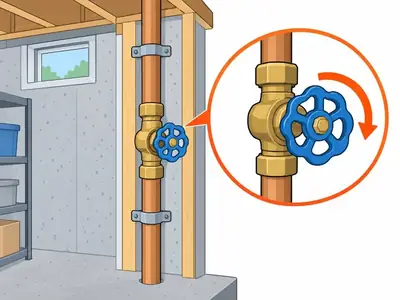 PlumbingHow to Shut Off Water Main (and Find the Shutoff Valve)Learn how to shut off water main in an emergency. Find the shutoff valve, tell ball valves from gate valves and test it before you need it.
 KitchenDishwasher Not Filling With Water: What to CheckA dishwasher not filling with water is usually a closed valve, a kinked line, a stuck float or a failed inlet valve. Check them in this order.