
How to Fix a Leaky Hose Connection at the Spigot or Sprayer
Part of: Basic plumbing · Also in: The Complete Guide to Home Plumbing Repair for Homeowners
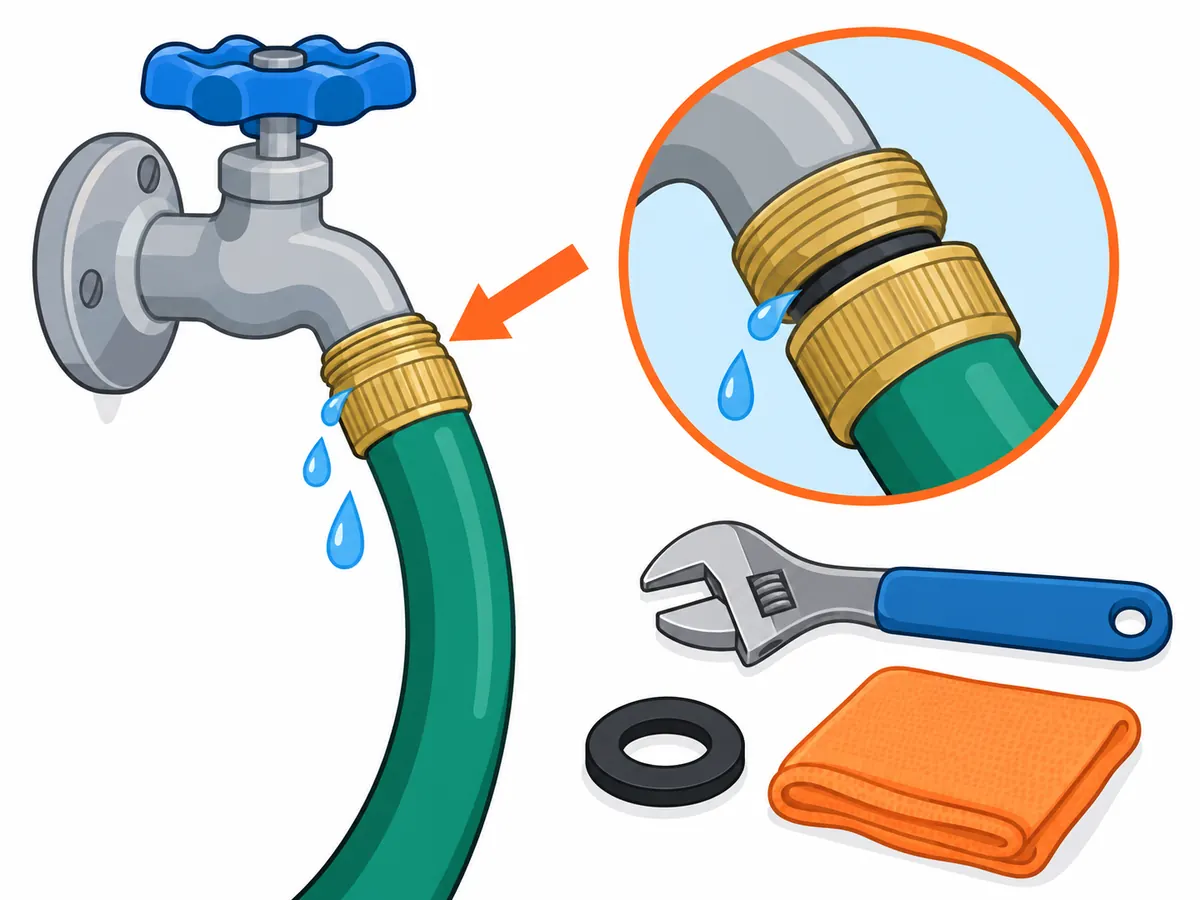
- Difficulty
- Easy
- Time
- 5 to 20 minutes
- Tools
- Replacement hose washers, pliers, adjustable wrench, thread seal tape, rag, small brush
- Call a pro if
- the spigot itself leaks from the wall, the threads are stripped or the pipe is damaged
In this guide
- Water off first
Water spraying from where the hose meets the spigot wastes water and soaks your shoes. A leaky hose connection is almost always caused by a flat or missing rubber washer, or by a loose or damaged fitting. This is one of the quickest fixes around the house, and this guide shows how to do it.
This guide is part of our wider guide to water pressure, pipes and sump pumps.
Find where the leak is
- Leak where the hose meets the spigot: a bad washer, a loose coupling or damaged threads.
- Leak at the sprayer or nozzle end: the washer inside the nozzle, or a loose connection.
- Leak along the hose: a split or hole in the hose.
- Leak around the spigot handle: see How to replace a hose spigot washer.
- Leak from the vacuum breaker cap: see Hose bib vacuum breaker leaks.
Step by step: replace the washer
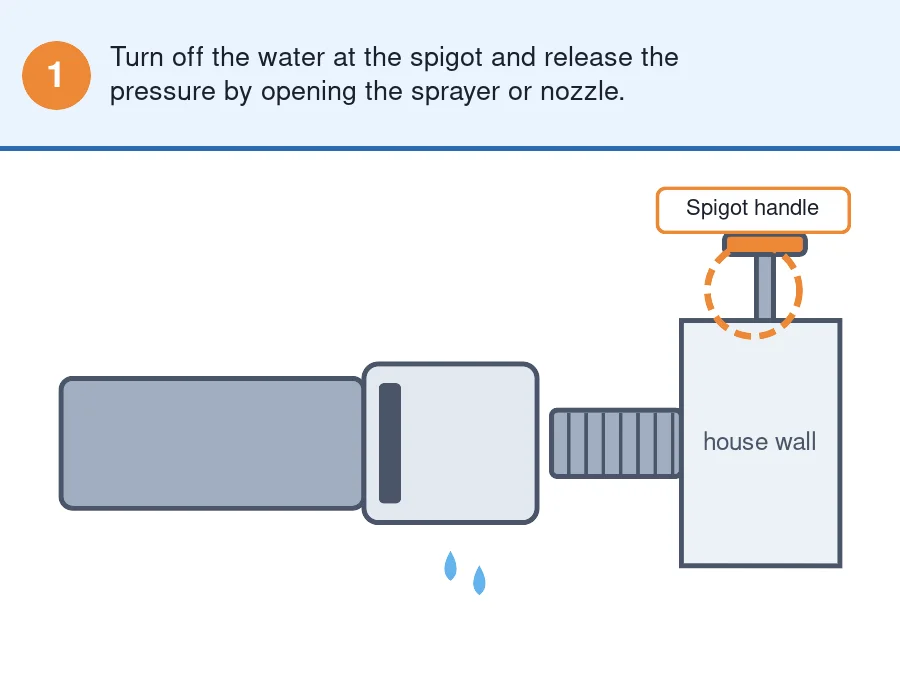
1. Turn off the water at the spigot and release the pressure by opening the sprayer or nozzle.
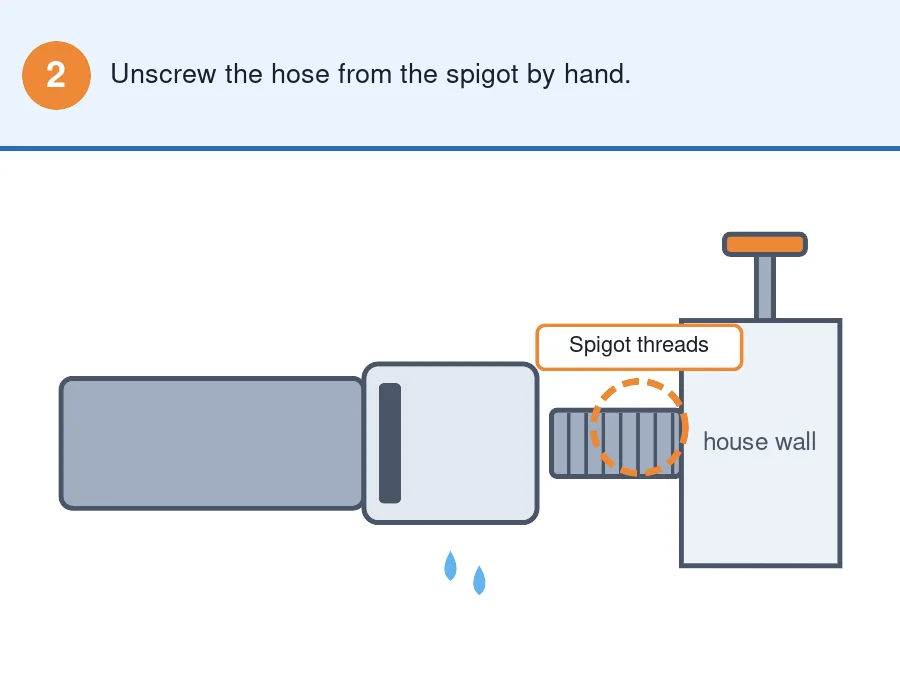
2. Unscrew the hose from the spigot by hand.
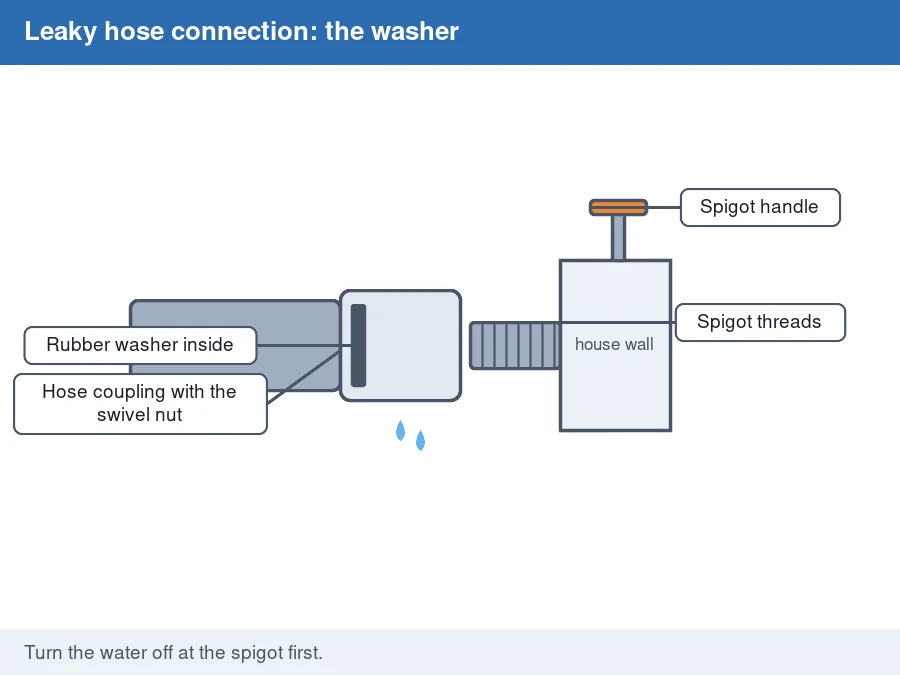
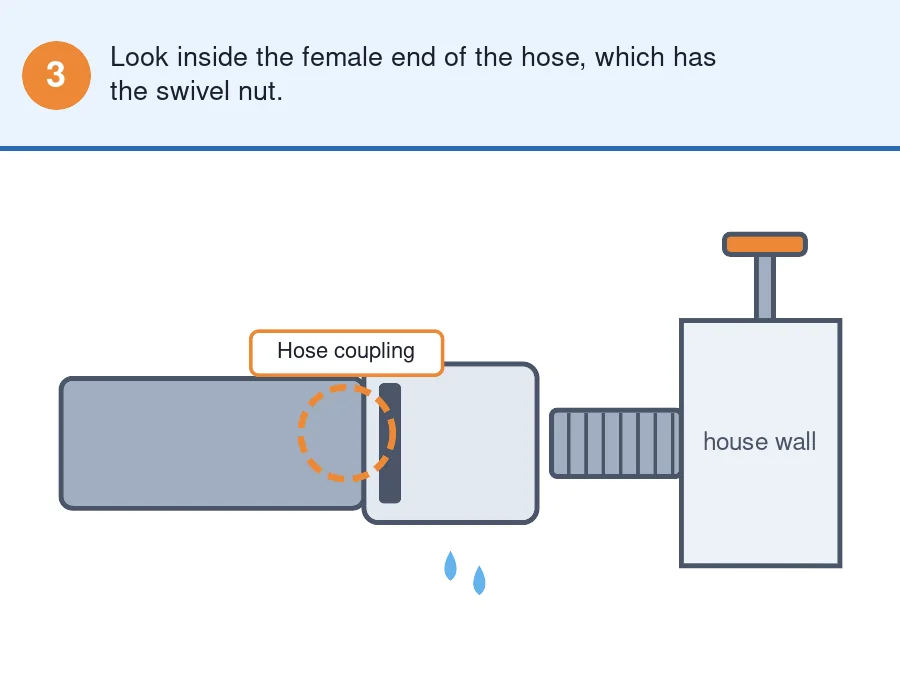
3. Look inside the female end of the hose, which has the swivel nut. You will see a rubber washer.
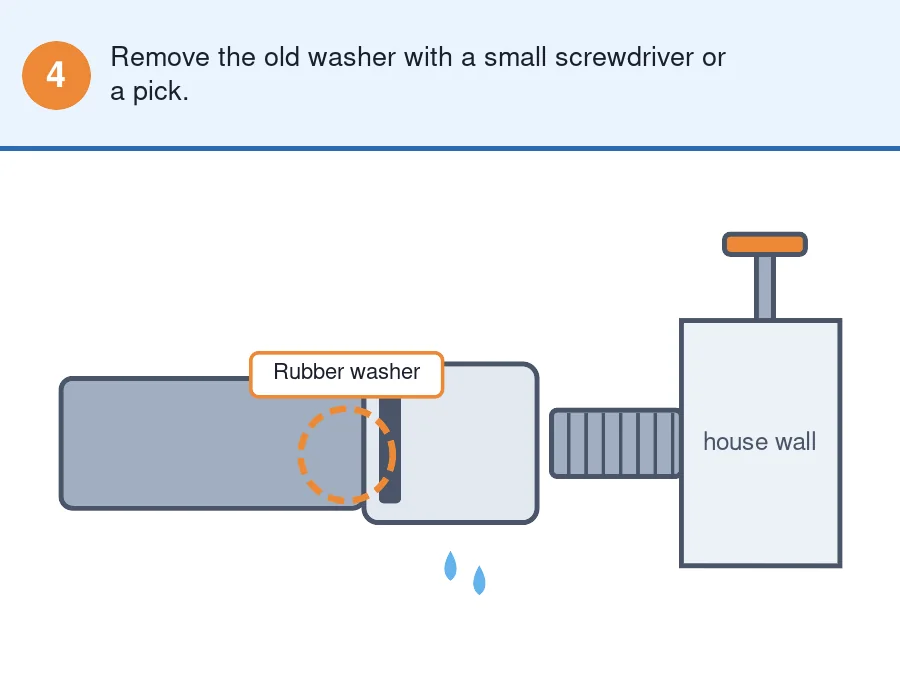
4. Remove the old washer with a small screwdriver or a pick. It is often flat, cracked or missing.
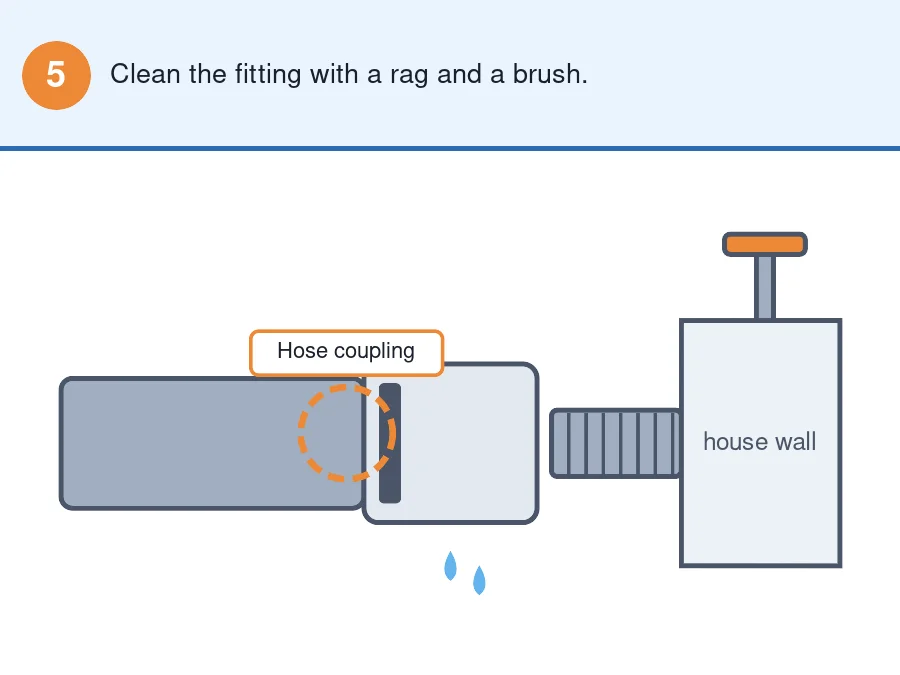
5. Clean the fitting with a rag and a brush. Remove dirt and mineral buildup.
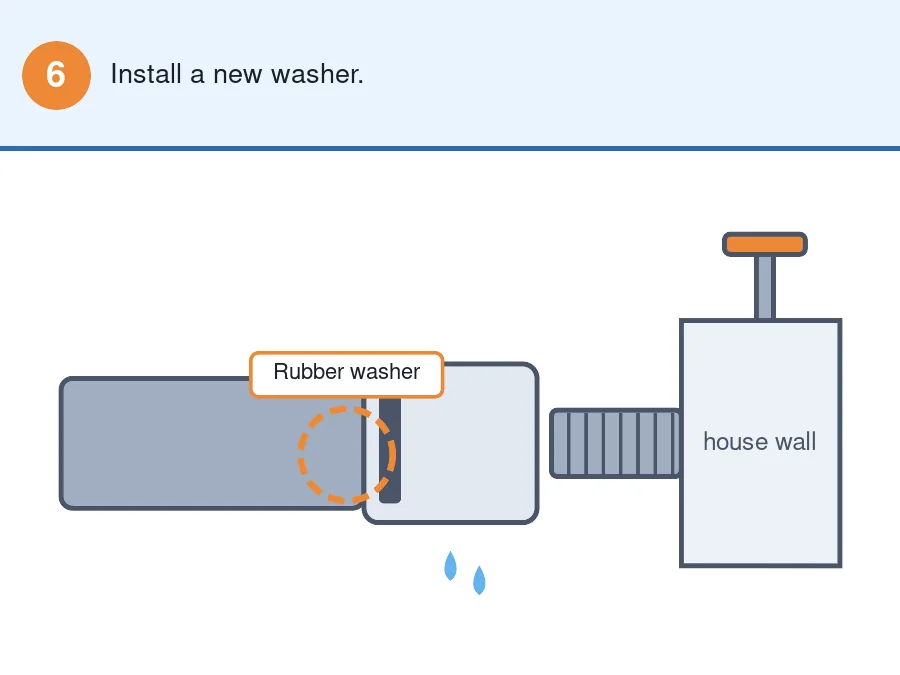
6. Install a new washer. Press it flat into the fitting. Make sure it sits fully in place.
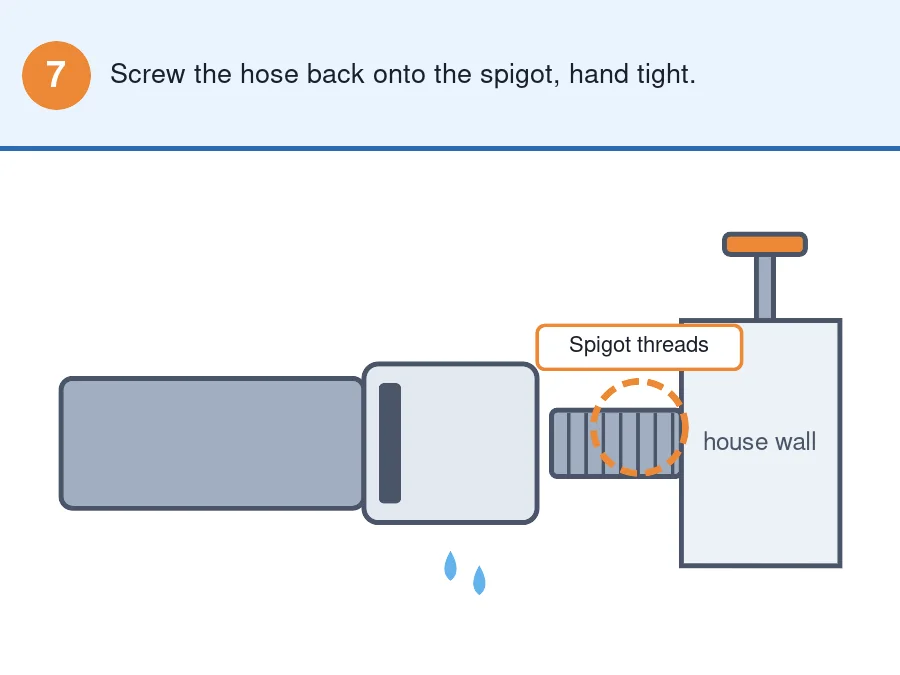
7. Screw the hose back onto the spigot, hand tight. Then use pliers to give it a small extra turn. Do not overtighten.
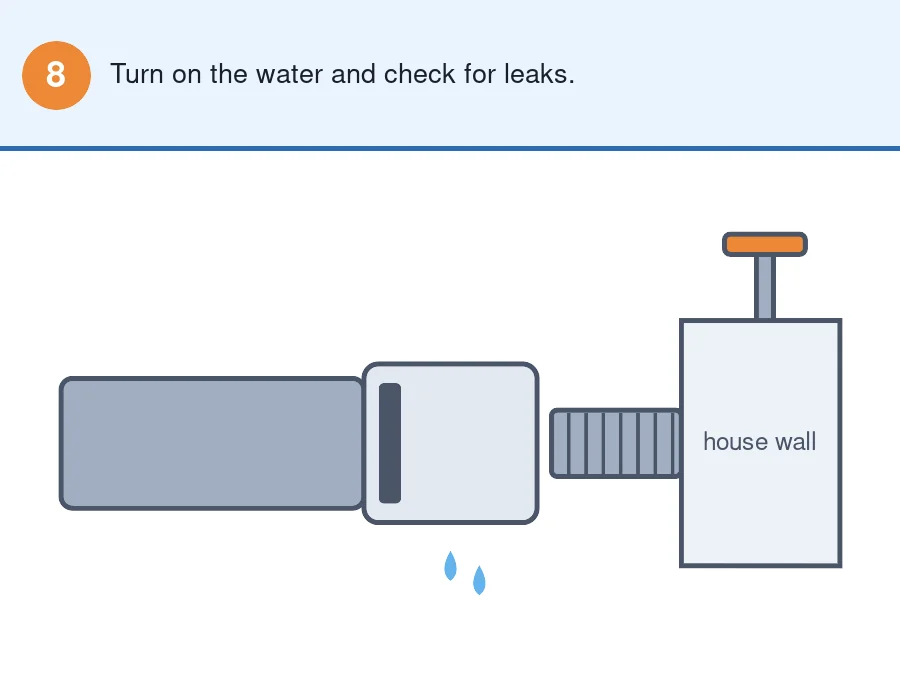
8. Turn on the water and check for leaks.
Do the same at the other end of the hose, or on a sprayer, if it leaks.
If it still leaks
- Check the threads on the spigot and on the hose. Damaged or crossed threads will leak.
- Wrap the threads of a metal spigot lightly with thread seal tape, in the direction you will tighten.
- Check the coupling. A bent or cracked plastic coupling must be replaced. A metal coupling is more durable.
- Replace the hose end. Repair kits let you cut off a damaged end and add a new one.
- Check the spigot for a loose mount or cracks.
Signs that point to each cause
A fine mist from the connection means a bad washer. A steady stream means a loose or cracked coupling. A drip at the spout end when the hose is off means the spigot washer is worn. Water coming out of the cap on top means the vacuum breaker is leaking. A hose that only leaks under pressure may have a small hole or crack. If the hose is stiff, faded or cracked, replace it.
Use a quick connect or a hose washer set
A quick connect system is easy to use and has its own gasket. Check the gasket often. Keep a spare set of washers in the garage. If your hose comes with a leaky coupling, replace the coupling.
Winter care
Disconnect hoses in cold weather and drain them. A hose left on the spigot can trap water and freeze, which can burst the pipe inside the wall. Cover the spigot or use an insulated cover. See How to winterize your home.
Prevention
Replace the washer once a season. Do not leave pressure on the hose when you are not using it. Store the hose out of the sun. Do not yank the hose. Use a hose reel to prevent kinks.
Choosing a better washer or fitting
Rubber washers are cheap, but a thicker, softer washer often seals better than a thin, hard one. Some hoses have a built-in gasket that can be replaced. Brass fittings last longer than plastic. If you use a hose connected to a timer, a splitter or a sprayer, check each connection, since each one adds a place for a leak. Tighten with your hand, and use a tool only for the final snug.
Check the whole hose
While the hose is off, lay it out and look at its full length. Run your hand along it to feel for bulges and soft spots. Kinks that have been there for a long time weaken the hose and cause leaks later. Fill the hose with water at the spigot, with the end closed, and watch for fine sprays or drips along its length. A small hole can be repaired with a mender fitting, but a hose that has many problems is better replaced.
More help
If the water is coming from somewhere else, plumbing leaks sorts every common leak by location and links to the repair.
Related guides
- How to Replace a Supply Line (Braided Hose) Under a Sink or Toilet
- Angle Stop Valve Leaks or Will Not Turn: What to Do
- How to Install a Water Leak Sensor Where It Matters Most
- How to Replace a Sink Sprayer Hose
- How to Fix a Leaky Faucet: Repair Guide, Step by Step
FAQ
Why does my hose leak at the spigot?
Most often the rubber washer is worn or missing.
How tight should I make the hose?
Hand tight, plus a small turn with pliers.
Can I use tape on the threads?
Yes on metal threads, in the tightening direction.
How long do hose washers last?
A season or two, depending on use.
More from this topic
- How to Fix a Leaky Hose Bib Handle: How to fix a leaky hose bib handle: tighten the packing nut or replace the packing washer and stop the stem...
- How to Replace a Garden Hose Washer: How to replace a garden hose washer: the two-minute fix for leaks at the faucet, nozzle and every hose...
- How to Fix a Leaking Shower Head: Stop the Drip: How to fix a leaking shower head: reseal the connection, clean the nozzles and know when the drip is really...
- How to Replace Washing Machine Hoses to Prevent Leaks: Learn how to replace washing machine hoses, spot signs of wear and connect hot and cold lines correctly to...
- How to Fix a Dripping Outdoor Faucet: How to fix a dripping outdoor faucet: tighten the packing nut, replace the washer and protect it from...
 Outdoor PlumbingHow to Fix a Leaky Hose Bib HandleHow to fix a leaky hose bib handle: tighten the packing nut or replace the packing washer and stop the stem drip in minutes.
 Outdoor PlumbingHow to Replace a Garden Hose WasherHow to replace a garden hose washer: the two-minute fix for leaks at the faucet, nozzle and every hose connection.
 PlumbingHow to Fix a Leaking Shower Head: Stop the DripHow to fix a leaking shower head: reseal the connection, clean the nozzles and know when the drip is really the valve.
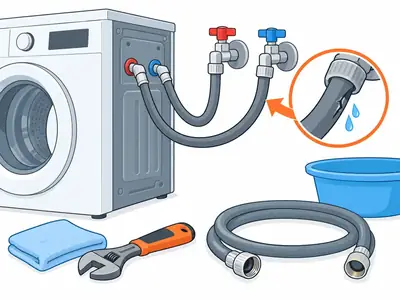 PlumbingHow to Replace Washing Machine Hoses to Prevent LeaksLearn how to replace washing machine hoses, spot signs of wear and connect hot and cold lines correctly to avoid leaks and flood damage in your laundry room.
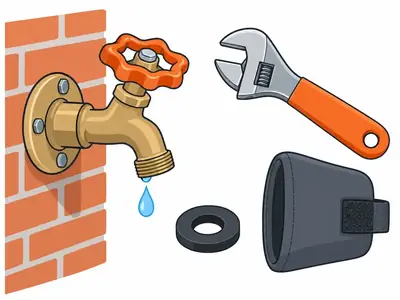 Garage and OutdoorsHow to Fix a Dripping Outdoor FaucetHow to fix a dripping outdoor faucet: tighten the packing nut, replace the washer and protect it from freezing. Steps, tools and when to call a pro.