
How to Winterize Your Home Before the Cold Arrives
Part of: Seasonal maintenance · Also in: The Complete Guide to Seasonal Home Maintenance
- Difficulty
- Easy to moderate
- Time
- A weekend
- Tools
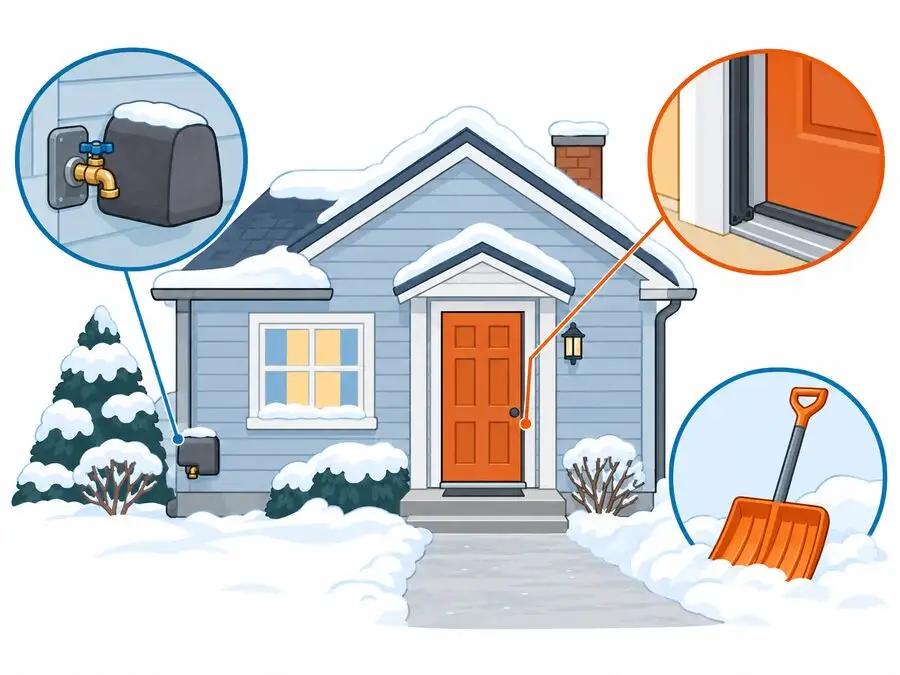
- Hose bib covers, weatherstripping, caulk, ladder, furnace filter
- Call a pro if
- You find roof damage, a leaking pipe or a furnace issue.
In this guide
- Step 1: Seal the drafts
- Step 2: Service the heating system
- Step 3: Protect the pipes
- Step 4: Clean the gutters and check the roof
- Step 5: Check the safety devices
- Step 6: Prepare the outdoors
- Step 7: Reverse ceiling fans and check insulation
- Step 8: Plan for a power outage
- Jobs to hand to a professional
- Common mistakes
- A simple weekend plan
- Related guides
- More help
- FAQ
- When to call a pro
Winter is hard on a house. Cold air gets in, pipes can freeze and burst, and heating costs rise. A few hours of preparation in the fall can prevent expensive damage. This guide covers how to winterize your home, with a checklist you can follow in a weekend.
This guide is part of our wider guide to seasonal home maintenance.
Step 1: Seal the drafts
Find gaps around doors and windows. Add weatherstripping to doors, and use door sweeps at the bottom. Caulk gaps around window frames. Our guide on how to seal a drafty window has the details. Seal gaps where pipes and wires enter the house with caulk or foam.
Step 2: Service the heating system
Replace the furnace filter, as we explain in how to change a furnace filter. Have a technician check the furnace or boiler every year. Test the thermostat. Replace its batteries if it uses them. Make sure vents and registers are clear of furniture. Bleed radiators if they are cold at the top.
Step 3: Protect the pipes
Frozen pipes can burst and cause major flooding.
- Disconnect garden hoses, and shut off the outdoor faucet valve from the inside if you have one. Drain the line.
- Insulate exposed pipes in the garage, attic, basement and crawl space with foam sleeves.
- Know where your main water shutoff is. Our guide on how to shut off water main explains.
- In a hard freeze, keep sink cabinet doors open and leave one faucet on at a slow drip.
Step 4: Clean the gutters and check the roof
Clean the gutters and downspouts, see how to clean gutters, so water can drain. Look at the roof from the ground for missing or damaged shingles. Trim tree branches that hang over the roof.
Step 5: Check the safety devices
Test smoke and carbon monoxide detectors, and replace the batteries. Our guide on how to replace a smoke detector battery shows how. Check fire extinguishers. If you use a fireplace, have the chimney inspected and cleaned.
Step 6: Prepare the outdoors
Store or cover outdoor furniture. Drain the lawn sprinkler system. Put away the hoses. Stock up on ice melt and a snow shovel. Check outdoor lights and walkways.
Step 7: Reverse ceiling fans and check insulation
Set ceiling fans to run clockwise at low speed to push warm air down. Check the attic insulation. If you can see the joists, you may need more. Make sure vents are not blocked.
Step 8: Plan for a power outage
Keep flashlights, batteries, blankets, bottled water and non-perishable food. Never run a generator, grill or camp stove indoors or in a garage. They produce carbon monoxide.
Jobs to hand to a professional
Call a pro for furnace or boiler service, chimney cleaning, adding attic insulation, or any gas smell. A rotten-egg smell near the furnace or boiler is an emergency, so go outside and call the gas company right away.
Common mistakes
- Waiting until the first freeze.
- Leaving hoses connected.
- Closing too many vents, which can strain the furnace.
- Ignoring small drafts.
- Skipping the detector batteries.
Use our home maintenance checklist by season to plan the rest of the year.
A simple weekend plan
If the list feels long, split it in two. On the first day, handle the safety items: test the detectors, replace the furnace filter, disconnect the hoses and find your water shutoff. On the second day, work on comfort and savings: seal the drafts, clean the gutters and check the attic. Save the jobs that need a professional, such as a furnace tune-up or a chimney sweep, and book them early, because the busy season fills up fast.
Related guides
- Home Winterizing Checklist: 12 Jobs to Finish Before the Cold Arrives
- Summer Home Prep Checklist: 12 Jobs to Do Before the Heat Hits
- Home Maintenance Checklist by Season (Spring, Summer, Fall, Winter)
- First Time Homeowner Checklist: 15 Things to Do Right Away
- How to Seal Small Cracks in a Basement Wall and When to Call a Pro
More help
For the other seasons, use the spring home maintenance checklist and the fall home maintenance checklist.
FAQ
When should I winterize?
Before the first hard freeze.
How do I protect pipes?
Disconnect hoses, cover outdoor faucets and insulate exposed pipes.
Should I leave my heat on if I travel?
Many owners set it to a low but safe temperature.
More from this topic
- How to Winterize an Outdoor Faucet Before the First Freeze: Learn how to winterize an outdoor faucet: shut off the supply, drain the line, open the valve, fit an...
- How to Winterize a Rain Barrel: Learn how to winterize a rain barrel: drain it, disconnect the diverter and store it so ice does not split...
- How to Get a Home Ready for a Cold Snap: Learn how to get a home ready for a cold snap: protect the pipes, check the heat, seal drafts and know where...
- Monthly Home Maintenance Checklist: 20 Minutes a Month: A monthly home maintenance checklist you can finish in about twenty minutes: alarms, filters, leaks, GFCI...
- Seasonal Home Maintenance: What to Do Each Season: Seasonal home maintenance: a season by season list of the home maintenance jobs that prevent expensive...
 SeasonalHow to Winterize an Outdoor Faucet Before the First FreezeLearn how to winterize an outdoor faucet: shut off the supply, drain the line, open the valve, fit an insulated cover and check for leaks that could freeze.
 SeasonalHow to Winterize a Rain BarrelLearn how to winterize a rain barrel: drain it, disconnect the diverter and store it so ice does not split the barrel.
 SeasonalHow to Get a Home Ready for a Cold SnapLearn how to get a home ready for a cold snap: protect the pipes, check the heat, seal drafts and know where the shutoff is.
 SeasonalMonthly Home Maintenance Checklist: 20 Minutes a MonthA monthly home maintenance checklist you can finish in about twenty minutes: alarms, filters, leaks, GFCI outlets and a quick walk of the house.
 SeasonalSeasonal Home Maintenance: What to Do Each SeasonSeasonal home maintenance: a season by season list of the home maintenance jobs that prevent expensive repairs. Difficulty: easy, with tools and steps listed.