
First Time Homeowner Checklist: 15 Things to Do Right Away
Part of: Tools and everyday fixes
- Difficulty
- Checklist
- Time
- A weekend, spread over your first month
- Tools
- Flashlight, notepad, phone camera
- Call a pro if
- The inspection report flagged electrical, roof, foundation or gas issues you have not had checked.
In this guide
- Power off first
- Water off first
- Gas safety
Moving into your first home is exciting, and there is a lot to remember. This first time homeowner checklist covers the things worth doing in the first week and the first month, so small problems do not turn into big bills later. You do not have to do everything in one day. Start with safety and shutoffs, then move to maintenance and records.
This guide is part of our wider guide to seasonal home maintenance.
In the first few days
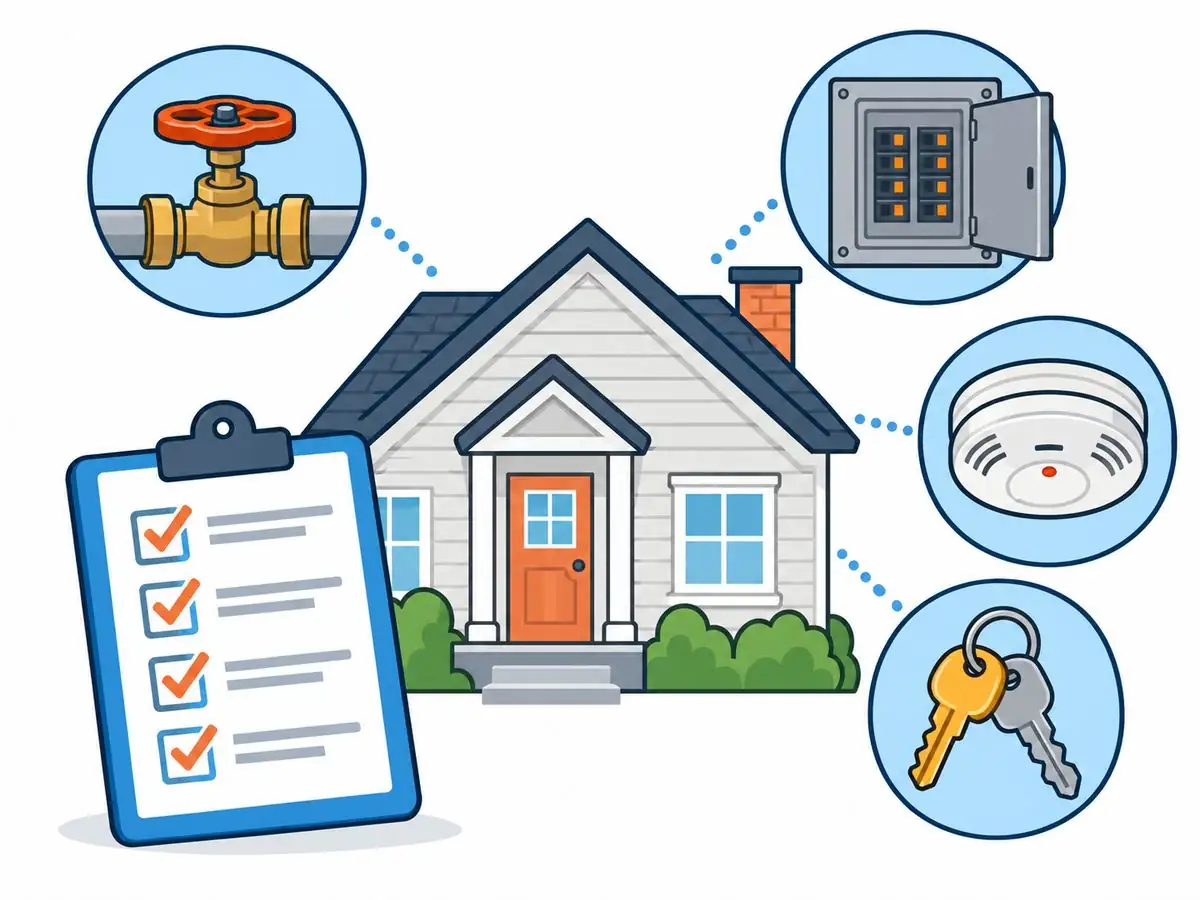
1. Change or rekey the locks. You do not know who has keys to a home you just bought. Replace the exterior locks, or hire a locksmith to rekey them. Check that deadbolts and window locks work.
2. Find the main water shutoff. Learn where the water enters the house and how to turn it off. In an emergency, a few minutes matter. Ask the seller, look near the water meter, or check the basement, garage or utility closet.
3. Find the electrical panel. Open it and read the labels. If the labels are missing, plan a quiet afternoon to map each breaker to a room, with a helper if you can.
4. Find the gas shutoff, if you have gas. Know where the valve is and what tool you need. Learn the smell of the odorant added to gas, and if you notice it, get out before you phone anyone.
5. Test every smoke and carbon monoxide alarm. Replace batteries, and replace any alarm that is more than about 10 years old. You need alarms in each bedroom, outside sleeping areas and on every level.
6. Locate a fire extinguisher. Keep one in the kitchen and one near the garage or utility area, and read the instructions before you need them.
In the first month
7. Change the HVAC filter. A dirty filter makes your system work harder. Write the date on the new one.
8. Clean the dryer vent. Lint buildup is a fire hazard. Disconnect the duct, vacuum it out and clean the outside vent.
9. Check the water heater. Look at the age on the label, check for rust or leaks and learn where the temperature setting is. Many manufacturers suggest about 120 degrees Fahrenheit.
10. Inspect the roof and gutters from the ground. Look for missing shingles, sagging gutters and stains on the ceiling inside. Do not climb on the roof unless you know how to do it safely.
11. Look for water. Check under sinks, around toilets, near the water heater and in the basement or crawl space. Small drips are easy to fix when they are new.
12. Learn your yard drainage. Water should run away from the house. If it pools near the foundation, you may need to extend the downspouts or regrade the soil.
Paperwork and money
13. Keep records. Make a folder, paper or digital, for the closing papers, warranties, manuals and receipts. Take photos of the main systems and their labels.
14. Start a repair fund. A common planning rule is to set aside about one to two percent of what the house is worth each year for upkeep. Even a smaller monthly amount helps.
15. Make a maintenance calendar. Put reminders on your phone for filters, gutters, smoke alarms and seasonal jobs.
Common mistakes
- Waiting for a problem to find the water shutoff.
- Ignoring small leaks or stains.
- Skipping alarm batteries.
- Doing electrical or gas work without a license.
- Not keeping receipts and manuals.
When to call a professional
Hire a licensed electrician, plumber or HVAC technician for anything involving wiring inside walls, gas lines, major plumbing or the furnace. If you did not have a full home inspection before buying, consider hiring an inspector to look at the roof, foundation and major systems.
Related guides
- How to Deep Clean a New Home Before Moving In
- Summer Home Prep Checklist: 12 Jobs to Do Before the Heat Hits
- Home Winterizing Checklist: 12 Jobs to Finish Before the Cold Arrives
- Fall Home Maintenance Checklist: Get Ready for Cold Weather
- First Apartment Essentials Checklist: What You Actually Need
- Rental Viewing Checklist: What to Look For Before You Sign
FAQ
What should I do first in a new house?
Locate the main water, gas and electrical shutoffs, test smoke and CO alarms, and change the locks.
Should I replace the locks?
Many owners do, since you do not know who has keys.
How do I keep track of home records?
Keep a folder with the inspection report, warranties, manuals and receipts.
More from this topic
- Home Maintenance Checklist by Season: Use this home maintenance checklist by season to catch small problems early: gutters, filters, alarms, caulk,...
- Essential Tools Every Homeowner Needs (Starter Tool Kit): See the essential tools every homeowner needs for basic repairs, with a starter list by price, what each one...
- How to Check a New Home for Pests Before You Move In: Learn how to check a new home for pests: look for droppings, gnaw marks and nests, inspect key rooms and the...
- Home Repair Tool Rental vs Buy for First-Time Owners: Home repair tool rental vs buy for first-time owners: a simple way to decide by how often you will use it,...
- DIY vs Hiring a Pro: How to Decide for Home Repairs: DIY vs hiring a pro: a simple way to decide which home repairs you can do yourself and which are safer,...
 First HomeHome Maintenance Checklist by SeasonUse this home maintenance checklist by season to catch small problems early: gutters, filters, alarms, caulk, pipes and more for all four seasons.
 First HomeEssential Tools Every Homeowner Needs (Starter Tool Kit)See the essential tools every homeowner needs for basic repairs, with a starter list by price, what each one does and what to skip.
 First HomeHow to Check a New Home for Pests Before You Move InLearn how to check a new home for pests: look for droppings, gnaw marks and nests, inspect key rooms and the exterior, and seal entry points before moving in.
 Tools and BasicsHome Repair Tool Rental vs Buy for First-Time OwnersHome repair tool rental vs buy for first-time owners: a simple way to decide by how often you will use it, storage and safety. Includes a quick checklist.
 First HomeDIY vs Hiring a Pro: How to Decide for Home RepairsDIY vs hiring a pro: a simple way to decide which home repairs you can do yourself and which are safer, faster or required to be done by a licensed pro.