
How to Deep Clean a New Home Before Moving In
Part of: Tools and everyday fixes
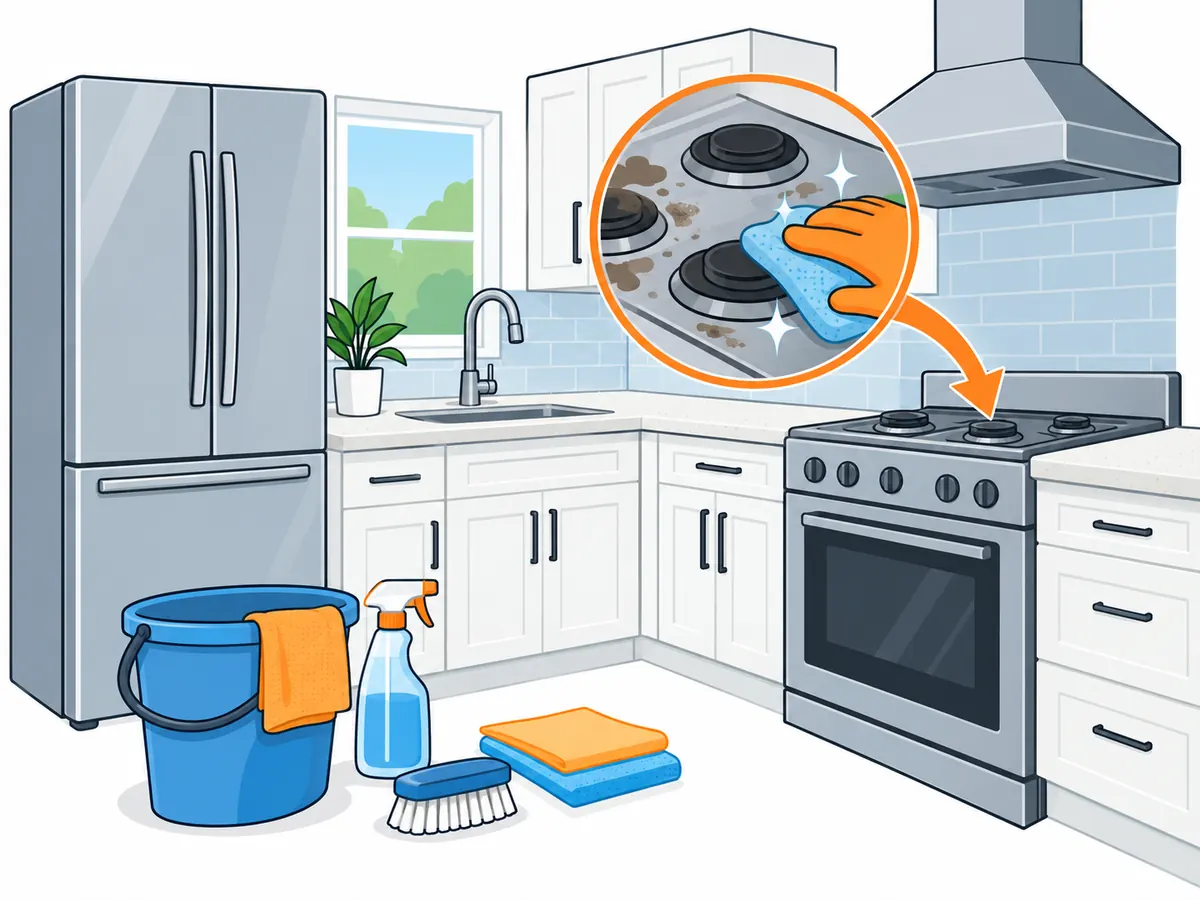
- Difficulty
- Moderate
- Time
- One full day for an apartment, a weekend for a house
- Tools
- Vacuum with attachments, mop and bucket, microfiber cloths, all-purpose cleaner, degreaser, bathroom cleaner, baking soda, rubber gloves, step ladder, trash bags
- Call a pro if
- There is mold covering more than a small area, signs of pests, heavy smoke residue, or ducts and carpets that need professional equipment.
In this guide
- Ladder safety
- Wear protection
- Chemical safety
The best cleaning opportunity a home ever gives you is the day before your furniture arrives. Empty rooms mean no obstacles, no working around boxes, and one chance to reach spots you will not touch again for years. Here is how to deep clean a new home before moving in, in the order that saves the most re-work.
This guide is part of our wider guide to tools, costs and first-home setup.
Step 1: Work top to bottom, back to front
Dust and dirty water travel downward, so every room gets cleaned ceiling first, floor last. Start in the rooms farthest from the entry and finish at the front door, so you never carry dirt across a finished floor. Open windows as you go for ventilation.
In each room the order is: light fixtures and fan blades, tops of cabinets and shelves, walls and switch plates, windows and tracks, counters and fixtures, baseboards, floor last.
Step 2: The kitchen gets the deepest clean
Kitchens collect the most residue, so budget the most time here.
- Cabinets inside and out: vacuum crumbs from drawers, wipe interiors with all-purpose cleaner, and degrease the door fronts. Empty cabinets take minutes now and hours later. Our guide on cleaning greasy kitchen cabinets covers heavy buildup.
- Appliances: pull the refrigerator out, vacuum behind and beneath it, and wipe the interior with baking soda solution. Run the empty dishwasher with a cleaning cycle, degrease the oven, and clean behind the stove if it moves.
- Sink and counters: disinfect the sink and faucet, and check the caulk line. Cracked caulk lets water creep under the sink; our guide on a cracked caulk line around a sink shows the repair.
- Under the sink: wipe it out and lay a fresh liner before you fill it.
Step 3: Bathrooms next
Disinfect everything: tub, shower, toilet inside and out, sink, faucets, mirrors. Pull the exhaust fan cover and vacuum the dust so the fan can actually move air. Check grout and caulk for mildew; our guides on removing mildew from shower grout and caulking a bathtub handle the two most common eyesores. Replace the toilet seat if you want a fresh start; it is a five-minute job covered in replacing a toilet seat.
Step 4: Walls, switches and fixtures
Wipe light switches, door handles and door frames throughout the house. These are the highest-touch surfaces and the most skipped. Dust ceiling fan blades and light fixtures before floors. Spot-clean wall marks with a damp cloth and a drop of dish soap, testing paint first in a hidden spot.
Step 5: Floors last
Vacuum all carpets slowly, twice, in perpendicular passes. If the home had pets or the carpet looks tired, a rental carpet cleaner or a professional service is worth it now, before a single box lands. Our guides on removing common carpet stains and cleaning hardwood floors cover problem spots.
Mop hard floors after vacuuming, working out of each room toward the door.
Step 6: Air and filters
Change the furnace or HVAC filter before you run the system; our guide on changing a furnace filter shows how. Vacuum supply vents and registers, covered in cleaning air vents and registers. Run the exhaust fans and open windows for a few hours to air the place out. If the previous occupants smoked or had heavy cooking odors, wiping walls and replacing filters does more than any air freshener.
Common mistakes
- Cleaning floors first, then dusting light fixtures onto them.
- Forgetting inside appliances until they are full of food.
- Bringing boxes in room by room while cleaning, so cleaned rooms get re-dirtied.
- Skipping the filter change and blowing the last owner's dust through the ducts.
Related guides
- How to Pack a Kitchen for a Move (Dishes, Glasses and Appliances)
- How to Set Up Utilities When You Move Into a New Home
- First Time Homeowner Checklist: 15 Things to Do Right Away
- How to Change Locks When You Move In: Rekey or Replace
- How to Move Heavy Furniture Without Damaging Floors
- How to Set Up a Laundry Area in a New Home
- How to Clean Stainless Steel Appliances Without Streaks or Scratches
- Home Repair Tool Rental vs Buy for First-Time Owners
FAQ
Should I hire cleaners for the move-in clean?
If time is short, a one-time professional deep clean is the most hire-worthy cleaning there is, precisely because the home is empty. Get the kitchen, bathrooms and floors done professionally and handle the rest yourself.
How long before moving day should I clean?
The day before is ideal. Earlier and dust resettles; later and you are cleaning around the movers.
What if the seller agreed to clean but did not?
Document it with photos, tell your agent, and decide whether the hassle of a claim beats the cost of a cleaning service. Usually the service is the faster path.
More from this topic
- How to Check a New Home for Pests Before You Move In: Learn how to check a new home for pests: look for droppings, gnaw marks and nests, inspect key rooms and the...
- How to Change Your Address After a Move: Learn how to change your address after a move: set up mail forwarding, list every account to update and keep...
- How to Check a New Home for Water Damage Before You Unpack: How to check a new home for water damage: look for stains and smells, test under sinks and the water heater,...
- How to Declutter Before a Move: Learn how to declutter before a move: sort room by room, set keep and go piles, sell or donate and pack only...
- How to Move In With a Roommate: Learn how to move in with a roommate: agree the money in writing, check the lease, split the space, set house...
 First HomeHow to Check a New Home for Pests Before You Move InLearn how to check a new home for pests: look for droppings, gnaw marks and nests, inspect key rooms and the exterior, and seal entry points before moving in.
 First HomeHow to Change Your Address After a MoveLearn how to change your address after a move: set up mail forwarding, list every account to update and keep a record of who you told.
 First HomeHow to Check a New Home for Water Damage Before You UnpackHow to check a new home for water damage: look for stains and smells, test under sinks and the water heater, check ceilings and floors.
 First HomeHow to Declutter Before a MoveLearn how to declutter before a move: sort room by room, set keep and go piles, sell or donate and pack only what you will take.
 First HomeHow to Move In With a RoommateLearn how to move in with a roommate: agree the money in writing, check the lease, split the space, set house rules and document the condition together.