
How to Clean Air Vents and Registers
Part of: Heating and cooling
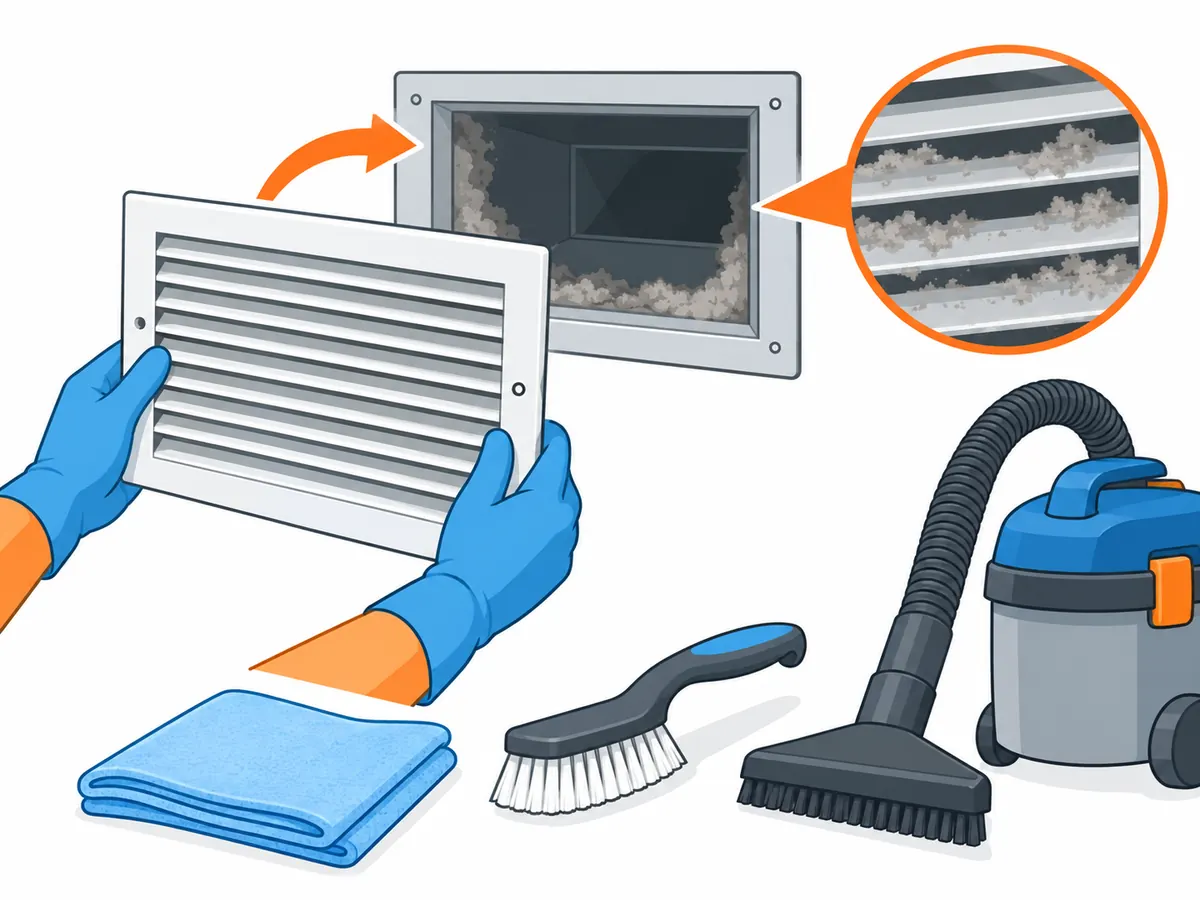
- Difficulty
- Easy
- Time
- 30 to 60 minutes
- Tools
- Screwdriver, vacuum with hose and brush attachment, microfiber cloth, bucket of warm soapy water, old toothbrush, flashlight, painter's tape
- Call a pro if
- You see mold on vents or ducts, there is a strong musty odor, pest droppings inside the ducts, or the airflow is low in many rooms.
In this guide
Air vents and registers get dusty. Pet hair, lint and the occasional dropped toy end up inside. Over time, this reduces airflow and can make a room feel stuffy. You do not need a duct cleaning service for ordinary dust near the openings. You can clean air vents and registers yourself in an hour.
This guide is part of our wider guide to heating, cooling and air quality.
Know the terms
A supply register blows air into the room. A return grille pulls air back to the system. Both collect dust. Registers on floors, walls or ceilings are the same idea in different places.
Step 1: Turn off the system and cover what you can
Set the thermostat to off. Put a drop cloth or old towel under a ceiling register to catch dust. If the vent is in a floor, move rugs aside.
Step 2: Remove the cover
Most covers are held by one or two screws. If there are no screws, the cover may lift out. Keep the screws in a small cup. Take photos so you remember how it fits. If the cover is painted shut, use a utility knife to cut along the edge, or ask for help.
Step 3: Vacuum the opening
Use the hose and brush attachment to vacuum inside the duct opening, as far as the hose reaches. Go slowly so you do not push dust further in. A flashlight helps you see. Wipe the inside edge with a damp microfiber cloth.
Step 4: Wash the covers
Soak the covers in warm water with dish soap for about 10 minutes. Scrub with an old toothbrush, then rinse and dry fully. A wet cover can rust or leave water on the floor. Metal covers that are painted should be dried quickly. Do not use harsh chemicals on painted covers.
Step 5: Reinstall and check
Screw the covers back in. Run the system and feel the airflow. If it is weak in only one room, check that the damper behind the register is open and nothing is blocking the duct. Our guide to changing a furnace filter matters too. A dirty filter is a common reason for weak flow.
Clean the return grilles
Return grilles collect more dust than supply registers. Vacuum the grille surface with a brush attachment, then wash it. Some returns have a filter behind the grille, which you can replace as the label says.
Keep vents clear
Do not block vents with furniture, curtains or rugs. This forces the system to work harder. A gap of several inches around a vent helps airflow. Close vents only in rooms you do not use if the system maker says it is fine, since closing too many can change the pressure.
What about full duct cleaning?
According to the EPA, studies have not shown that duct cleaning prevents health problems, so it gives no blanket advice for or against it. The agency lists the cases where cleaning makes sense: if there is substantial visible mold inside hard ducts, if the ducts are infested with rodents or insects, or if they are clogged with so much dust and debris that particles are released from your registers. If you hire a company, ask them to show you any mold they say they found. The EPA's guidance is at https://www.epa.gov/indoor-air-quality-iaq/should-you-have-air-ducts-your-home-cleaned.
How often
Wipe the covers every month and do the full job twice a year. If you have pets or allergies, do it more often.
Related guides
- How to Clean a Ceiling Fan Without Spreading Dust Everywhere
- How to Seal Leaky Ductwork and Stop Wasting Heat
- How to Check Attic Ventilation: Vents, Airflow, and Warning Signs
- How to Control Basement Humidity and Keep the Air Dry
- How to Get Rid of a Musty Basement Smell by Fixing the Cause
- Digital Hygrometer Comparison: ThermoPro TP50 and Two AcuRite Models
FAQ
Can I vacuum the ducts further in?
You can reach a short way. Deeper cleaning needs special tools.
Should I use a spray cleaner inside the duct?
No. It can leave residue and moisture.
What if the dust returns quickly?
Check the filter and the home for sources of dust, like open windows or carpets.
More from this topic
- How to Balance Airflow in Your Home: Learn how to balance airflow in your home: adjust vents and dampers, seal leaks, and even out temperatures...
- How to Clean and Unclog an AC Condensate Drain Line: How to clean and unclog an AC condensate drain line with a wet/dry vac and vinegar. Steps, tools, and when to...
- How to Check Attic Ventilation: Vents and Airflow: Learn how to check attic ventilation: find soffit and ridge vents, spot blocked airflow, look for moisture...
- How to Choose a Furnace Filter for Your Home: Learn how to choose a furnace filter: find the right size, understand MERV ratings, pick a filter for pets or...
- How to Clean a Ceiling Fan Without Spreading Dust Everywhere: Learn how to clean a ceiling fan: trap dust with a pillowcase or brush, wash the blades, clean the motor...
 Heating and CoolingHow to Balance Airflow in Your HomeLearn how to balance airflow in your home: adjust vents and dampers, seal leaks, and even out temperatures from room to room.
 Heating and CoolingHow to Clean and Unclog an AC Condensate Drain LineHow to clean and unclog an AC condensate drain line with a wet/dry vac and vinegar. Steps, tools, and when to call an HVAC tech. Prevent water damage.
 Heating and CoolingHow to Check Attic Ventilation: Vents and AirflowLearn how to check attic ventilation: find soffit and ridge vents, spot blocked airflow, look for moisture signs, and know when to add or fix vents.
 Heating and CoolingHow to Choose a Furnace Filter for Your HomeLearn how to choose a furnace filter: find the right size, understand MERV ratings, pick a filter for pets or allergies and know when to replace it.
 Heating and CoolingHow to Clean a Ceiling Fan Without Spreading Dust EverywhereLearn how to clean a ceiling fan: trap dust with a pillowcase or brush, wash the blades, clean the motor housing and stop wobble-causing buildup.