
How to Check Attic Ventilation: Vents and Airflow
Part of: Heating and cooling
- Difficulty
- Easy to moderate
- Time
- 30 to 60 minutes
- Tools
- Flashlight or headlamp, camera or phone, binoculars, gloves, dust mask, safety glasses, boards to walk on, tape measure
- Call a pro if
- You see mold, wet insulation, rusty nails, roof deck stains, blocked or missing vents you cannot reach, or you plan to add vents or cut into the roof.
In this guide
- Wear protection
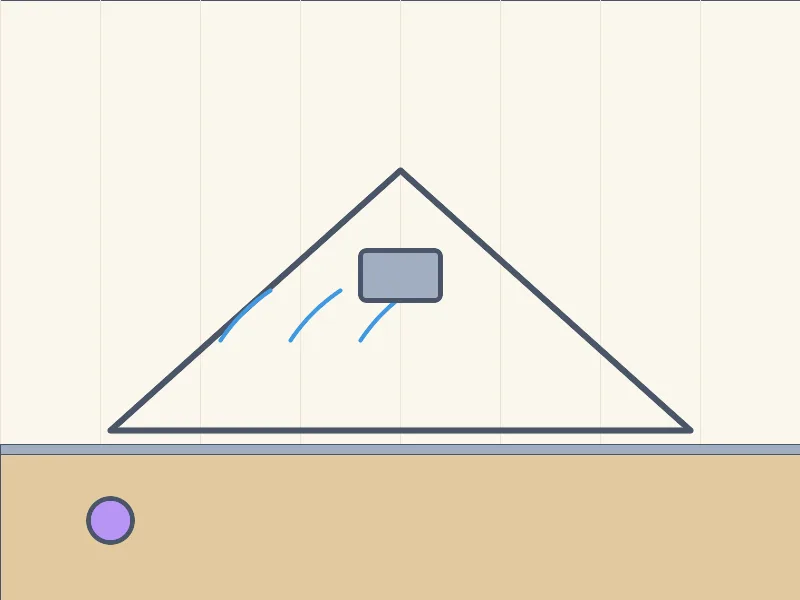
An attic needs to breathe. Fresh air coming in low at the eaves and warm air going out near the peak keeps the roof cooler in summer and drier in winter. When the flow is blocked, you can get moisture, mold, ice dams, and a hotter house. Here is how to check attic ventilation with a flashlight and a ladder from the ground.
How attic ventilation works
Most homes use a mix of intake vents low at the eaves, called soffit vents, and exhaust vents high on the roof, such as a ridge vent, gable vents, or roof vents. Air enters low, rises as it warms, and leaves at the top. The system only works if both parts are open and balanced.
Step by step
1. Start outside. Look at the underside of the roof overhang. You should see small vents or a continuous slot. Check whether they are painted over, clogged, or covered by debris.
2. Look at the roof top. Use binoculars to find a ridge vent, roof vents, or turbines. Check for damage, nests, and missing covers.
3. Look at the gable ends. Gable vents are louvers on the end walls. Check that they are not blocked by boxes or screens full of dust.
4. Go inside the attic. Wear a mask and gloves and step only on joists.
5. Find the baffles. Look at the eaves. Insulation should not cover the soffit vents. Baffles, which are thin channels, keep a clear path for air from the vents.
6. Check for daylight. Look up at the soffit vent from inside. You should see light or feel air movement. If the area is packed with insulation, clear it carefully.
7. Look for moisture signs. Check the underside of the roof deck for dark stains, frost in winter, rusty nails, and a musty smell.
8. Check the exhaust fans. Bath fans and range hoods should vent outside, not into the attic. Look for loose or disconnected ducts. See how to replace a bathroom exhaust fan.
Warning signs
- Frost on the roof deck in winter
- Ice dams or icicles. See how to prevent ice dams
- A very hot attic and upstairs rooms in summer
- Wet or matted insulation
- Peeling paint near the eaves
- A musty smell upstairs
Fix simple problems
- Blocked soffit vents: clear debris and add baffles so insulation does not cover them.
- Insulation in the way: pull it back from the eaves. See how to check attic insulation.
- Loose bath fan ducts: reconnect and seal them, and make sure they exit outside.
- Gaps in the ceiling: seal them so moist indoor air does not rise into the attic. See how to find air leaks in your home.
Do not mix vent types
Adding extra roof vents without a plan can pull air in the wrong places and defeat the system. A pro can size the vents to the attic space and the roof type. Avoid cutting into the roof yourself.
Seasonal checks
Look in fall and again in late winter. Winter is the best time to spot frost and moisture. Summer shows heat problems. Add this to your home maintenance checklist by season.
FAQ
How much venting does an attic need?
It depends on the attic size and local rules. A pro or your building department can tell you the right amount.
Do I need both soffit and ridge vents?
They work well together, one for air in and one for air out.
Can a power fan fix a hot attic?
Not always. It can pull conditioned air from the house if the ceiling has gaps.
Is some frost normal?
Light frost on a very cold day may appear, but heavy frost or wet wood points to a problem.
Related guides
- How to Clean Soffit Vents: Learn how to clean soffit vents: clear the screens from outside, check the attic side for blocked insulation...
- How to Install a Soffit Vent: Learn how to install a soffit vent: mark the opening, cut the soffit cleanly, fit the vent and keep...
- How to Vent a Bathroom Fan Through the Attic: How to vent a bathroom fan through the attic: run rigid duct to the outside, slope it right, insulate it, and...
- How to Fix a Roof Vent Leak: Learn how to fix a roof vent leak: trace the stain, check the boot and flashing, reseal or replace the collar...
- How to Balance Airflow in Your Home: Learn how to balance airflow in your home: adjust vents and dampers, seal leaks, and even out temperatures...
 Garage and OutdoorsHow to Clean Soffit VentsLearn how to clean soffit vents: clear the screens from outside, check the attic side for blocked insulation and keep air moving so the roof deck stays dry.
 Garage and OutdoorsHow to Install a Soffit VentLearn how to install a soffit vent: mark the opening, cut the soffit cleanly, fit the vent and keep insulation back so the attic gets a steady air intake.
 Heating and CoolingHow to Vent a Bathroom Fan Through the AtticHow to vent a bathroom fan through the attic: run rigid duct to the outside, slope it right, insulate it, and keep moist air out of the attic.
 Garage and OutdoorsHow to Fix a Roof Vent LeakLearn how to fix a roof vent leak: trace the stain, check the boot and flashing, reseal or replace the collar and confirm the leak is gone after rain.
 Heating and CoolingHow to Balance Airflow in Your HomeLearn how to balance airflow in your home: adjust vents and dampers, seal leaks, and even out temperatures from room to room.