
How to Find Air Leaks in Your Home and Where to Seal First
Part of: Heating and cooling
- Difficulty
- Easy
- Time
- 1 to 2 hours
- Tools
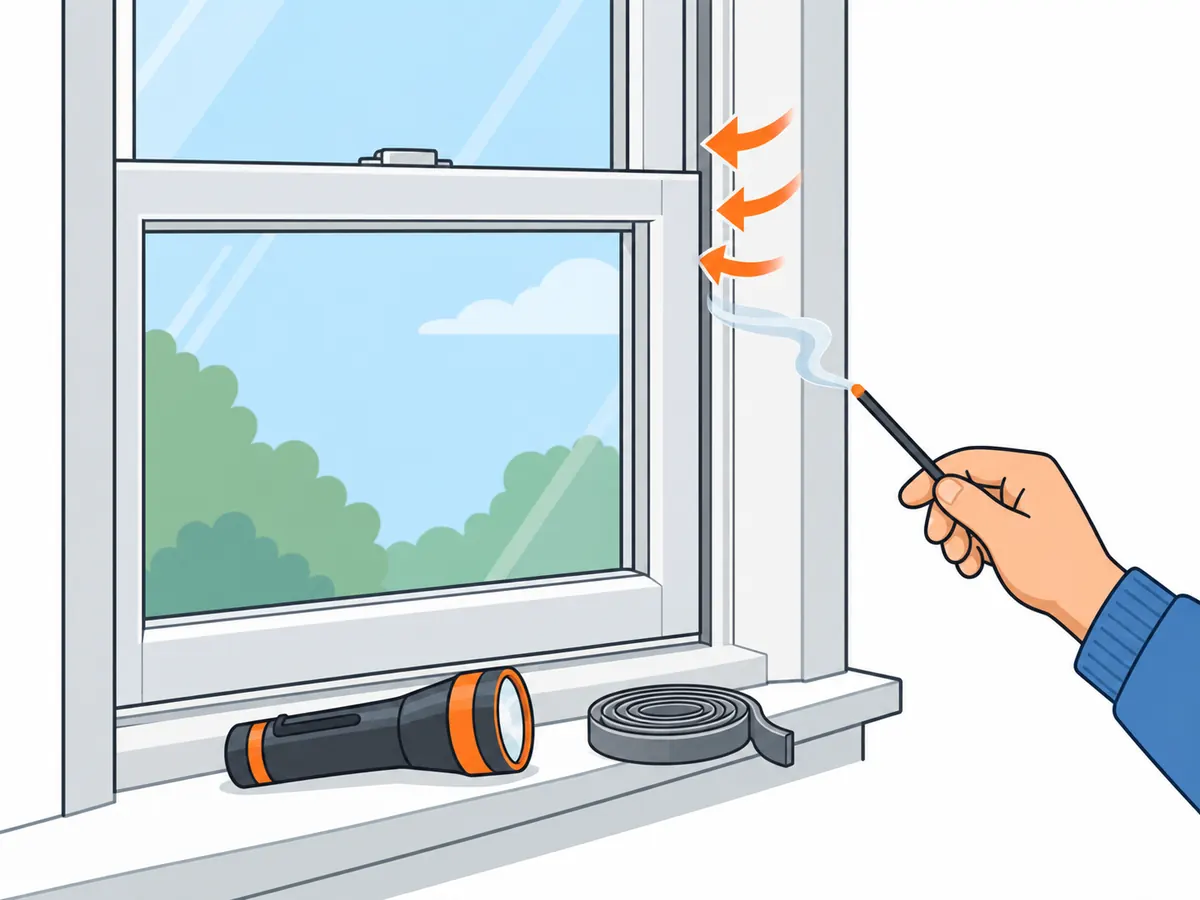
- Incense stick or tissue, flashlight, caulk gun, weatherstripping, foam gasket pads for outlets, notepad, painter's tape
- Call a pro if
- You find signs of mold, a gas smell, flue or vent gaps near a furnace or water heater, or leaks around the chimney and roof that you cannot reach safely.
In this guide
- Gas safety
Drafts make a house feel cold in winter and hot in summer, and they waste the energy you pay to heat and cool it. The first step to fixing them is learning where they are. This guide explains how to find air leaks in your home with a few cheap tools and a free hour or two.
This guide is part of our wider guide to heating, cooling and air quality.
Why leaks matter
Air moves in through low gaps and out through high gaps, pulled by temperature differences. Cracks around windows, doors, pipes, and wires add up. Small openings can matter more than one big one. Sealing them makes rooms more even in temperature and can reduce dust and outdoor noise.
Pick a good day
Test on a cold or windy day. The bigger the temperature difference between inside and outside, the easier leaks are to feel. Close windows and exterior doors. Turn off fans such as the bath fan and the range hood so they do not pull air in from other places.
The simple tests
Hand test. Slowly run your hand along edges and feel for cool air.
Tissue or incense test. Hold a thin strip of tissue or the smoke from an incense stick near a suspected gap. If the smoke bends or the tissue flutters, air is moving. Keep the flame away from anything that burns.
Flashlight test. Close the room and have a helper hold a flashlight on one side of a door or window at night. Light that shows through a gap means air can get through too.
Where to look
Check these spots in order:
1. Window and door frames. Look at the seams between the frame and the wall, at the sash edges, and under the door. See how to seal a drafty window and how to weatherstrip an exterior door.
2. Outlets and switches on exterior walls. Cold air can seep behind the cover plate.
3. Baseboards and the corner where the wall meets the floor.
4. Attic hatch and attic floor penetrations, such as around light fixtures and pipes. See how to insulate an attic hatch.
5. Where pipes, wires, and vents pass through walls or floors, often under sinks and in the basement.
6. The rim joist in a basement or crawl space, where the framing sits on the foundation.
7. Fireplace dampers that do not close tightly.
8. Dryer vent and bath fan covers that hang open.
Mark what you find
Put a piece of painter's tape next to each leak. Write a short list by room. You will want to know what you need before you go to the store.
Which fixes to use
- Small gaps up to a quarter inch, such as trim and window frames: paintable caulk.
- Moving parts, such as doors and operable windows: weatherstripping.
- Outlets and switches: foam gaskets behind the cover plate.
- Larger gaps around pipes and wires: expanding foam made for gaps, or fire rated material where code requires it.
- Attic hatch: weatherstripping around the opening and a rigid insulation cover.
Use the right product for the job. Check the label for the gap size and the surface.
What not to seal
Never block combustion air vents or flues. Fuel burning appliances need air to burn safely and to vent exhaust outdoors. Do not cover bath fan or dryer exhaust ducts. A very tight house also needs fresh air, so keep the bathroom and kitchen fans working. If you smell gas or exhaust, leave and call your utility or emergency number.
Keep a record
After you seal a few spots, repeat the tissue test. Over a few weeks you will probably notice the house is steadier. A more complete picture comes from a professional energy audit, which can use a blower door test, but many homeowners get good results from the steps here.
Related guides
- How to Apply Window Insulation Film for a Warmer Winter Home
- Air Conditioner Not Cooling? Checks to Make Before You Call for Service
- How to Control Basement Humidity and Keep the Air Dry
- How to Clean Air Vents and Registers Without Hiring a Duct Cleaner
FAQ
What is the most common place for air leaks?
Windows, exterior doors, the attic, and the basement rim joist are common trouble spots.
Can I use candles for the smoke test?
An incense stick is safer than an open candle. Keep any flame away from curtains and paper.
Will sealing leaks cause moisture problems?
A tighter home needs working ventilation. Use bath and kitchen fans, and watch for window condensation. See how to stop window condensation.
Do I need special tools?
No. A tissue and a flashlight will find most leaks.
More from this topic
- How to Air Seal an Attic: How to air seal an attic: find the bypasses at the ceiling plane, seal them with foam and caulk, and keep...
- How to Insulate a Crawl Space Door: How to insulate a crawl space door and stop the draft: seal the frame, insulate the panel, weatherstrip the...
- How to Seal Gaps Around Pipes and Wires in Walls and Floors: How to seal gaps around pipes and wires: use the right sealant for the location, keep fire separations...
- How to Stop Air Leaks Around Windows: Learn how to stop air leaks around windows: find the drafts, caulk gaps, add weatherstripping, and cut your...
- How to Weatherstrip a Sliding Glass Door That Leaks Air: How to weatherstrip a sliding glass door: find where the air gets in, replace the pile strip and sweep,...
 Heating and CoolingHow to Air Seal an AtticHow to air seal an attic: find the bypasses at the ceiling plane, seal them with foam and caulk, and keep insulation and vents clear.
 Heating and CoolingHow to Insulate a Crawl Space DoorHow to insulate a crawl space door and stop the draft: seal the frame, insulate the panel, weatherstrip the edge, and keep the space vented.Heating and CoolingHow to Seal Gaps Around Pipes and Wires in Walls and FloorsHow to seal gaps around pipes and wires: use the right sealant for the location, keep fire separations intact, and leave vents and flues alone.
 SeasonalHow to Stop Air Leaks Around WindowsLearn how to stop air leaks around windows: find the drafts, caulk gaps, add weatherstripping, and cut your energy bills.
 Doors and WindowsHow to Weatherstrip a Sliding Glass Door That Leaks AirHow to weatherstrip a sliding glass door: find where the air gets in, replace the pile strip and sweep, adjust the rollers, and seal the frame.