
How to Weatherstrip an Exterior Door and Stop Drafts
Part of: Floors, walls and doors
- Difficulty
- Easy
- Time
- 45 to 90 minutes
- Tools
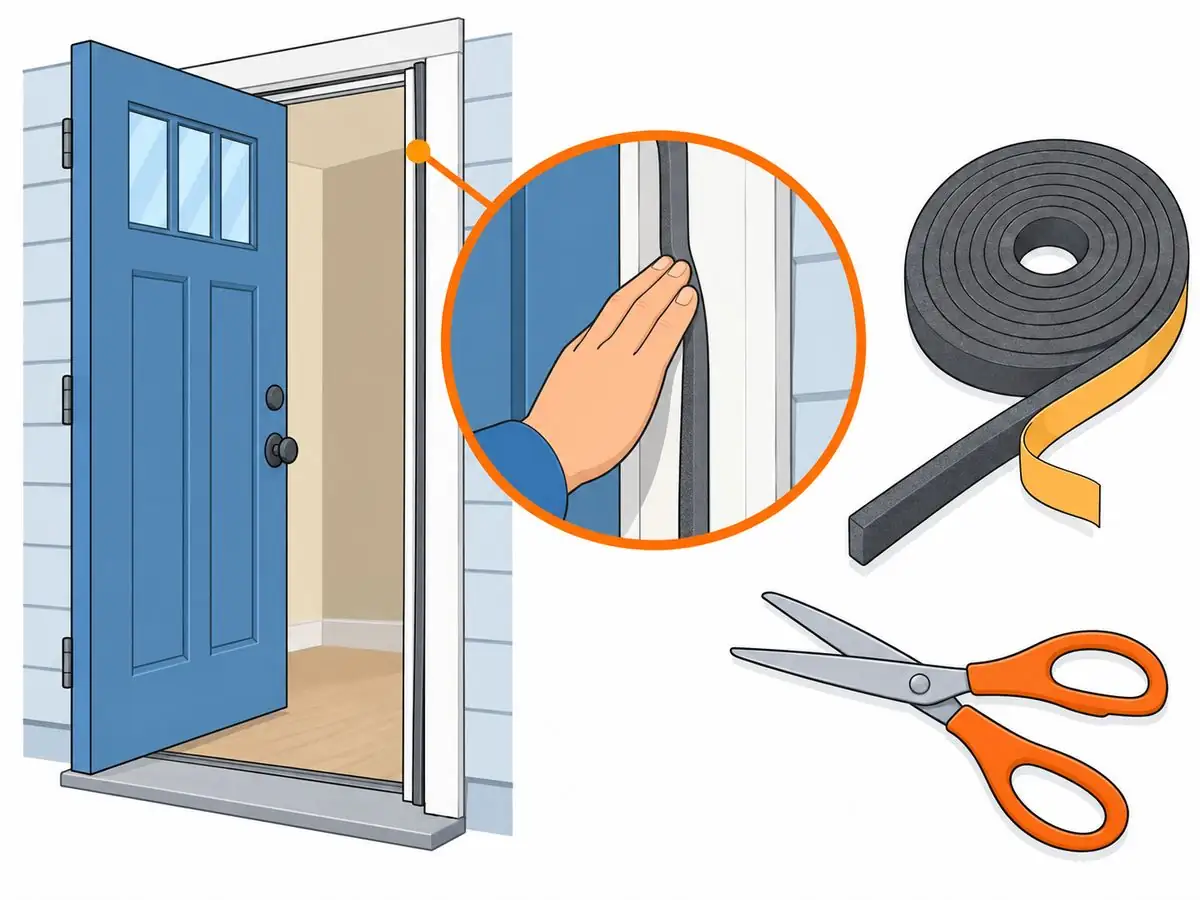
- Tape measure, utility knife or scissors, screwdriver, hammer or pin nails, pry bar or putty knife, pencil, replacement weatherstripping kit
- Call a pro if
- The door frame is rotted, the door does not latch even with new seals, or water gets inside around the frame during rain.
In this guide
- Wear protection
Most doors leak around the edges long before the door itself is a problem. The weatherstripping, the soft strip that seals the gap between the door and the frame, gets compressed, torn or painted over. Replacing it is one of the cheapest ways to make a house more comfortable, and you can weatherstrip an exterior door in an hour with simple tools.
This guide is part of our wider guide to doors and windows.
Check for leaks first
On a bright day, close the door and turn off the lights inside. Look for light along the edges. On a windy day you can also hold a burning incense stick near the edges and see where the smoke is pulled or pushed. Or try the dollar bill test. Close a bill in the door at several places. If you can pull it out easily, the seal there is weak.
Mark the weak spots with painter's tape so you know where the trouble is.
Pick the right type
There are a few common types, and the right choice depends on the door and the frame.
- Compression strip (foam or rubber): Sticks to the door stop. Easy to put on and fine for small gaps.
- Kerf-in or tubular seal: Has a flange that presses into a groove in the frame. Very common on newer doors. Good seal and lasts years.
- V-strip (tension seal): A folded strip of plastic or metal. Good for the sides of a door with a gap of about 1/16 to 1/8 inch.
- Door sweep: For the bottom. See fixing the gap under an exterior door.
Check the existing strip. If there is a groove, buy the same style. Many hardware stores sell kits with enough for a standard door.
Remove the old weatherstripping
Pull the old strip out of its groove, or peel it off. If it is glued, use a putty knife to scrape off old adhesive. Wipe the surface clean with rubbing alcohol or a damp cloth and let it dry.
Measure and cut
Measure the two sides and the top of the frame. Cut each piece slightly longer than needed. Cut the top piece first, then the sides. A long piece compresses a little when you push it into the corners.
Install it
For a kerf-in seal, line up the flange with the groove at the top corner and press it in with your fingers. Use a plastic putty knife to push it all the way in. Work down each side. At the corners, cut the fin at a 45 degree angle so the pieces meet neatly.
For a foam or compression strip, peel the backing off in sections and press the strip onto the door stop so it meets the door when closed. Do not stretch it.
Test the fit
Close the door. It should close with some resistance but not fight you. The latch should catch. If the door will not close, the strip may be too thick. Trim or move it slightly. If the door closes loosely with a gap, adjust the strip.
Repeat the light or dollar bill test. A tight seal should show no light and hold the bill.
Seal the frame to the wall
If you feel air through the casing, there may be a gap between the door frame and the wall. Fill it with a small bead of paintable caulk on the outside, and consider low-expansion foam for large gaps. Keep the foam away from the door jamb, since it can bend the frame.
What to avoid
Do not use thick weatherstrip on a tight door. Do not paint over new seals, since paint makes them stiff. Do not use the same strip for every door in the house without checking the gap size.
Related guides
- How to Replace Window Weatherstripping to Stop Drafts and Rattles
- How to Stop a Door From Slamming or Banging
- How to Fix a Storm Door That Slams or Will Not Close With the Closer
- How to Install a Door Stop Without Damaging the Door
- How to Tighten a Loose Door Knob in Five Minutes
FAQ
How often should I replace weatherstripping?
Every few years, or when it is flat, torn or hard.
Can I weatherstrip a storm door?
Yes, but follow the maker's instructions, because some include built-in seals.
What if the door still leaks?
The door or frame may have warped. A carpenter can plane or rehang it.
More from this topic
- How to Replace a Door Threshold to Stop Drafts and Water: Learn how to replace a door threshold: measure the opening, remove the old one, deal with rot, fit the new...
- How to Install a Door Sweep to Stop Drafts, Water and Pests: Learn how to install a door sweep: measure the gap, choose the right type, cut it to fit, fix it to the door...
- How to Replace Window Weatherstripping to Stop Drafts: Learn how to replace window weatherstripping: pick the right type, remove the old strip, clean the channel,...
- How to Weatherstrip a Sliding Glass Door That Leaks Air: How to weatherstrip a sliding glass door: find where the air gets in, replace the pile strip and sweep,...
- How to Stop a Window From Rattling in the Wind: Learn how to stop a window from rattling: check the lock and sash, add weatherstripping or foam, adjust...
 Doors and WindowsHow to Replace a Door Threshold to Stop Drafts and WaterLearn how to replace a door threshold: measure the opening, remove the old one, deal with rot, fit the new one level, seal it and check the door clears.
 Doors and WindowsHow to Install a Door Sweep to Stop Drafts, Water and PestsLearn how to install a door sweep: measure the gap, choose the right type, cut it to fit, fix it to the door without blocking the swing and seal the ends.
 Doors and WindowsHow to Replace Window Weatherstripping to Stop DraftsLearn how to replace window weatherstripping: pick the right type, remove the old strip, clean the channel, fit the new seal, and test the window for gaps.
 Doors and WindowsHow to Weatherstrip a Sliding Glass Door That Leaks AirHow to weatherstrip a sliding glass door: find where the air gets in, replace the pile strip and sweep, adjust the rollers, and seal the frame.
 Doors and WindowsHow to Stop a Window From Rattling in the WindLearn how to stop a window from rattling: check the lock and sash, add weatherstripping or foam, adjust stops, and use simple tricks for a quiet fit.