
How to Install a Door Sweep to Stop Drafts, Water and Pests
Part of: Floors, walls and doors
- Difficulty
- Easy
- Time
- 20 to 45 minutes per door
- Tools
- Tape measure, hacksaw or tin snips, screwdriver, drill and bits, pencil, utility knife, silicone sealant, a straight edge, a helper
- Call a pro if
- The door or frame is rotten or out of square, the gap is uneven across the width of the door, or the door needs to clear a raised threshold, since those need adjustment before a sweep will work.
In this guide
- Gas safety
- Ladder safety
- Chemical safety
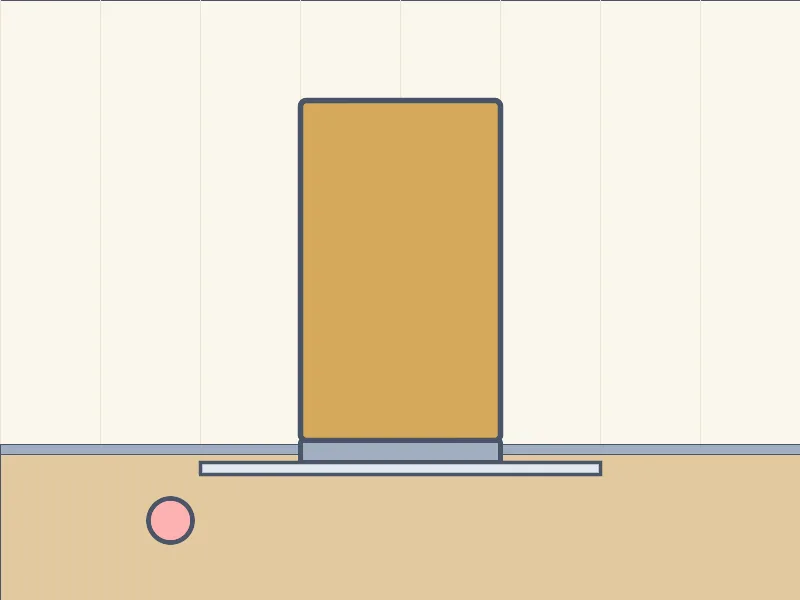
The gap under an exterior door is the biggest small hole in a house. It lets in cold air, rain, dust, insects and mice, and it makes the heating work harder all winter. A door sweep closes it for a few dollars and twenty minutes. The only trick is choosing the right type and fitting it so the door still closes easily. Here is how to install a door sweep.
This guide is part of our wider guide to doors and windows.
1. Measure the gap
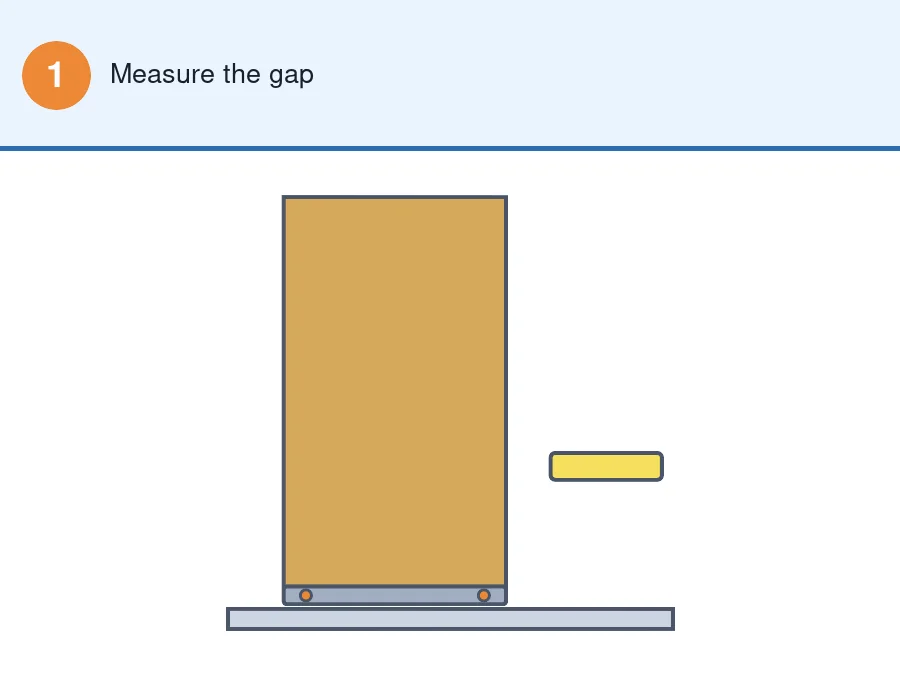
Close the door and measure the gap at the handle side, the hinge side and the middle. Use a flashlight or a piece of paper to check for light.
An even gap of about 1/4 to 1/2 inch suits most sweeps. A gap that varies a lot means the door is out of square, and a sweep will either drag at one end or leave a gap at the other. In that case, adjust the door first.
2. Choose the type
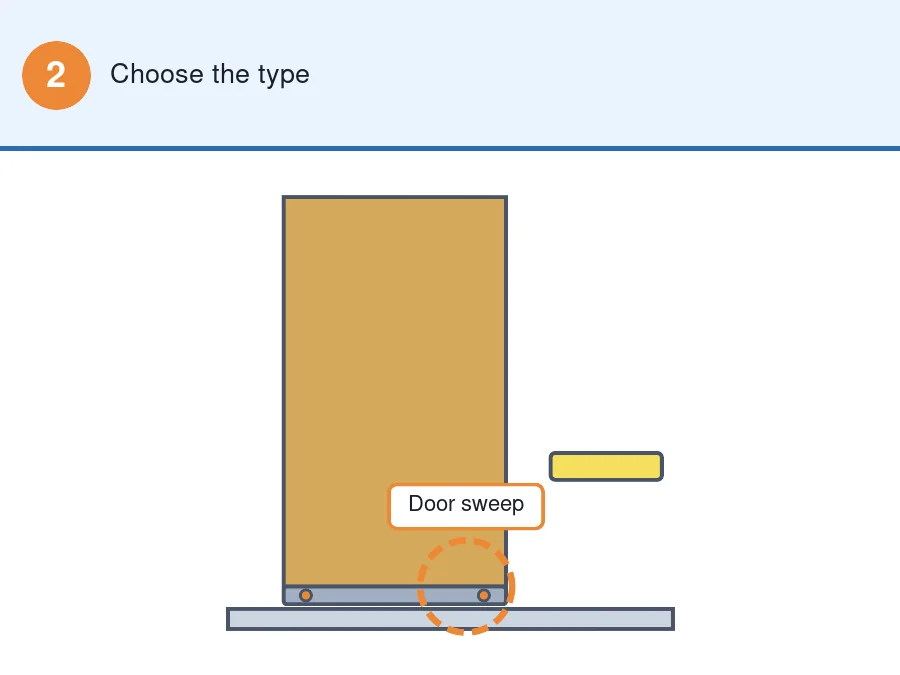
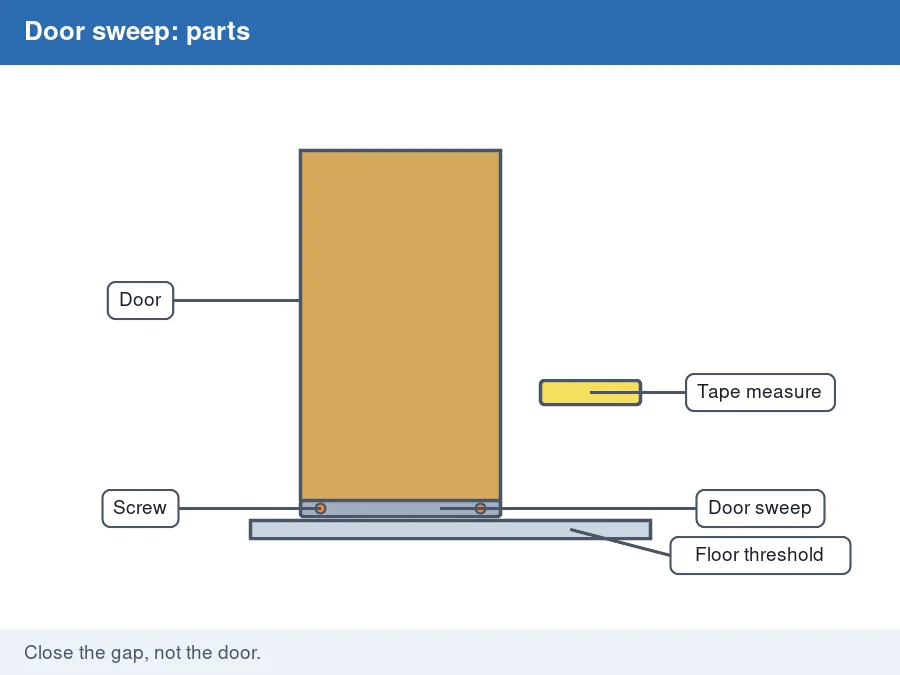
- Surface mounted brush sweep: a brush strip in an aluminum carrier, screwed to the inside face of the door. Good for uneven floors and for sliding doors.
- Blade or flap sweep: a rubber or vinyl flap that presses on the floor. Best for a flat threshold, and the most effective against water.
- Drop-down (automatic) sweep: a mechanism that lowers a seal when the door closes and lifts it when it opens. The best for a door over a thick mat or an uneven floor, and the most expensive.
- Slide-on sweep: fits over the bottom edge of the door with no screws. Quick, and good for a rental.
3. Decide which side to fit it
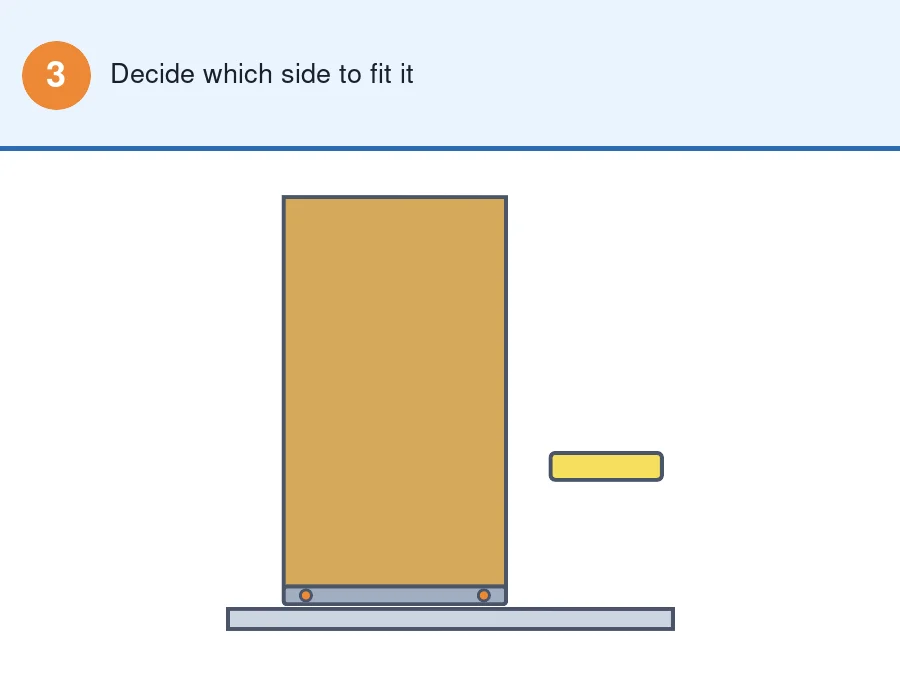
Fit the sweep on the inside face of an exterior door, so wind and water push it against the door rather than lifting it away. On an interior door, either side works.
For a door with a raised threshold, the sweep needs to clear the threshold when the door swings, which may mean a drop-down type or trimming the door.
4. Cut it to length
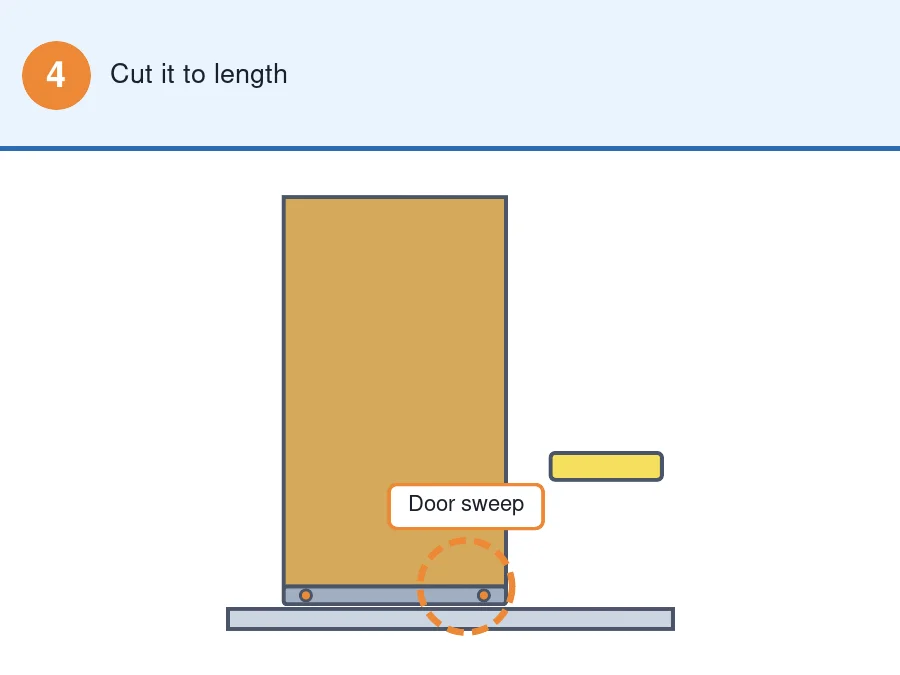
1. Measure the door width, not the opening.
2. Cut the carrier with a hacksaw or tin snips.
3. Cut the brush or flap with a utility knife, leaving it slightly longer than the carrier if it is a brush.
4. Deburr the metal edge with a file so it does not scratch.
5. Mark and drill
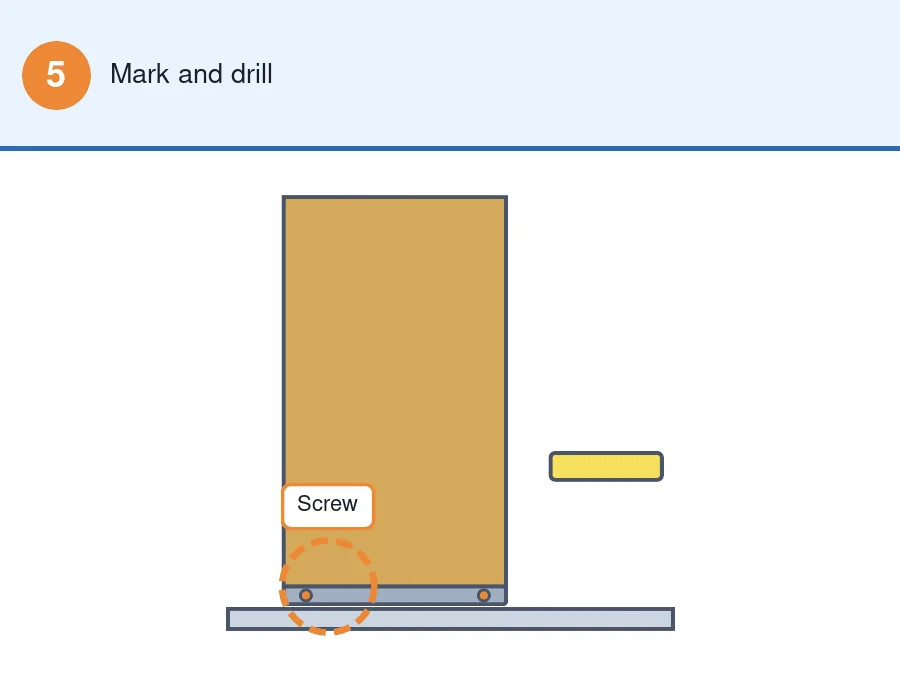
1. Close the door and hold the sweep in place against the bottom edge.
2. Set it so the brush or flap just touches the floor, with a small amount of compression.
3. Mark the screw holes with a pencil.
4. Drill pilot holes, taking care not to drill through the door face on a hollow door.
On a metal door, use self-tapping screws and a pilot hole.
6. Fix it
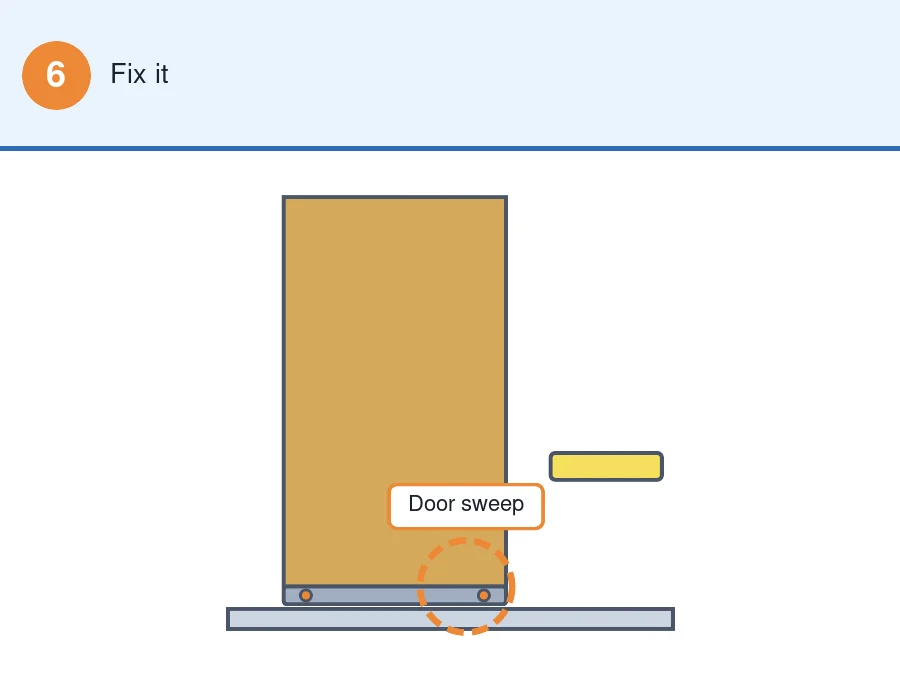
1. Screw the sweep in place, starting at one end.
2. Check the sweep touches the floor evenly along its length.
3. Adjust the height if one end drags.
4. Seal the ends with a small amount of silicone, so water and drafts cannot get behind the carrier.
7. Test the door
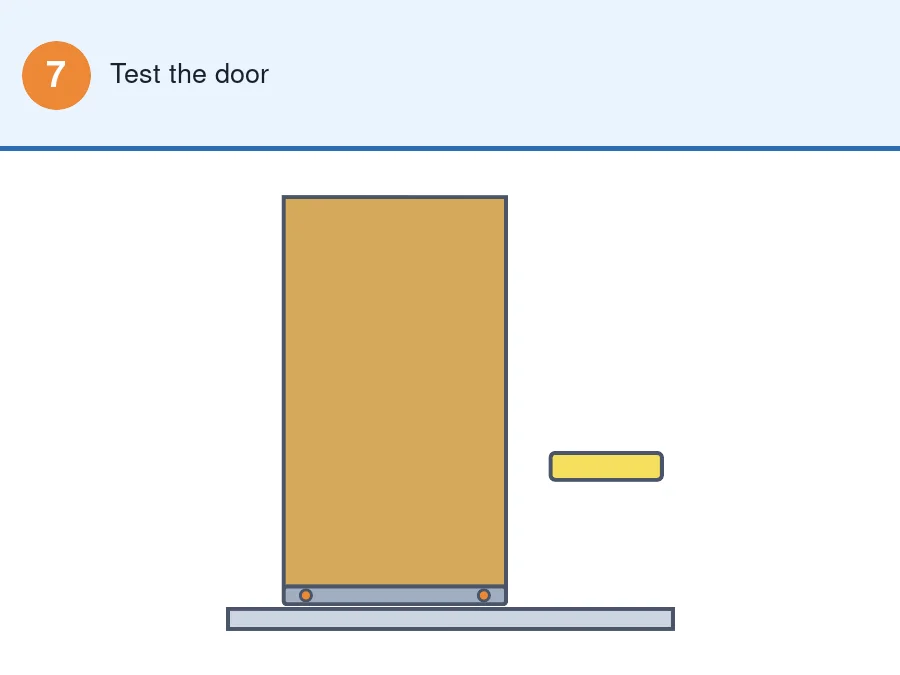
Open and close the door several times. It should close with a light push, latch as before, and not rub.
If the door is hard to close, the sweep is too low. Move it up a couple of millimeters or trim the brush.
8. Deal with the rest of the door
A sweep only fixes the bottom. If the door still leaks air, check:
- The sides and top, which need weatherstripping. Our guide on weatherstripping an exterior door covers it.
- The threshold, which may need replacing if it is worn or rotten.
- The letterbox and the keyhole, which are common draft paths.
- The door itself, if it is warped or the frame is out of square.
9. Keep it working
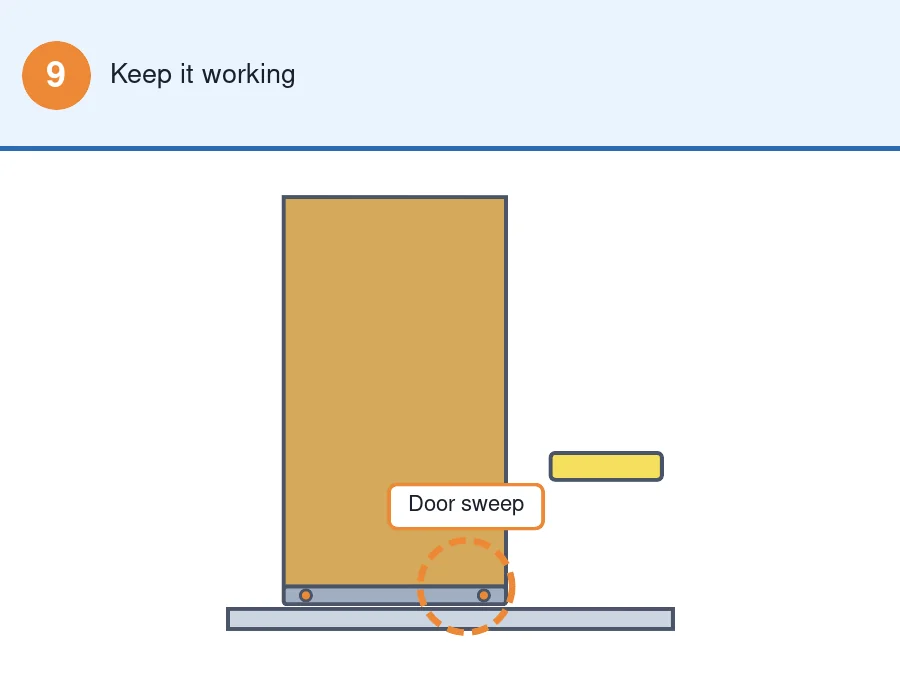
- Check the sweep every autumn; brushes wear and flaps harden.
- Clean grit off the floor under the door, which wears the seal.
- Re-seal the ends if the silicone peels.
Common mistakes
- Fitting a sweep so low that the door has to be forced.
- Fitting it on the outside of an exterior door, where wind lifts it.
- Cutting it too short, leaving gaps at the ends.
- Ignoring an uneven gap that needs the door adjusted first.
- Blocking the ventilation a gas appliance needs.
Related guides
- How to Caulk Around a Window to Stop Drafts and Water
- How to Stop a Door From Slamming or Banging
- How to Fix a Storm Door That Slams or Will Not Close With the Closer
- How to Fix a Door That Will Not Latch (3 Simple Fixes)
- How to Install a Door Stop Without Damaging the Door
- How to Replace Window Weatherstripping to Stop Drafts
FAQ
What is the best door sweep for an exterior door?
A blade or flap sweep on the inside face for a flat threshold, or a drop-down sweep for an uneven floor or a thick mat.
Will a door sweep stop mice?
It closes the main gap under a door and helps, but mice can get through gaps the size of a pencil elsewhere. Seal those too.
Can I fit a door sweep without drilling?
A slide-on sweep fits over the door edge with no screws, and some adhesive sweeps work on a smooth door. Screwed sweeps last longer.
Why does my door not close after fitting a sweep?
The sweep is too low or too thick. Raise it slightly, trim the brush, or use a thinner profile.
More from this topic
- How to Replace a Door Threshold to Stop Drafts and Water: Learn how to replace a door threshold: measure the opening, remove the old one, deal with rot, fit the new...
- How to Caulk Around a Window to Stop Drafts and Water: How to caulk around a window where water gets in: which joints to seal, which stay open, draft vs leak, and...
- Gap Under an Exterior Door: A gap under an exterior door lets in cold air, bugs and water. Measure it, choose the right door sweep or...
- How to Weatherstrip an Exterior Door and Stop Drafts: Learn how to weatherstrip an exterior door: test for leaks, pick the right seal and install it along the...
- How to Seal a Garage Door: Gaps, Drafts, Water and Pests: How to seal a garage door: find the gaps, fit a bottom seal and side weatherstripping, seal the frame, and...
 Doors and WindowsHow to Replace a Door Threshold to Stop Drafts and WaterLearn how to replace a door threshold: measure the opening, remove the old one, deal with rot, fit the new one level, seal it and check the door clears.
 Doors and WindowsHow to Caulk Around a Window to Stop Drafts and WaterHow to caulk around a window where water gets in: which joints to seal, which stay open, draft vs leak, and when the problem is flashing.
 Doors and WindowsGap Under an Exterior DoorA gap under an exterior door lets in cold air, bugs and water. Measure it, choose the right door sweep or threshold fix and install it in under an hour.
 Doors and WindowsHow to Weatherstrip an Exterior Door and Stop DraftsLearn how to weatherstrip an exterior door: test for leaks, pick the right seal and install it along the sides and top so the door closes snug without sticking.
 SafetyHow to Seal a Garage Door: Gaps, Drafts, Water and PestsHow to seal a garage door: find the gaps, fit a bottom seal and side weatherstripping, seal the frame, and check it still closes safely.