
How to Fix a Door That Will Not Latch (3 Simple Fixes)
Part of: Floors, walls and doors · Also in: The Complete Guide to Doors and Windows: Repairs at Home
- Difficulty
- Easy
- Time
- 15 to 45 minutes
- Tools
- Screwdriver, pencil or lipstick, small file, 3 inch screws, drill with bits, chisel and hammer (if moving the plate)
- Call a pro if
- The door frame is cracked or split, the door is badly warped, or the lockset itself is broken and you cannot get a matching part.
In this guide
- Wear protection
A door that swings open on its own or bounces back when you close it is annoying, and it is also a privacy and security problem. Most of the time, the cause is simple. The latch bolt no longer lines up with the hole in the strike plate, the metal plate on the frame. This guide explains how to fix a door that will not latch, starting with the easiest fix.
This guide is part of our wider guide to doors and windows.
Step 1: Find where the latch misses
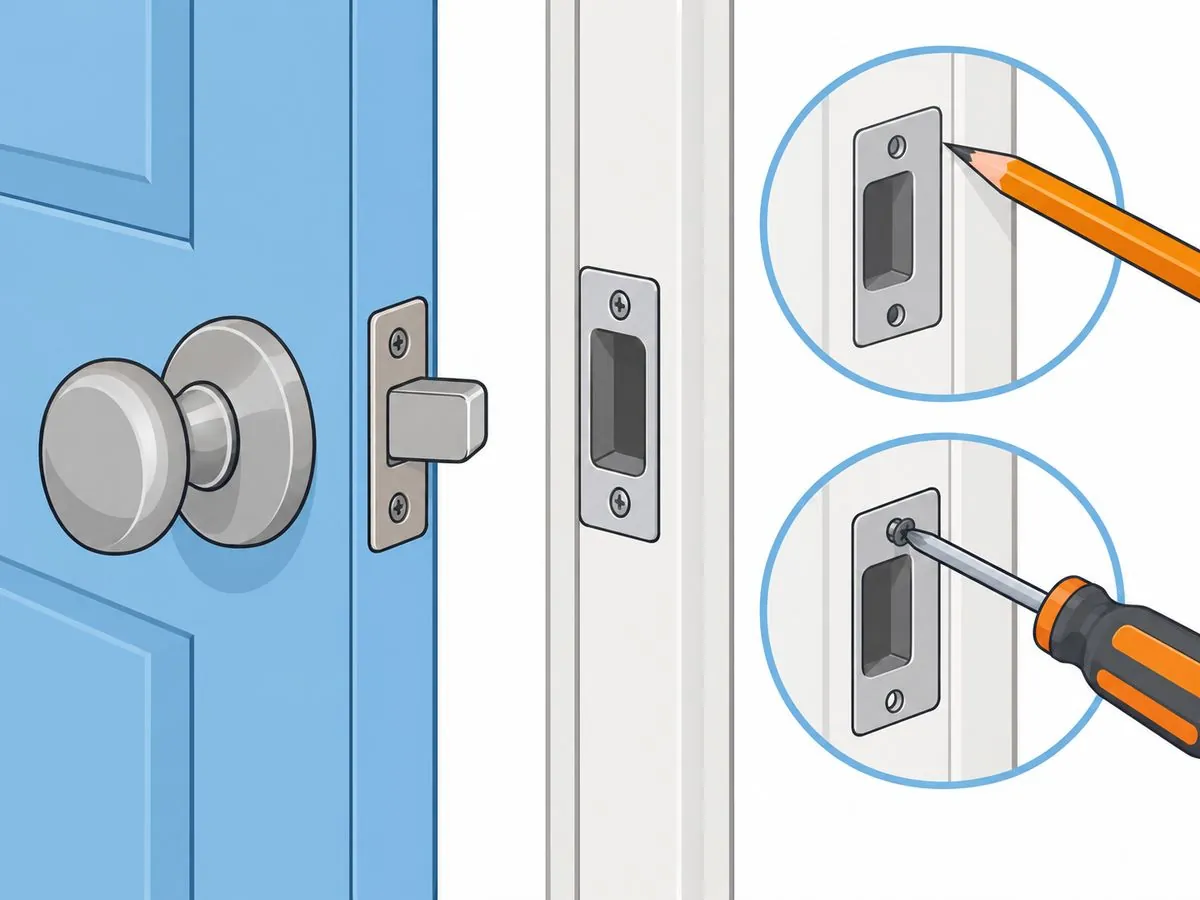
Close the door slowly and watch the latch bolt, the angled piece on the door edge. Does it hit above the hole, below it, or against the plate edge? You can also rub lipstick, chalk or a pencil on the latch bolt, close the door, and look at the mark it leaves on the strike plate. The mark shows which direction to move.
Check the gap between the door and the frame, too. A gap that is wider at the top than at the bottom suggests the door has sagged on its hinges.
Step 2: Tighten the hinge screws
Loose hinges let the door droop, which pushes the latch out of line.
1. Open the door and tighten every hinge screw with a screwdriver.
2. When a screw just spins, the hole has worn out. Remove the screw and put a wooden toothpick or a golf tee dipped in wood glue into the hole. Break it off flush, then drive the screw back in.
3. For a stronger fix, swap one screw in the top hinge for a 3 inch screw that goes through the frame into the wall stud. It pulls the door up and back into line.
Close the door and test it. This fix alone solves many cases. If the door squeaks too, see how to fix a squeaky door.
Step 3: Adjust the strike plate
If the latch still misses, the plate needs to move.
If it is off by a small amount (about 1/8 inch or less):
1. Unscrew the strike plate.
2. File the edge of the hole in the direction the latch needs to go. A small metal file works.
3. Screw the plate back and test.
If it is off by more:
1. Unscrew the plate and trace its outline.
2. Use a chisel to widen the shallow pocket in the frame in the right direction.
3. Move the plate and mark the new screw holes.
4. Fill old screw holes with a wood filler or toothpicks and glue so the screws hold. Drill pilot holes.
5. Screw the plate down, flush with the frame. Make sure the latch hole in the wood is also wide enough. Chisel it if needed.
Step 4: Check the latch itself
Take the latch bolt in your fingers and press it. It should spring back. A sticky latch can be cleaned and lubricated with a dry lubricant. If it does not spring back, the latch is worn. Unscrew the knob and replace it. Take the old one to the store to match the size.
Step 5: Look for humidity and swelling
Doors swell in humid weather and can rub on the frame. Look for shiny spots where paint has worn off. If the door rubs, you can lightly sand or plane the edge. Seal any bare wood with paint, since raw wood absorbs moisture.
How to prevent it
- Check hinge screws once a year.
- Keep gaps around the door even.
- Do not hang heavy items on the door.
- Keep the latch clean and lightly lubricated.
Related guides
- How to Fix a Deadbolt That Will Not Throw All the Way
- How to Secure a Sliding Door With a Security Bar and Simple Upgrades
- How to Tighten a Loose Door Knob in Five Minutes
- Cabinet Door Won't Stay Closed: How to Fix It
- Sliding Door Off Track or Hard to Slide: How to Fix It
- How to Fix a Cabinet Door That Rubs the Frame or Another Door
FAQ
Why did my door stop latching all of a sudden?
Seasonal humidity, a loose hinge or the house settling are the usual reasons.
Do I need to take the door off?
Usually not. You can do all of these steps with the door on its hinges.
What if the latch catches but the door still rattles?
Bend the strike plate tab slightly, or add a weatherstrip. Our guide to how to seal a drafty window covers adhesive foam strips you can also use here.
More from this topic
- How to Fix a Bathroom Door Lock That Sticks or Wont Latch: Learn how to fix a bathroom door lock: adjust the strike plate, free a sticking thumb turn, clear corrosion...
- How to Fix a Deadbolt That Will Not Throw All the Way: Learn how to fix a deadbolt that will not throw: check door alignment, the strike plate, hinge screws, and...
- How to Fix a Door That Scrapes the Floor: Learn how to fix a door that scrapes the floor: find out why it dropped, tighten or reset the hinges, adjust...
- How to Fix a Door That Swings Open on Its Own: Learn how to fix a door that swings open on its own: check the frame for plumb, adjust or shim the hinges,...
- How to Tighten a Loose Door Knob in Five Minutes: Learn how to tighten a loose door knob: find the set screw or mounting screws, snug the parts, and fix a...
 Doors and WindowsHow to Fix a Bathroom Door Lock That Sticks or Wont LatchLearn how to fix a bathroom door lock: adjust the strike plate, free a sticking thumb turn, clear corrosion from the latch and replace a worn privacy lock.
 Doors and WindowsHow to Fix a Deadbolt That Will Not Throw All the WayLearn how to fix a deadbolt that will not throw: check door alignment, the strike plate, hinge screws, and the lock itself, with simple steps and safety notes.
 Doors and WindowsHow to Fix a Door That Scrapes the FloorLearn how to fix a door that scrapes the floor: find out why it dropped, tighten or reset the hinges, adjust the frame and trim the door only as a last resort.
 Doors and WindowsHow to Fix a Door That Swings Open on Its OwnLearn how to fix a door that swings open on its own: check the frame for plumb, adjust or shim the hinges, and add a latch, closer or stop that holds it shut.
 Doors and WindowsHow to Tighten a Loose Door Knob in Five MinutesLearn how to tighten a loose door knob: find the set screw or mounting screws, snug the parts, and fix a wobbly handle on interior and exterior doors.