
How to Fix a Deadbolt That Will Not Throw All the Way
Part of: Floors, walls and doors
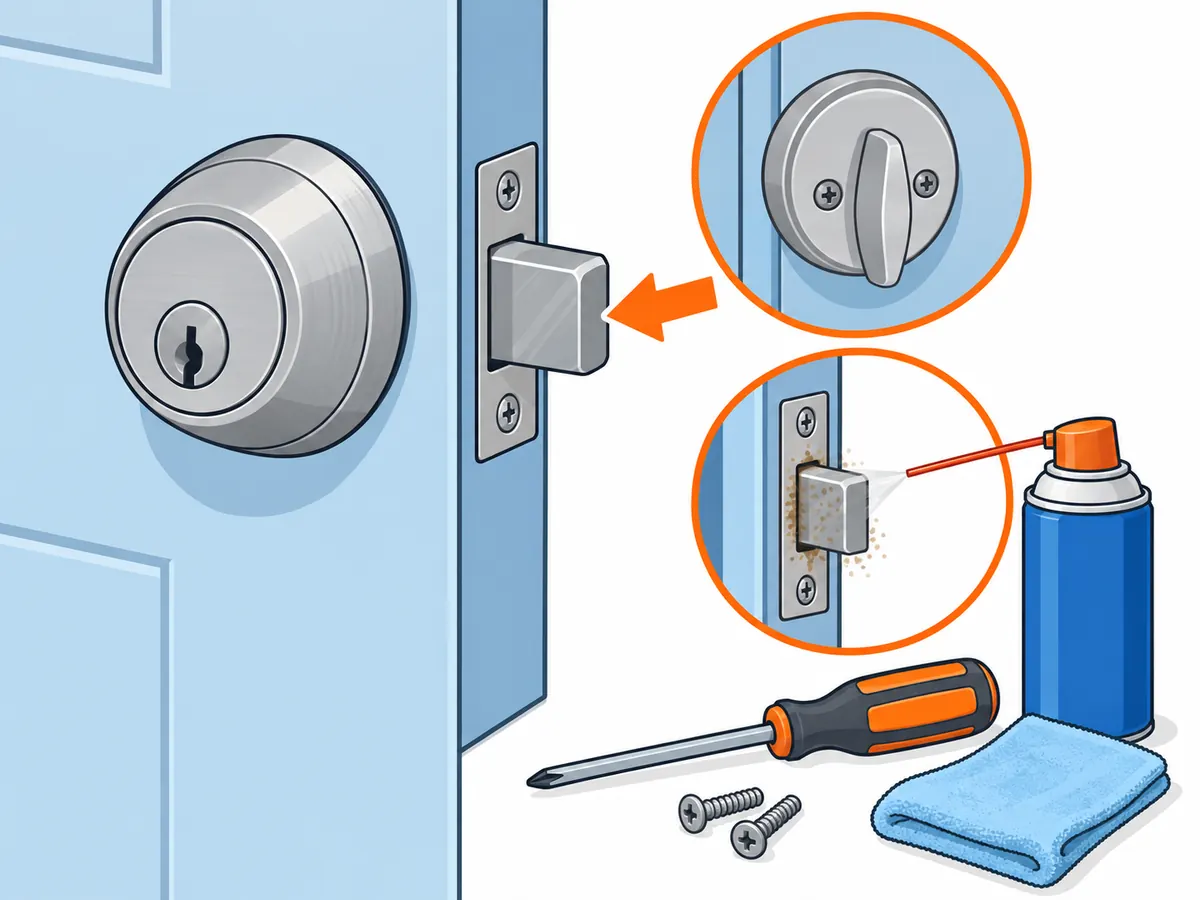
- Difficulty
- Easy to moderate
- Time
- 20 to 60 minutes
- Tools
- Screwdriver, pencil, lipstick or chalk, drill with bits, wood filler or hardwood dowels, dry lock lubricant, file
- Call a pro if
- The lock turns but the bolt will not move, the cylinder is loose or spins, the door frame is cracked, or the lock is on a door that cannot be left unsecured.
In this guide
A deadbolt that will not slide all the way out is one of the most common door problems. It makes the home feel less secure, and it usually shows up when the weather changes. The cause is often simple. Here is how to fix a deadbolt that will not throw, starting with the cheapest checks.
This guide is part of our wider guide to electrical problems and safety.
First test: is it the lock or the door?
Open the door and turn the key or thumb turn. Watch the bolt.
- If it slides out fully and smoothly, the lock works. The problem is alignment with the frame.
- If it moves only part way or feels gritty, the lock mechanism needs attention.
This one test saves a lot of time.
Step 1: Check the alignment
Close the door and try to lock it. Look at where the bolt hits the frame.
1. Rub a little lipstick or chalk on the end of the bolt.
2. Close the door and turn the thumb turn or key so the bolt marks the frame.
3. Open the door and see where the mark landed compared to the hole.
If the mark is above, below, or to one side of the hole, the door or the strike plate is out of line.
Step 2: Tighten hinges
A door sags over time as the hinge screws loosen. Tighten every hinge screw. If a screw just spins, use the toothpick and wood glue method or swap in a longer screw that reaches into the frame stud. Our guide on fixing a door that rubs the frame goes deeper on sagging doors.
Step 3: Adjust the strike plate
If the bolt is only a little off, you can often fix it without moving the door.
1. Unscrew the strike plate.
2. If the hole is slightly too small, use a file to enlarge it in the direction the bolt is missing.
3. If the hole is too far off, fill the old screw holes with glue and dowels, then reposition the plate.
4. Drill a deeper hole if the bolt does not go in far enough. A good bolt should sink about one inch into the frame.
5. Use long screws on the strike plate. They should reach into the wall stud, not just the thin jamb.
Longer screws also make the door harder to kick in, so it is worth doing even if the lock works fine.
Step 4: Lubricate the lock
If the bolt feels stiff when the door is open, clean and lubricate the lock. Use a dry lock lubricant rather than oil. We cover this in how to lubricate a sticky door lock. Work the key and the thumb turn a few times.
Step 5: Check the install
A deadbolt that was installed a little crooked can bind. Remove the interior thumb turn plate and see whether the two halves are tight and square. If the cylinder tailpiece is bent, or the lock body is loose in the door, snug it up. If the bolt hits the edge of the hole in the door, the bore may need to be enlarged slightly.
Season and weather
Doors swell in humid weather and shrink in dry weather. If the bolt works well in winter but sticks in summer, the door is rubbing or the frame has moved. A bit of paste wax on the bolt helps, but fix the cause. Weather also changes how a door fits; our guide on fixing a gap under an exterior door can help if the door has dropped.
When to replace the lock
Replace the deadbolt if any of these is true:
- The bolt moves only with great effort even with the door open.
- The key turns freely but nothing happens.
- Parts rattle inside the lock body.
Most deadbolts use standard hole sizes, so a new one often fits in the old holes.
Related guides
- How to Fix a Storm Door That Slams or Will Not Close With the Closer
- How to Fix a Window Latch That Will Not Lock and Pulls the Sash Tight
- How to Fix a Window That Will Not Stay Up: Balances, Cords, and Friction
- How to Install a Deadbolt on an Exterior Door
- How to Anchor Furniture to the Wall (Anti-Tip Safety)
- How to Childproof Cabinets and Drawers in the Kitchen and Bathroom
FAQ
Why does my deadbolt lock only when I lift the door?
The door has sagged. Tighten the hinges first, then check the strike plate.
Can I fix a deadbolt without taking it apart?
Yes, in most cases. The usual fixes are on the frame and the strike plate.
How far should a deadbolt extend?
About one inch into the frame is common for a secure fit.
Should I use WD-40?
A dry lock lubricant is a better long term choice.
More from this topic
- How to Fix a Bathroom Door Lock That Sticks or Wont Latch: Learn how to fix a bathroom door lock: adjust the strike plate, free a sticking thumb turn, clear corrosion...
- How to Fix a Door That Swings Open on Its Own: Learn how to fix a door that swings open on its own: check the frame for plumb, adjust or shim the hinges,...
- How to Fix a Door That Will Not Latch (3 Simple Fixes): How to fix a door that will not latch: find where the latch misses, tighten the hinges, and adjust the strike...
- How to Fix an Interior Door That Sticks: Learn how to fix an interior door that sticks: find where it rubs, tighten hinges, sand or plane the edge,...
- How to Fix a Bathroom Door That Will Not Close or Latch: Learn how to fix a bathroom door that will not close: check the strike plate, swelling and hinges, adjust the...
 Doors and WindowsHow to Fix a Bathroom Door Lock That Sticks or Wont LatchLearn how to fix a bathroom door lock: adjust the strike plate, free a sticking thumb turn, clear corrosion from the latch and replace a worn privacy lock.
 Doors and WindowsHow to Fix a Door That Swings Open on Its OwnLearn how to fix a door that swings open on its own: check the frame for plumb, adjust or shim the hinges, and add a latch, closer or stop that holds it shut.
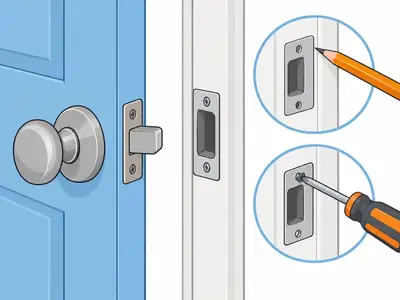 Doors and WindowsHow to Fix a Door That Will Not Latch (3 Simple Fixes)How to fix a door that will not latch: find where the latch misses, tighten the hinges, and adjust the strike plate. A beginner guide with basic tools.
 Doors and WindowsHow to Fix an Interior Door That SticksLearn how to fix an interior door that sticks: find where it rubs, tighten hinges, sand or plane the edge, and seal the wood so humidity stops the problem.
 BathroomHow to Fix a Bathroom Door That Will Not Close or LatchLearn how to fix a bathroom door that will not close: check the strike plate, swelling and hinges, adjust the plate, and deal with a door that hits the frame.