
How to Install a Deadbolt on an Exterior Door
Part of: Electrical safety
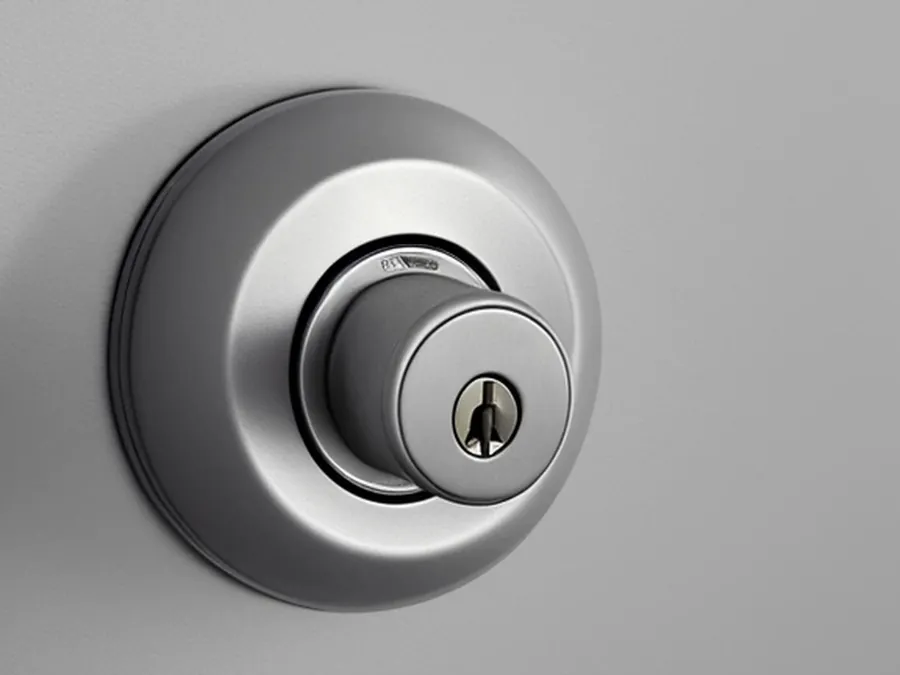
- Difficulty
- Moderate
- Time
- 1 to 2 hours
- Tools
- Tape measure, pencil, hole saw of the right size, drill, spade bit, chisel, hammer, screwdriver, utility knife, masking tape, a deadbolt kit with a template, eye protection
- Call a pro if
- The door is metal, glass or very thin, the frame is damaged, or the door is hollow core, since a deadbolt in a hollow door provides no real security.
In this guide
- Wear protection
A spring latch keeps a door closed. A deadbolt keeps it shut. If your exterior doors only have a knob lock, a deadbolt is the single most effective security upgrade you can make, and it is a job you can do in an hour with a drill and a chisel. The whole thing depends on drilling two holes in the right places. Here is how to install a deadbolt.
This guide is part of our wider guide to electrical problems and safety.
1. Check the door and choose the bolt
The door must be solid: solid wood, or a solid core door. A hollow core door will not hold a deadbolt under force, and installing one gives false confidence.
Choose a single cylinder deadbolt for a door with no glass nearby: key outside, thumb turn inside. Choose a double cylinder only if the door has glass within reach of the inside thumb turn, since someone could otherwise break the glass and turn the latch. Check local rules on double cylinder locks, since some areas restrict them for fire safety.
Look for a bolt with a hardened steel throw of at least 1 inch. That is what resists kicking.
2. Measure the backset
Backset means how far the lock hole sits in from the door edge, measured to its center. Most doors use either 2 3/8 inches or 2 3/4 inches. Measure the existing knob or latch to match it, so the deadbolt lines up above the handle.
If the door has no existing lock, pick 2 3/4 inches for a bit more strength. Then measure the height: usually a few inches above the knob, and follow the template that comes with the kit.
3. Mark both sides and the edge
Use the template that comes with the deadbolt. Tape it to the door, aligned with the edge and the height you chose, and mark the center on both faces and on the edge.
Marking both faces matters: if you drill from one side only, the hole can blow out on the other. Marking the edge gives you the center for the bolt hole.
4. Drill the face hole
Use a hole saw of the size the kit specifies, usually 2 1/8 inches, and drill from one side until the pilot bit breaks through, then finish from the other side. That gives a clean hole on both faces.
Keep the drill straight. A hole that is not square to the door makes the bolt bind.
5. Drill the edge hole
Drill into the door edge at the center mark, using a spade bit sized to the bolt body, usually 1 inch, straight toward the face hole. Drill until the two holes meet.
Wrap tape around the bit at the depth of the bolt so you do not drill too far.
6. Fit the bolt
1. Slide the bolt into the edge hole.
2. Fit the exterior and interior halves through the face holes, aligning them with the bolt.
3. Feed the connecting screws through and tighten them evenly.
4. Test the thumb turn. The bolt should extend and retract smoothly without force.
If the bolt binds, the holes are slightly out of line. A small amount of filing usually fixes it; a large misalignment means redrilling.
7. Fit the strike plate
The strike plate is the part on the door frame that receives the bolt, and it is the weakest link if it is installed badly.
1. Close the door and turn the bolt so it marks the frame.
2. Mark the outline of the strike plate on the frame and score it with a knife.
3. Chisel a shallow recess so the plate sits flush.
4. Drill a hole into the frame deep enough for the bolt to seat fully.
5. Screw the plate in place with long screws that reach the framing, not just the trim.
A strike plate held by short screws in soft trim is what fails when a door is kicked.
8. Test everything
Close the door and lock it. The bolt should slide home without you having to push or lift the door. If it does not, check that the door is not sagging: a dropped door makes a deadbolt bind, and our guide on a door that will not latch covers the adjustment.
Then test from outside with the key. It should turn smoothly, without forcing.
9. Finish the job
- Rekey or replace the other locks so one key works everywhere, or so the previous owner's key no longer fits. Our guide on changing or rekeying locks when you move in covers that.
- Add a door viewer if the door has none, so you can see who is outside.
- Check the door hinges: hinge pins on the outside can be removed, and security hinges or a pin fix stop that.
Common mistakes
- Drilling from one side and blowing out the veneer on the other.
- Fitting a deadbolt to a hollow core door.
- Using the short screws that come with a strike plate in soft trim.
- A hole that is not square to the door, so the bolt binds.
- Fitting a double cylinder where fire safety rules restrict it.
Related guides
- How to Fix a Deadbolt That Will Not Throw All the Way
- How to Install a Baby Gate at the Top and Bottom of Stairs
FAQ
Can I install a deadbolt myself?
Yes, on a solid wood door, with a hole saw, a drill and a chisel. It takes about an hour and the kit usually includes a template.
What is the standard backset for a deadbolt?
2 3/8 inches or 2 3/4 inches. Match the existing lock so the deadbolt sits in line with the handle.
Do I need a deadbolt if I have a smart lock?
Many smart locks include a deadbolt. If yours is a latch only, a separate deadbolt still adds real security.
How high should a deadbolt be?
A few inches above the handle, as the kit's template shows. Check that it does not foul the handle or the door viewer.
More from this topic
- How to Install a Door Viewer (Peephole) in an Exterior Door: Install a door viewer by drilling a clean hole through the door at the right height and threading in a...
- How to Install a Peephole in a Front Door: Learn how to install a peephole: pick a viewer that matches the door thickness, drill the hole squarely from...
- How to Install a Security Strike Plate: How to install a security strike plate: mortise it to fit, drive long screws into the framing, and make the...
- How to Secure Sliding Doors and Windows Against Break-Ins: Secure sliding doors and windows with a track bar or dowel, better locks, anti-lift pins, and...
- How to Secure the Garage Entry Door: Secure the garage entry door with a solid-core or metal door, a Grade 1 deadbolt, long strike screws, and...
 SafetyHow to Install a Door Viewer (Peephole) in an Exterior DoorInstall a door viewer by drilling a clean hole through the door at the right height and threading in a wide-angle viewer for safe visitor screening.
 SafetyHow to Install a Peephole in a Front DoorLearn how to install a peephole: pick a viewer that matches the door thickness, drill the hole squarely from both sides, fit the two halves and test the view.
 SafetyHow to Install a Security Strike PlateHow to install a security strike plate: mortise it to fit, drive long screws into the framing, and make the door harder to kick in.
 SafetyHow to Secure Sliding Doors and Windows Against Break-InsSecure sliding doors and windows with a track bar or dowel, better locks, anti-lift pins, and shatter-resistant film on the glass.
 SafetyHow to Secure the Garage Entry DoorSecure the garage entry door with a solid-core or metal door, a Grade 1 deadbolt, long strike screws, and habits that stop the most common break-in path.