
How to Fix a Cabinet Door That Rubs
Part of: Kitchen · Also in: The Complete Guide to Kitchen and Appliance Care at Home
- Difficulty
- Easy
- Time
- 20 to 45 minutes per door
- Tools
- Screwdriver, flashlight, sandpaper or a sanding block, a straight edge, a level, clear finish or paint for a sanded edge, felt bumpers, a helper
- Call a pro if
- The cabinet frame is out of square, the cabinet has pulled away from the wall, or the door is warped, since a warped door or a twisted frame cannot be fixed by adjustment.
In this guide
- Wear protection
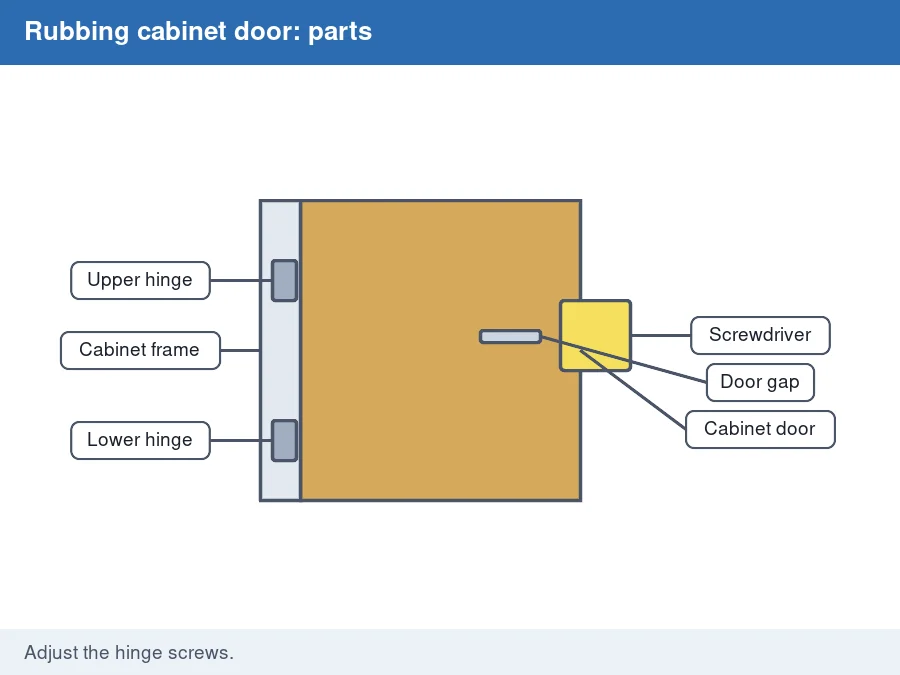
This guide shows how to fix a cabinet door that rubs against its neighbor or the frame. A cabinet door that rubs is annoying before it is damaging: it squeaks, it wears the finish, and eventually it takes a chip out of the edge. Almost always the door has shifted a millimeter or the wood has swelled, and the fix is an adjustment rather than a repair. The steps below start with the simplest adjustment and move to the more involved ones.
This guide is part of our wider guide to doors and windows.
1. Find exactly where it touches
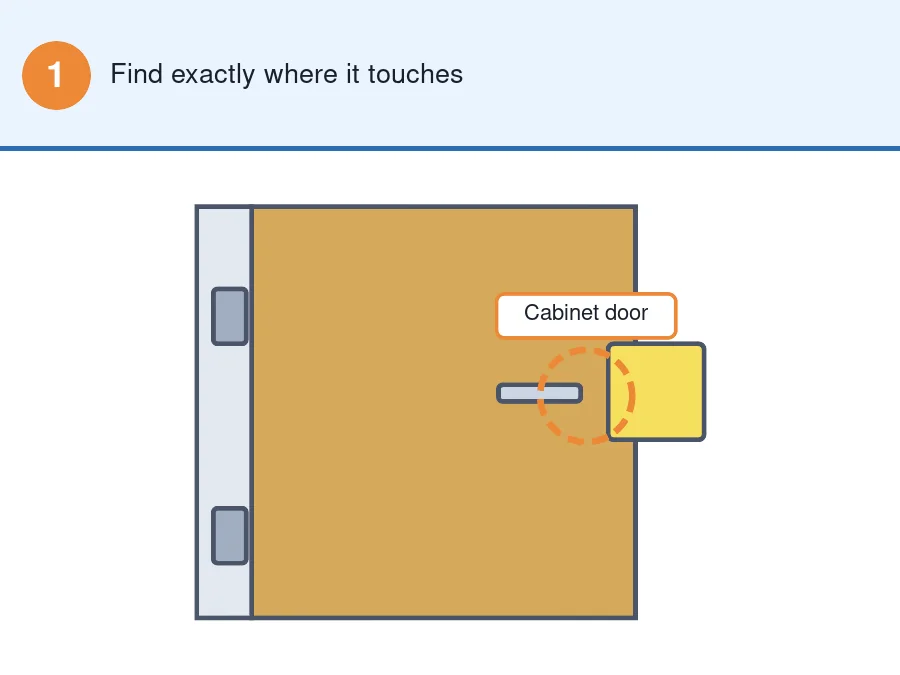
Open and close the door slowly and listen. Then look for the mark: a shiny patch, a scuff or a line of worn finish shows where two surfaces meet. Rub a pencil along the suspect edge and close the door; the graphite transfers to the contact point.
Common spots: the top outer corner against the frame, the hinge side against the cabinet face, the bottom edge against the base, or the closing edge against a neighboring door.
2. Check the gap all round
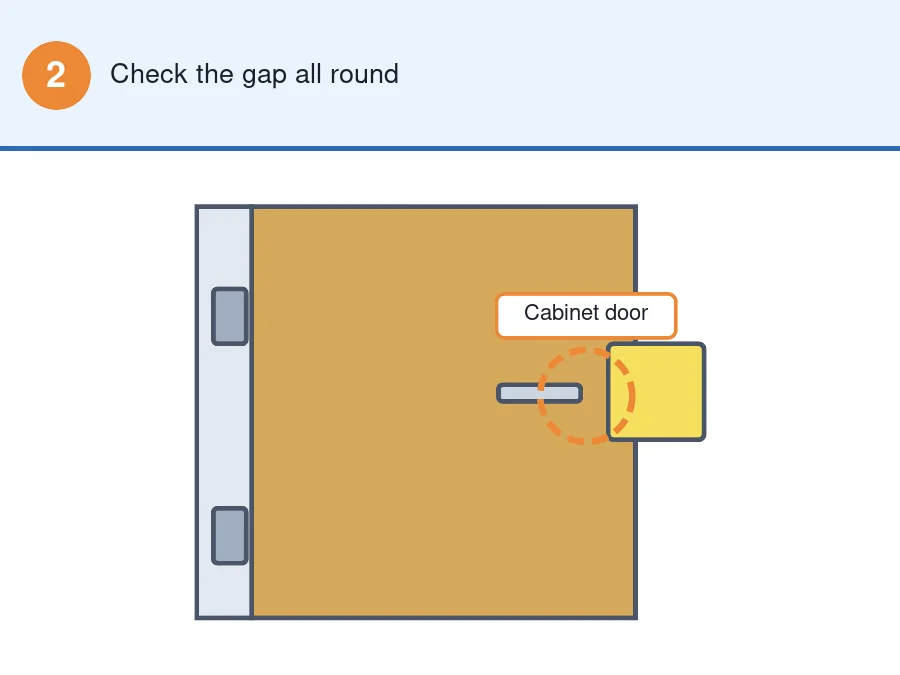
With the door closed, look at the gap between the door and the frame. An even gap all round with a rub at one corner means the door needs adjusting. A gap that is wide at the top and tight at the bottom means the door has dropped, usually a hinge issue.
Check the doors next to it. Two doors rubbing each other is a different fix from a door rubbing the frame.
3. Adjust the hinge to move the door
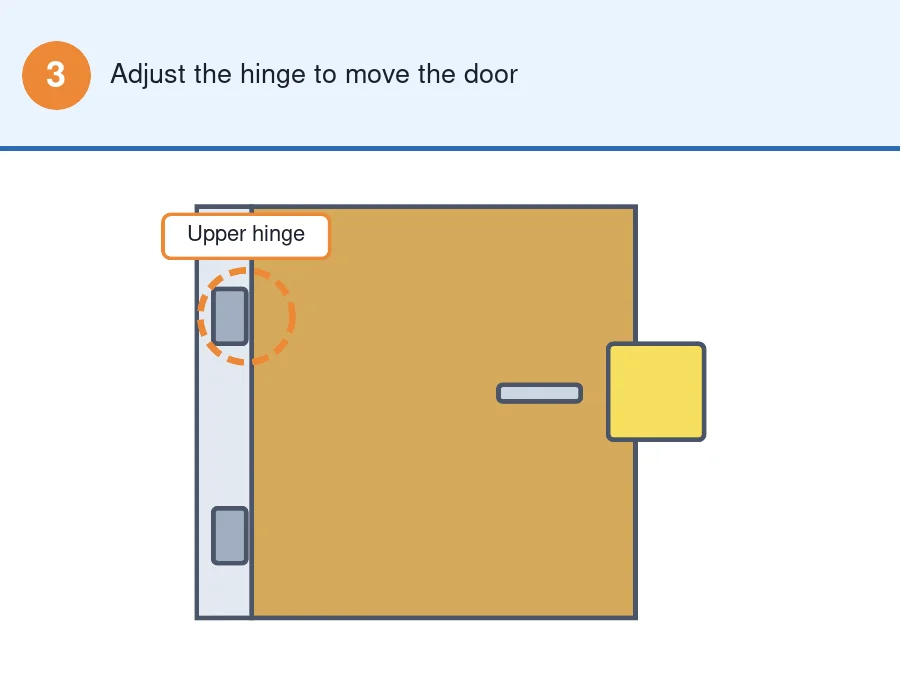
Most modern hinges have adjustment screws that shift the door without removing anything.
- The side adjustment moves the door left or right, which fixes a door rubbing its neighbor or the frame on the hinge side.
- The depth adjustment moves the door in or out, closing the gap at the front.
- The height can usually be adjusted by loosening the mounting screws and lifting the door slightly.
Turn a quarter turn at a time and close the door to check. Write down what you changed, because it is easy to lose track.
4. Fix a dropped door
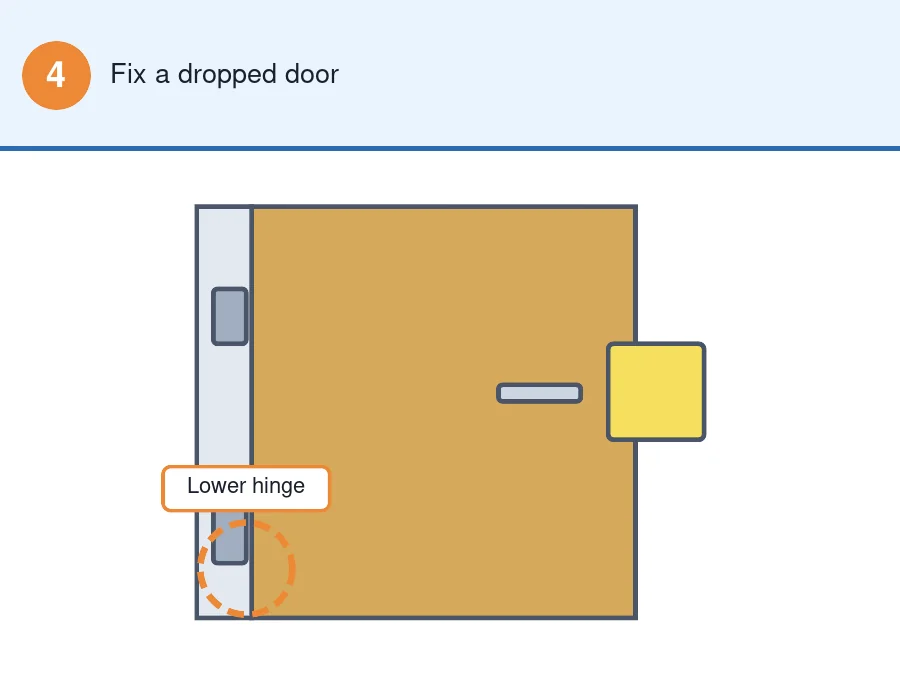
A door that rubs at the bottom has usually dropped because the top hinge screws have worked loose or the wood around them has given way. Tighten the screws, and if they spin, fill the holes with glued toothpicks and refit. Our guide on fixing a cabinet hinge covers the repair in detail.
5. Sand or plane a swollen edge
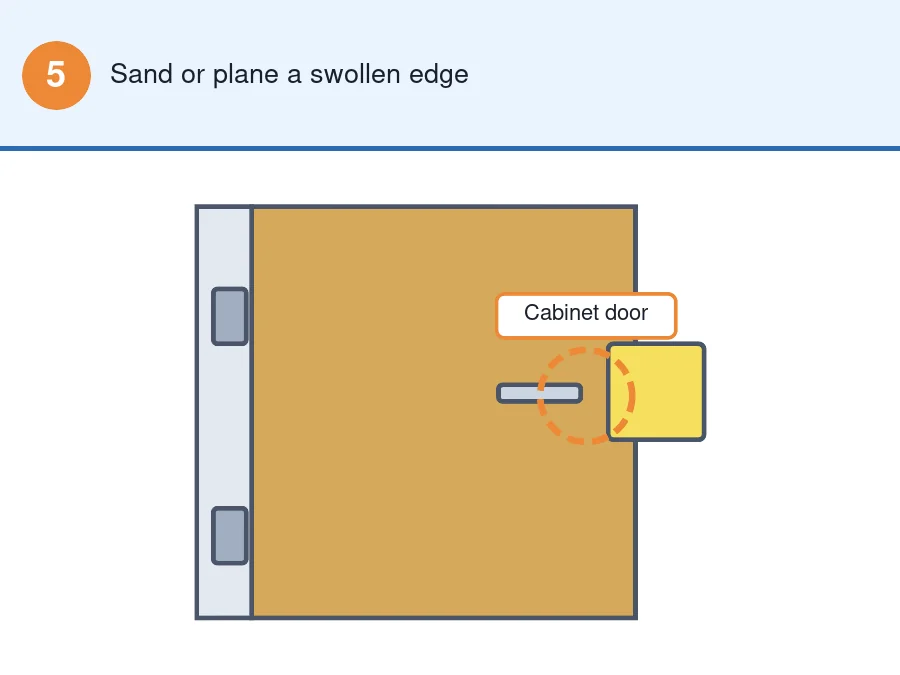
If the door has swelled, usually in a humid season, the edge itself is the problem.
1. Take the door off and lay it flat.
2. Sand the rubbing edge lightly with medium paper, then fine, taking off only what is needed.
3. Seal the bare edge with a matching finish or paint, because bare wood swells again faster.
4. Refit and check the gap.
Take off a little at a time. It is easy to remove wood and impossible to put it back.
6. Check the cabinet is square
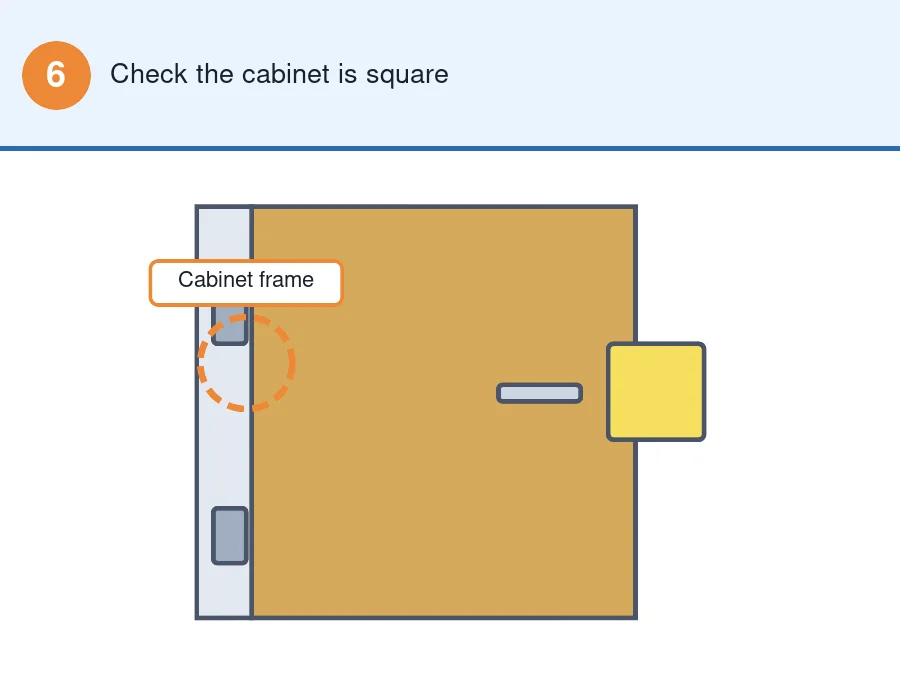
If a door rubs no matter how you adjust it, the cabinet frame may be out of square. Check with a straight edge and a level across the front of the cabinet. A cabinet that has pulled away from the wall, or one that was installed out of level, twists the doors.
A cabinet that has pulled out of the wall is a safety issue as well as an alignment one, and it needs refixing to the studs before anything else.
7. Deal with a warped door
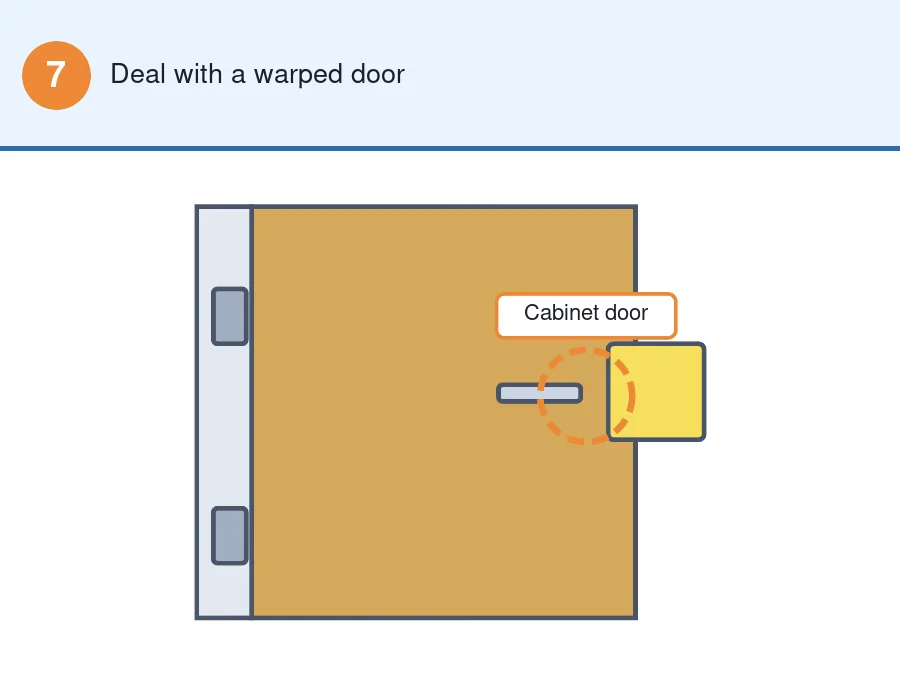
A warped door cannot be adjusted straight. Hold a straight edge across the door face and look for a gap. Slight warping sometimes improves if the door is taken off, laid flat and left in a dry room for a week, but most warped doors are permanent.
For a warped door, the practical options are to replace the door, or to accept a slightly wider gap by adjusting the hinge and living with it.
8. Stop the wear at the contact point
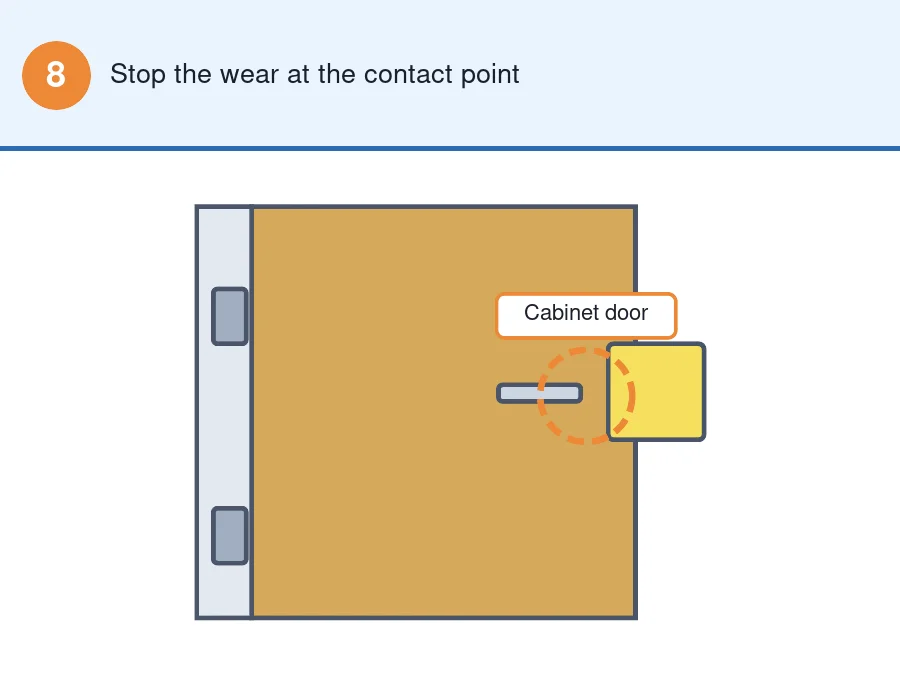
Once the door clears, protect it:
- Add a small felt or rubber bumper at the contact point so the door cannot strike the frame.
- Check the door catch; a catch that pulls the door too tight can cause a rub at the top.
- Keep the kitchen humidity steady, since swelling is seasonal.
Common mistakes
- Sanding the door before trying a hinge adjustment.
- Taking too much off an edge and leaving a visible gap.
- Leaving a sanded edge unsealed, so it swells again.
- Adjusting a door that is actually warped.
- Forcing a door shut and chipping the edge.
Related guides
- Cabinet Door Won't Stay Closed: How to Fix It
- How to Fix a Storm Door That Slams or Will Not Close With the Closer
- Door Rubbing the Frame? How to Find Where It Sticks and Fix It
- How to Hang a Wall Cabinet Safely on Studs
- How to Paint Kitchen Cabinet Doors Without Brush Marks
- How to Install Cabinet Knobs and Pulls (Straight and Even)
FAQ
Why does my cabinet door rub only in summer?
Wood swells in humid air. The door is slightly oversized for the gap, so it binds in the damp months and clears in winter. Sanding and sealing the edge fixes it.
Can I fix a rubbing door without taking it off?
Often yes, with the hinge adjustment screws. If the edge needs sanding, taking the door off is quicker and safer.
What if two doors rub each other?
Adjust the side screws on both hinges to open the gap between them, usually a quarter turn each. If they still touch, one door may be slightly too wide.
Do I need to replace the hinges?
Only if they are bent, cracked or the adjustment no longer holds. Most rubbing doors are fixed with the screws that are already there.
More from this topic
- How to Fix a Cabinet Hinge: Learn how to fix a cabinet hinge that is loose, squeaking or pulling out: tighten it, reset stripped screw...
- How to Fix a Squeaky Cabinet Door: How to fix a squeaky cabinet door: find the source, lubricate hinges the right way, adjust the door so it...
- How to Fix a Door That Scrapes the Floor: Learn how to fix a door that scrapes the floor: find out why it dropped, tighten or reset the hinges, adjust...
- How to Fix a Cabinet Drawer Front That Is Loose or Crooked: Learn how to fix a cabinet drawer front that is loose or crooked: tighten the screws, realign the front, glue...
- How to Fix a Cabinet Shelf Bracket That Came Loose or Broke: Learn how to fix a cabinet shelf bracket: find why it failed, repair a stripped hole, replace a broken pin or...
 KitchenHow to Fix a Cabinet HingeLearn how to fix a cabinet hinge that is loose, squeaking or pulling out: tighten it, reset stripped screw holes, adjust the door and replace a bent hinge.
 KitchenHow to Fix a Squeaky Cabinet DoorHow to fix a squeaky cabinet door: find the source, lubricate hinges the right way, adjust the door so it stops rubbing, silence catches.
 Doors and WindowsHow to Fix a Door That Scrapes the FloorLearn how to fix a door that scrapes the floor: find out why it dropped, tighten or reset the hinges, adjust the frame and trim the door only as a last resort.
 KitchenHow to Fix a Cabinet Drawer Front That Is Loose or CrookedLearn how to fix a cabinet drawer front that is loose or crooked: tighten the screws, realign the front, glue a split box and refit the slides.
 KitchenHow to Fix a Cabinet Shelf Bracket That Came Loose or BrokeLearn how to fix a cabinet shelf bracket: find why it failed, repair a stripped hole, replace a broken pin or clip, and add support so the shelf stops sagging.