
How to Fix a Cabinet Hinge
Part of: Kitchen
- Difficulty
- Easy to moderate
- Time
- 30 minutes to 1 hour per door
- Tools
- Screwdriver that matches the screw heads, a small pick or knife, wood glue, wooden toothpicks or matches, a drill with a 1/8 inch bit if needed, a level, a helper or a shim, replacement hinges of the same type
- Call a pro if
- The cabinet side panel is split, the door is warped or the cabinet frame itself is coming away from the wall, since those are structural repairs rather than hinge adjustments.
In this guide
- Find out which hinge is at fault
- Tighten the screws properly
- Fix a stripped screw hole
- Adjust the door with the hinge screws
- Fix a sagging door on older hinges
- Replace a hinge that is bent or cracked
- Stop the door slamming or swinging open
- Check the whole run of doors
- Common mistakes
- Related guides
- FAQ
- When to call a pro
A cabinet door that hangs crooked, rubs the frame or drops a little every time it opens is almost always a hinge problem, not a door problem. Hinges carry the full weight of the door on a few small screws, and over years of use those screws work loose or the wood around them gives way. The fix is usually quick and needs no special tools. Here is how to fix a cabinet hinge, from a single loose screw to a hinge that has to be replaced.
This guide is part of our wider guide to kitchen cabinets, countertops and storage.
1. Find out which hinge is at fault
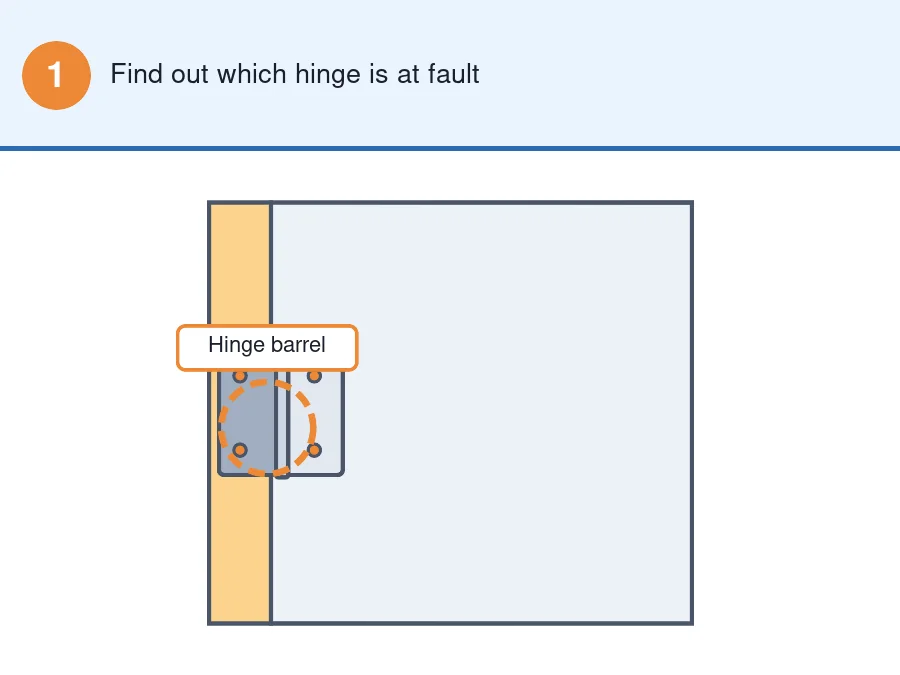
Open the door and watch it. A door that sags at the outer corner is usually held by the top hinge, which has pulled loose. A door that rubs at the bottom is usually a bottom hinge issue. A door that is loose in every direction has both hinges working free.
Close the door and look at the gap around it. An even gap all round with a rub at one corner points to a hinge. A gap that is wide at the top and tight at the bottom points to a door that has dropped. Run your finger along the hinge plate on the door and on the cabinet frame; a screw that turns easily under a screwdriver is already loose.
2. Tighten the screws properly
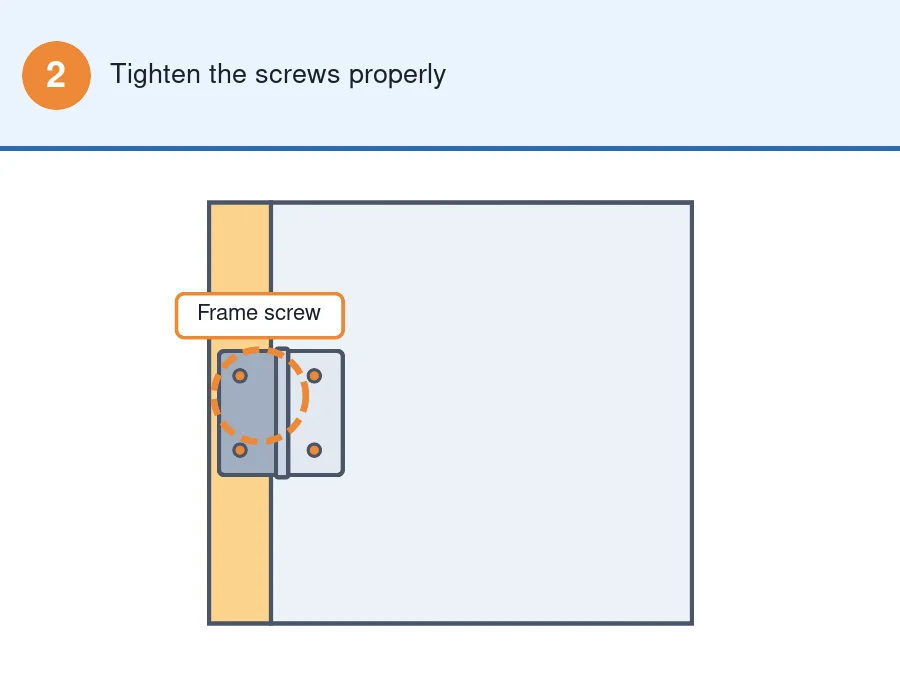
Use a screwdriver that fits the screw head exactly. A loose fit chews the head and then you cannot get it out at all. Turn each screw snug, not hard. Work around the hinge, then check the door.
If a screw turns and never gets tight, the hole is stripped and tightening will not fix it. Move to the next step instead of forcing it.
3. Fix a stripped screw hole
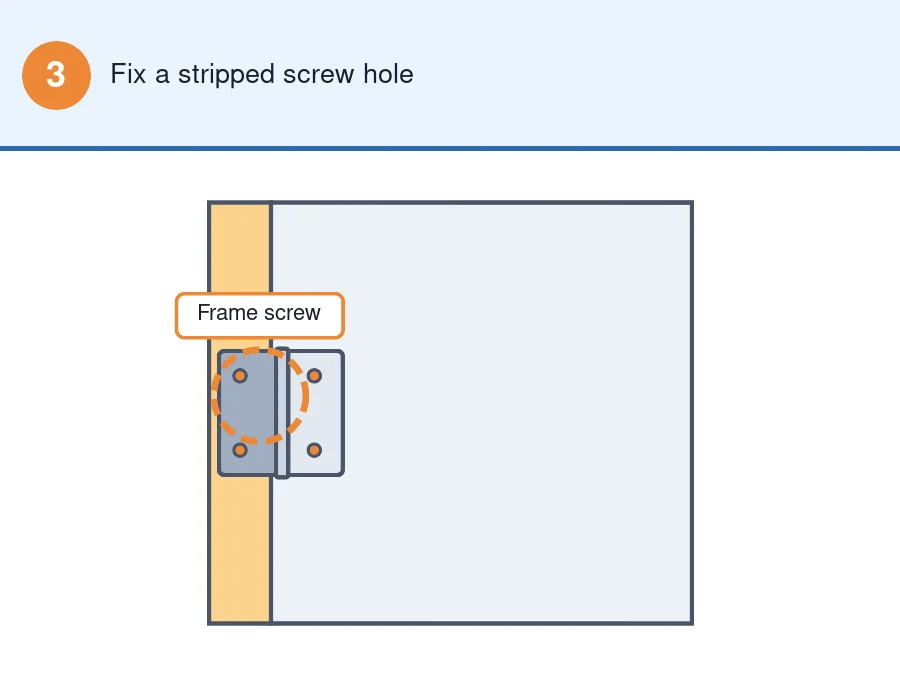
This is the most common cabinet hinge repair, and it takes five minutes.
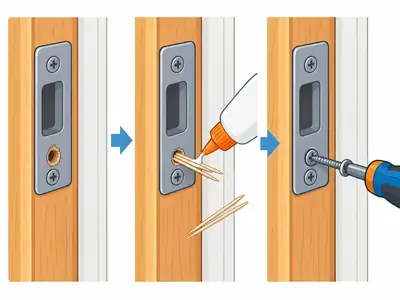
1. Take the screw out completely.
2. Clean the hole with a small pick or knife tip to remove loose dust and old wood fibers.
3. Dip two or three wooden toothpicks or the tips of matches in wood glue and push them into the hole, packed fairly tight.
4. Snap them off level with the surface.
5. Let the glue set for about an hour, then drive the screw back in. It should bite and hold.
For a hole that is badly enlarged, drill it out to 1/8 inch and glue in a short piece of hardwood dowel, then drill a pilot hole and refit the screw. If the same hinge has stripped twice, the panel behind it is probably crumbling. Move the hinge up or down an inch to fresh wood, filling the old holes with wood filler first.
4. Adjust the door with the hinge screws
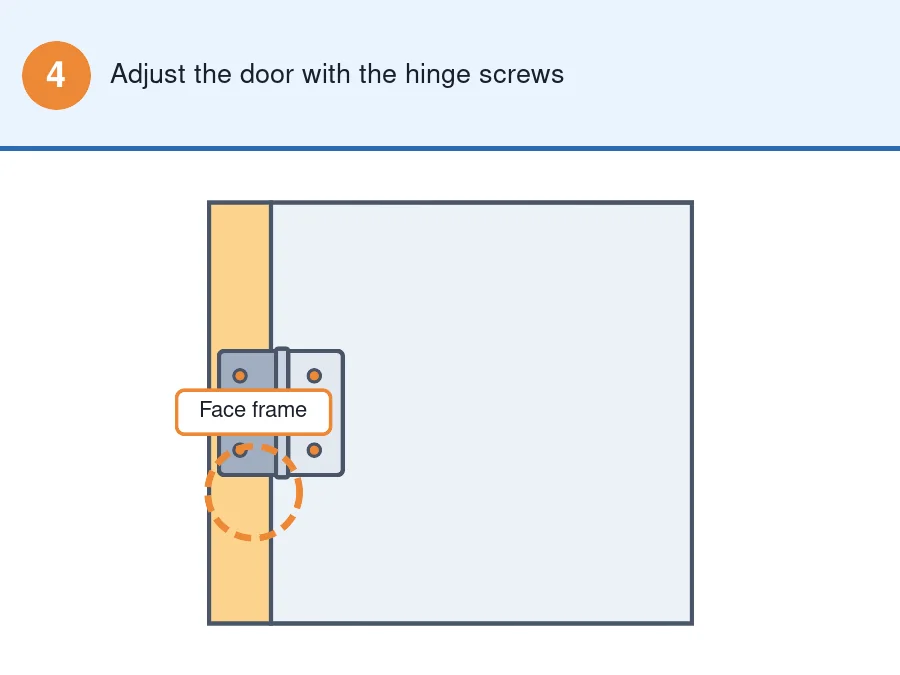
Most modern cabinet hinges have two or three adjustment screws, and understanding them saves you from moving the hinge at all.
- The mounting screws hold the hinge plate to the cabinet. These are the ones you tighten.
- The depth screw, on the door side, moves the door toward or away from the cabinet, closing or widening the gap at the front.
- The side adjustment screw slides the door left or right, which fixes a door that overlaps its neighbor or shows a gap at the side.
Turn each adjustment screw a quarter turn at a time and close the door to check before turning further. Keep notes if you are doing a whole kitchen, because it is easy to lose track of which door you already corrected.
5. Fix a sagging door on older hinges
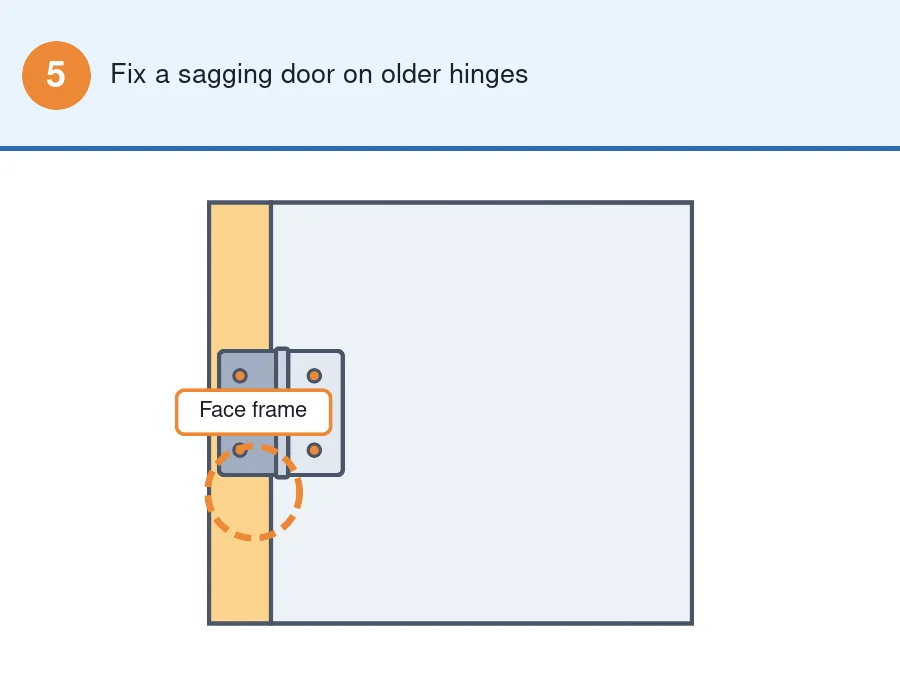
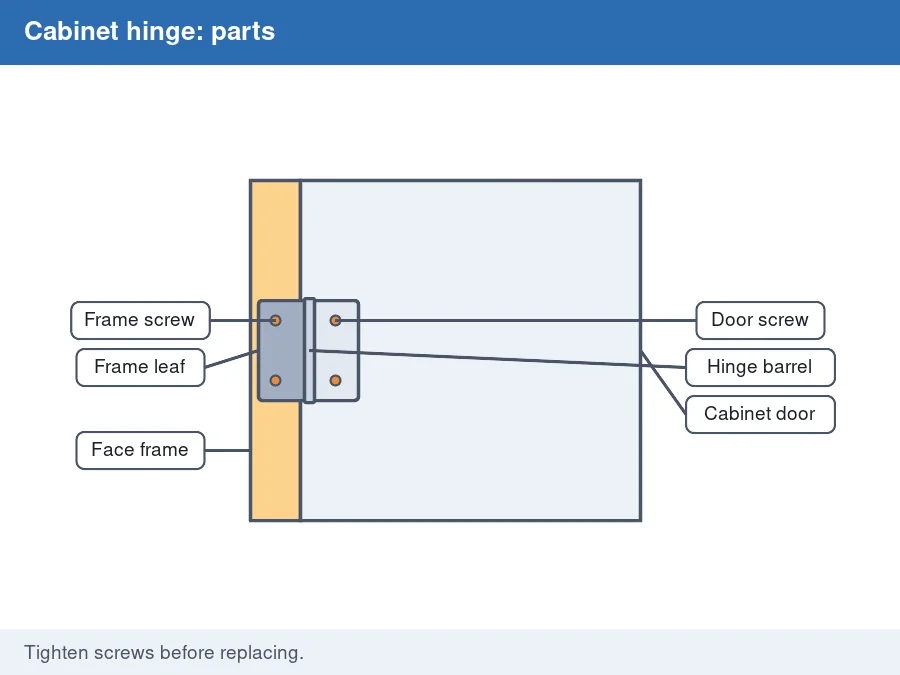
Older face frame cabinets often use simple butt hinges with two screws on the door and two on the frame. When the door sags, the fix is to loosen the frame screws slightly, lift the door to level, and retighten. A helper or a shim under the door holds it at the right height while you tighten.
If the door has dropped so far that the hinge plates no longer line up, take the door off, fill the old screw holes, and refit the hinge with the plate set slightly higher on the frame. Then check the gap with a level across the cabinet front.
6. Replace a hinge that is bent or cracked
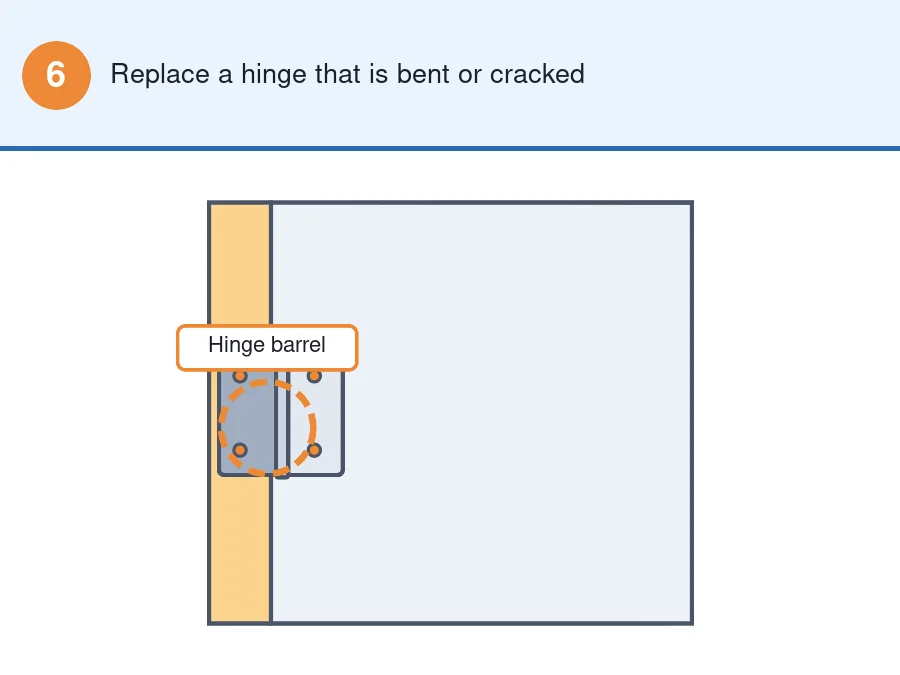
Look for a hinge that is bent out of shape, has a cracked knuckle, or is missing its pin. No adjustment will fix that. Bring the old hinge to the store, or match its type, size, overlay and screw pattern when you order a new one. Cabinet hinges are not universal, and a hinge with a different overlay will leave the door sitting wrong even if the screws fit.
Replace one hinge at a time so the door stays supported, and fit the new hinge to the existing screw holes where possible. If the pattern differs, fill the old holes and drill fresh pilot holes.
7. Stop the door slamming or swinging open
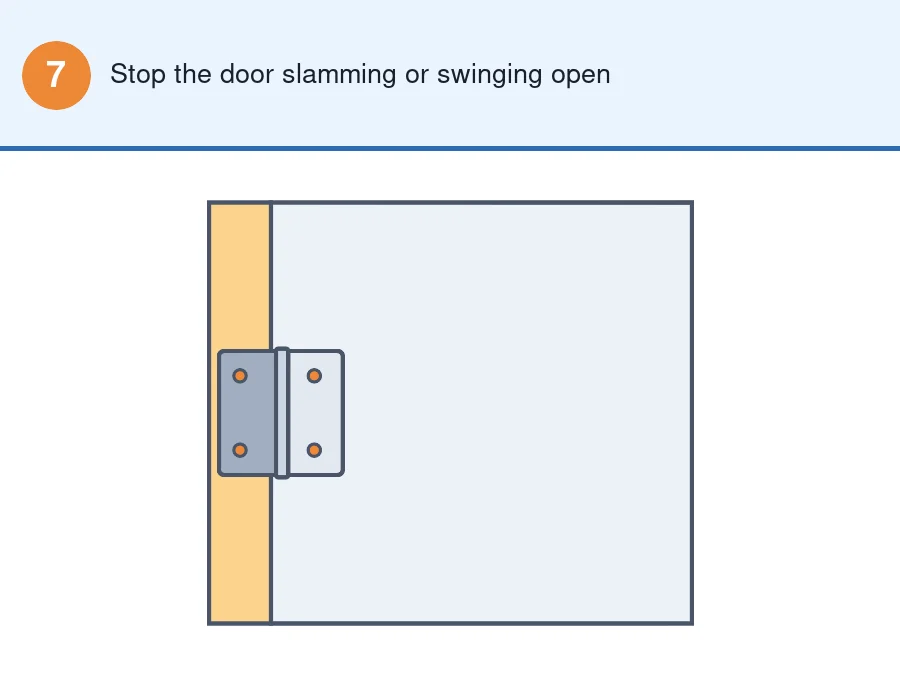
Once the hinge is sound, a door that still bangs shut or swings open on its own needs a different fix. Self-closing hinges have a spring that wears out, and soft-close hinges have a small damper that fails. Our guide on stopping cabinet doors from slamming covers bumpers, soft-close replacements and magnet catches. If the door will not stay shut at all, check the catch and the door alignment together, since a door sitting slightly proud will never latch.
8. Check the whole run of doors
Fix the worst door first, then close every door in the run and stand back. A single misaligned door makes the whole kitchen look off, and the fix is often a quarter turn on one screw. New handles and knobs also change how a door feels in the hand, and our guide on installing cabinet knobs and pulls covers spacing them evenly.
Common mistakes
- Using a screwdriver that is too small for the screw and stripping the head.
- Driving a screw back into a stripped hole without filling it, which fails again within a week.
- Turning every adjustment screw at once, so you cannot tell which change helped.
- Buying a hinge by looks alone without checking the overlay and screw pattern.
- Hanging on an open door to test it, which pulls the hinge out again.
Related guides
- How to Fix a Squeaky Cabinet Door: Hinges, Catches and Wood Rub
- How to Fix a Sagging Cabinet Shelf
- How to Fix a Cabinet Drawer Front That Is Loose or Crooked
- How to Fix a Kitchen Drawer That Sticks: Slides, Runners and Swollen Wood
- How to Replace a Door Hinge
- How to Fix a Cabinet Shelf Bracket That Came Loose or Broke
FAQ
Why do cabinet hinges keep coming loose?
Usually because the screws sit in particleboard that has crumbled, or because the door is being pulled open by the handle rather than the edge. Fill the holes properly and add a pull handle so the door is opened by the handle.
Can I fix a stripped cabinet hinge hole without glue?
A longer or thicker screw sometimes holds, but it is a temporary fix that enlarges the hole further. The toothpick-and-glue method takes five minutes and lasts.
Do I need to replace both hinges on a door?
Not always. Replace the damaged one, but if the pair is old and the other hinge is worn, replacing both keeps the door hanging evenly.
What if the door still rubs after adjusting the hinge?
Check whether the cabinet frame is out of square or the door itself is warped. A warped door cannot be adjusted straight, and a twisted frame needs to be fixed before the door will ever sit right.
More from this topic
- How to Fix Loose Cabinet Door: Tighten Hinges and Realign: Learn how to fix loose cabinet door problems: tighten hinge screws, repair stripped holes, adjust the hinge...
- How to Fix a Cabinet Door That Rubs: Learn how to fix a cabinet door that rubs: find the contact point, adjust the hinge, sand or seal a swollen...
- How to Fix a Squeaky Cabinet Door: How to fix a squeaky cabinet door: find the source, lubricate hinges the right way, adjust the door so it...
- How to Fix a Loose Hinge Screw: How to fix a loose hinge screw so the door hangs straight again: test the holes, pack them with wood, and...
- How to Fix a Stripped Screw Hole in Wood: 4 Simple Methods: How to fix a stripped screw hole in wood: use toothpicks and glue, a dowel, a larger screw or a wood filler...
 Doors and WindowsHow to Fix Loose Cabinet Door: Tighten Hinges and RealignLearn how to fix loose cabinet door problems: tighten hinge screws, repair stripped holes, adjust the hinge and realign a door that hangs crooked.
 KitchenHow to Fix a Cabinet Door That RubsLearn how to fix a cabinet door that rubs: find the contact point, adjust the hinge, sand or seal a swollen edge, and correct a cabinet that is out of square.
 KitchenHow to Fix a Squeaky Cabinet DoorHow to fix a squeaky cabinet door: find the source, lubricate hinges the right way, adjust the door so it stops rubbing, silence catches.
 Doors and WindowsHow to Fix a Loose Hinge ScrewHow to fix a loose hinge screw so the door hangs straight again: test the holes, pack them with wood, and reset the screws.
 Tools and BasicsHow to Fix a Stripped Screw Hole in Wood: 4 Simple MethodsHow to fix a stripped screw hole in wood: use toothpicks and glue, a dowel, a larger screw or a wood filler method so hinges and fixtures hold tight.