
How to Fix a Loose Hinge Screw
Part of: Floors, walls and doors · Also in: The Complete Guide to Doors and Windows: Repairs at Home
- Difficulty
- Easy
- Time
- 15 to 30 minutes
- Tools
- screwdriver, wooden matches or golf tees or dowel, wood glue, drill, utility knife, hammer, chisel, longer screws, sandpaper
- Call a pro if
- The jamb itself is split or crumbled around the hinge, since that needs a patch or a new section of jamb rather than a packed hole.
In this guide
- Confirm which hinge is loose
- Support the door
- Remove the loose screw
- Try a longer screw first for the top hinge
- Pack the hole with glued wood
- Or use the toothpick method for small holes
- Fill and redrill a badly damaged hole
- Drive the screws in order
- Check the door's alignment
- Watch it over the next week
- Common mistakes
- Related guides
- FAQ
- When to call a pro
- Wear protection
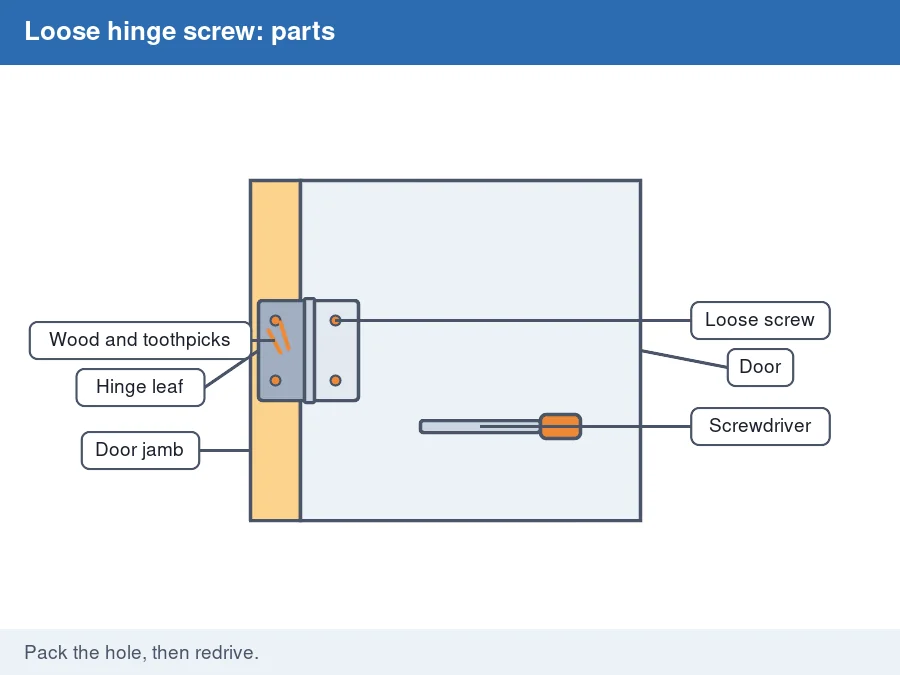
Knowing how to fix a loose hinge screw saves a door that seems to be failing. Nine times out of ten the hinge is fine and the wood around the screw is not. A door that drags, rubs, or will not latch often has one spinning screw at the top hinge.
The repair is quick, and the choice of method depends on how much wood is left in the hole. Packing with glued wood works for most stripped holes, and a longer screw that reaches the framing is the permanent fix for a top hinge.
1. Confirm which hinge is loose
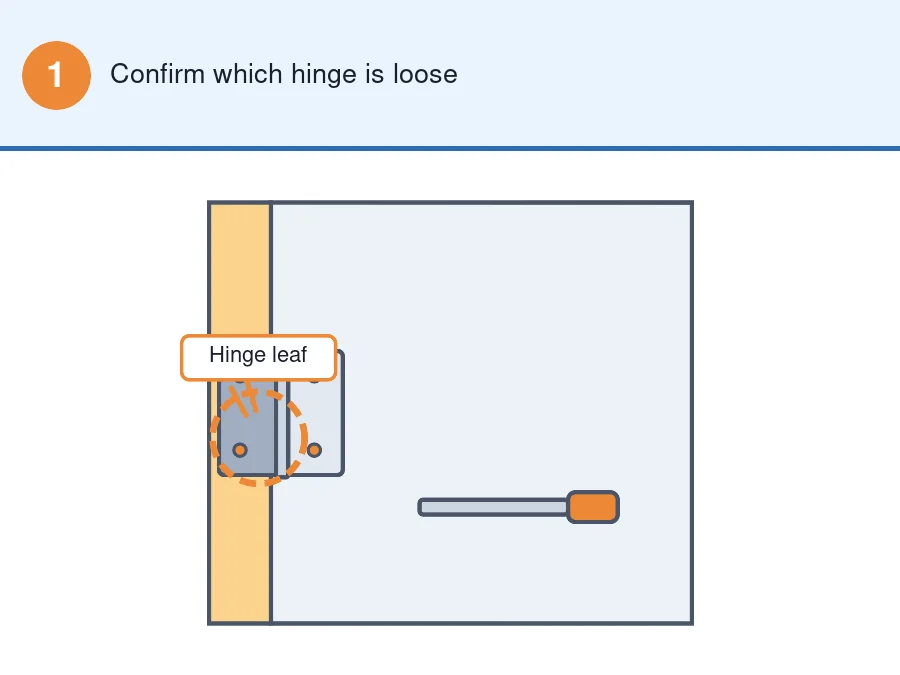
Open the door and try each screw with a screwdriver. A screw that spins without tightening is stripped. Also lift the door slightly at the handle to see if there is movement at the hinges. Mark the loose screws.
2. Support the door
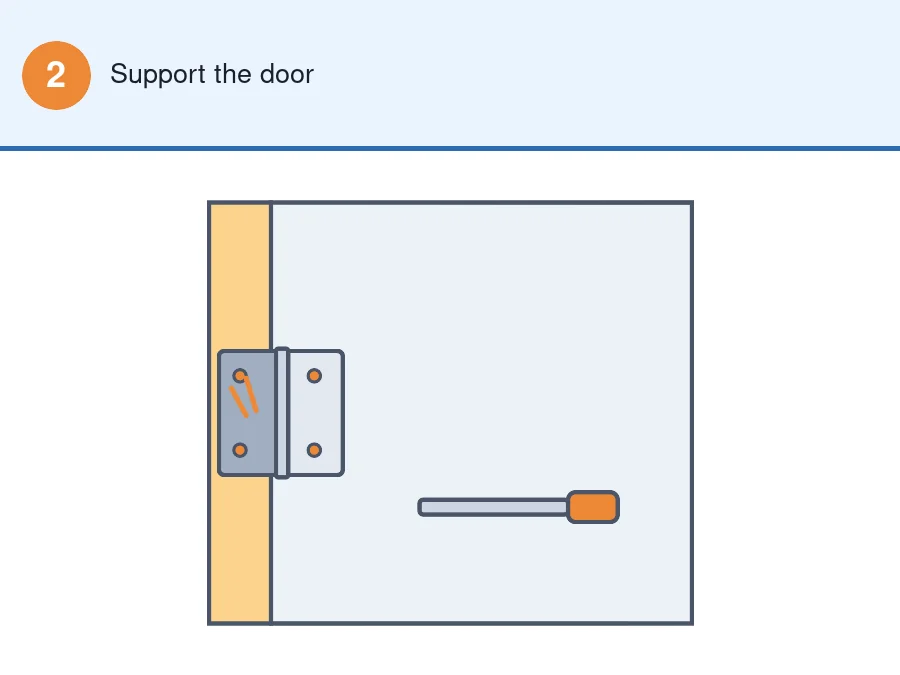
Put a wedge or a stack of shims under the door's outer edge to take the weight off the hinge. This keeps the door from dropping when the screws come out and makes the hinge easier to re-align.
3. Remove the loose screw
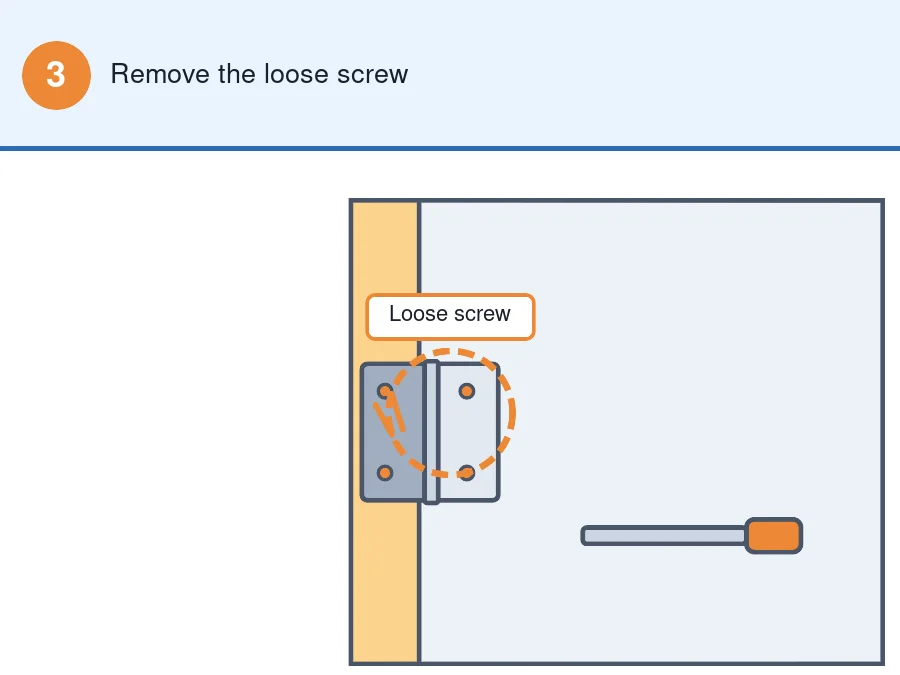
Back the screw out and look at it. If the threads are wrapped with wood fibers, the hole is stripped. If the screw is bent or the head is chewed up, replace it. Check the other screws in the same hinge, since they often loosen together.
4. Try a longer screw first for the top hinge
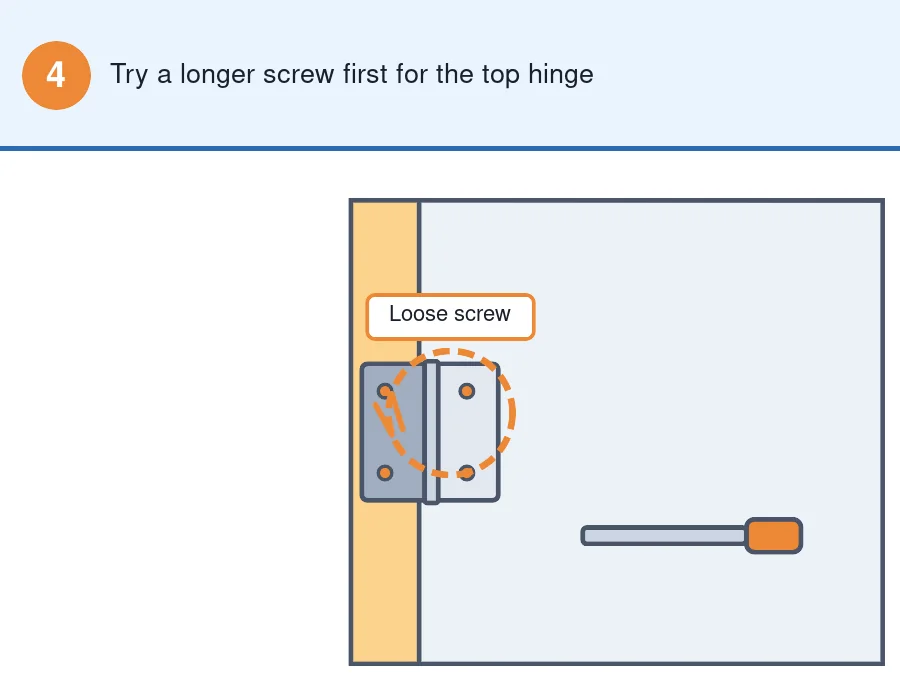
For a top hinge, a screw long enough to reach the wall framing behind the jamb is the strongest fix. Measure through the hole to see how much depth you have, and choose a screw that reaches the stud without going through the other side of the frame.
5. Pack the hole with glued wood
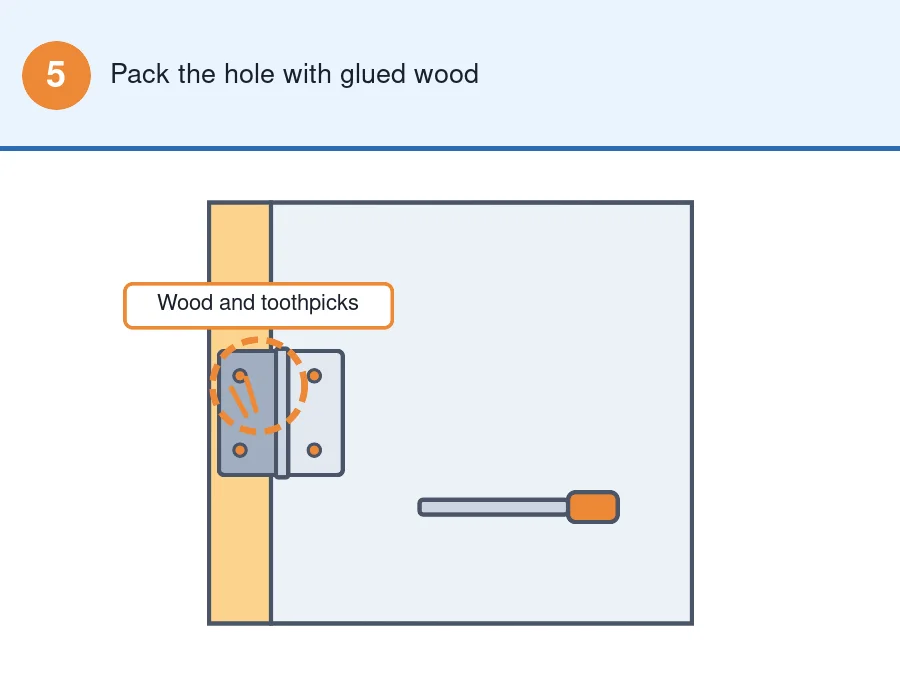
For a hole that cannot take a longer screw, cut wooden matches, a golf tee, or a short piece of dowel to fit. Coat them with wood glue, tap them into the hole until it is snug, and let the glue set. Trim anything proud with a knife.
6. Or use the toothpick method for small holes
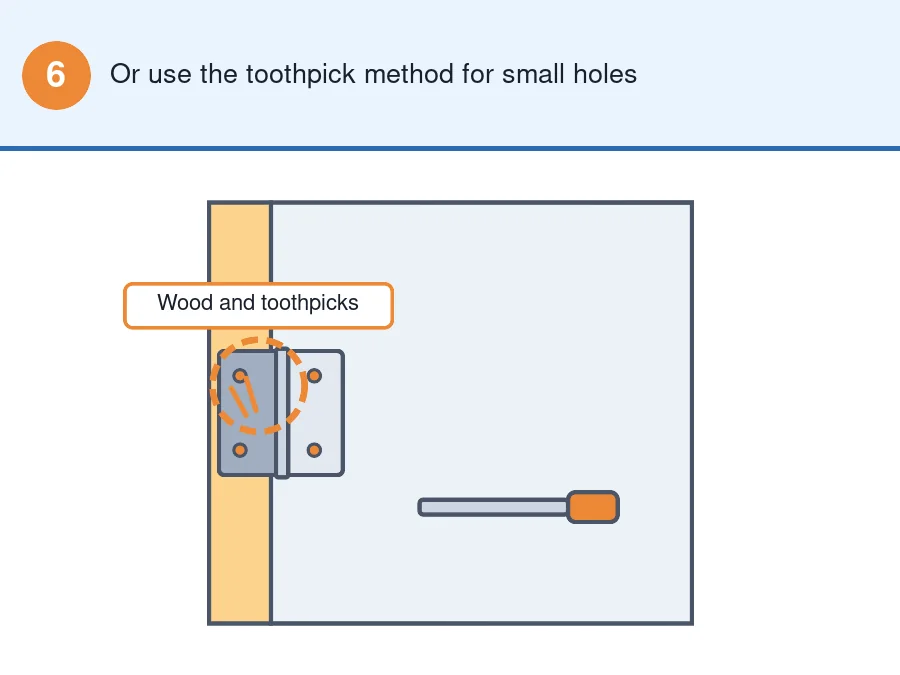
For a small stripped hole, push several toothpicks dipped in glue into the hole until it is packed, break them off flush, and drive the original screw back in while the glue is still soft. This works well for light interior doors.
7. Fill and redrill a badly damaged hole
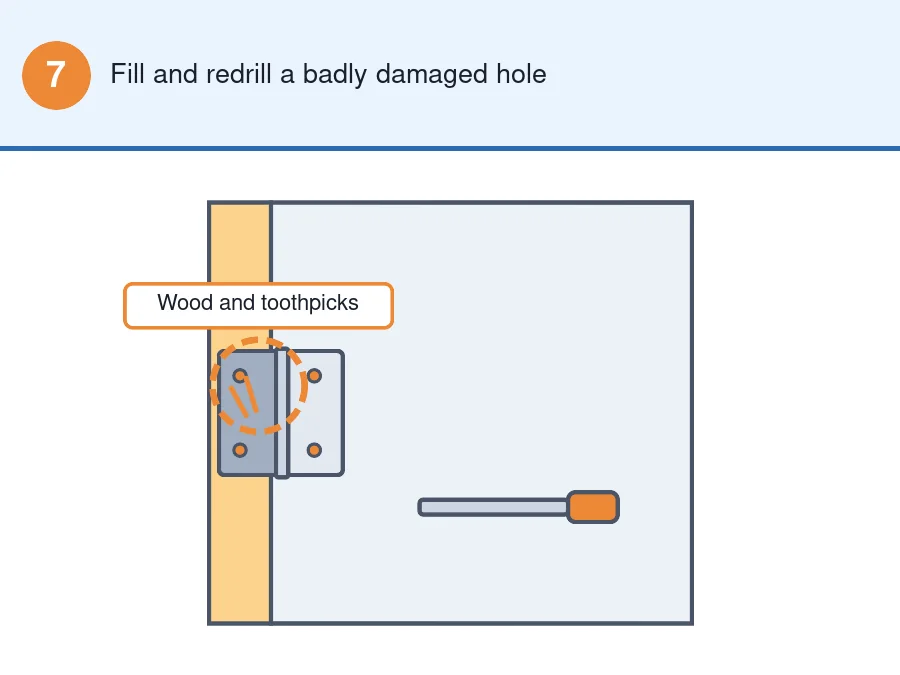
If the hole is large and crumbled, drill it out cleanly, glue in a dowel of matching diameter, let it set, and drill a new pilot hole for the screw. This gives a solid new hole rather than a packed one.
8. Drive the screws in order
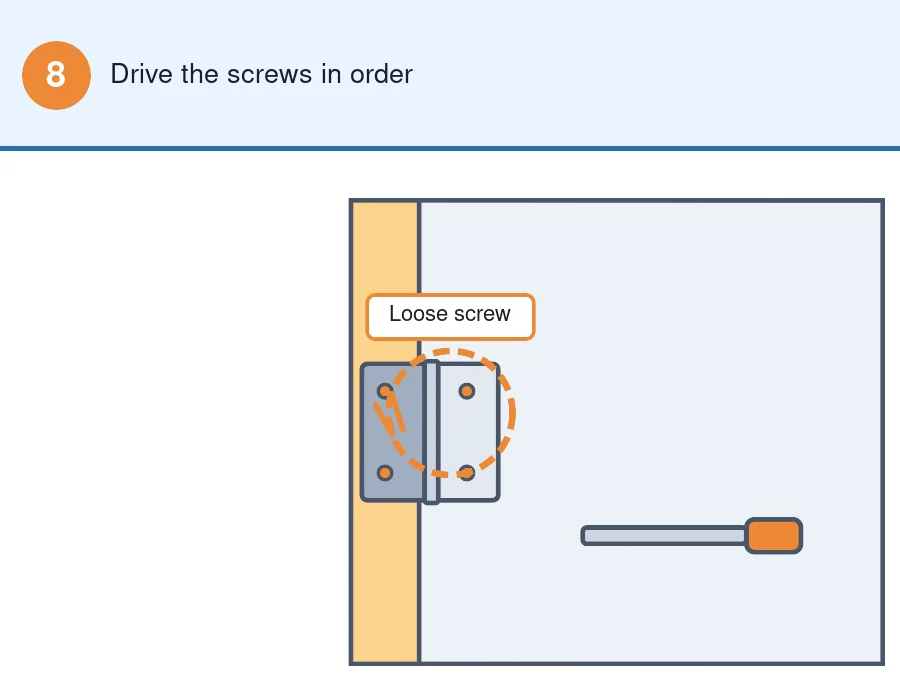
Start with the screw nearest the hinge pin, then the outer one, and snug them in stages rather than driving one fully. Even pressure keeps the hinge flat against the jamb. Do not over-tighten, which crushes the wood again.
9. Check the door's alignment
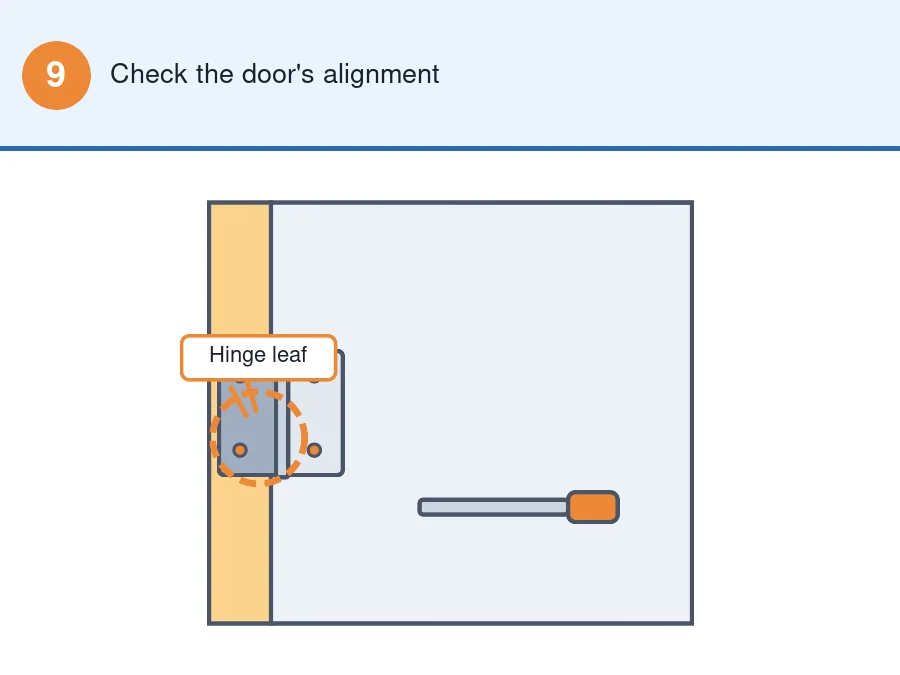
Close the door and check the gap along the top and the latch side. If the door still sags, the hinge may be bent or the jamb out of square. Adjust by tightening the screws in a different order or by shimming the hinge.
10. Watch it over the next week
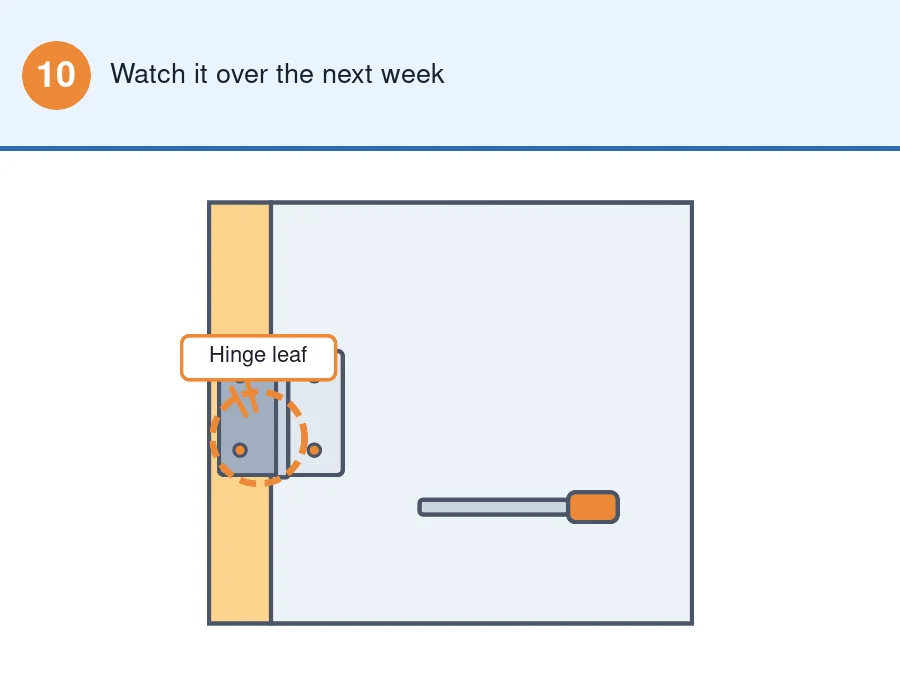
Check the screws again after a week of use. A repair that loosens again means the jamb wood is failing, and the hinge plate may need to be moved slightly or the jamb patched.
Common mistakes
- Driving a bigger screw into a stripped hole without packing it, which splits the jamb.
- Using a screw so long it comes through the other side of the frame.
- Over-tightening and crushing the wood around the hinge.
- Fixing one screw while the others in the hinge stay loose.
- Leaving the door unsupported, so it drops when the screws come out.
- Using glue alone with no wood, which does not fill the hole.
Related guides
- How to Remove a Door Hinge Pin
- How to Repair a Damaged Door Jamb
- How to Tighten a Loose Door Knob in Five Minutes
- Loose Stair Handrail: How to Make It Solid Again
- How to Install a Storm Door
- How to Fix a Squeaky Door in 10 Minutes
FAQ
Why does a hinge screw keep coming loose?
The wood in the hole has stripped or the screw is too short. Pack the hole with glued wood or use a longer screw that reaches the framing.
What can I use to fill a stripped screw hole?
Wooden matches, toothpicks, golf tees, or a glued dowel. All give the screw new material to bite into.
Can I use a longer screw on a door hinge?
Yes, especially on the top hinge, where a screw can reach the wall framing. Check the depth so it does not come through the other side.
Do I need to take the door off to fix a loose hinge screw?
Usually not. Support the door with a shim and work with it hanging, unless the jamb needs a bigger repair.
What if the jamb itself is split?
That is a bigger repair. The split section needs to be glued and clamped, or cut out and replaced with a new piece of jamb.
More from this topic
- How to Fix Loose Cabinet Door: Tighten Hinges and Realign: Learn how to fix loose cabinet door problems: tighten hinge screws, repair stripped holes, adjust the hinge...
- How to Remove a Broken Screw From a Hinge: Learn how to remove a broken screw from a hinge: cut a slot in the stub, use pliers or a screw extractor, and...
- How to Remove a Door Hinge Pin: How to remove a door hinge pin that is stuck: tap from below, use a punch, and free a painted or rusted pin...
- How to Repair a Hole in a Hollow Door: How to repair a hole in a hollow door: cut back to solid skin, add a backing plug, fill in stages, and finish...
- How to Fix a Cabinet Hinge: Learn how to fix a cabinet hinge that is loose, squeaking or pulling out: tighten it, reset stripped screw...
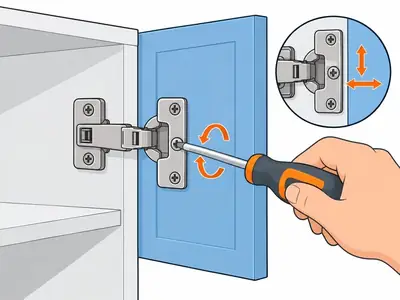 Doors and WindowsHow to Fix Loose Cabinet Door: Tighten Hinges and RealignLearn how to fix loose cabinet door problems: tighten hinge screws, repair stripped holes, adjust the hinge and realign a door that hangs crooked.
 Doors and WindowsHow to Remove a Broken Screw From a HingeLearn how to remove a broken screw from a hinge: cut a slot in the stub, use pliers or a screw extractor, and repair the hole so the hinge holds again.
 Doors and WindowsHow to Remove a Door Hinge PinHow to remove a door hinge pin that is stuck: tap from below, use a punch, and free a painted or rusted pin without bending the hinge.
 Doors and WindowsHow to Repair a Hole in a Hollow DoorHow to repair a hole in a hollow door: cut back to solid skin, add a backing plug, fill in stages, and finish so the patch disappears.
 KitchenHow to Fix a Cabinet HingeLearn how to fix a cabinet hinge that is loose, squeaking or pulling out: tighten it, reset stripped screw holes, adjust the door and replace a bent hinge.